A giraffe is read by three things: a long neck that leans, a small head set on the end of it, and legs that are longer than you expect. Spots come last. That is why an easy giraffe drawing, finished in a few minutes, still works, and why a careful one with perfect patches can still look like a horse. If yours does, the spots did not fail. The neck, the head and the legs did.
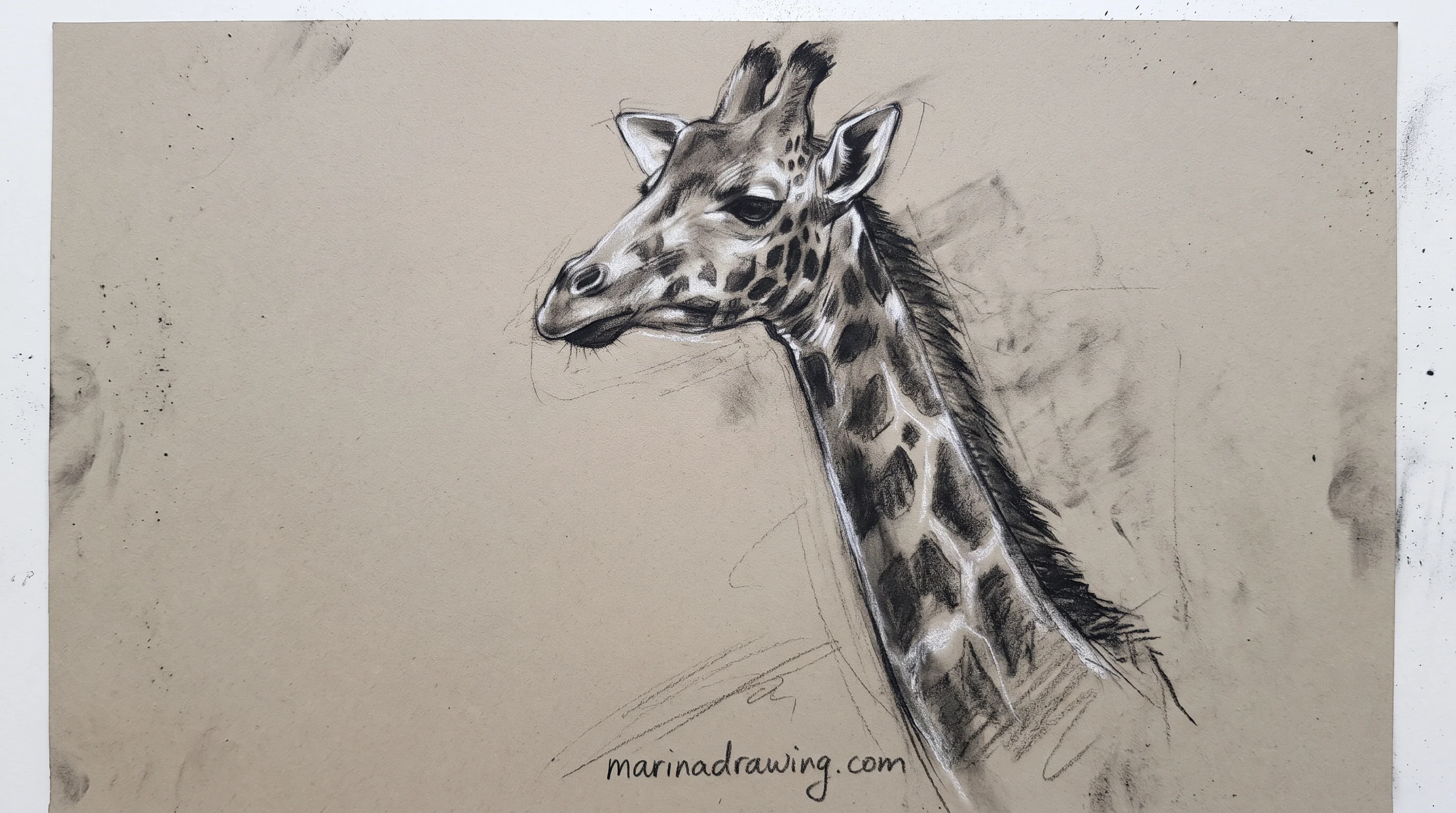
A giraffe reads as a giraffe because of its proportions, not its pattern.
A neck as long as the body, a head about the size of a fist against it, and four thin legs. Lose any of them and you get a horse, a cow or a deer with a stretched neck.
Quick answer: draw one bean-shaped body, a neck rising from the front that is as long as the body itself, and a small head on top, tilted forward. Add four thin legs, a short tail and two little horns. Spots go in last, in patches that touch. Then pick your giraffe from the nine below and read the table near the end for your mistake. If you would rather watch a giraffe built than read about it, this giraffe drawing class covers backgrounds, fine hair and wrinkles.
Neck, head and legs make the giraffe, not the spots
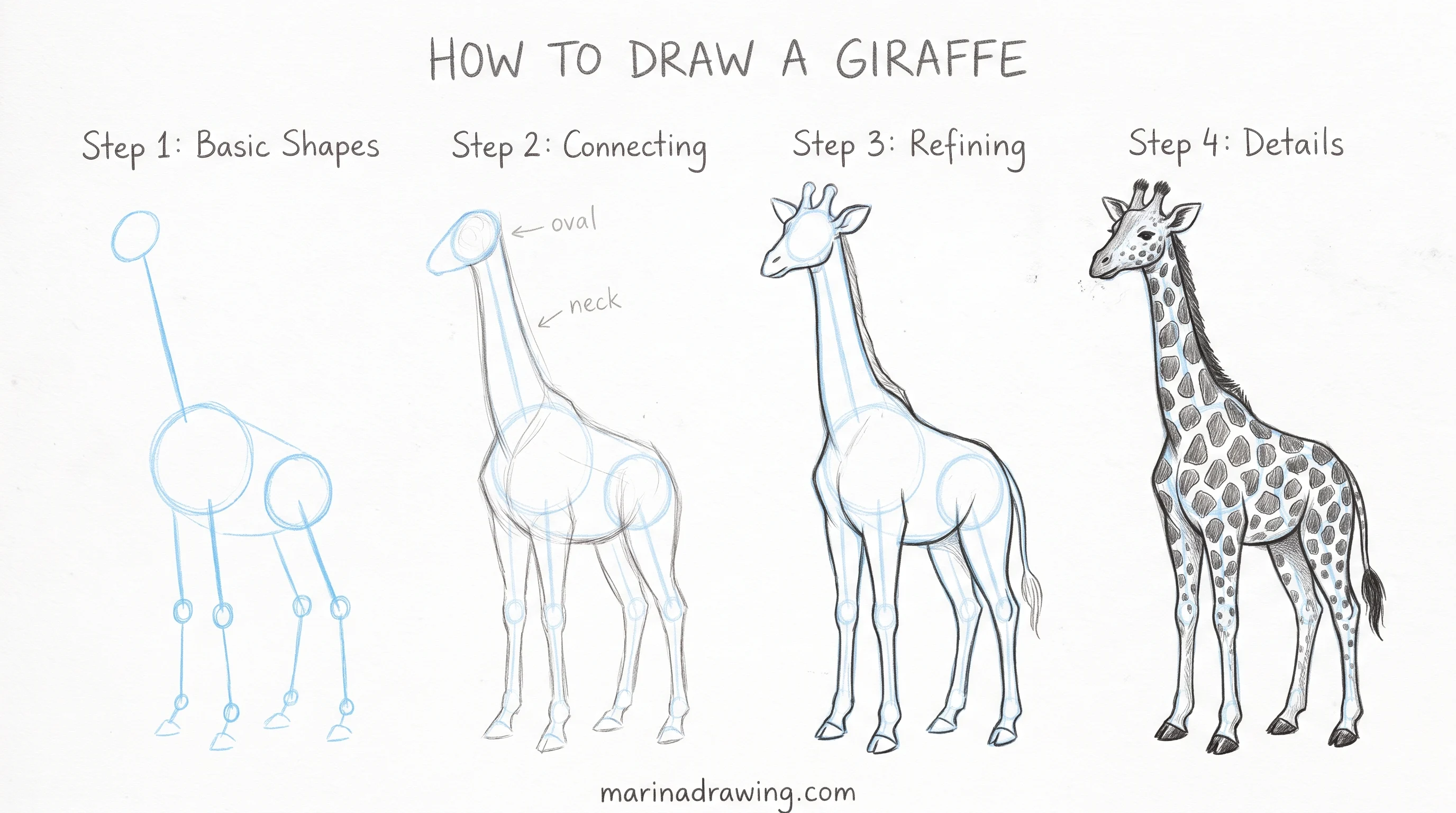
Every giraffe here starts with the same four light marks, put down before any pattern.
- The body. A bean, not a circle: a long shape, slightly higher at the shoulder than at the hips, because a giraffe slopes down toward the back.
- The neck. Two slightly curved lines rising from the front of the body. Make it as long as the body, narrower at the top than at the base. A neck that is shorter than the body gives you a horse.
- The head. A small, long oval on top, tilted forward, narrower than the neck at its base. Two thin ossicones on the crown, tipped with a tiny knob each.
- The legs. Four thin lines, the front pair longer than the back pair. Knees sit about halfway down, and the hooves are small.
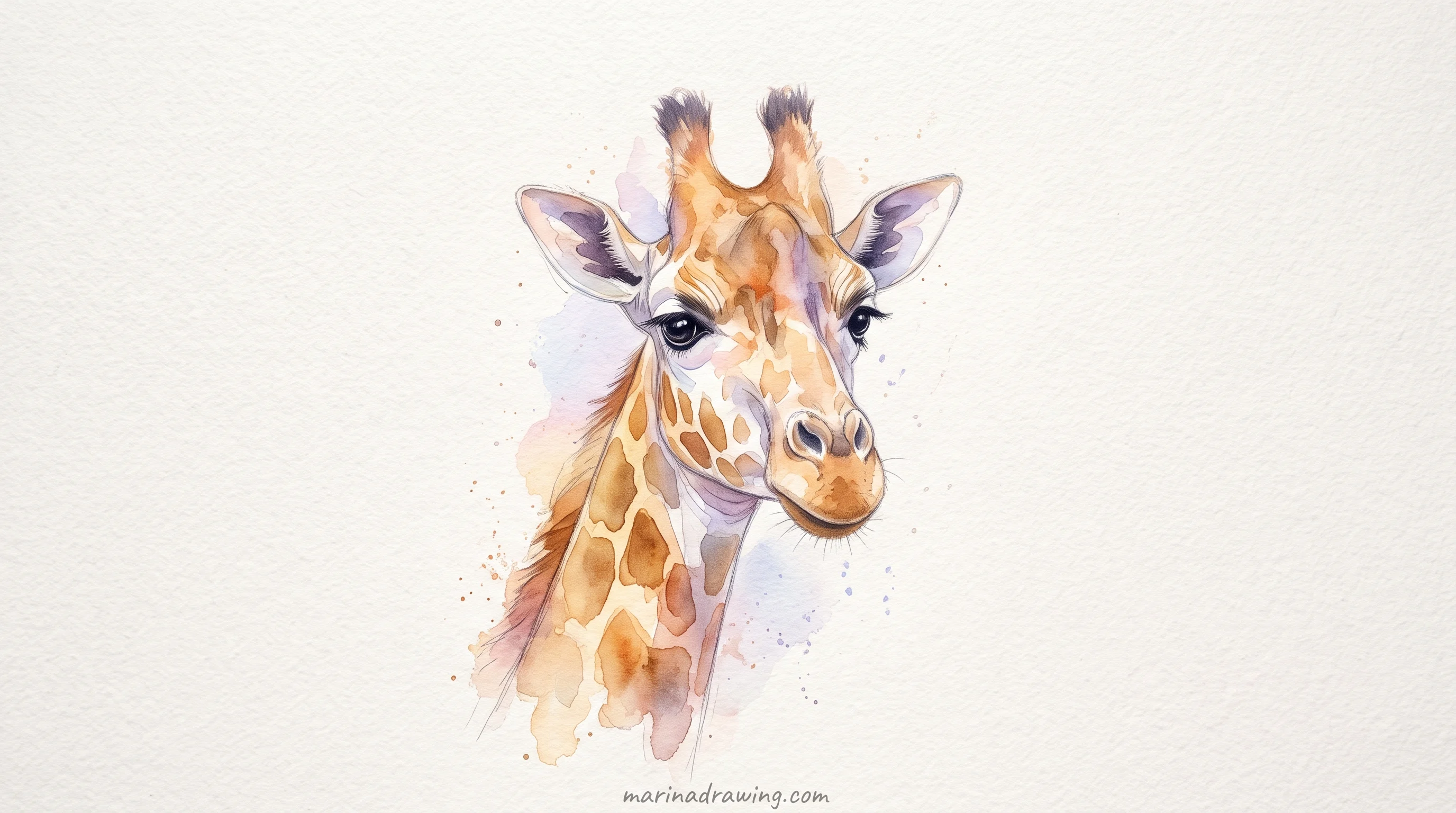
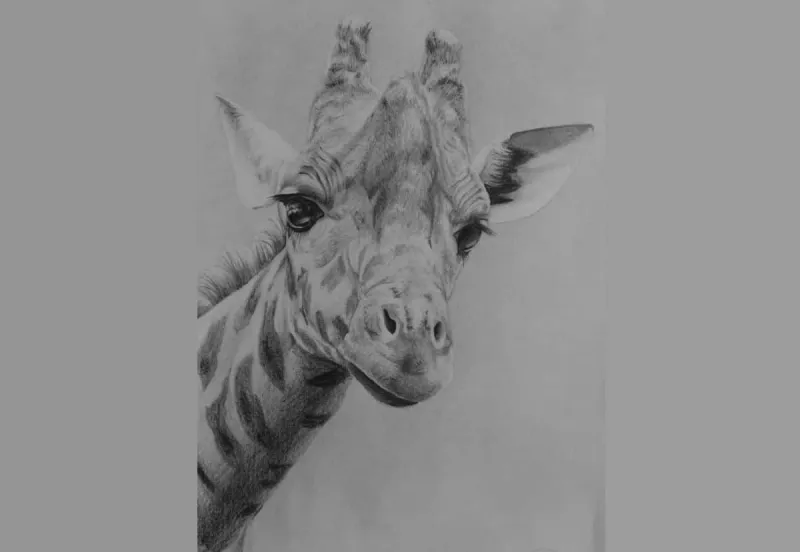
Now the face. A giraffe has a long muzzle, nostrils drawn as two small slits and big eyes set high on the sides of the head, with heavy lashes. Leave a dot of bare paper in each eye.
That dot is the light. Without it the eye goes flat and the giraffe looks stuffed. Check these four placements while the pencil still lifts.
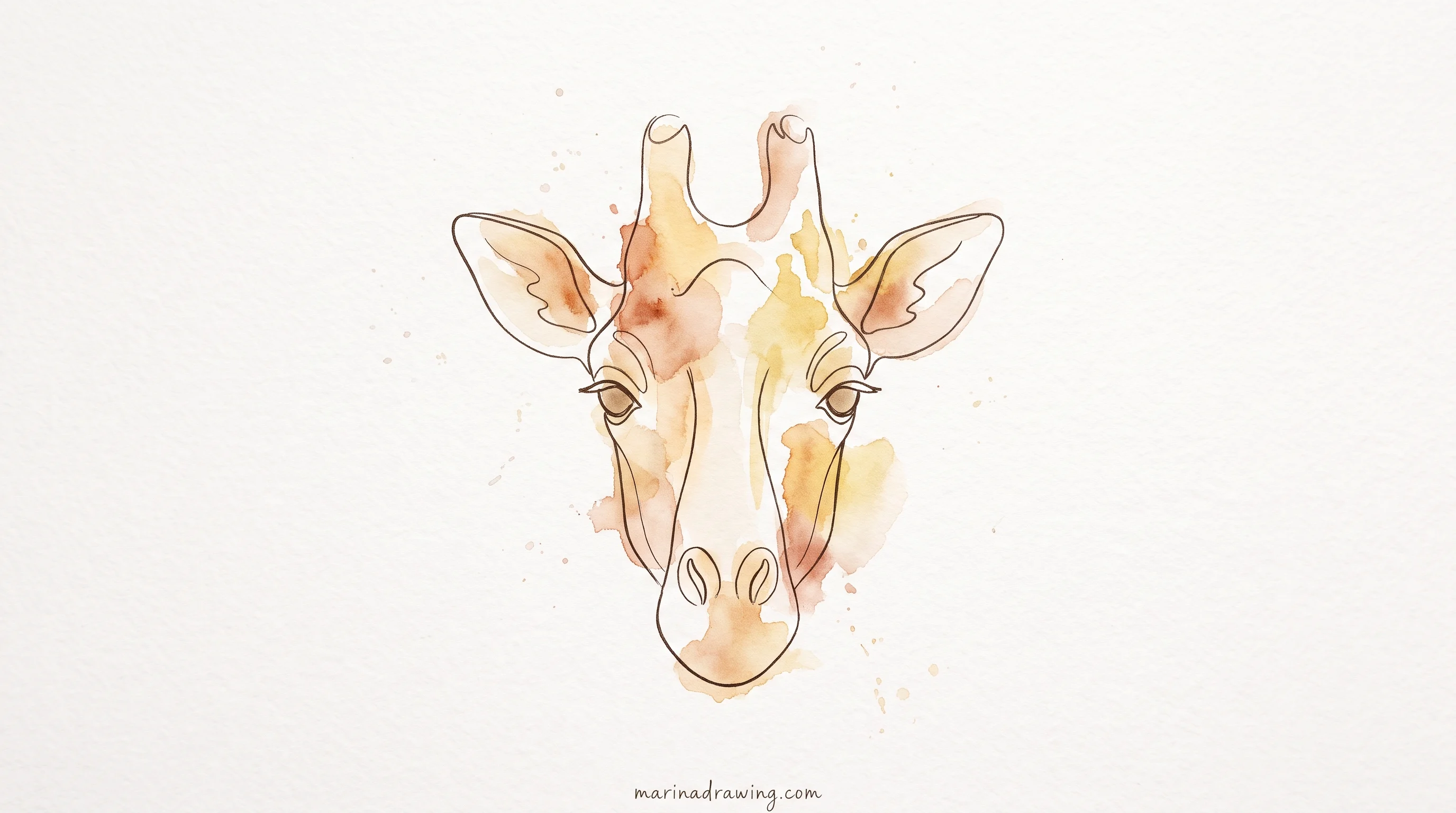
You decide whether your giraffe works when you draw the neck. Everything after that is filling in a decision you already made.
Why your giraffe looks like a horse: four mistakes
Of the six pages that hold the top spots for this subject, none has a section on what goes wrong with a giraffe in particular. The nearest one handles troubleshooting for watercolour in general, and none shows nine different giraffes in one place. You get one animal per page, drawn in one technique.
| What was checked | Pages that had it |
|---|---|
| A section on mistakes specific to a giraffe | 0 of 6 |
| A set of different giraffes, each with its own method | 0 of 6 |
| A baby and an adult compared by proportion | 0 of 6 |
| A rule for placing the spots | 0 of 6 |
The numbers you do find are about minutes and steps, such as fifteen minutes or seven steps, never about how long the neck should be.
Four mistakes account for almost all of the horses, and you have probably made one of them:
- Your neck is shorter than your body, so the animal reads as a horse with a tall head.
- Your head is as big as a horse’s, so the neck looks small and weak under it.
- Your legs are all the same length and as thick as the neck, so the body looks like a cow’s.
- Your spots are round dots scattered evenly, so the coat looks like a leopard’s.
All four are proportion problems you settle in the first minute, which is why another set of steps rarely helps. The steps are fine. The thing they skip is the thing you got wrong. Long ears are the rabbit version of this problem, covered in these rabbit drawing ideas.
The same trap shows up on the owl and the panda.
What you actually need: one pencil and a soft eraser
You need very little for every giraffe here.
- One sharp 2B pencil for the construction lines.
- A soft kneaded eraser that lifts guides out without scrubbing the paper.
- Cheap printer paper. A giraffe goes wrong in the first minute, so spend nothing on the surface.
1. Easy giraffe drawing from three ovals
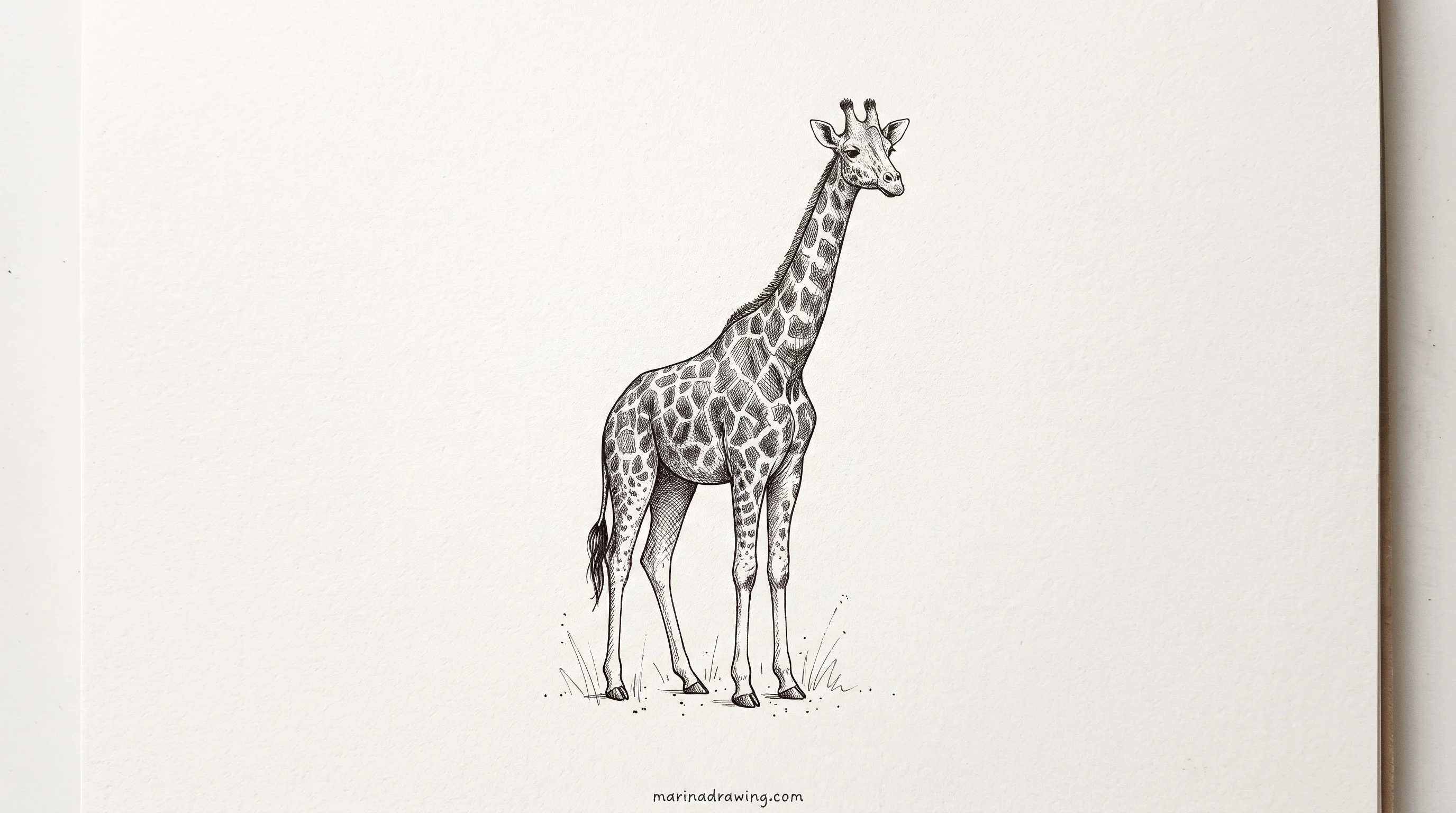
Draw this one first. I always do. You start with a long oval for the body, a tall narrow oval for the neck, a small oval for the head tilted forward. Join them with two smooth lines, add four straight legs and a short tail with a tuft.
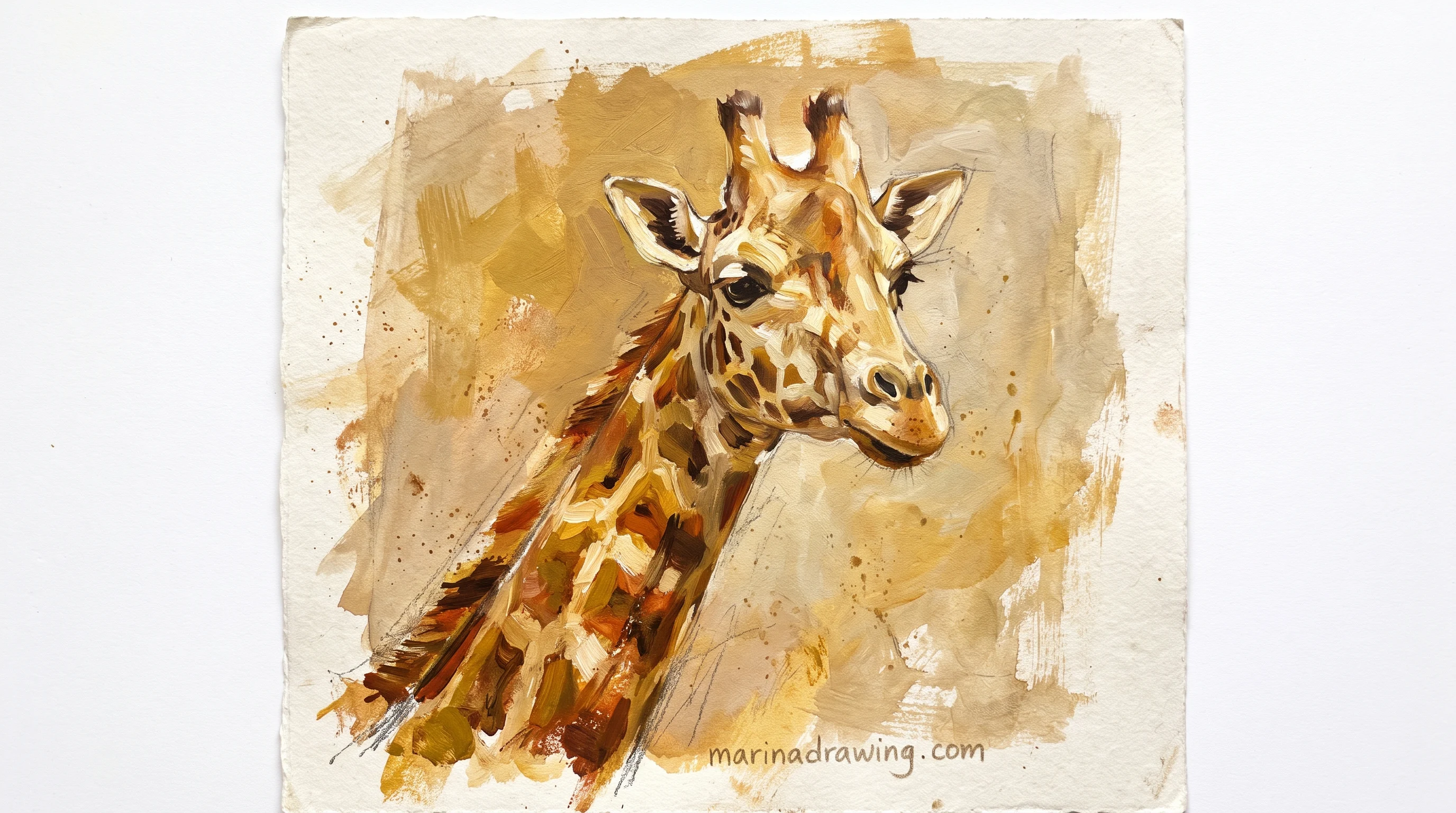
You make nine marks, and it reads as a giraffe from across the room.
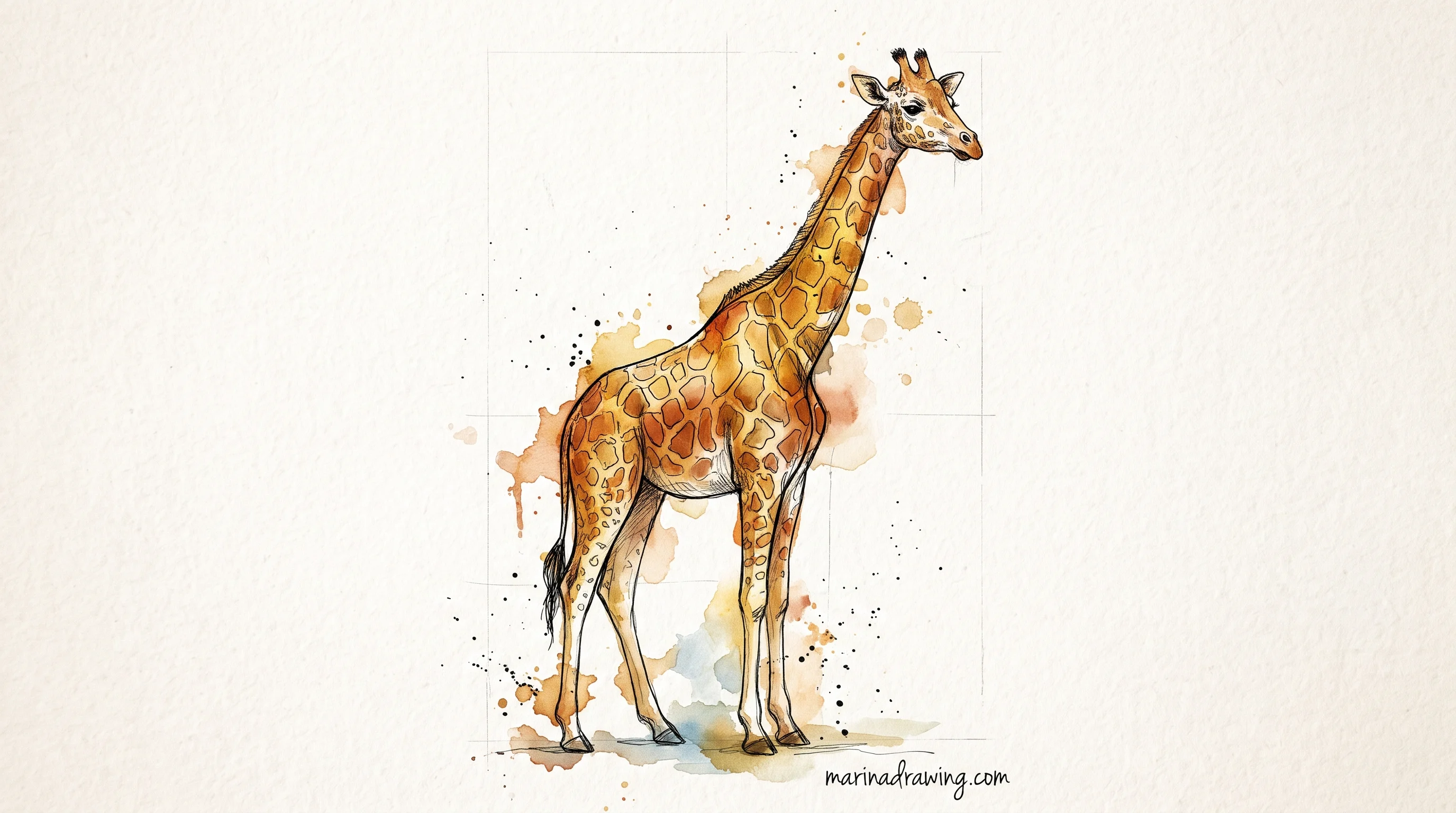
Treat it as a five-day challenge: draw it five times and make the neck a little longer each time. Keep your hand loose and let the line wander before you commit. You will see the character change before you add a single patch.
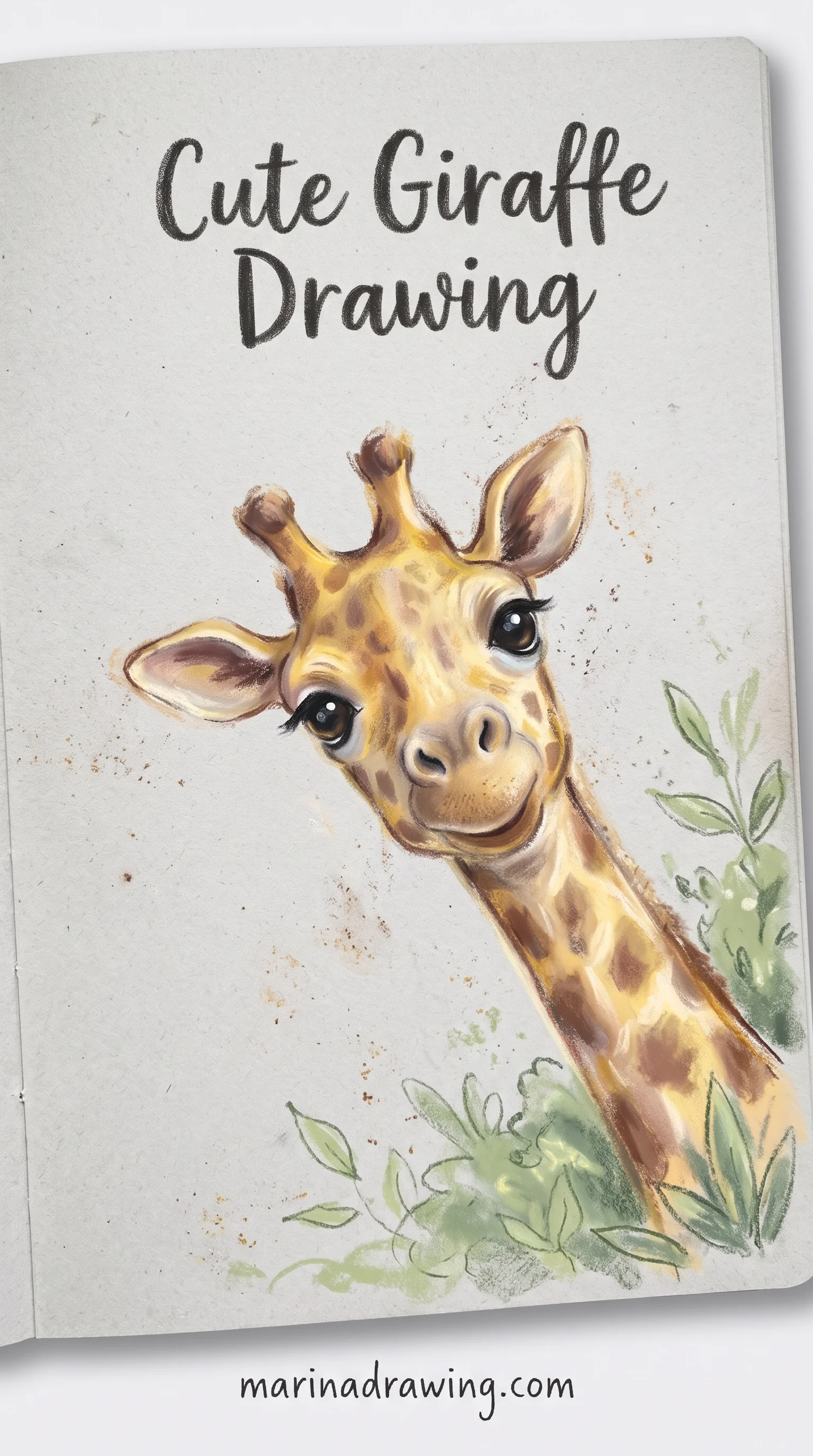
2. A cute giraffe with a big head
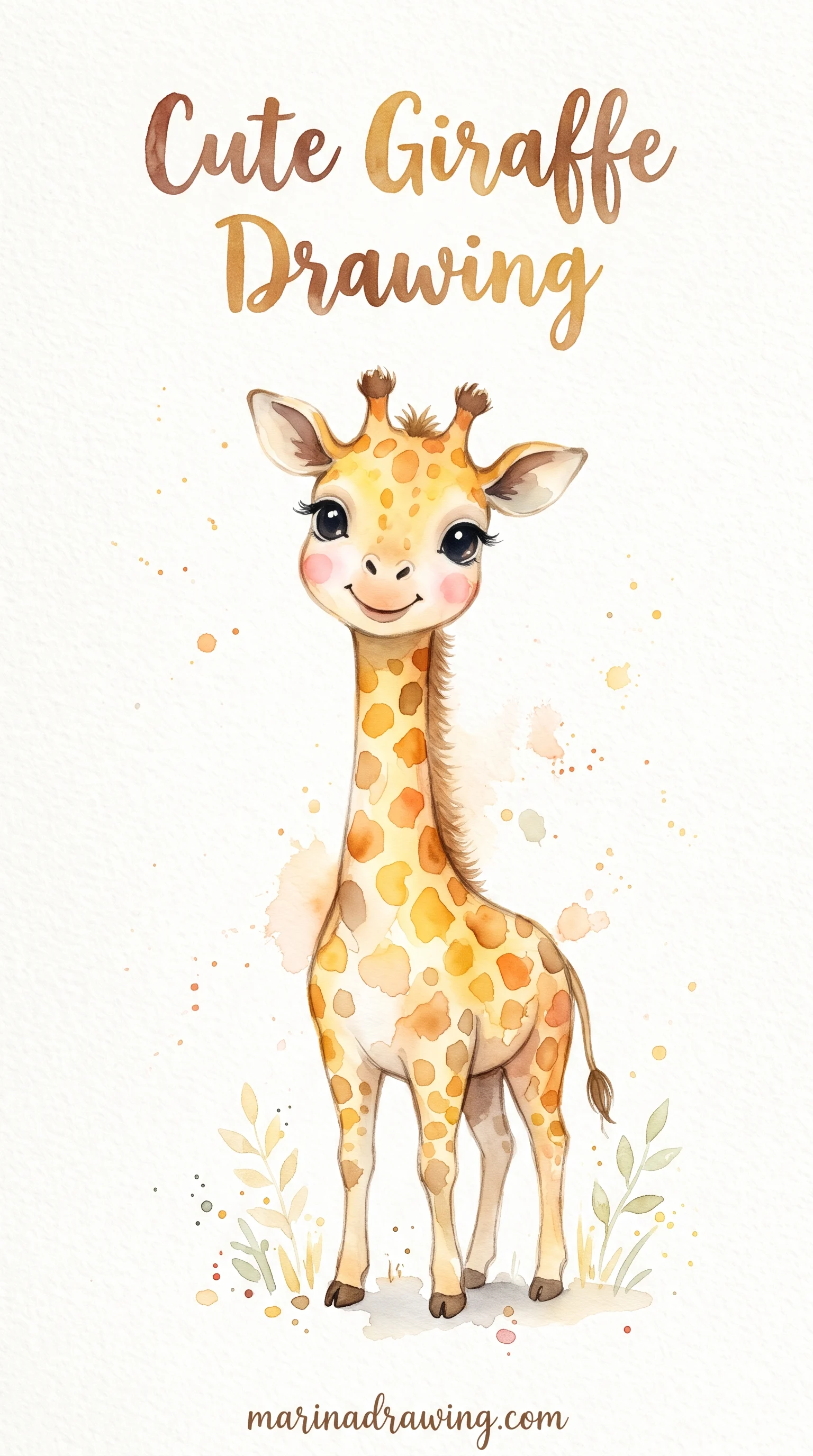
Cute is a ratio, not a style.
Give a cute giraffe a head that is large against the body and a neck that is shorter than the real thing, about three quarters of the body. Drop the eyes lower than feels right, make them big and round, and keep the muzzle short. Low and big reads as friendly. High and small reads as realistic. The same ratio works on the animals in these squirrel drawing ideas.
Colour it with a warm yellow and brown patches that do not touch the outline. For ready-made animal reference sheets, a library of drawing guides saves guessing.
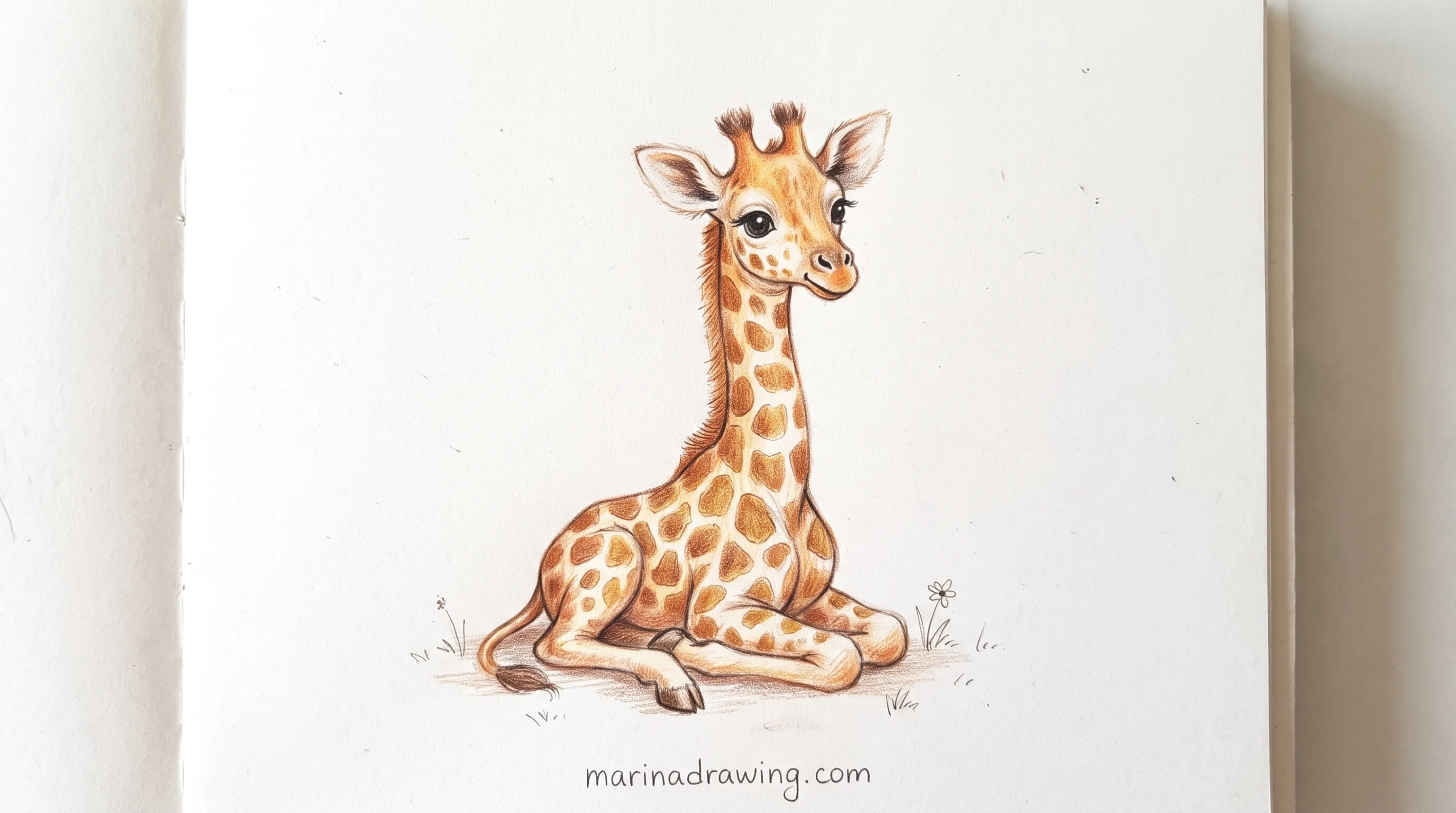
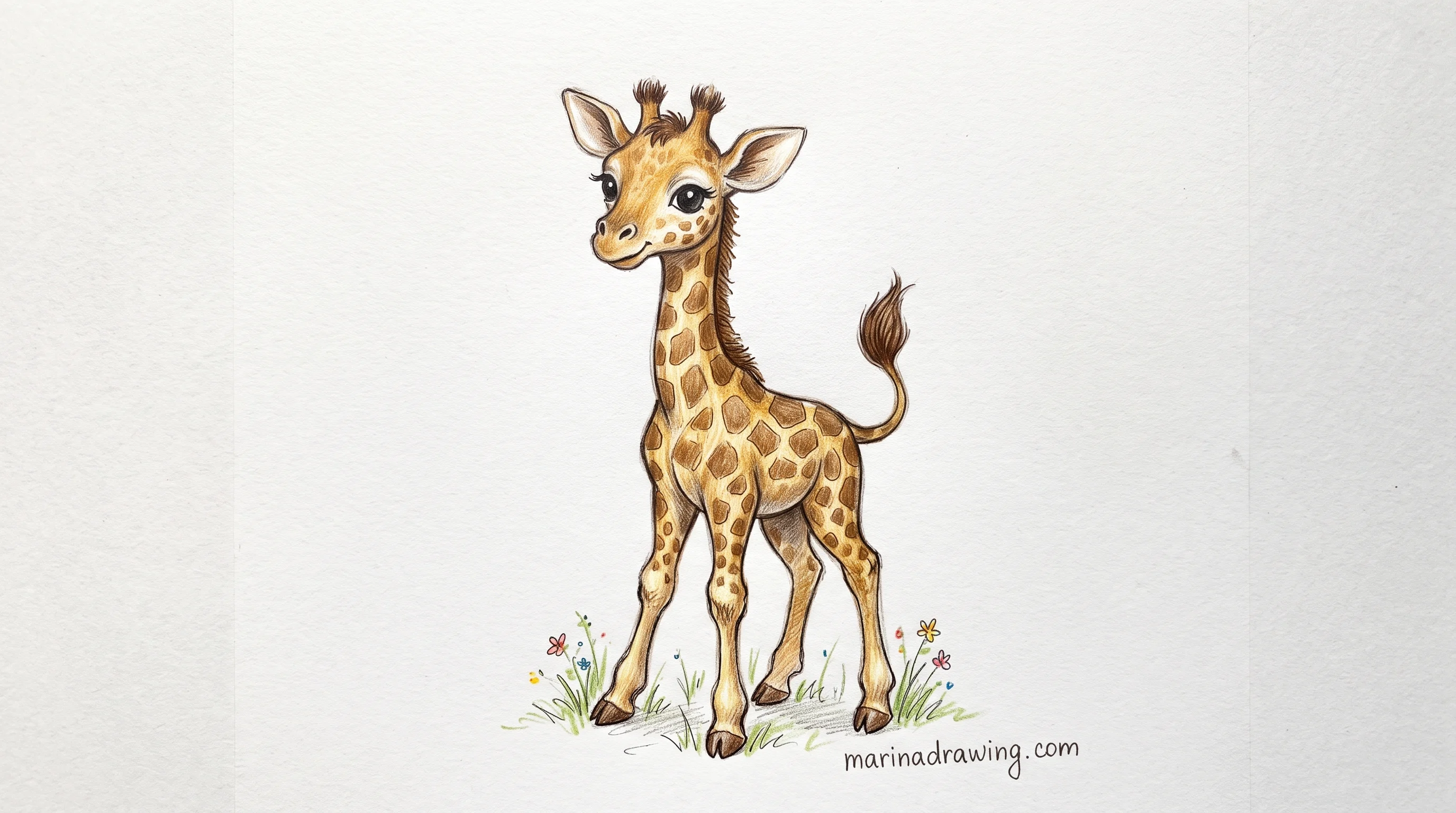
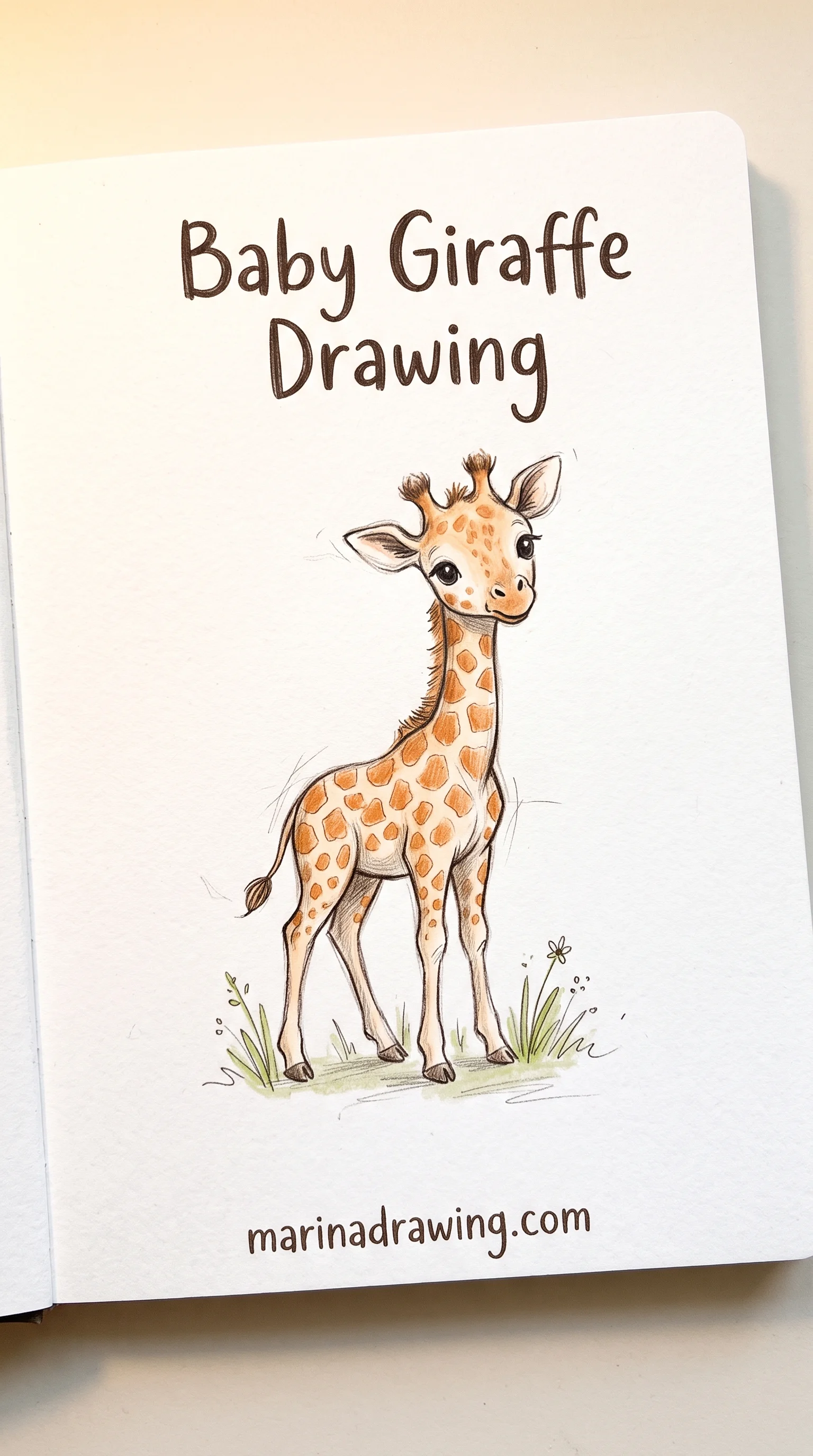
3. A baby giraffe drawing
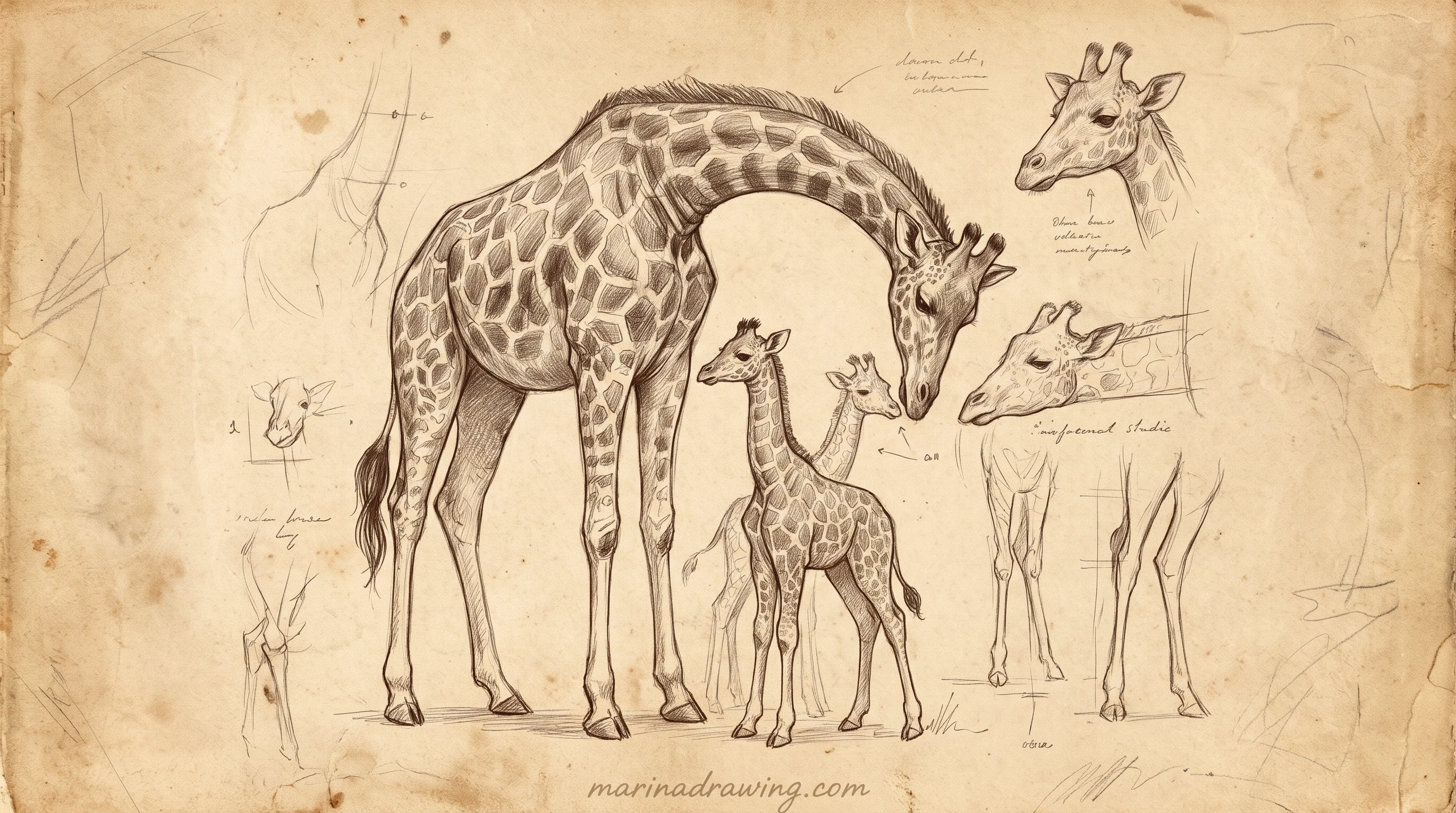
Your calf has the same build as an adult, scaled differently. I never shrink it evenly. The head is relatively bigger, the legs are relatively longer and the neck is thinner and shorter than the body.
I start with the legs. You make them long and thin, with knobby knees, and set them a little apart so the calf looks unsteady. Then draw the body small and compact above them.
You give the baby a short mane of fuzz down the neck, tiny ossicones lying flat, and big dark eyes. Leave the spots a little paler than an adult’s.
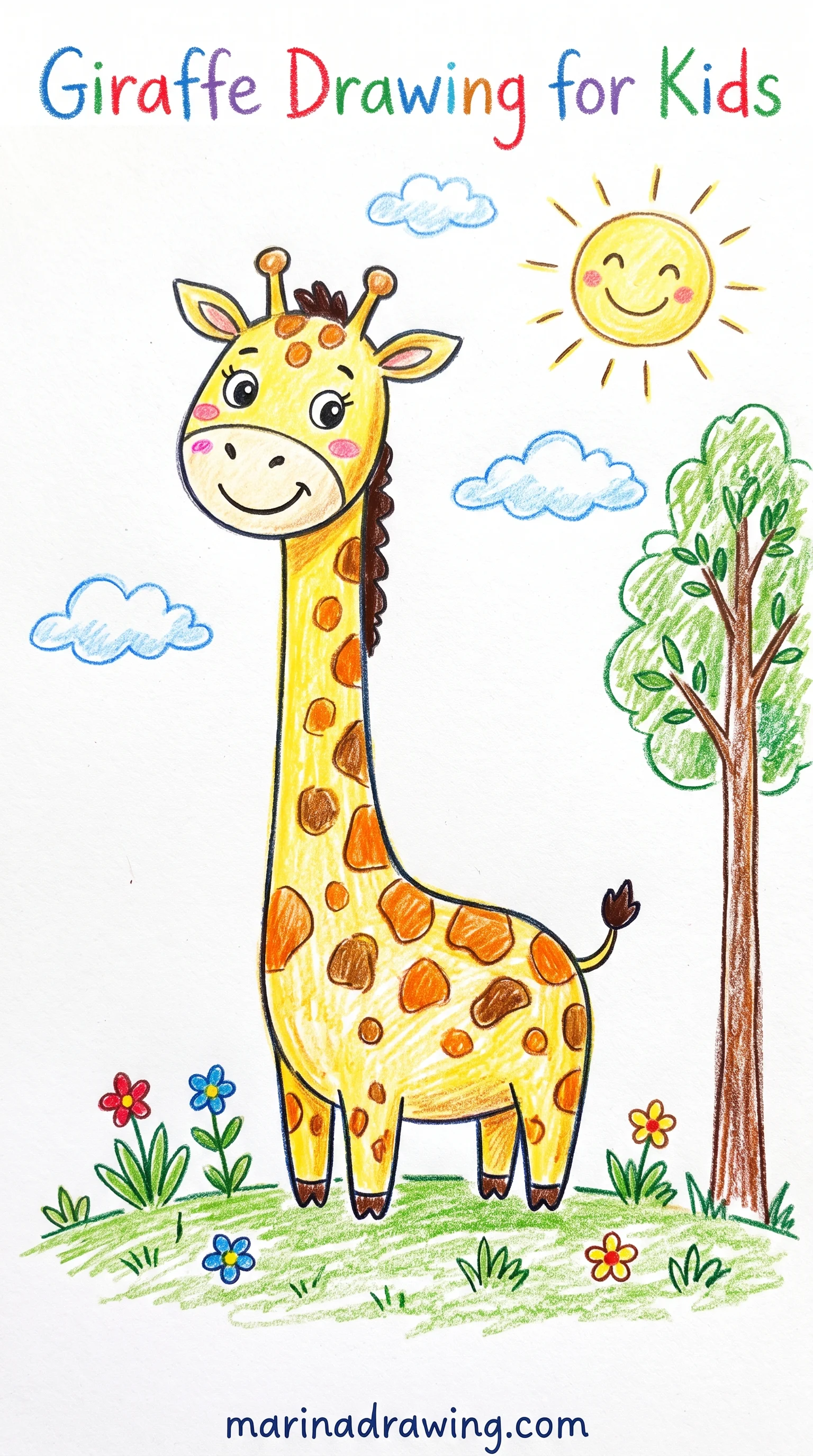
4. A giraffe drawing for kids with simple spots
For a child, strip the giraffe down to shapes they already know: a rectangle body, a long rectangle neck, a circle head, four sticks for legs.
Spots become the whole lesson. You let them draw patches as rounded squares and leave a thin gap of bare paper between each one. That gap is what makes it a giraffe and not a leopard.
Nothing to shade, so it finishes before interest runs out.
5. A giraffe in a winter scarf
This is the same giraffe with the neck given a job. Draw the animal first, then wrap the scarf where the neck meets the body, in two or three curved bands that follow the roundness of the neck.
Because the neck is so long, your scarf can be a long one. Let the loose end hang down the front and curl at the tip, and add a small knitted hat between the ossicones.
If your stripes are straight lines, the scarf looks like a sticker. Curve them around the neck, closer together at the sides and wider in the middle.
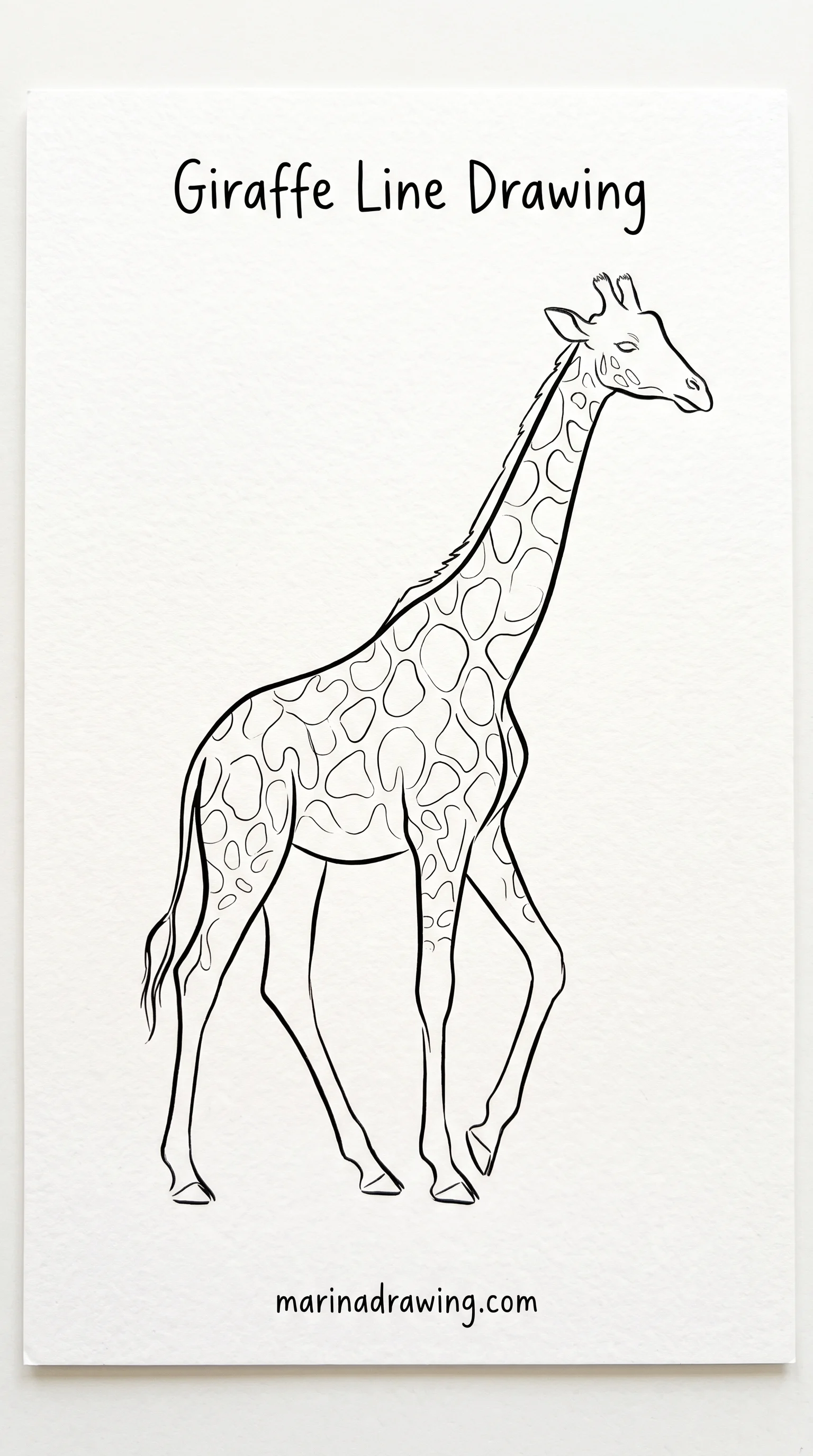
6. A giraffe line drawing
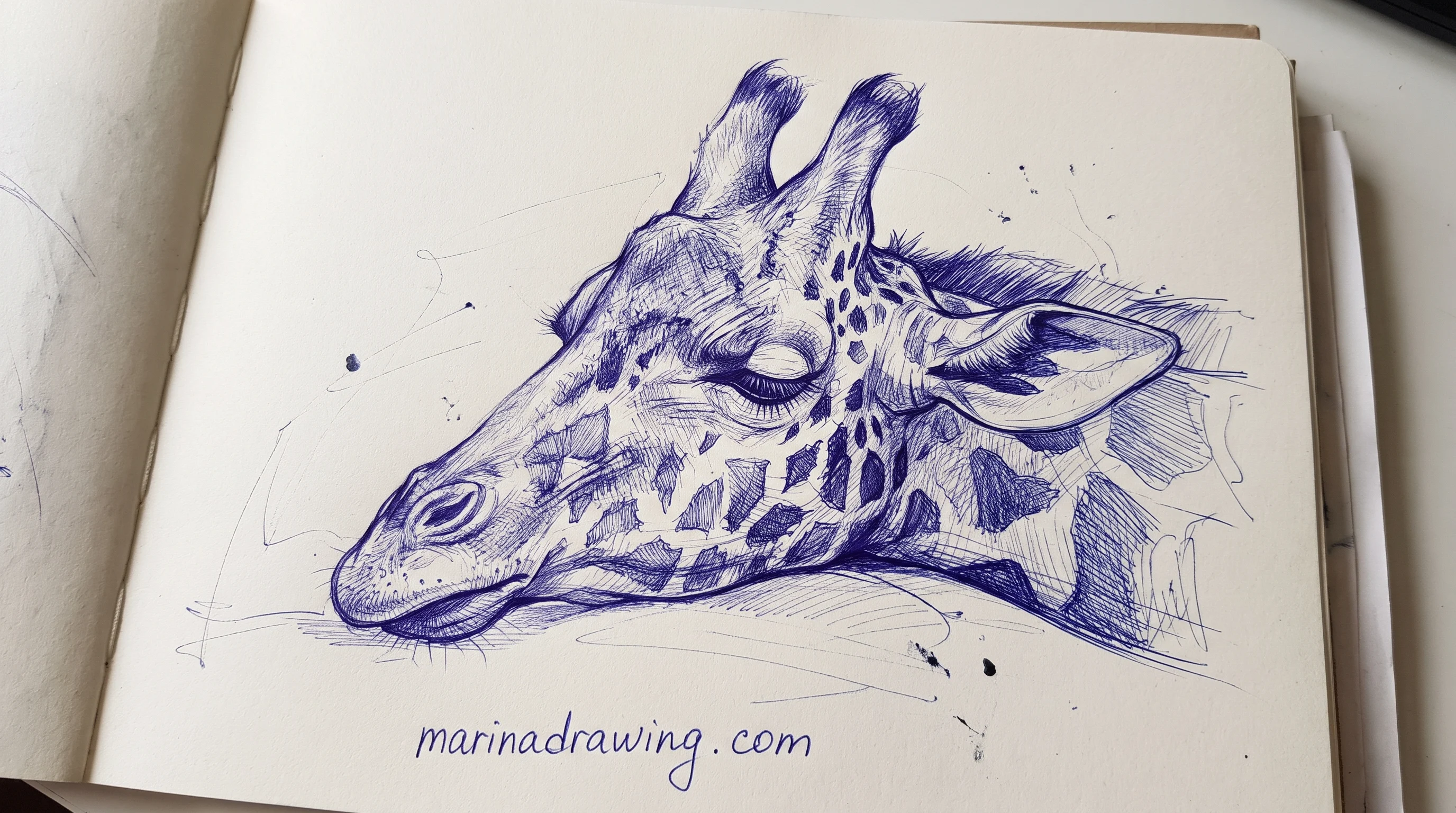
A line drawing has no tone to hide behind, so your proportions carry everything. You use one continuous line for the back, neck and head, then lift the pen only for the legs and tail.
You keep the spots as a few open shapes. Four or five patches on the neck and three on the body are enough, and a line drawing looks better with space around them.
If it still reads as a giraffe with the spots removed, the drawing is done. Markings carry more of the likeness on a raccoon, as these raccoon drawing ideas show.
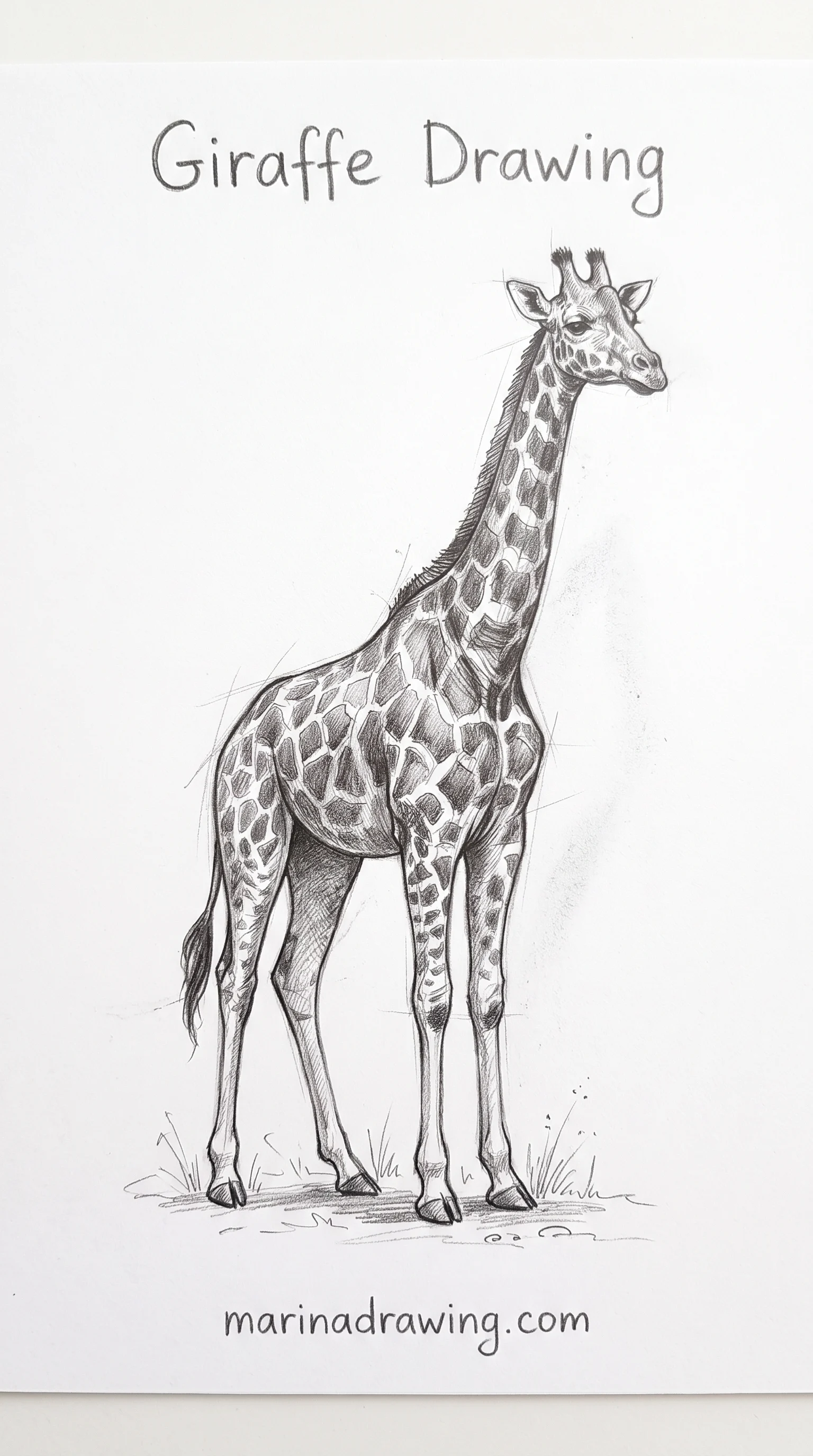
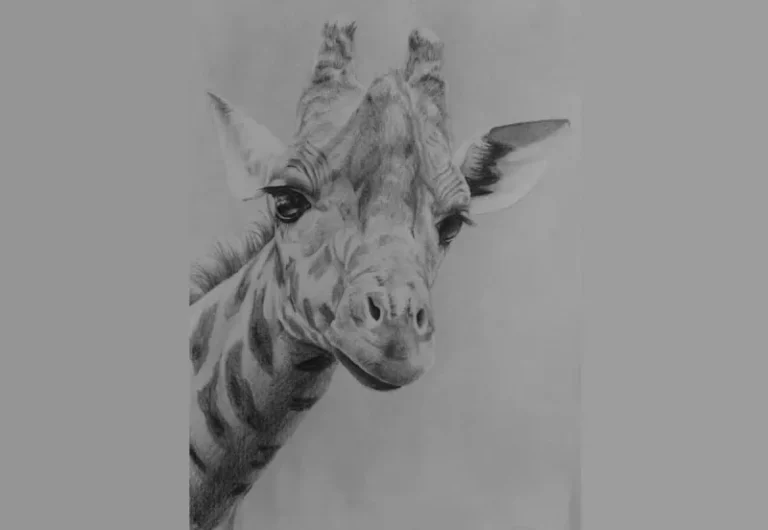
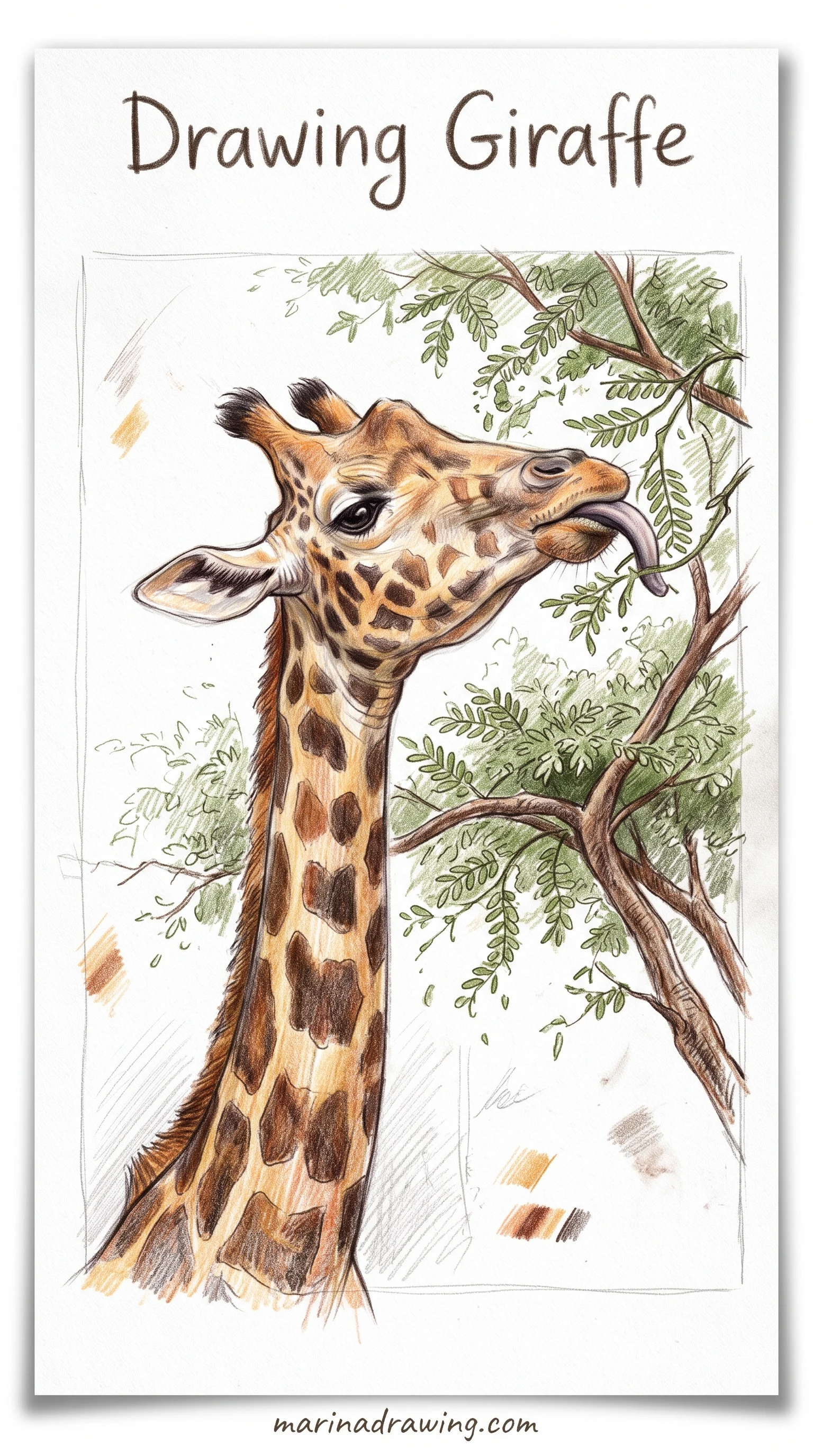
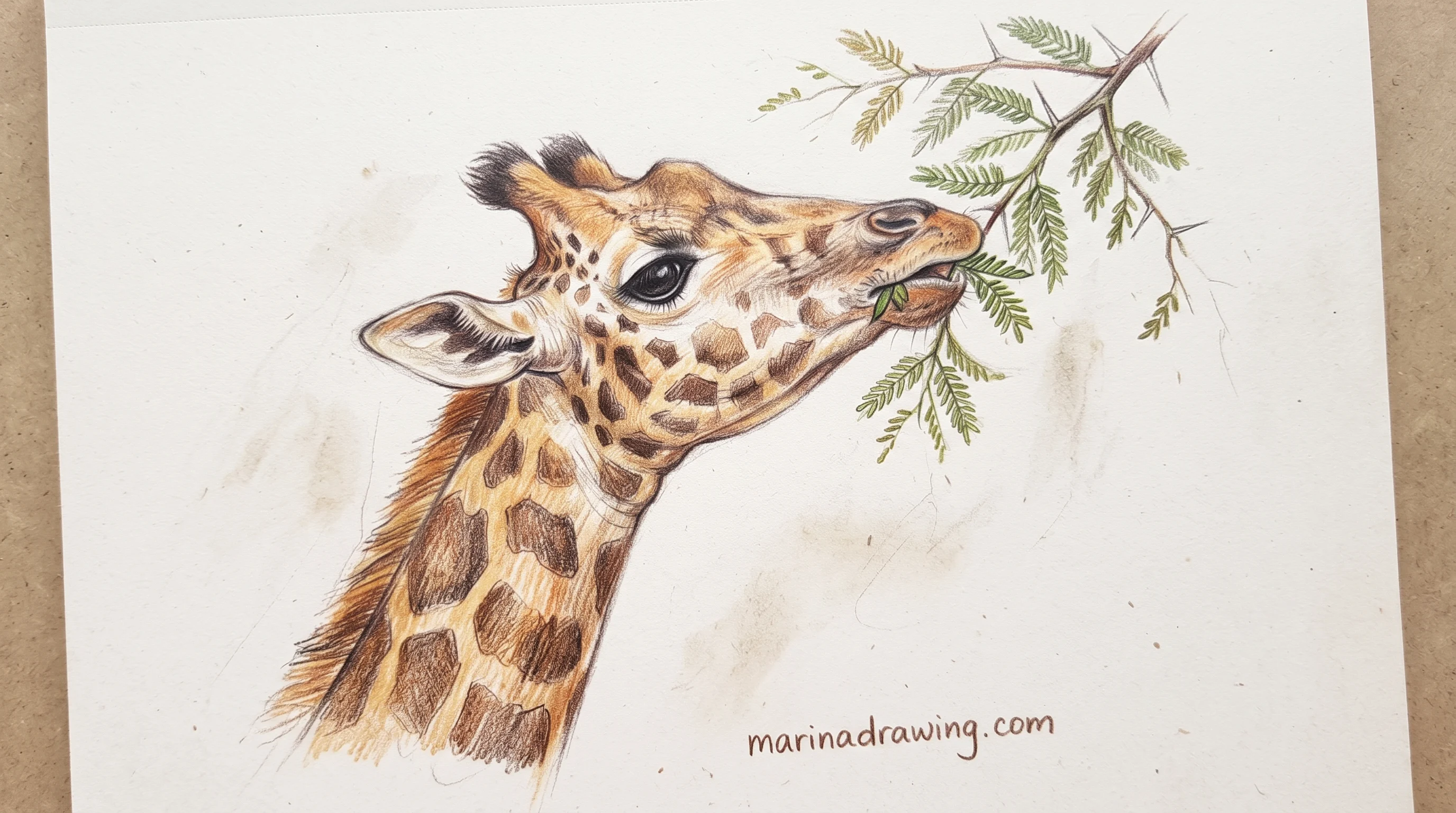
7. A realistic giraffe drawing in pencil
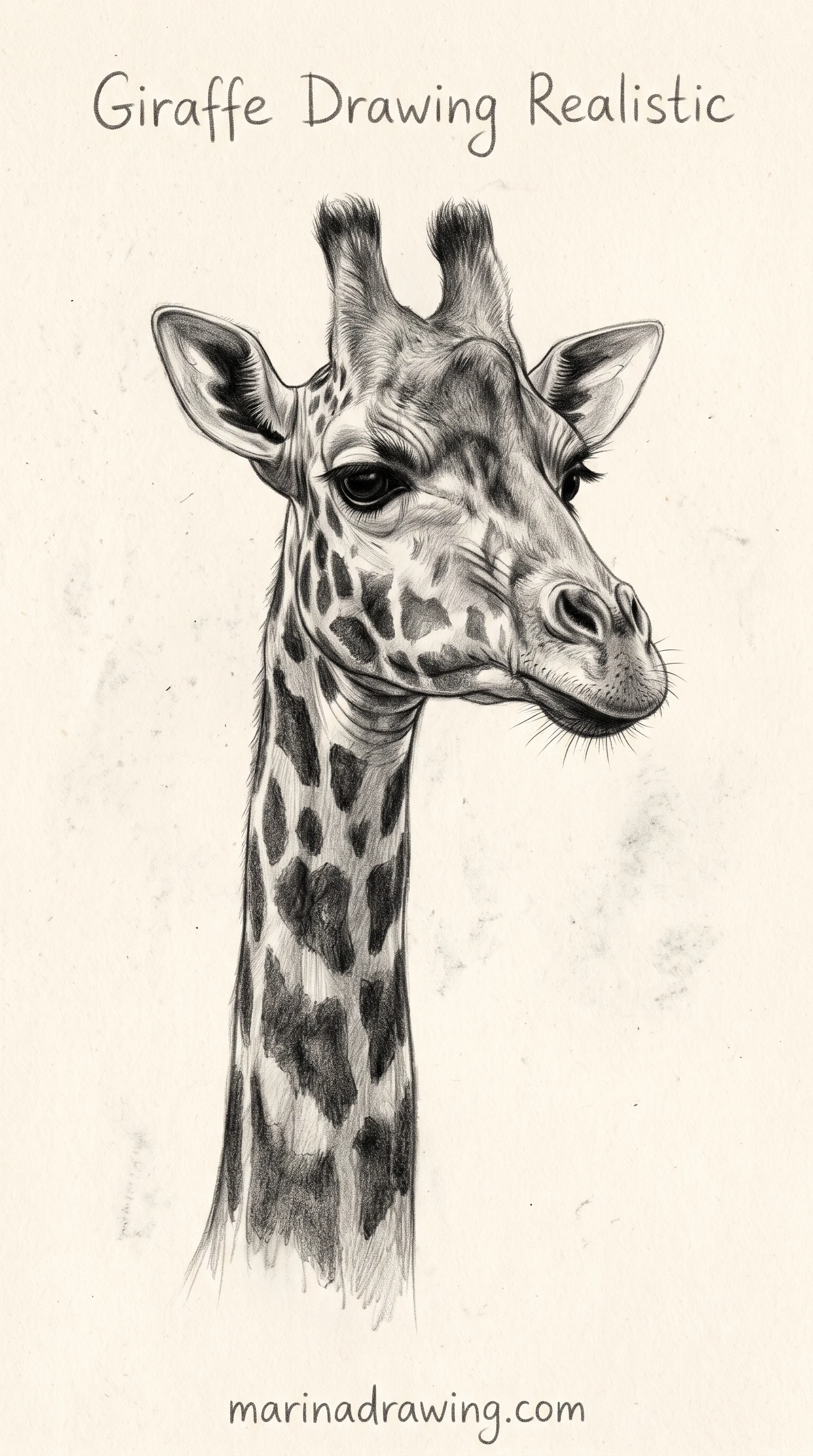
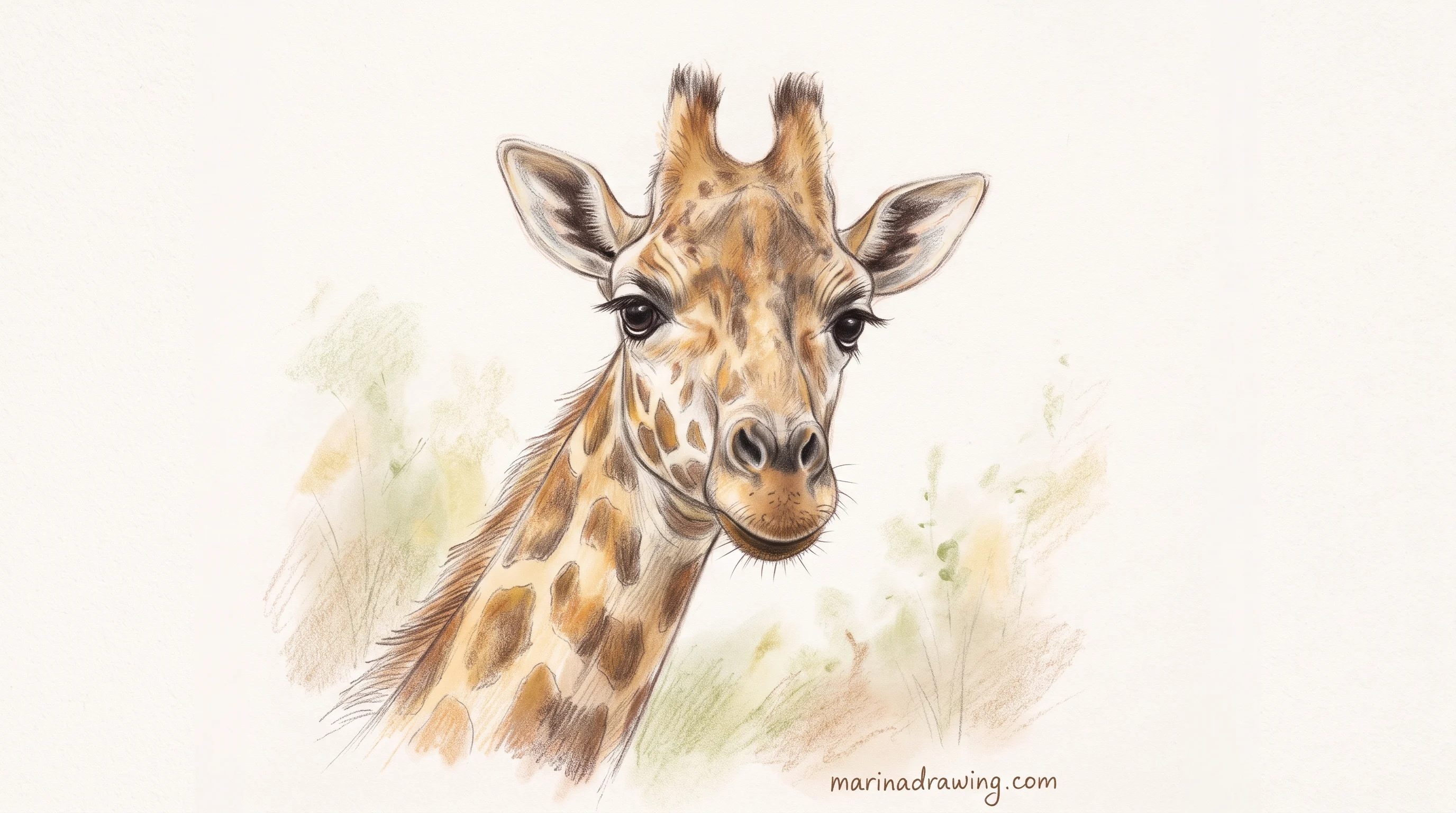
The realistic giraffe is the one that needs tone, and I keep this one for last. The coat is not one flat colour: the patches are dark chestnut, a little darker toward the centre, and the thin lines between them are pale cream.
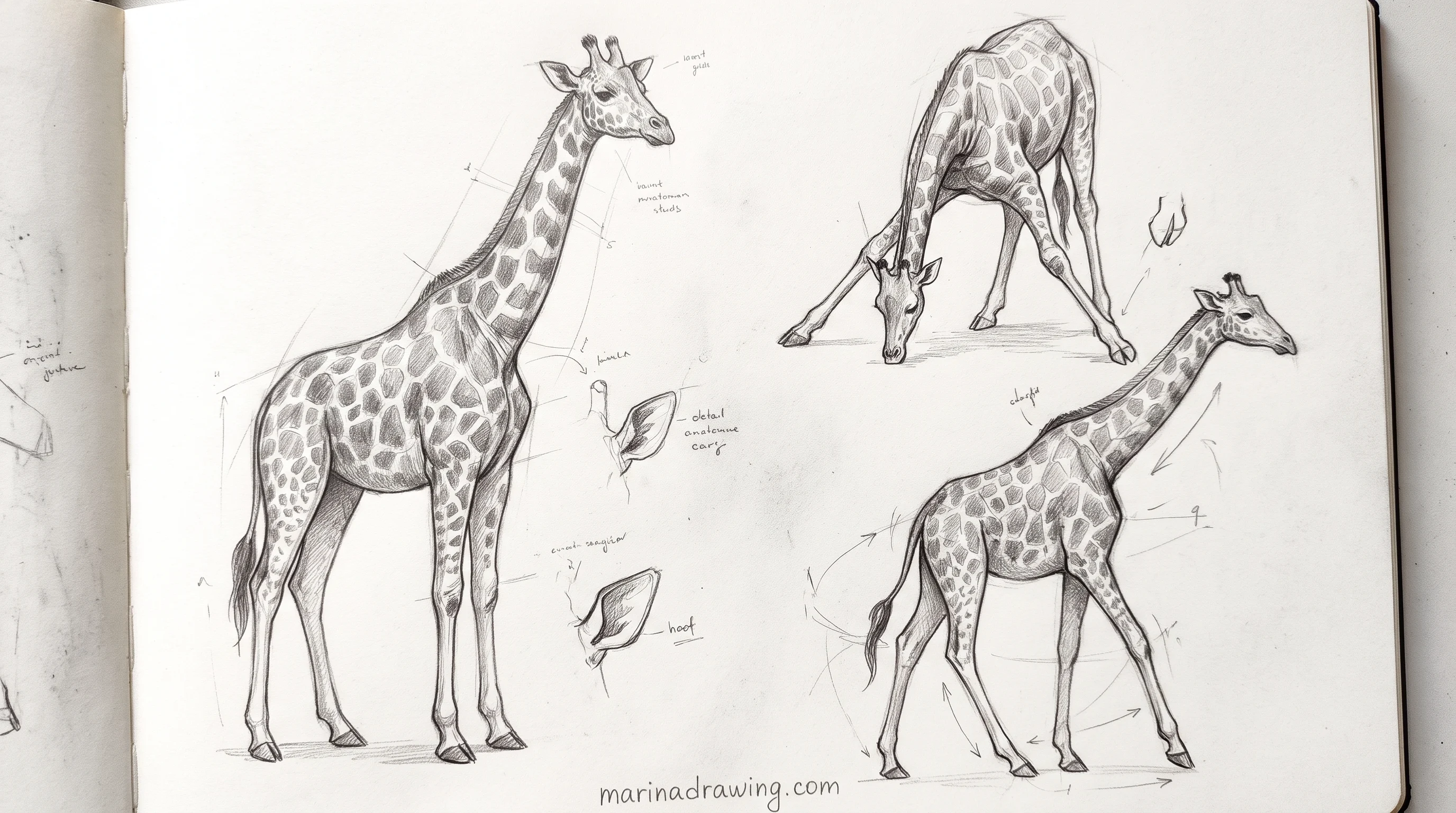
I start with the darkest areas: the patch centres, the eye, the inside of the ear and the hooves. Then a mid tone over the rest of each patch, so it turns with the form of the neck. Last, almost nothing on the cream lines.
The same value habit runs through realistic shading.
Patches get smaller and closer together as they wrap around the neck, and they get smaller on the lower legs, where the coat fades to pale. If yours looks flat, you are missing a dark, not a detail.
This one takes an hour, and it is where knowing the shapes stops being enough. For the fine hair and wrinkles at this stage, the giraffe class is a useful next watch.
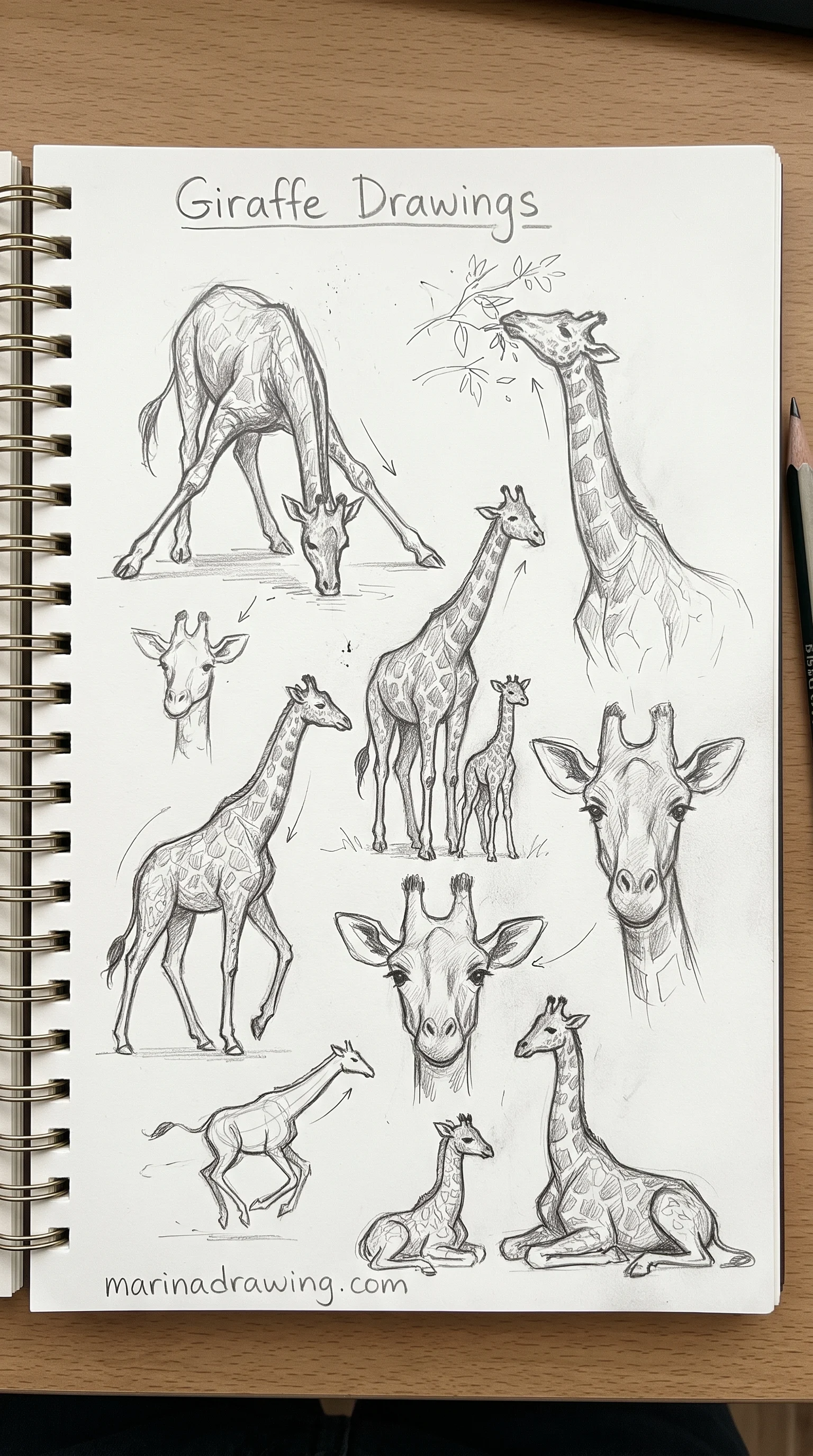
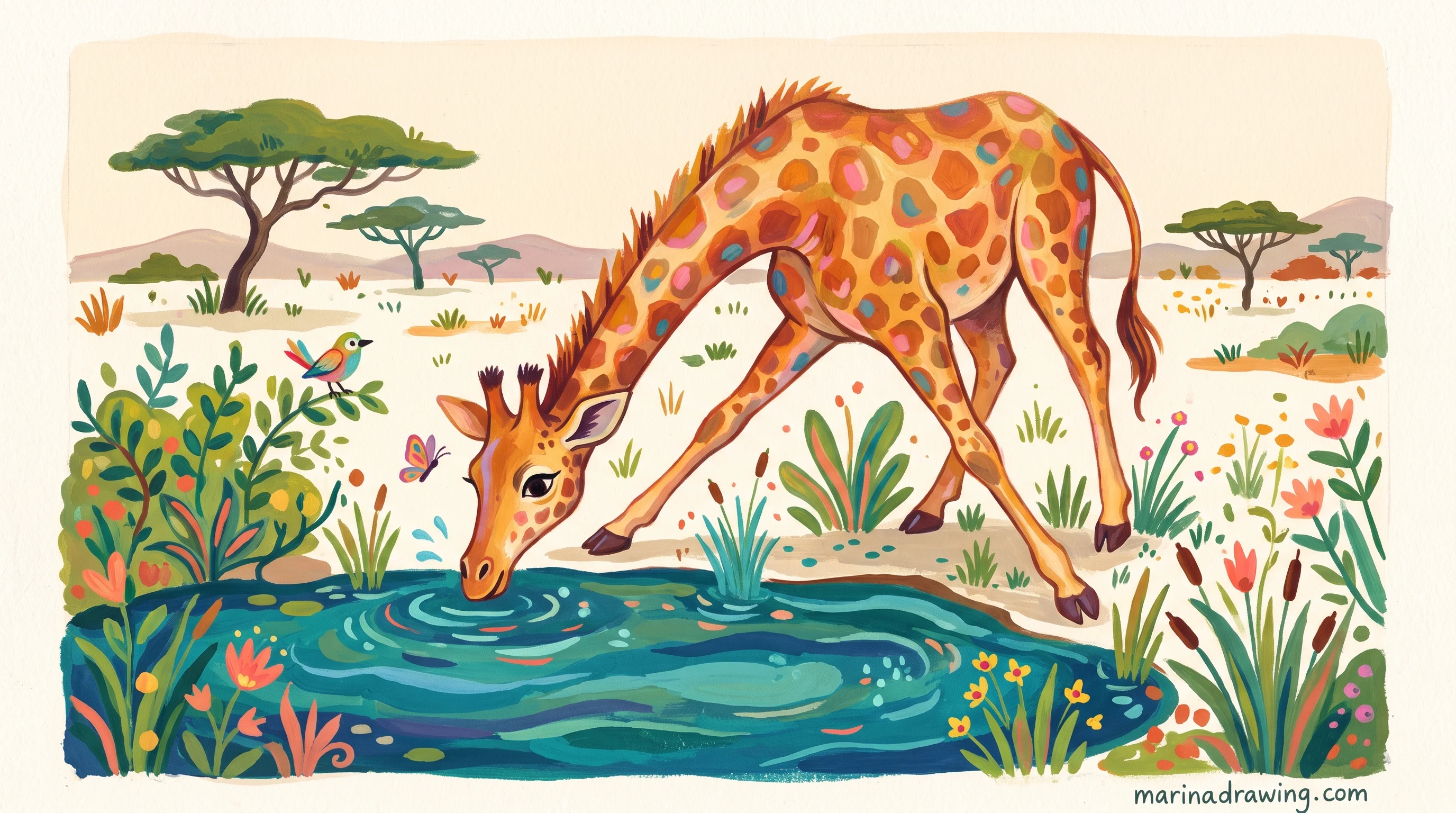
8. A giraffe bending down to drink
Here the neck does something new. A giraffe cannot simply lower its head, so the front legs splay wide apart and bend at the knees while the neck swings down in a long curve.
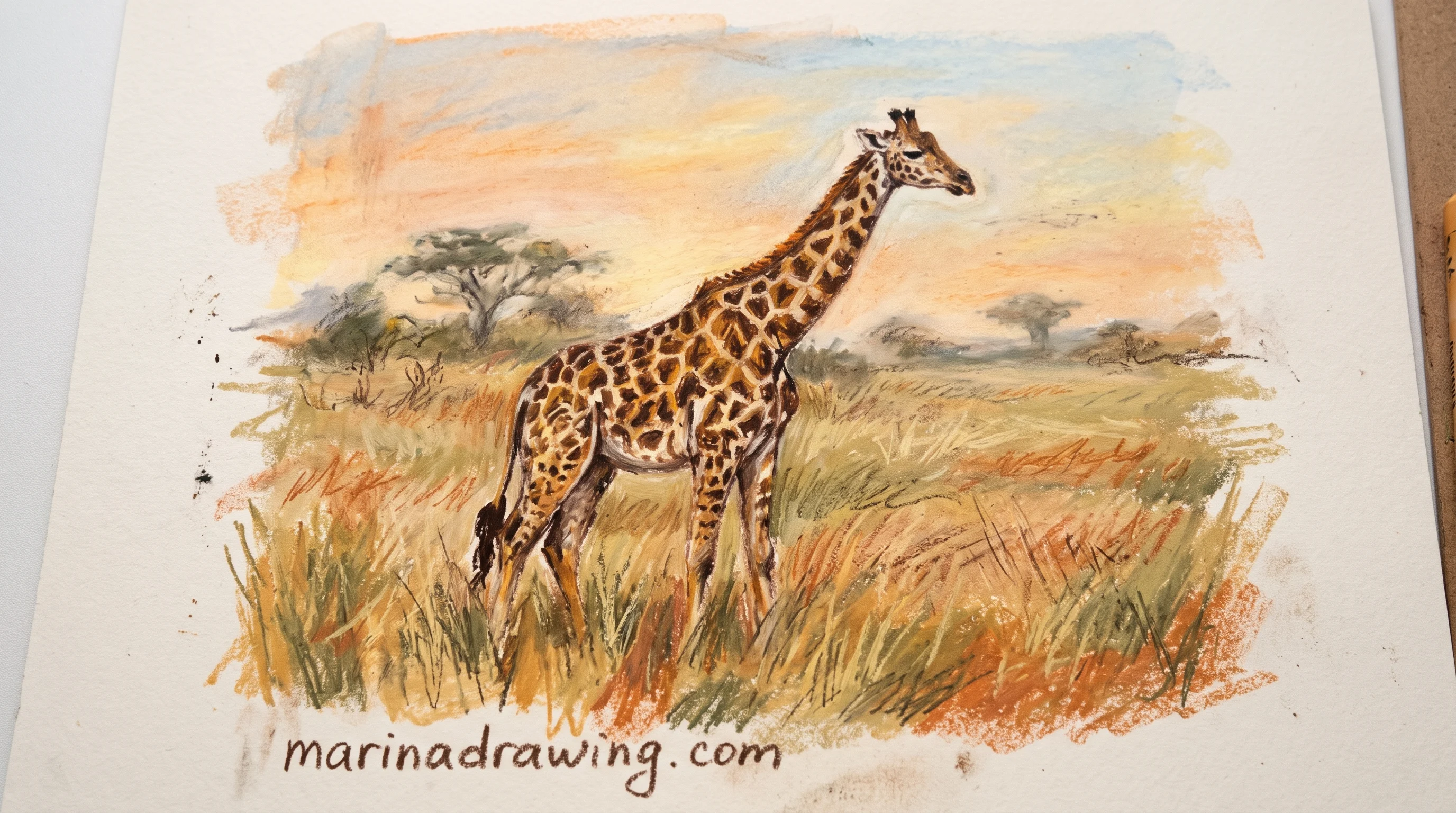
The order matters here:
- Draw the splayed front legs first, because they set the base.
- Draw the body above them, sloping down toward the front.
- Swing the neck down in an S that ends with the head just above the water.
Keep the back legs straighter than the front ones. A giraffe drinking with all four legs vertical looks like a toy being tipped.
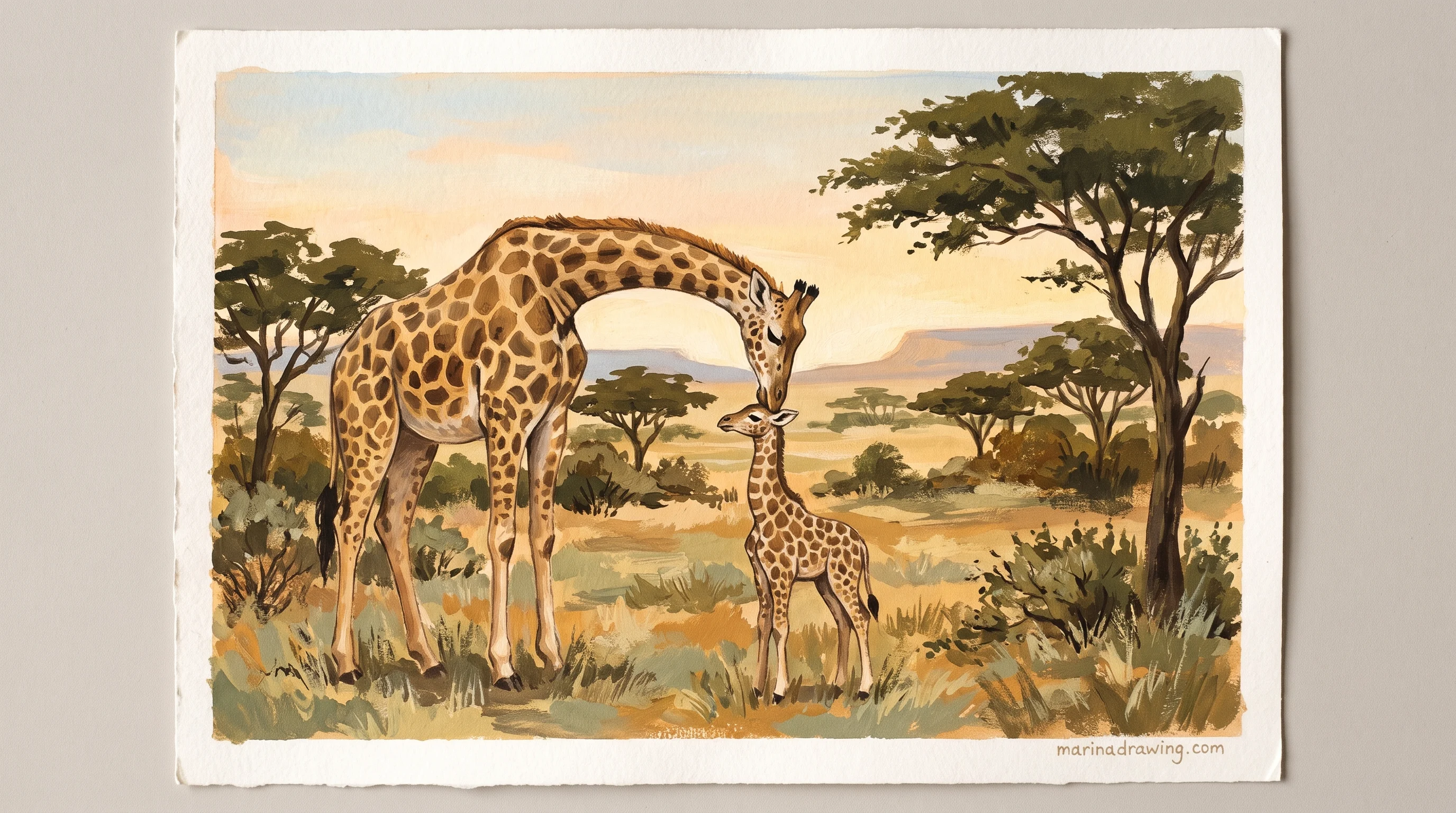
9. A mother giraffe and her calf
Two giraffes are one drawing with a relationship in it.
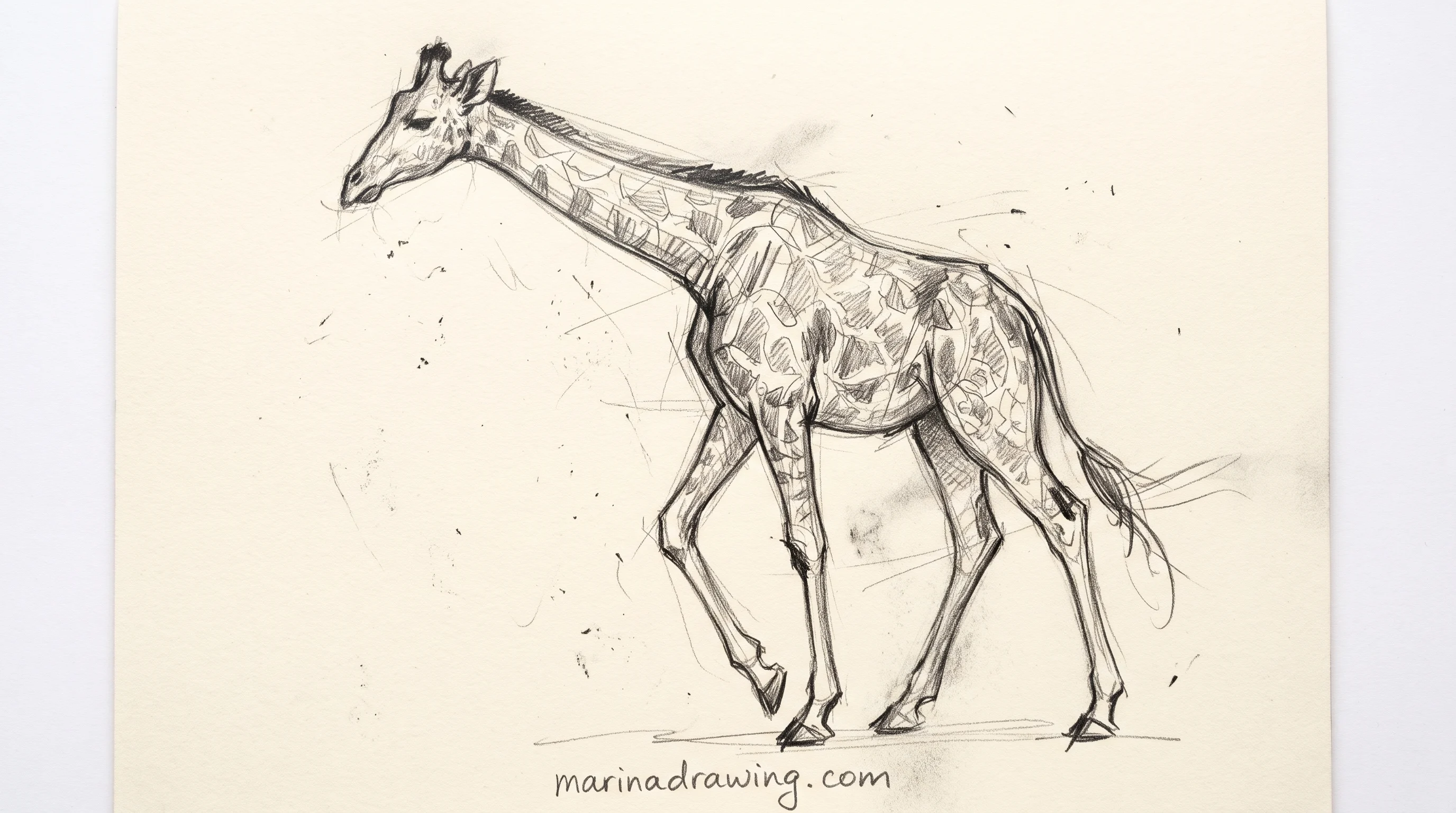
I draw the mother taller and slightly behind, and the calf smaller and in front, with their necks curving toward each other. Overlap the bodies by a third so they read as a pair rather than two separate sketches.
The patches should follow the lean of each body. If both coats are identical, the pair looks copied. Make the calf paler and its patches rounder.
Which mistake did you make?
Put your drawing next to this and read down the left column.

| What you see | What is actually wrong | Your fix |
|---|---|---|
| It looks like a horse | The neck is shorter than the body and the head is large | Make the neck as long as the body and shrink the head to a small oval |
| It looks like a cow | All four legs are the same length and thick | Lengthen the front legs and thin all four to sticks |
| It looks like a leopard | The spots are round dots with wide gaps | Draw patches as rounded squares that nearly touch |
| The neck looks broken | It is the same width from top to bottom | Taper it, wide at the shoulder and narrow at the head |
| The head looks stuck on | It sits level with the body line, pointing straight ahead | Tilt the head forward and let the neck lean back over the shoulders |
If the same row describes every giraffe you draw, your gap is construction rather than practice. That is where a structured start such as the Sketching Basics course, six weeks from equipment essentials to advanced techniques, does more for you than the next ten pages of steps.

Questions people ask about drawing a giraffe
How to make giraffe drawing easy?
Draw three ovals: a long one for the body, a tall narrow one for the neck and a small one for the head. Join them with two smooth lines and add four sticks for legs. Nine marks. Add nothing until that reads as a giraffe to you.
How to draw a giraffe step by step?
Start with the body, then the neck, then the head. Legs and tail come next, and the eyes, ossicones and spots last. Fill in the dark areas after the shapes are right.
How to make a cute giraffe drawing?
Enlarge the head, shorten the neck to about three quarters of the body, drop the eyes low and keep the muzzle short. Round every corner. It is a ratio, not extra detail.
How to make giraffe drawing for kids?
Use rectangles and circles, and let them add the spots as rounded squares with a gap between each. Nothing to shade, so it finishes before interest runs out.
How to make giraffe drawing realistic?
Build the same body, then work in three tones: dark centres of the patches first, a mid tone over the rest of each patch, and bare paper in the thin lines between them. Make the patches smaller on the legs last.
How to make a giraffe drawing with pencil?
Block in the shapes with a light 2B line, lift the guides out with a soft eraser, then build tone in layers. Follow the curve of the neck with every patch.
Which giraffe should I draw first?
The easy three-oval one, then the baby, then the one in a scarf.
Key takeaways
- A giraffe is read by its neck, head and legs. Get those right and the spots barely matter.
- The neck is as long as the body and tapers toward a small head.
- Legs are thin sticks, the front pair longer than the back pair.
- Spots are rounded patches that nearly touch, not round dots.
- Cute is a ratio: big head, low big eyes, a shorter neck.
- The realistic giraffe needs tone, so draw the darks first.
Draw two or three and you will know which row is yours. The same habit works on other animals: the fox, the duck, plain drawing practice.