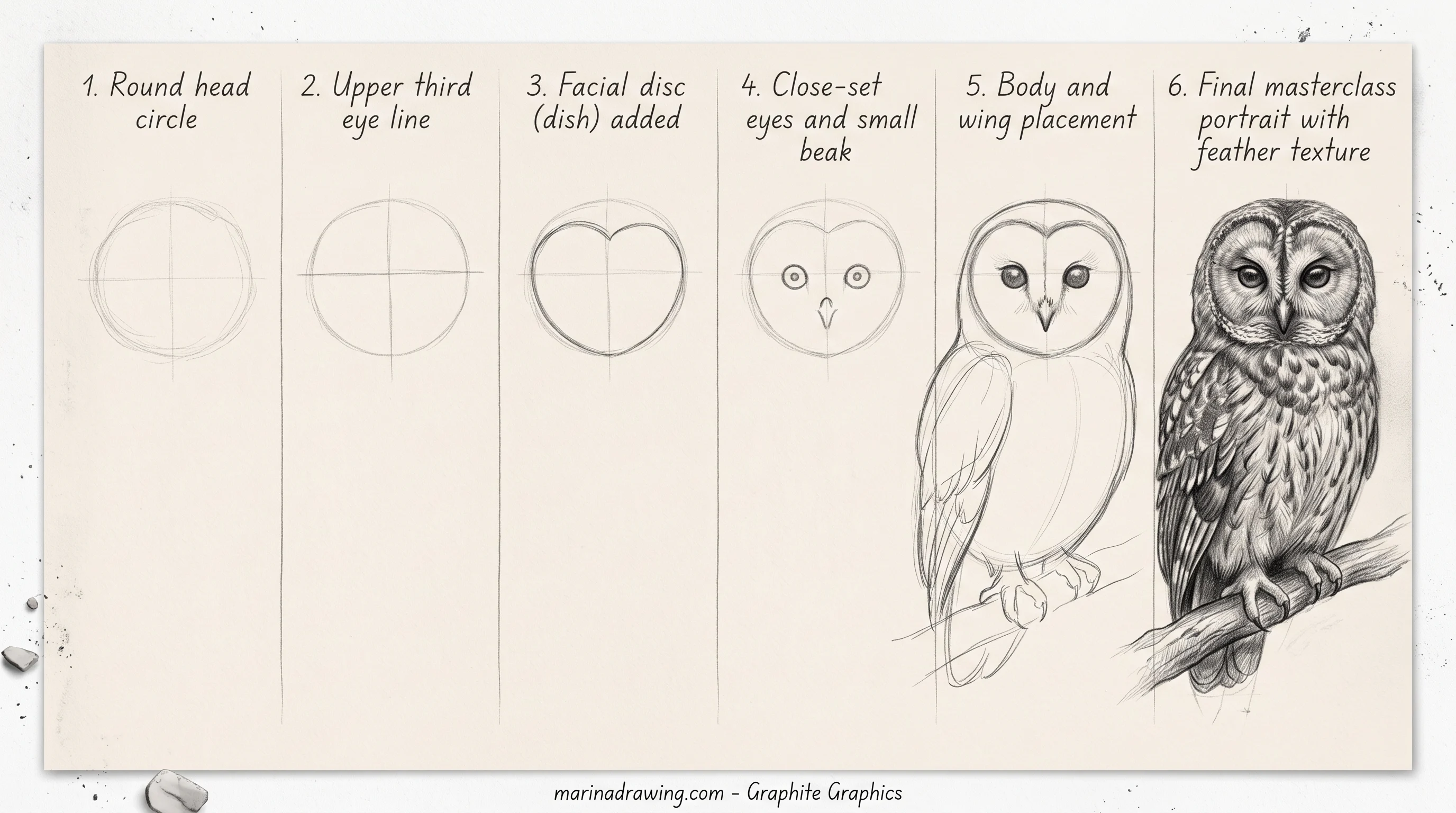
An owl is a round head with a dish carved into the front. That dish is the facial disc, and it is why an easy owl drawing reads as an owl when it is five lines long. If yours came out a cat with a beak, your lines are not the problem: the disc was never drawn.
An owl reads as an owl because of the flat plate around its eyes, not the tufts on its head.
Quick answer: circle for the skull, eye line across the upper third, a shallow dish on the front of the face. Both eyes inside the dish, forward-facing, almost touching. Beak between them, small. Then pick your owl from the eight below.
The facial disc makes the owl, not the ear tufts
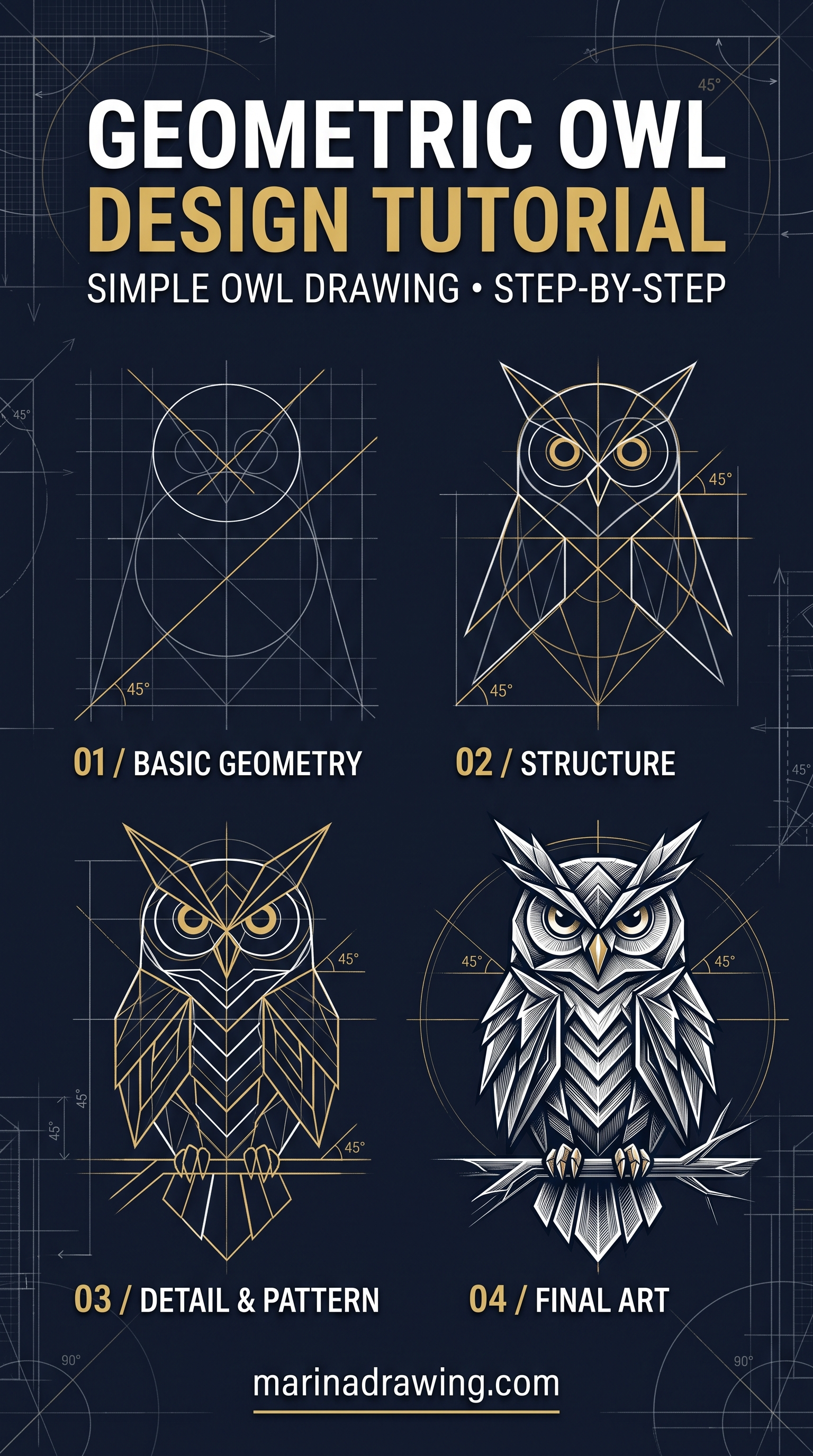
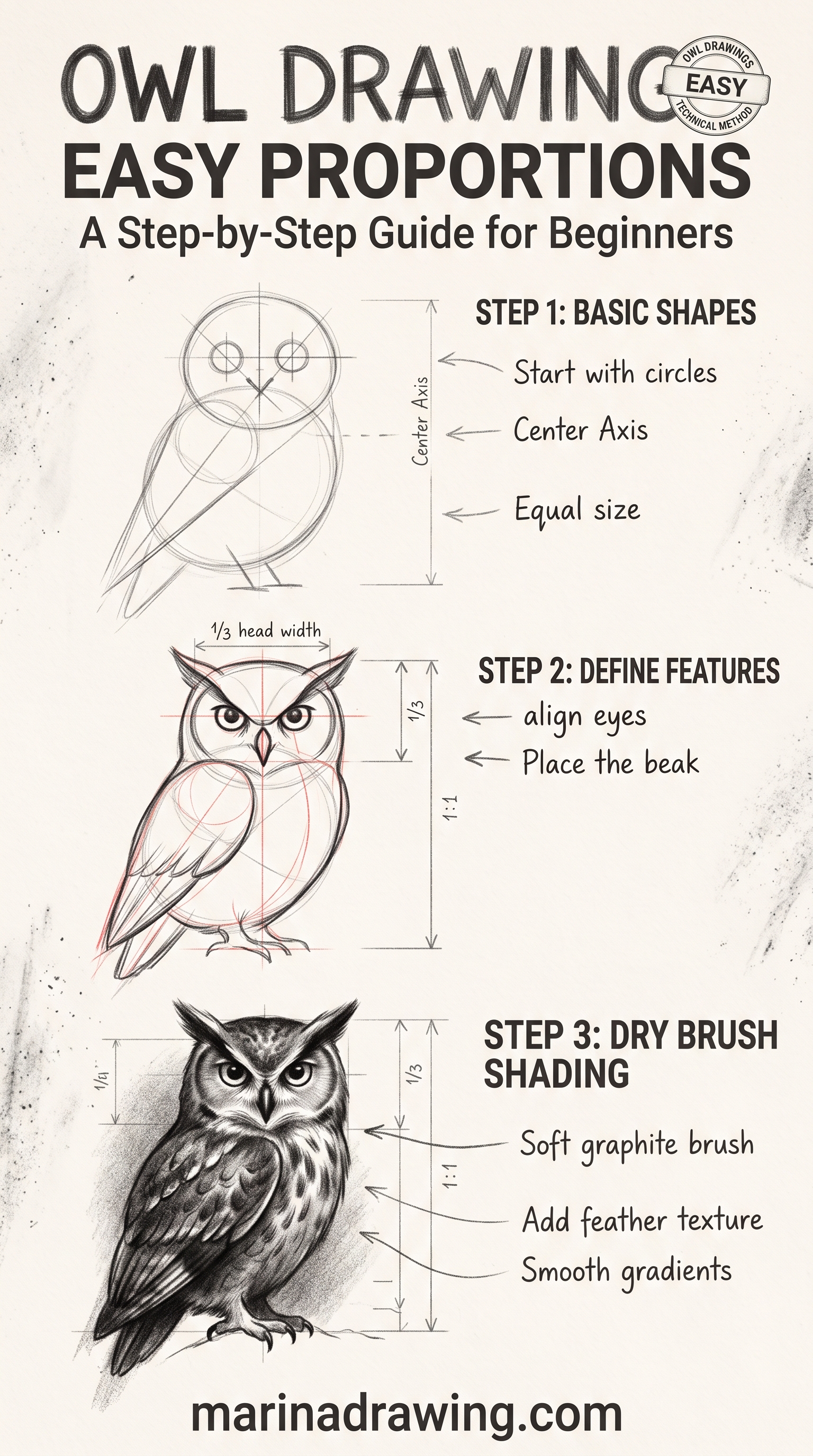
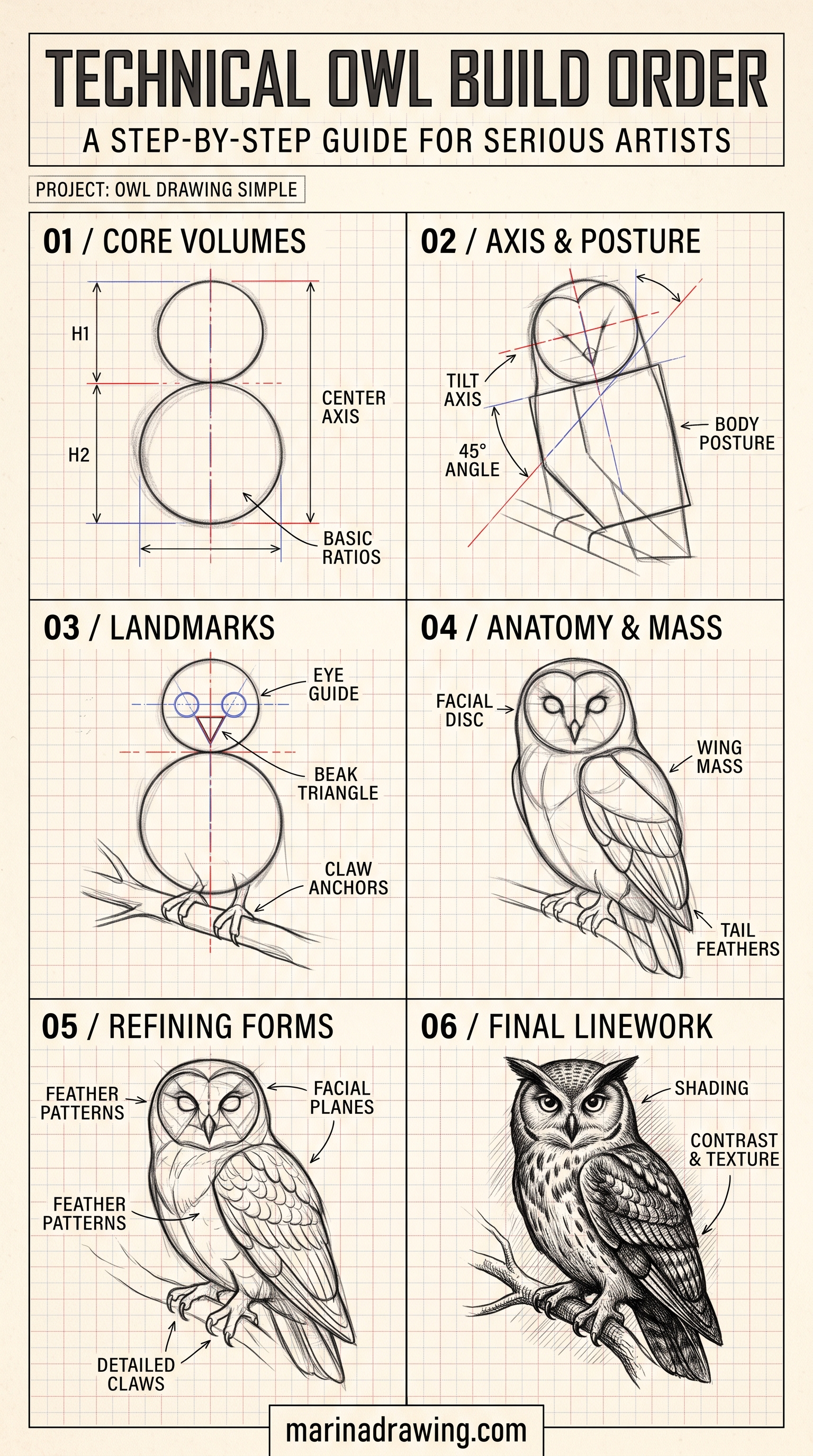
Every owl here starts with three marks, light enough to move.
- The circle. The skull, and on an owl it really is round.
- The eye line. Horizontal, across the upper third. Across the middle and the forehead vanishes, which is what turns your bird into a cat.
- The dish. A shallow curve across the skull, dipping below the eye line and closing under it. A wide circle on most owls, a heart on a barn owl.
Both eyes go inside the dish, on the line, facing straight out: each a third of the skull wide, less than half an eye apart. A cat has no flat face and no forward-set eyes, so a cat on your page means you drew the eyes on the sides.
Beak last and small, a triangle ending level with the eye bottoms. Long and you have a parrot. Check both ratios while your pencil still lifts off, or a structured pencil drawing programme drills them instead of listing them.
You decide your owl in the first three marks. The rest fills in a decision you already made.
Where owl drawings go wrong
Seventeen pages measured, four stood.
| What I looked for | Pages that had it |
|---|---|
| A section on what goes wrong | 0 of 4 |
| The disc or eye spacing given as a number | 0 of 4 |
| A wrong owl drawn beside a right one | 0 of 4 |
| More than one owl on the page | 0 of 4 |
Every number there was minutes and sheets, none about disc size. And every page draws one owl, though demand splits: barn, snowy and cute owls are searched separately.
Three mistakes account for most of it:
- No facial disc, just two eyes on a round head.
- Eyes too far apart, near the edges of the skull.
- Ear tufts drawn as pointed cat ears on top.
None of those four pages names any of them, and all three are settled in your first minute, which is why another set of steps rarely helps you. Same trap on the cute lion and the panda.
What you actually need
- A sharp 2B pencil for construction and tone.
- A fineliner or ballpoint for the lines you keep: the pen is what finishes the simple versions.
- Printer paper and a soft eraser.
- Three coloured pencils for the colour owl below. Three, not twelve.
Buy a graded set before you can place a facial disc and your evening turns into sorting. An app smooths your line and leaves your construction as wrong as it was, the same trap as in beginner drawings.
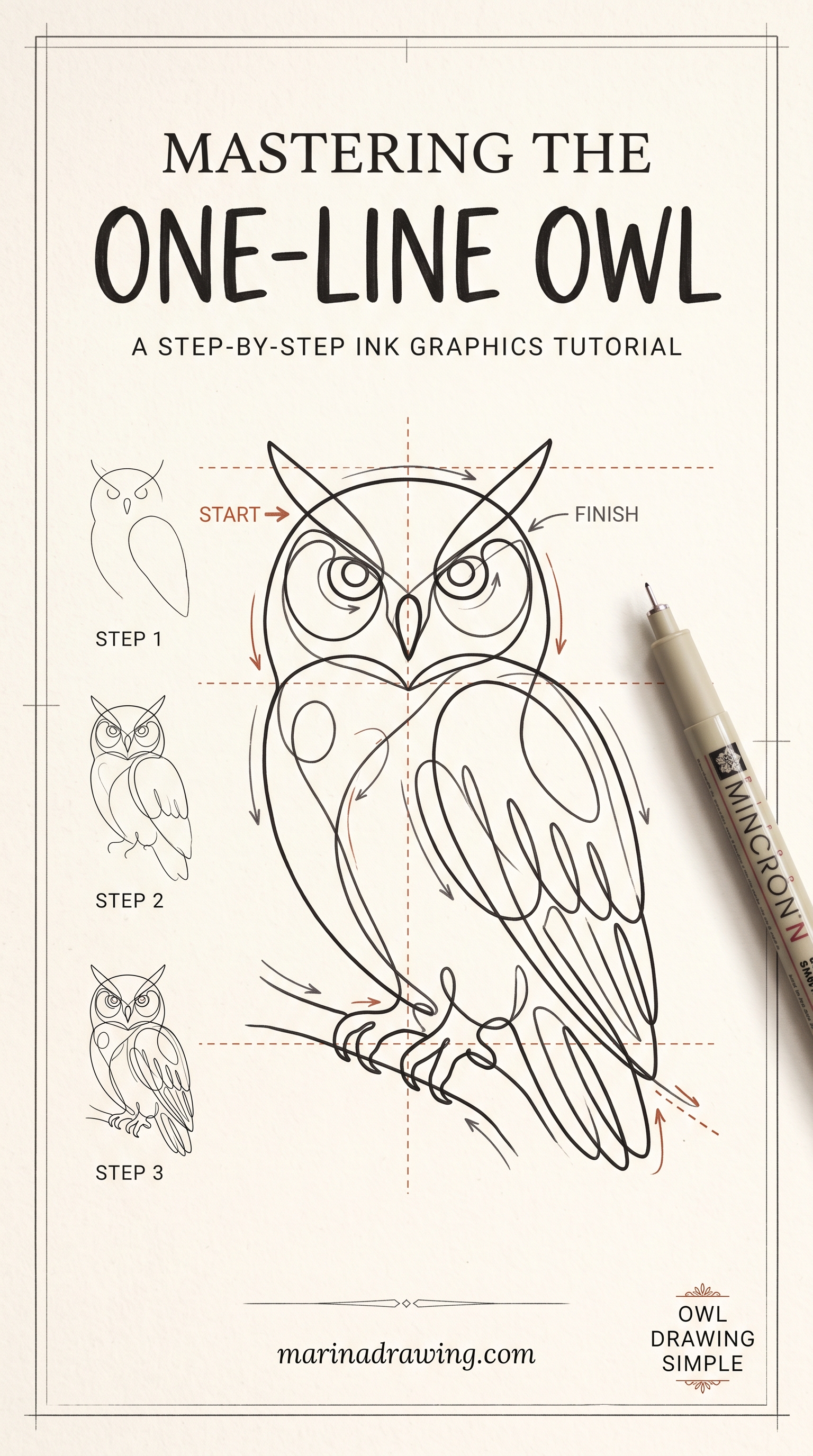
1. Owl drawing simple: the five-shape version
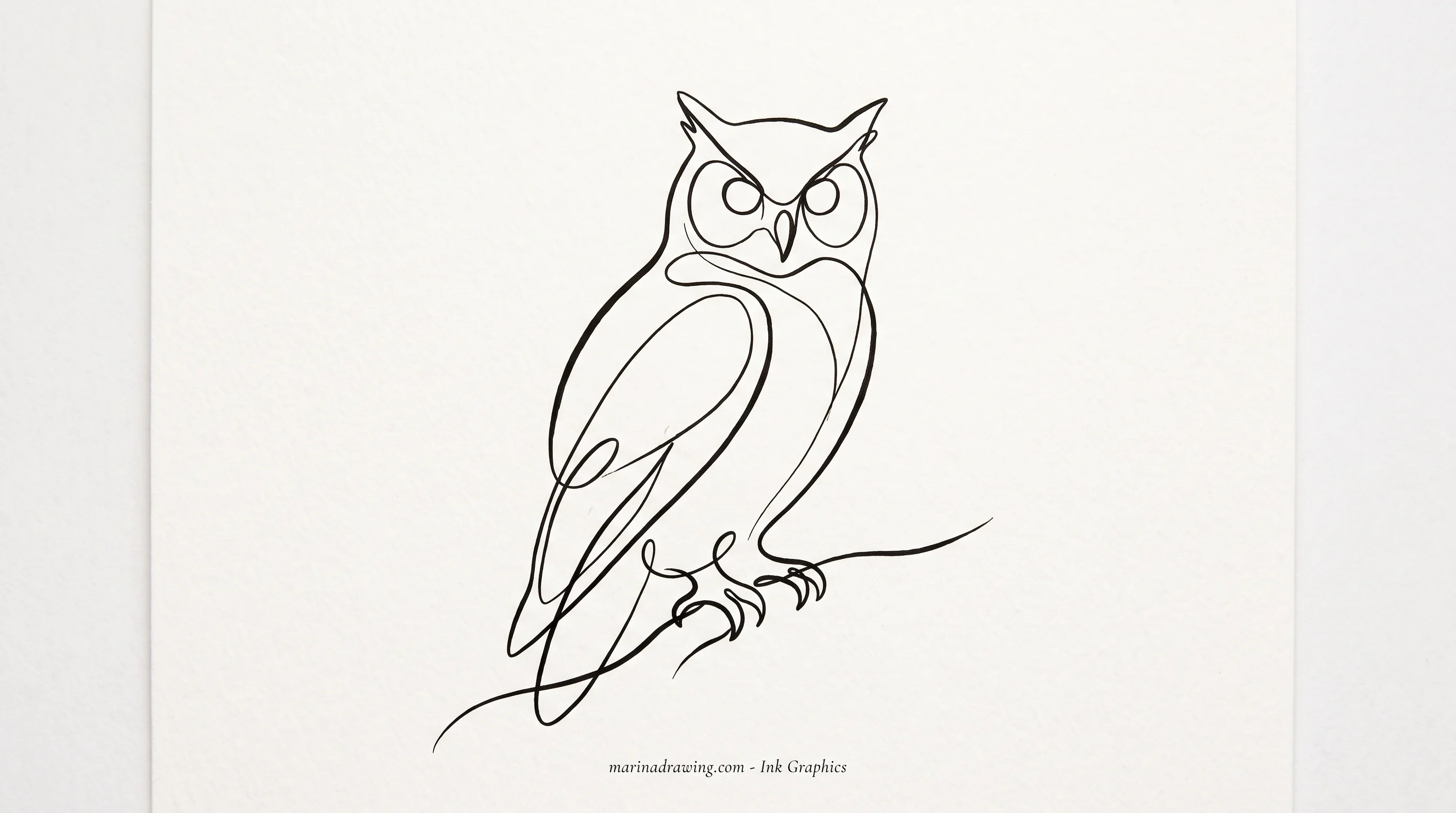
Draw this one first, under a minute: head circle, wider body with no neck, shallow dish across the upper front of the head, two big circles inside it, small triangle between them.
Five shapes and you can read it across the room. Draw it five more times, moving your eye line each pass: you find the height that works by seeing the one that stops working. Same drill as in drawing practice.
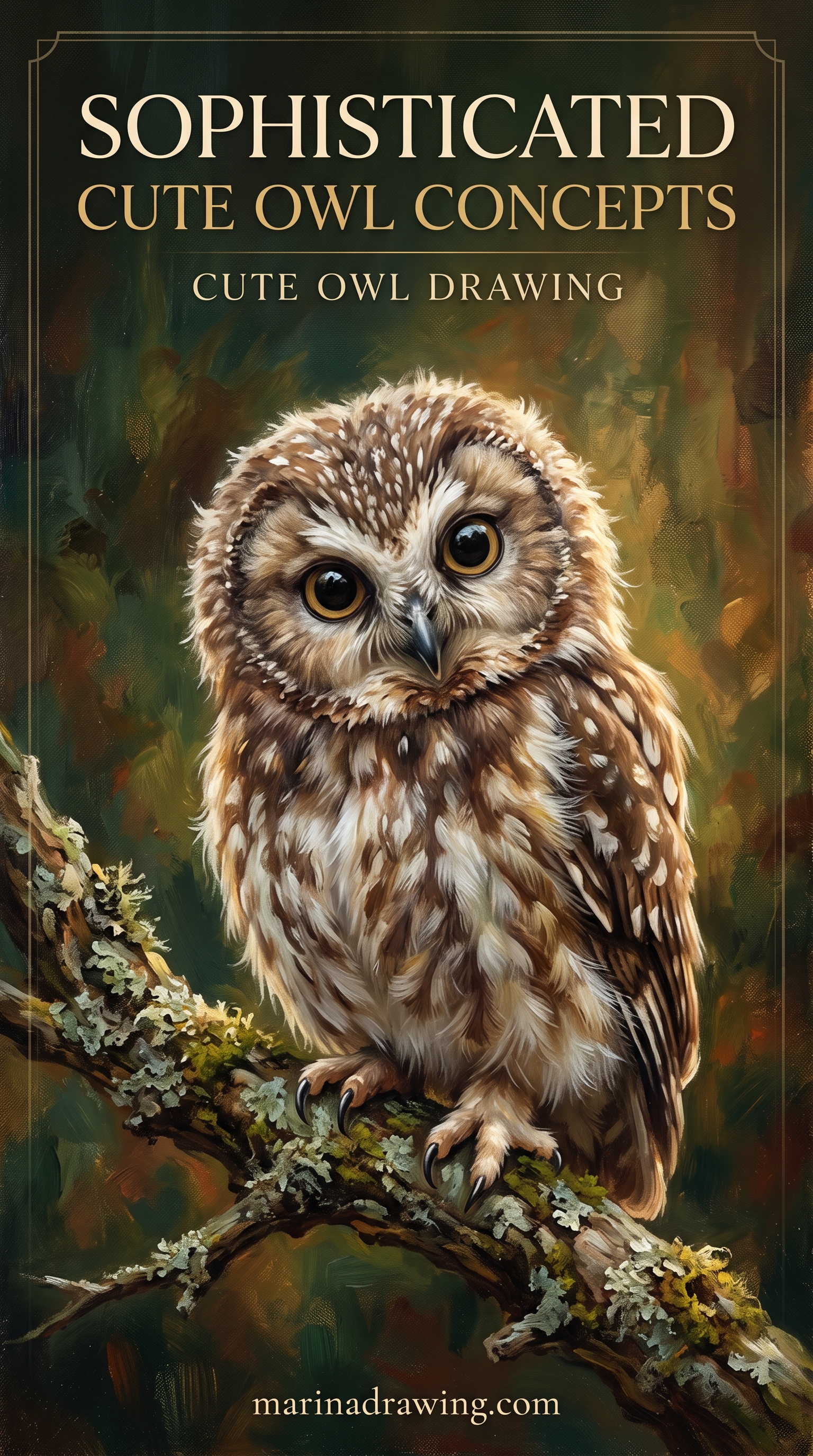
2. A cute owl, front on
42 hours of pencil drawing training, lifetime access
The video course I point plateaued students to — full lessons on portraits, hands, and realistic shading, not another short tutorial.
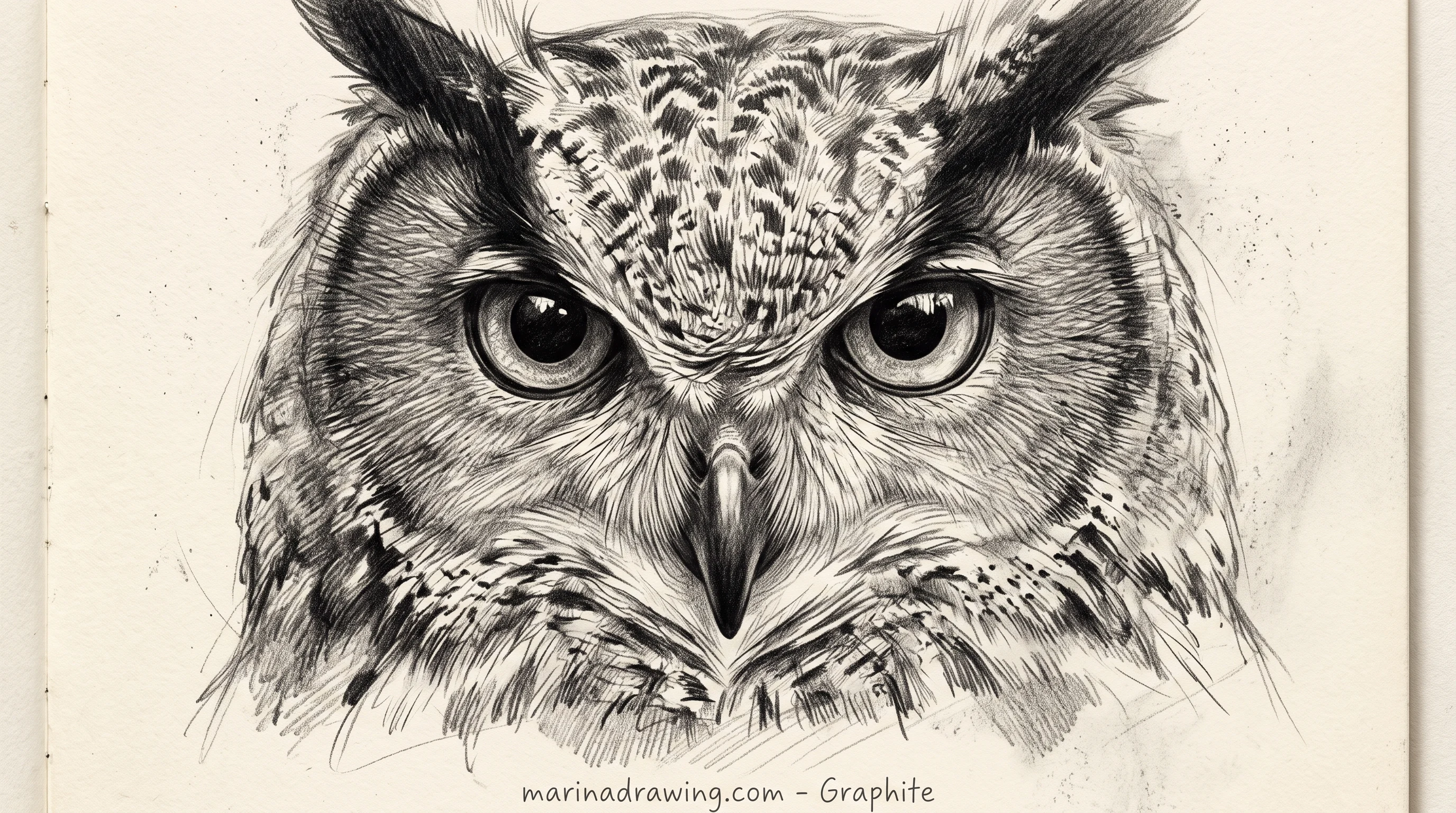
Cute is a ratio, not a style. Enlarge both eyes past half the height of the face and push them lower so the forehead grows: that is how you get the cutest owl on the page. Small eyes set high read as an adult, which is never what you mean by a cute owl drawing.
Keep the beak tiny and leave a crescent of untouched paper in each eye: that highlight does more work than the rest of the face. Body an egg, wider than the head. A construction course shows you that ratio early.
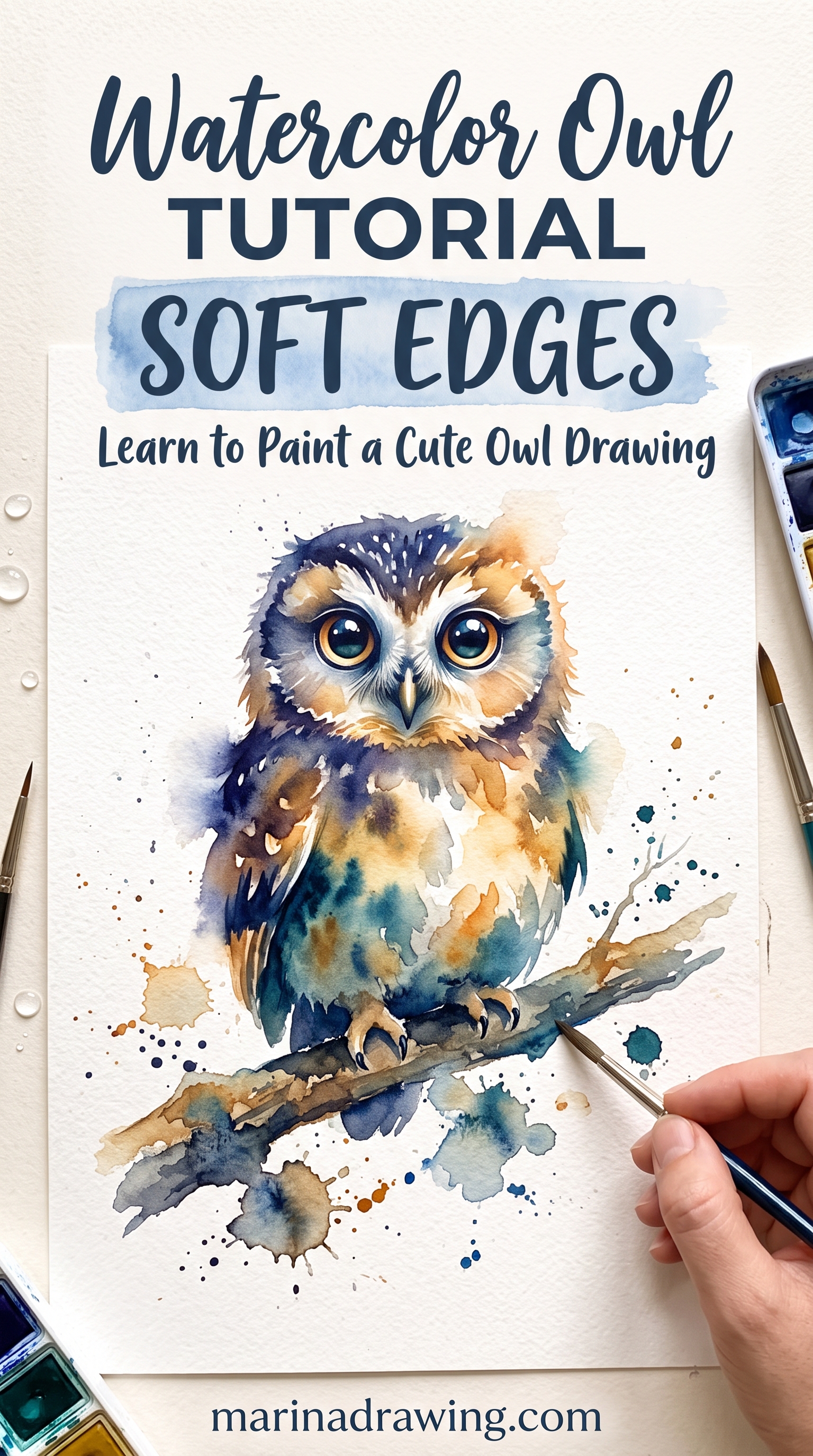
3. An owl on a branch
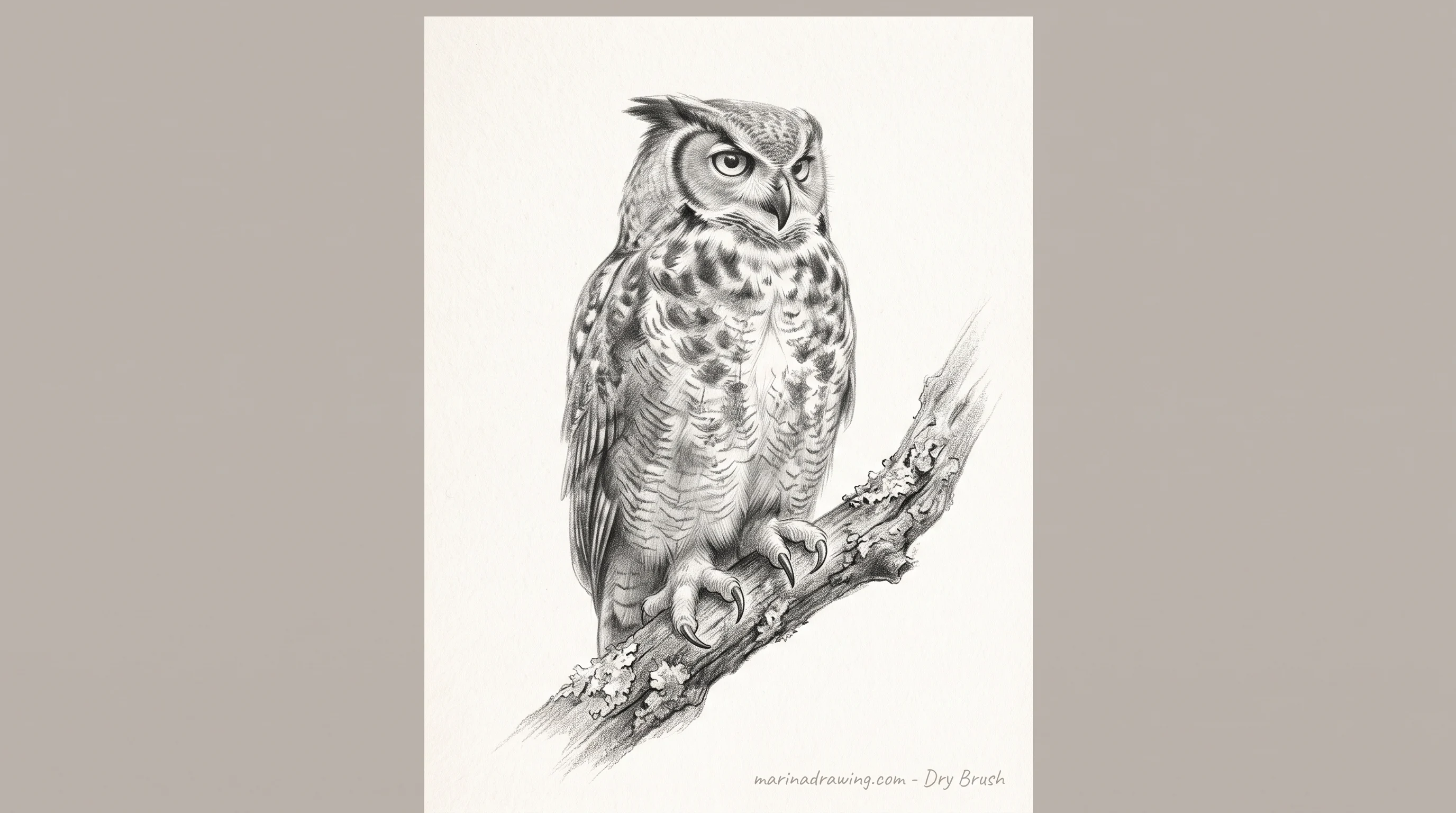
The branch makes the pose, so draw it first: one curved line, a second below for thickness, a twig angled up at either end.
Then your owl sits on it, not behind it. Three curved toes wrap over the front edge and one hooks back; four in a fan looks like a duck, a mistake I made myself more than once. Sit the body low enough that belly feathers bury the legs.
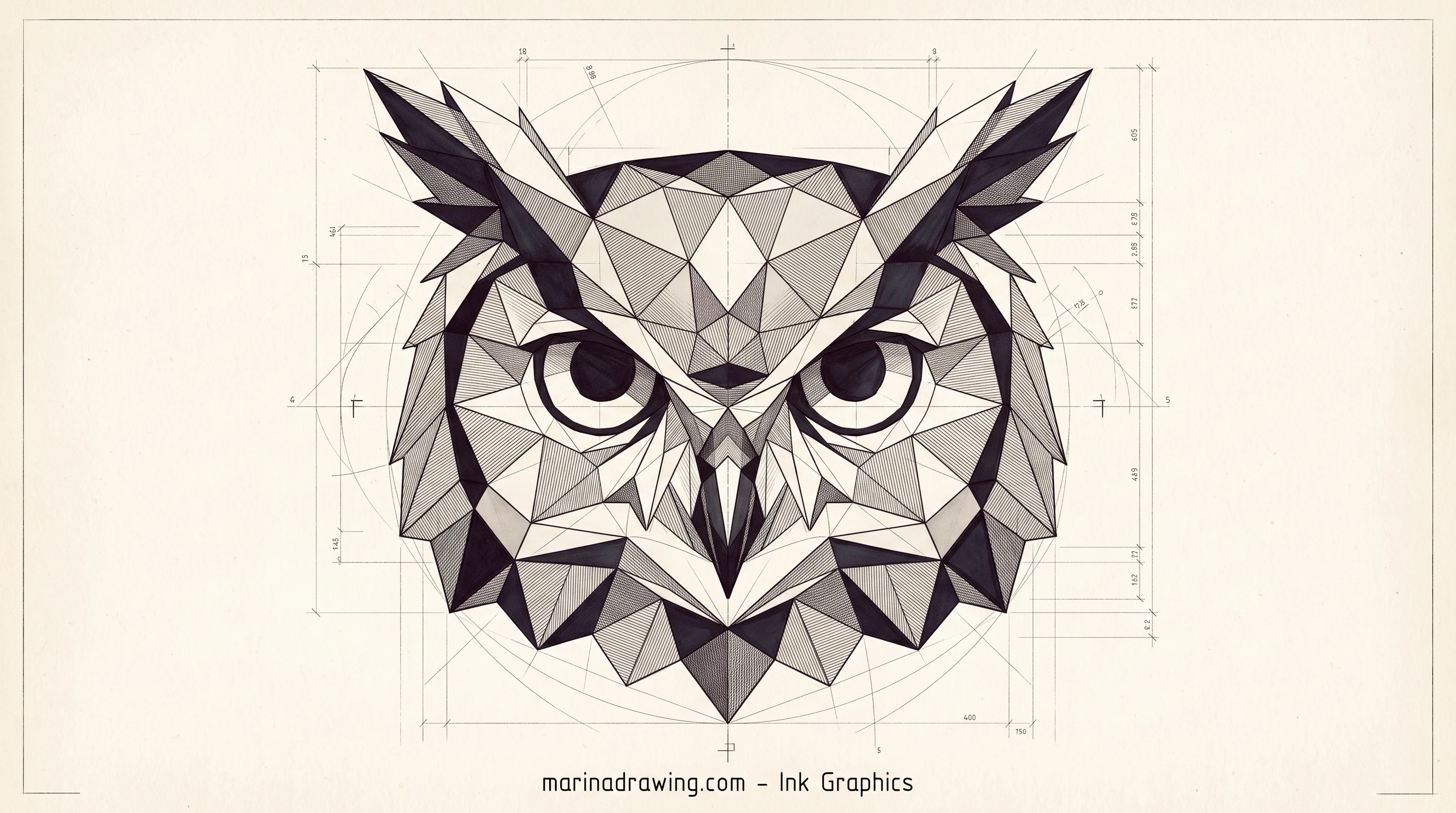
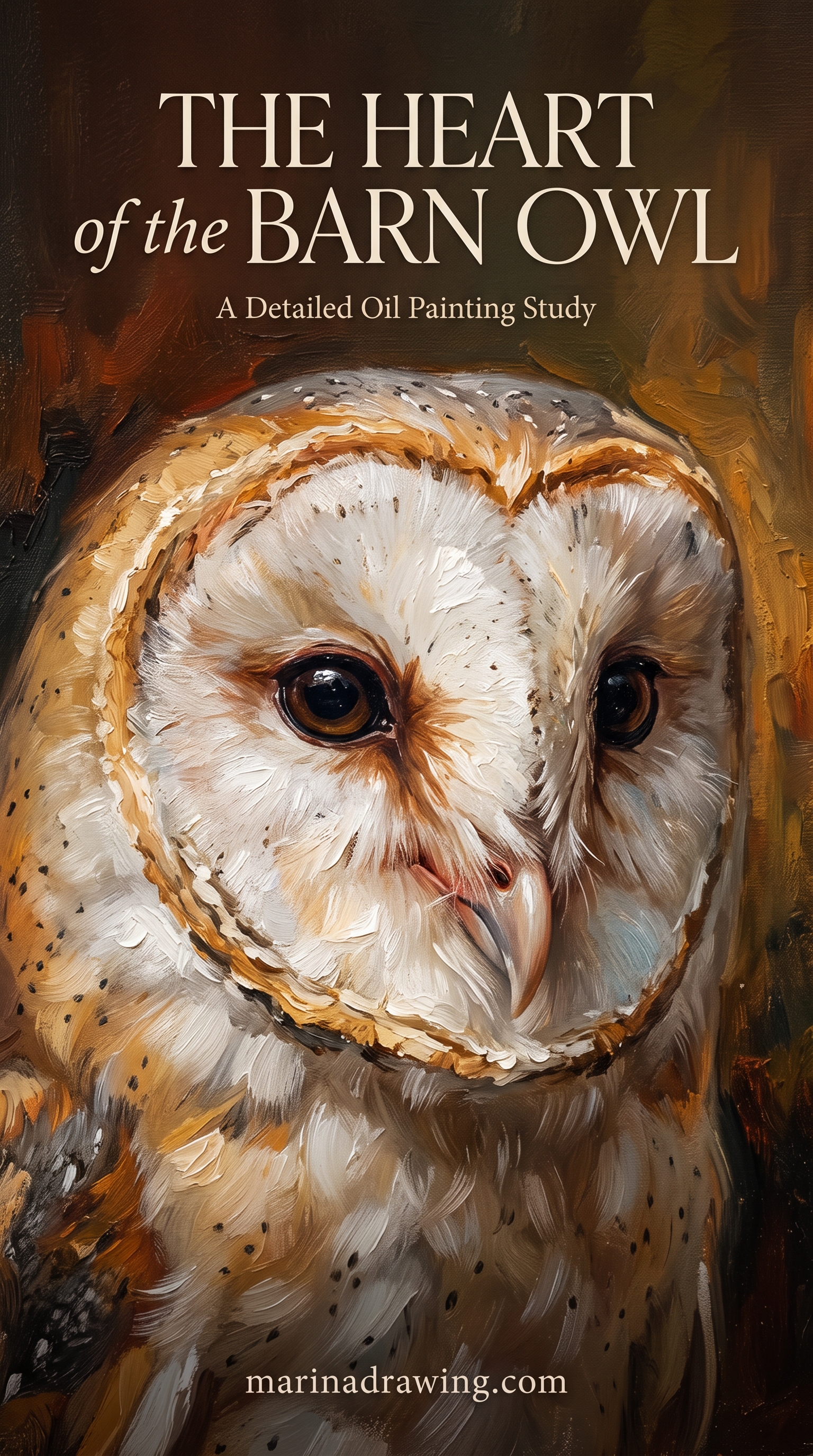
4. A barn owl, with the heart-shaped face
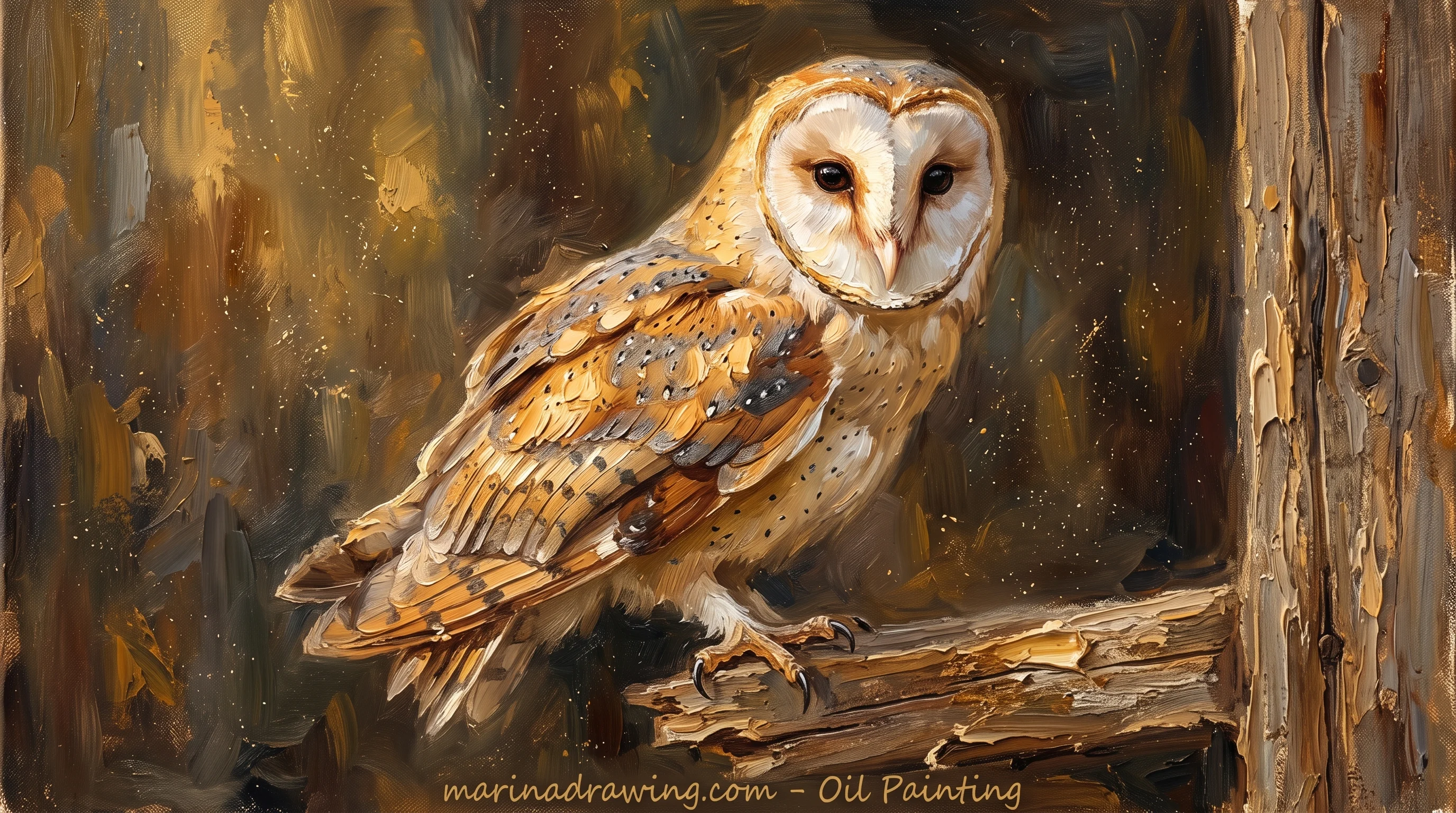
A barn owl drawing is not a pale brown owl. It is built differently:
- The disc is a heart: two curves meeting in a point under the beak.
- No ear tufts. The top of the head is a smooth dome.
- Smaller eyes, set deeper in the heart, dark all the way through.
- A thin raised rim round the heart, one continuous line.
That heart is the giveaway: draw it cleanly and nobody asks what species you meant. A graded animal section hands you these builds in order.
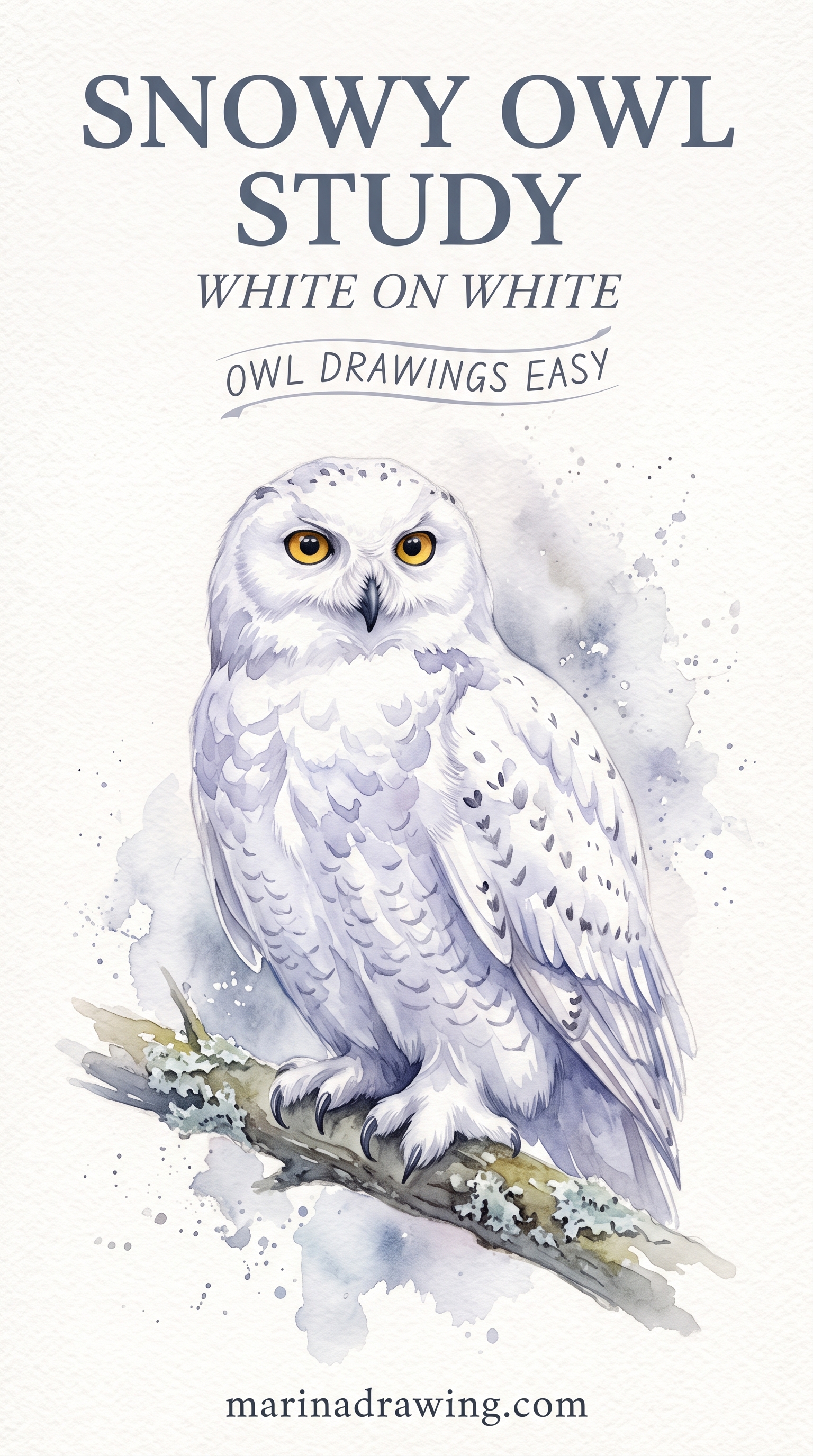
5. A snowy owl, where the white is not white

A snowy owl drawing is almost entirely white, so you draw everything around the bird instead. Leave paper alone on the head, back and chest; lay light grey under the body, under the chin, inside the wing. Where the bird meets branch or snow, go darker than feels comfortable: that shadow is the only thing holding a white bird onto the page.
Markings are dark flecks on the wings and back, thinning to a clean chest. In graphite leave the eyes light and ring them with your darkest line, the same gap as in realistic shading.
6. An owl in flight
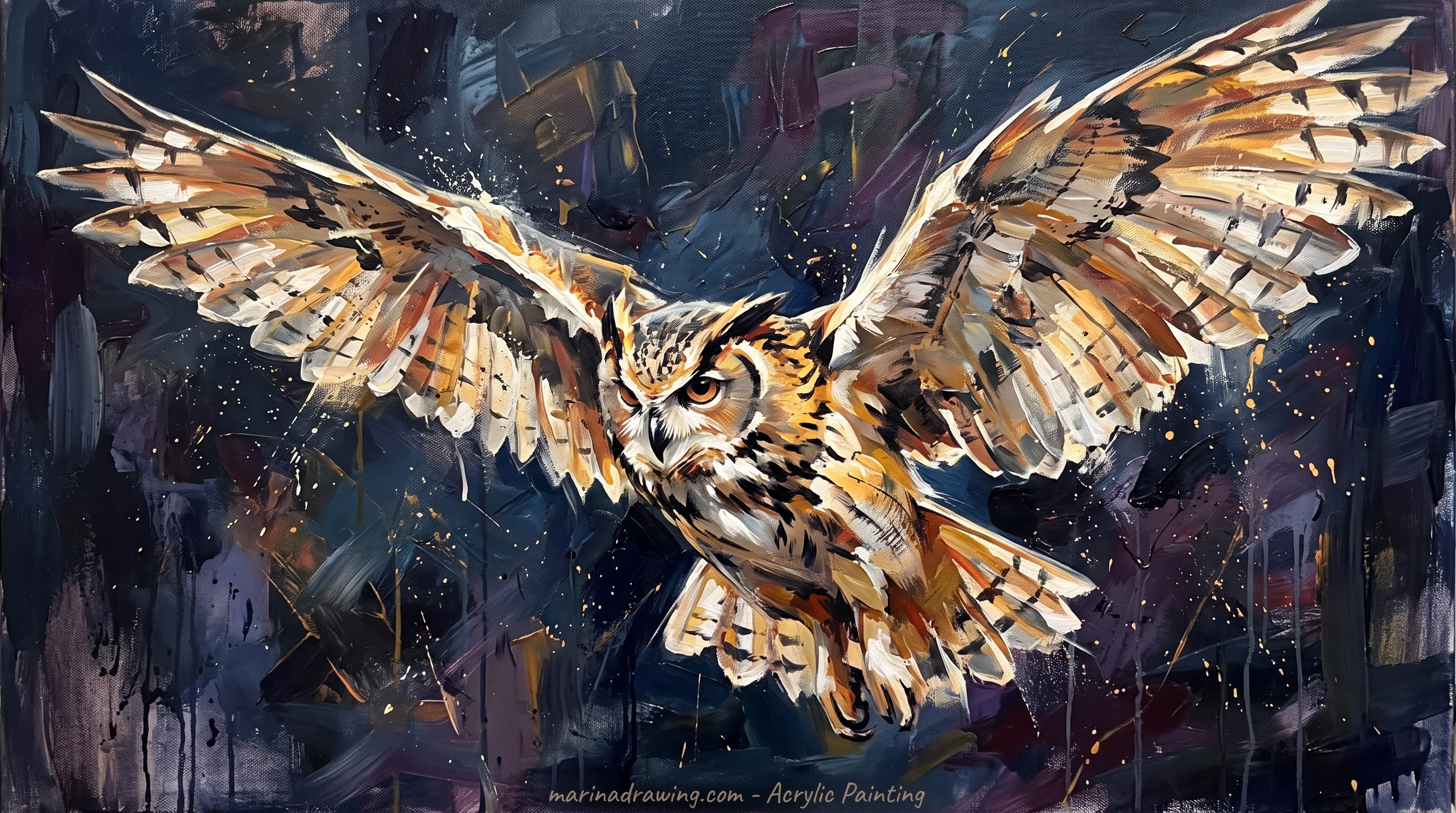
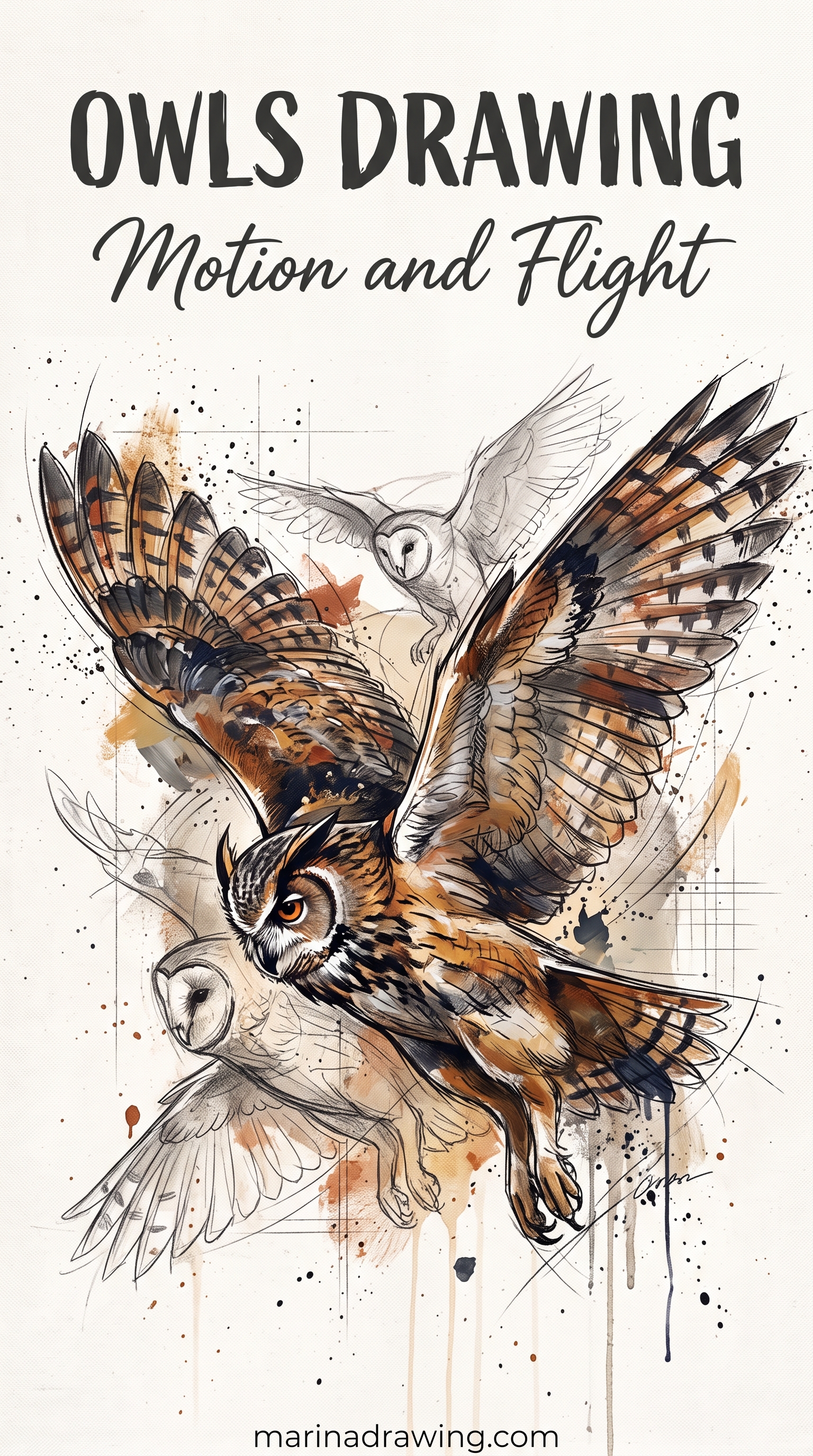
An owl flying drawing is mostly wing: each wing is longer than the whole body, often half again as long. Draw your body too big and the bird looks like it is falling, the same proportion slip as on the fox.
Start with one long shallow arc through both wingtips and the body, then hang everything off it. Small egg body, head turned to face you even as the bird moves away: a head in profile loses the owl signature. Four or five splayed feathers at each wingtip.
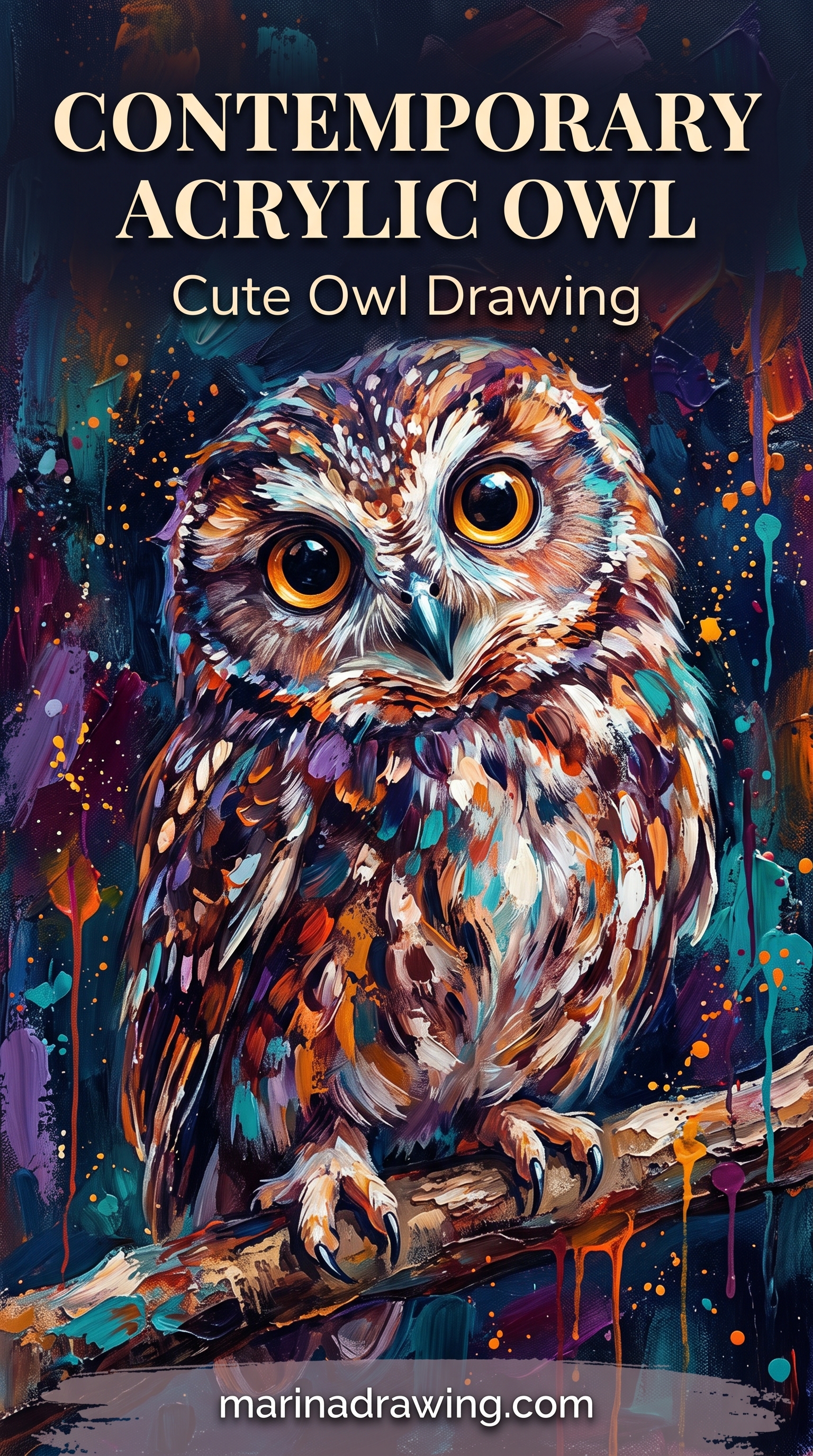
7. An owl in colour
42 hours of pencil drawing training, lifetime access
The video course I point plateaued students to — full lessons on portraits, hands, and realistic shading, not another short tutorial.
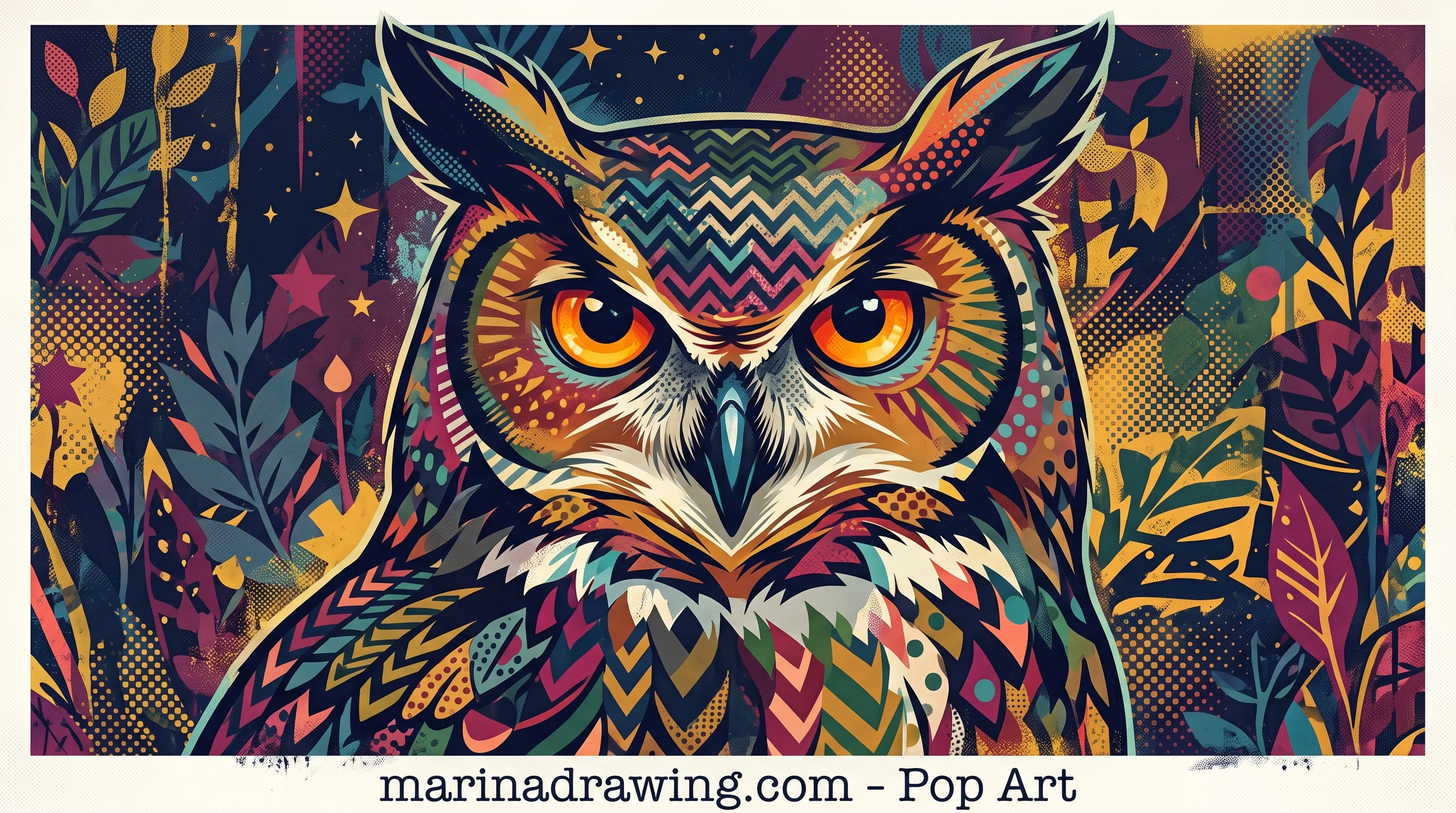
Your mistake here is one colour for the feathers. A tawny owl is three browns: warm mid brown over the body, darker cool brown in the shadow, cream nearly paper on the chest.
Dark brown first, down one side and under the wing. Mid brown over everything but the chest. Barely touch the cream; I learned that one the hard way. Draw the barred markings as broken dashes following the body. Three pencils do it all. To create a background without drawing one, a graphics library is the quick route.
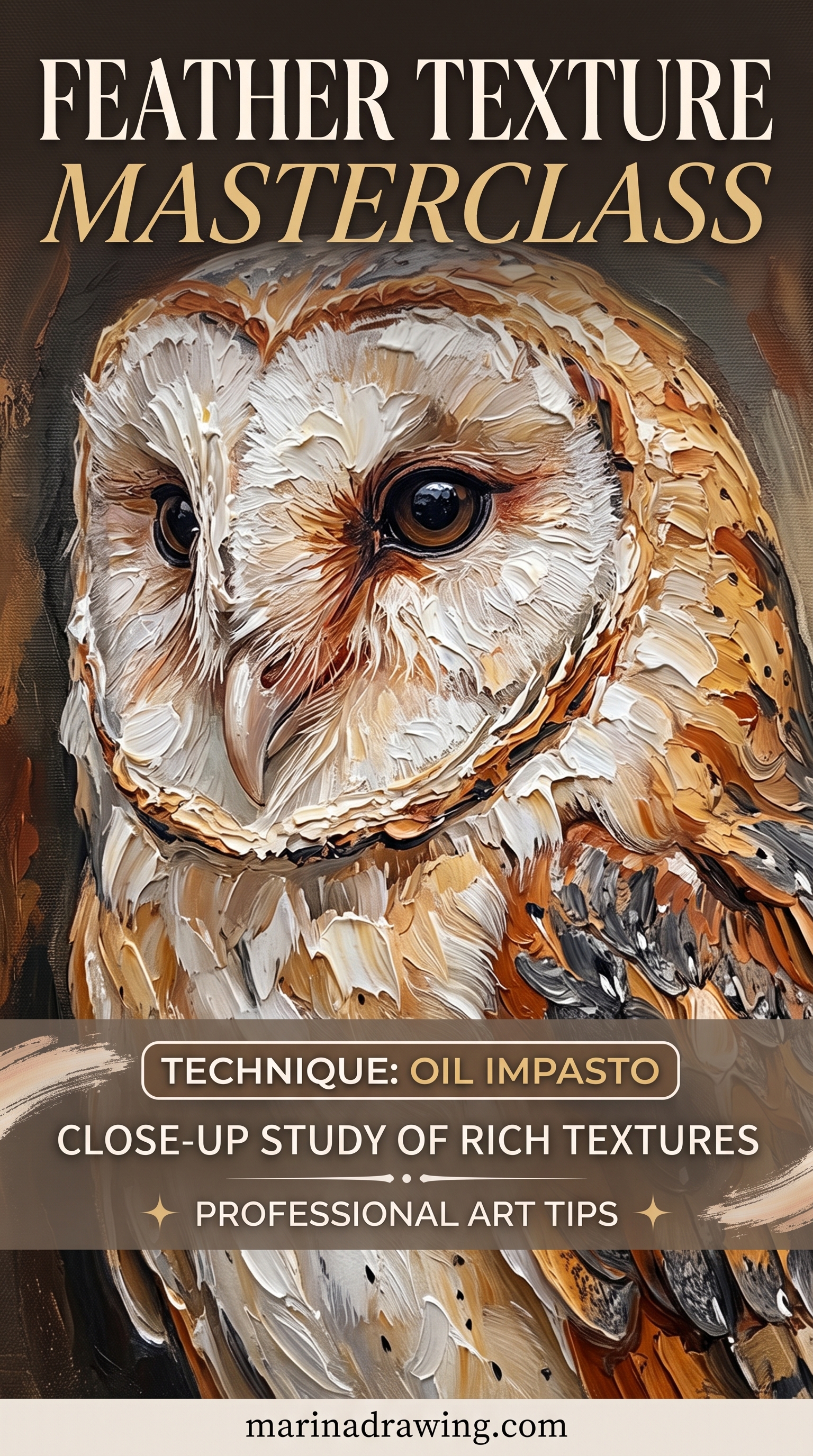
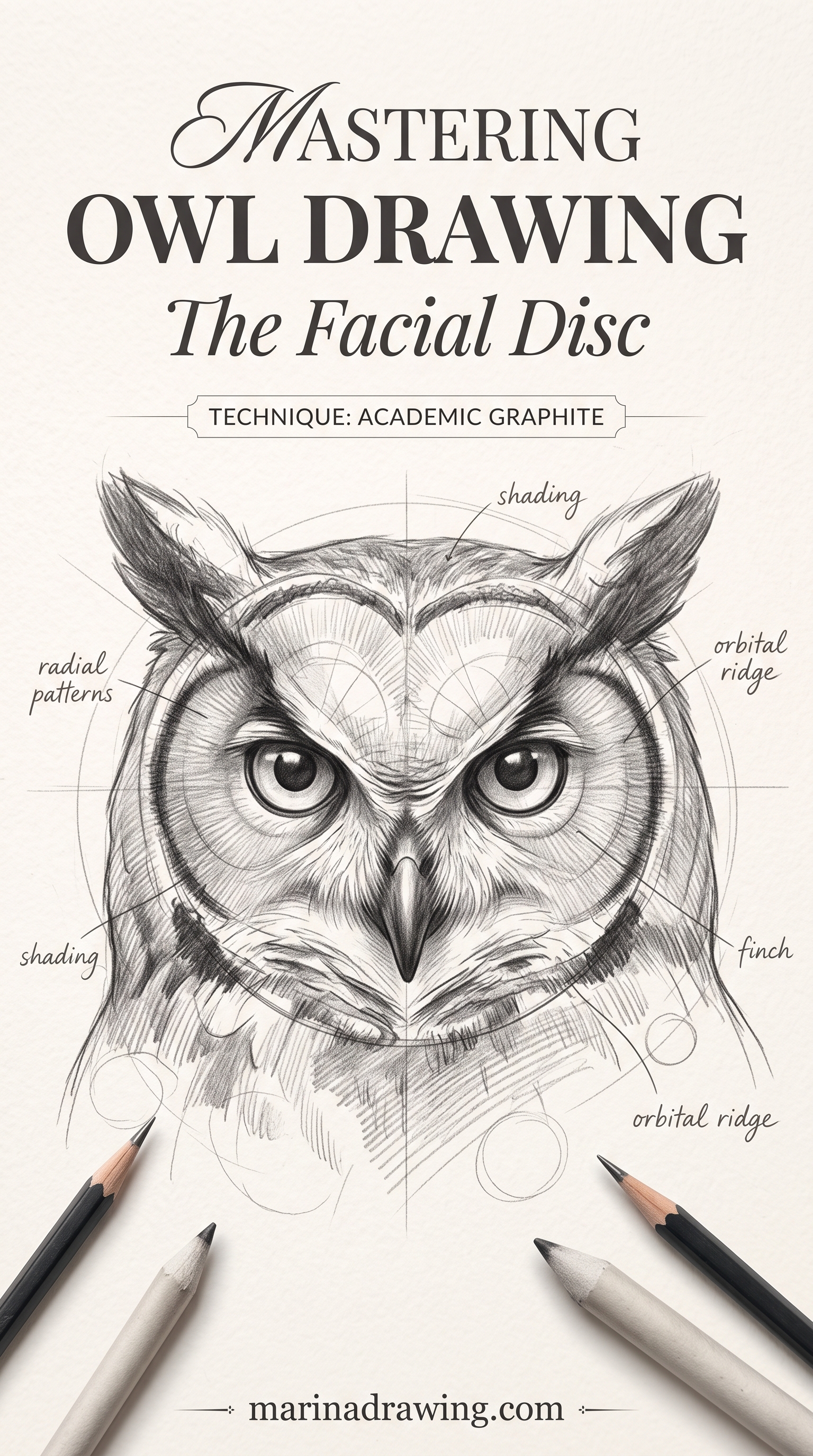
8. A realistic graphite owl with feather texture
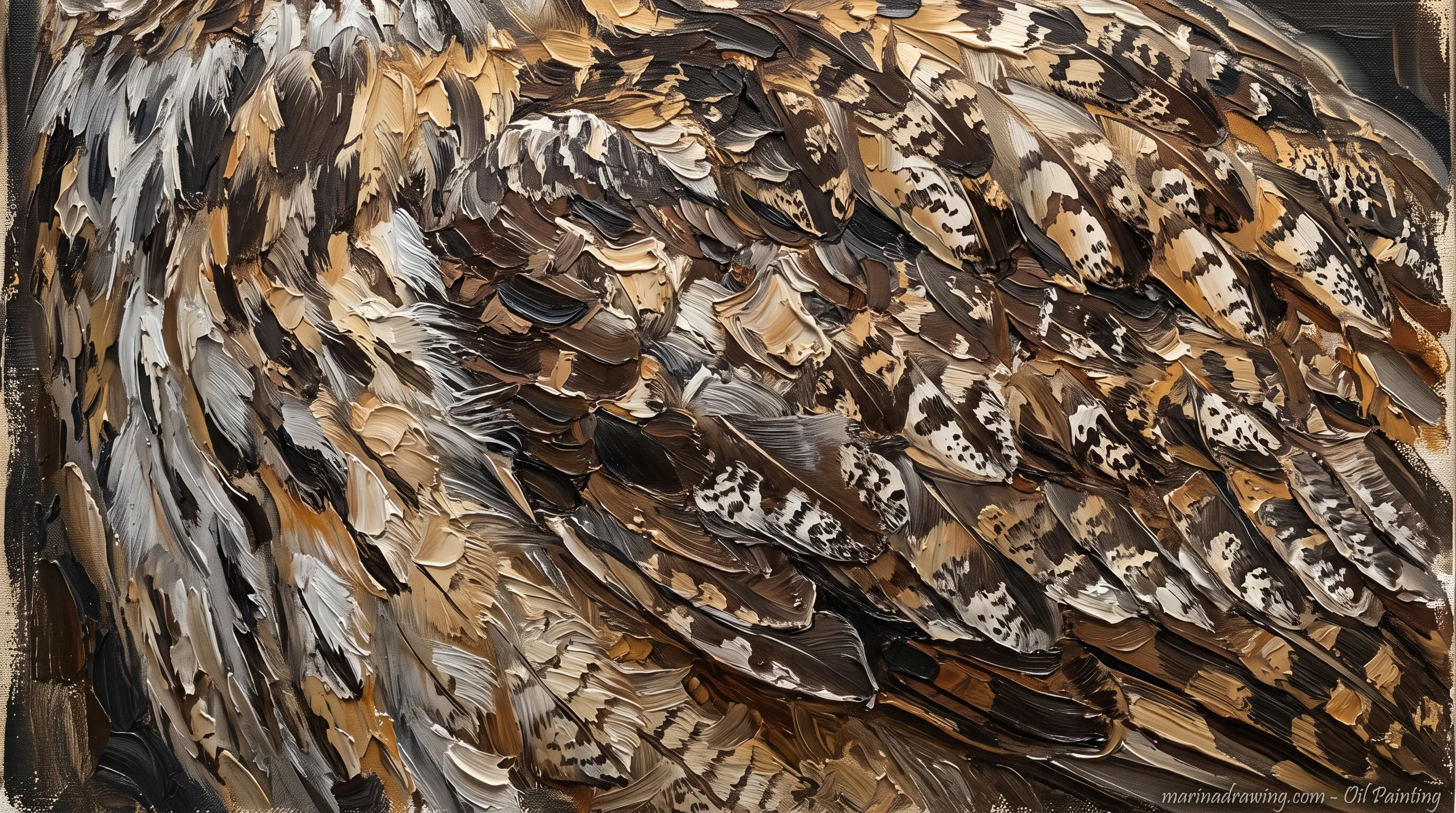
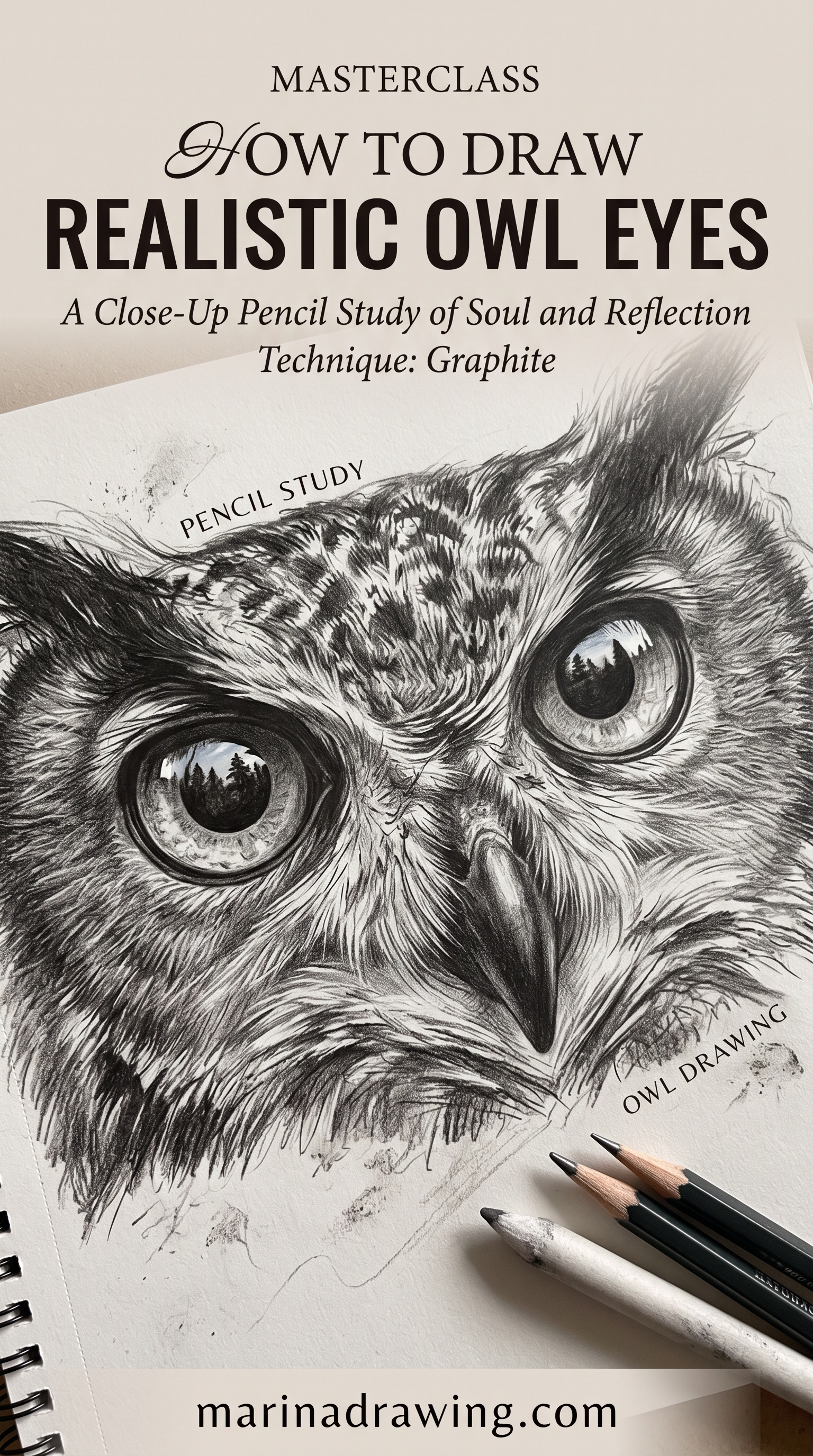
Feathers are tone, not hairs. My first realistic owl drawing looked like a doormat: hundreds of lines, no values.
Commit to three separated tones, darkest first: pupils, rim of the disc, gap under the beak, shadow where wing overlaps body. Then mid grey across the shaded half.
Texture last, in two places. On the disc, short strokes radiating outward from the eyes, because that is how those feathers grow. On the body, the shadows between clumps. Flat means a missing dark, not a missing detail: the same habit as in eyes, which a programme with a value unit drills.
Which mistake did you make?
Put your drawing beside this and read down the left column.
| What you see | What is actually wrong | Your fix |
|---|---|---|
| A cat with a beak | No facial disc, tufts drawn as pointed cat ears | Draw the dish first, round the tufts into the dome |
| The eyes look wrong, you cannot say how | They sit near the edges instead of inside the disc | Move both onto the eye line, less than half an eye apart |
| The face has no forehead | The eye line is across the middle of the skull | Raise it into the upper third, redraw the eyes on it |
| It reads as a parrot | The beak is long, or drops below the eyes | Shorten it to a triangle ending level with the eye bottoms |
| A bird on stilts | A gap between body and feet | Drop the body until belly feathers cover the legs |
| The feathers look like a doormat | Individual hairs and no values | Three separated tones first, texture between clumps after |
If the same row describes every owl you draw, the gap is construction, not practice, and a programme that builds the order in beats another seventeen pages of steps.
Questions people ask about drawing an owl
How to make owl drawing easy?
Head circle, wider body with no neck, a shallow dish across the upper front of the head, two big circles inside it, a triangle between them. Five shapes.
Why does my owl look like a cat?
You skipped the facial disc and drew the tufts as pointed ears. Draw the dish, put both eyes inside it facing forward, round the tufts into the dome.
How to color an owl drawing?
Three browns, not one, and your darks first.
How to draw an owl outline?
Ink four things only: the silhouette, the rim of the disc, both eyes, the beak.
How to make owl drawing with colour?
Three browns: dark cool brown in the shadowed half, warm mid brown over the body, near-paper cream on the chest.
How do you plan an owl drawing for kids?
Draw the five-shape version and let them fill your shapes with a marker. Big low eyes and a tiny beak do the work, and nothing needs shading.
How to draw a real owl?
Same shapes, then spend your time on three separated values rather than outlines: strokes radiating outward from the eyes.
Which owl should I draw first?
The five-shape one, then the cute version, then the owl on a branch. A graded course sequences subjects by difficulty instead of leaving you to guess.
Key takeaways
- An owl is read by its facial disc, not its outline.
- The eye line goes in the upper third of the skull. Across the middle is the commonest mistake.
- Both eyes sit inside the disc, less than half an eye apart. Eyes on the sides give you a cat.
- Tufts round into the dome; the beak stops level with the eye bottoms.
- Cute is a ratio: bigger eyes, lower, taller forehead, wider body.
- A barn owl is a heart, not a pale circle; a snowy owl is shaded everywhere but the bird.
- Feathers are three tones first, texture second.
Draw two or three and you will know which row is yours. I still check my own owls against that table, and the row that kept coming back for me only stopped once a construction programme made the order automatic. Same habit on the elephant.