A whale shark is a long grey body with a wide, flat head, a mouth at the very front of the snout and a grid of pale spots and stripes. That is the whole animal, and it is why a whale shark drawing easy enough to finish in a couple of minutes still works. If your whale shark drawing looks like a regular shark with freckles, the fins did not fail. The head, the mouth and the spot grid did.
A whale shark reads as a whale shark because of its flat head and its pattern, not because of the fins.
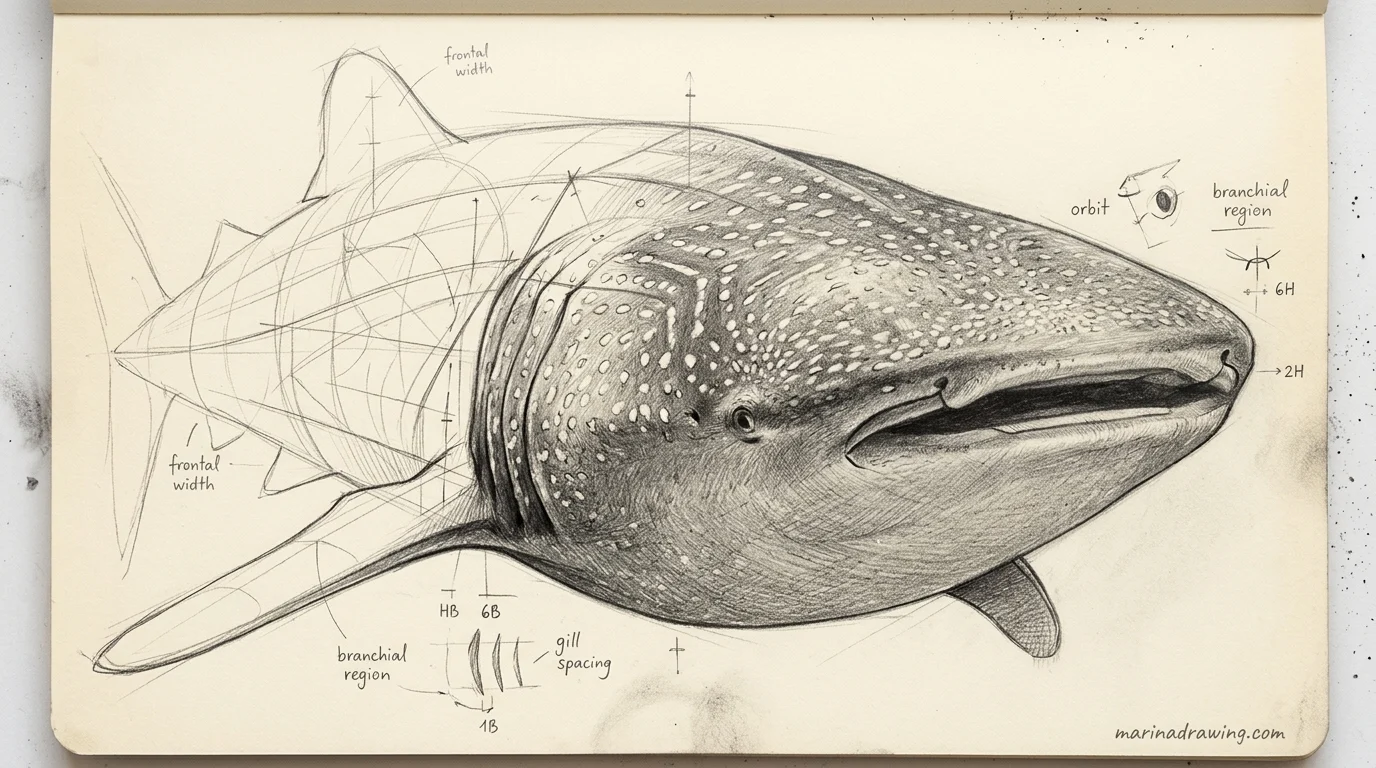
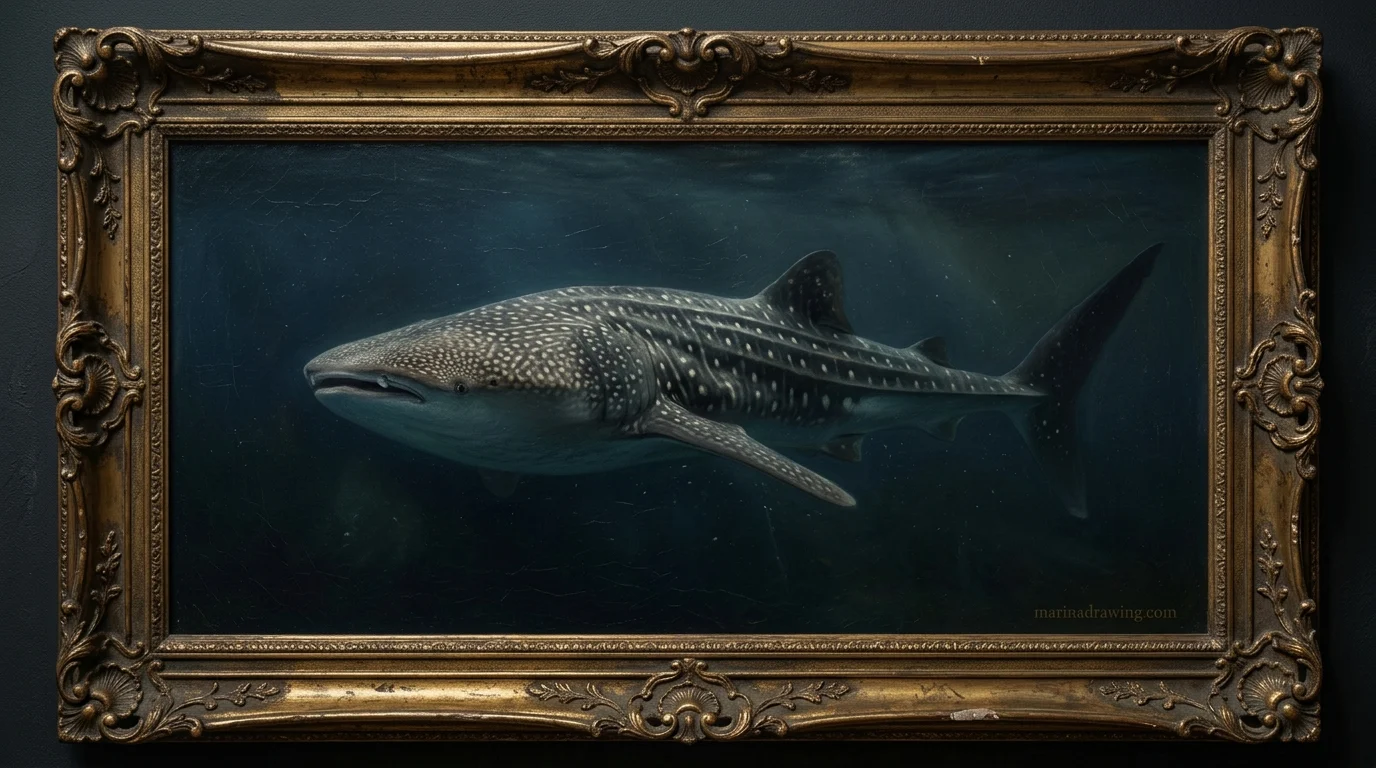
A broad, blunt snout with the mouth across the front, three ridges running along each side, and spots that sit on a grid. Lose any of them and you get an ordinary shark.
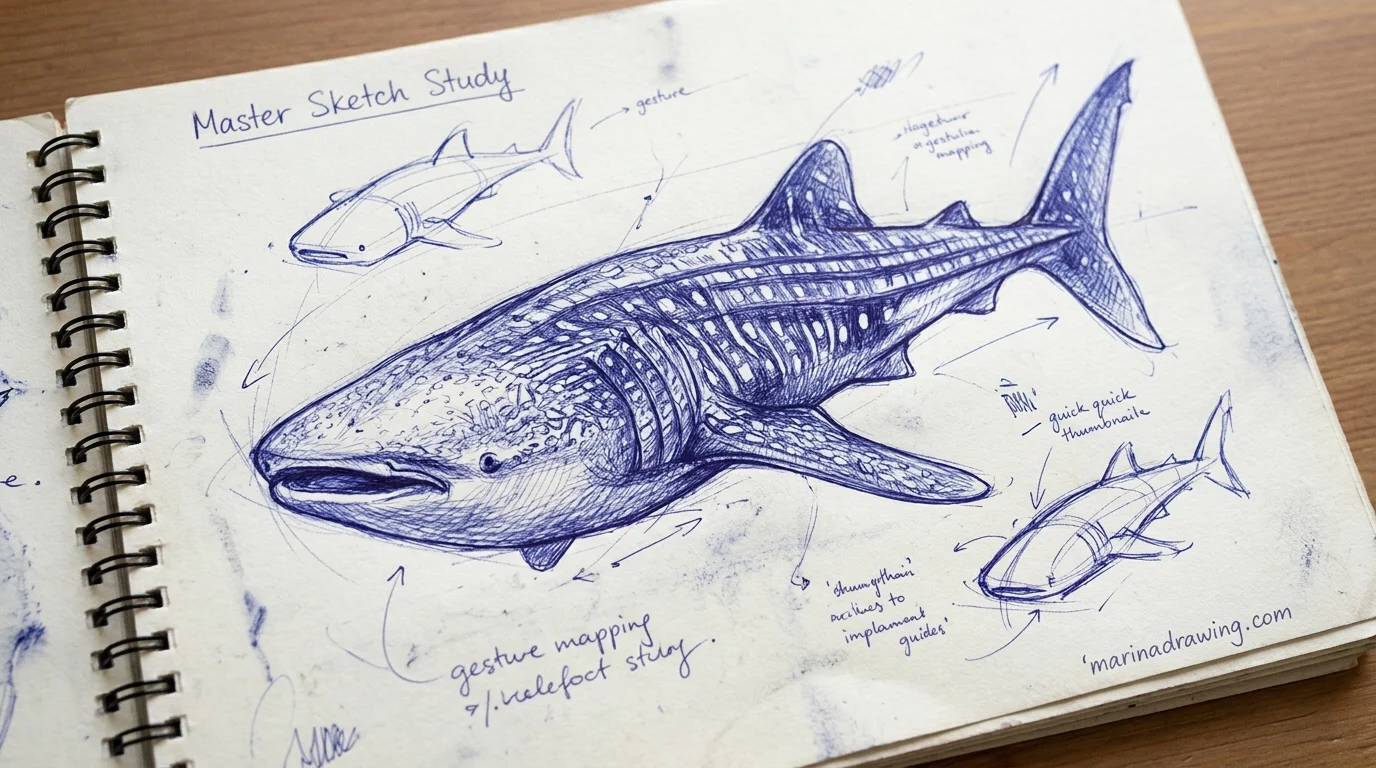
Quick answer: draw one long, slightly tapered oval, flatten the front into a wide blunt snout and put the mouth straight across the end of it. Add a tall first dorsal fin, a smaller second one, two broad side fins and a crescent tail with a longer upper lobe. Then lay spots in rows between pale stripes. Pick your version from the nine below and read the table near the end for your mistake.
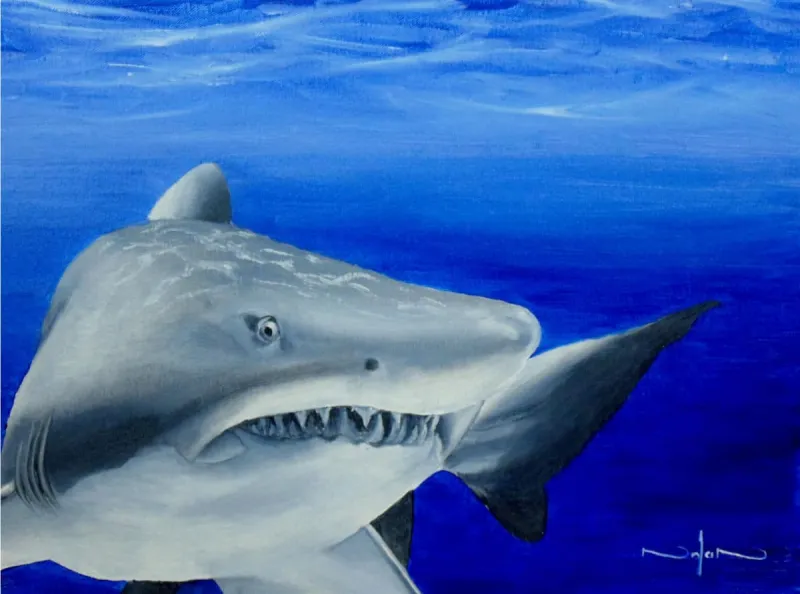
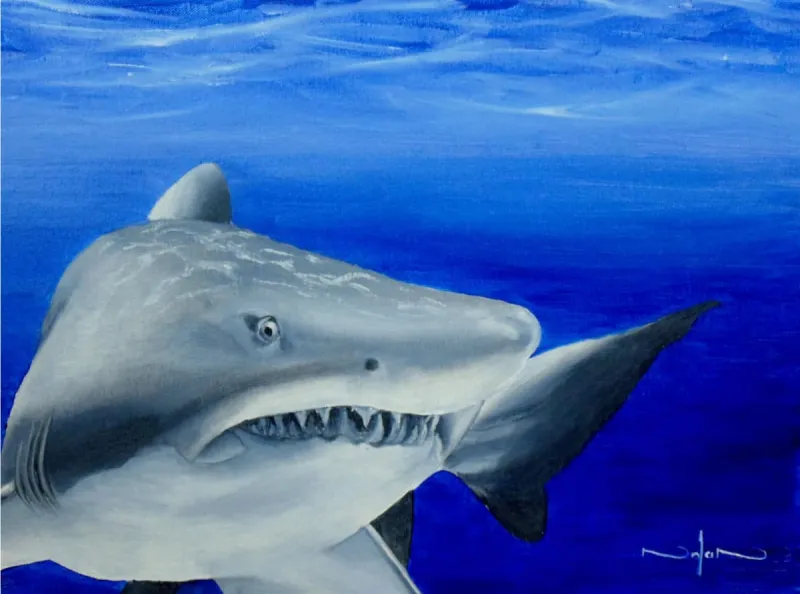
If you want to see a shark in paint rather than pencil, the How to Paint a Shark in Oil class at Online Art Lessons covers mixing ocean colours (it is a general shark, not a whale shark).
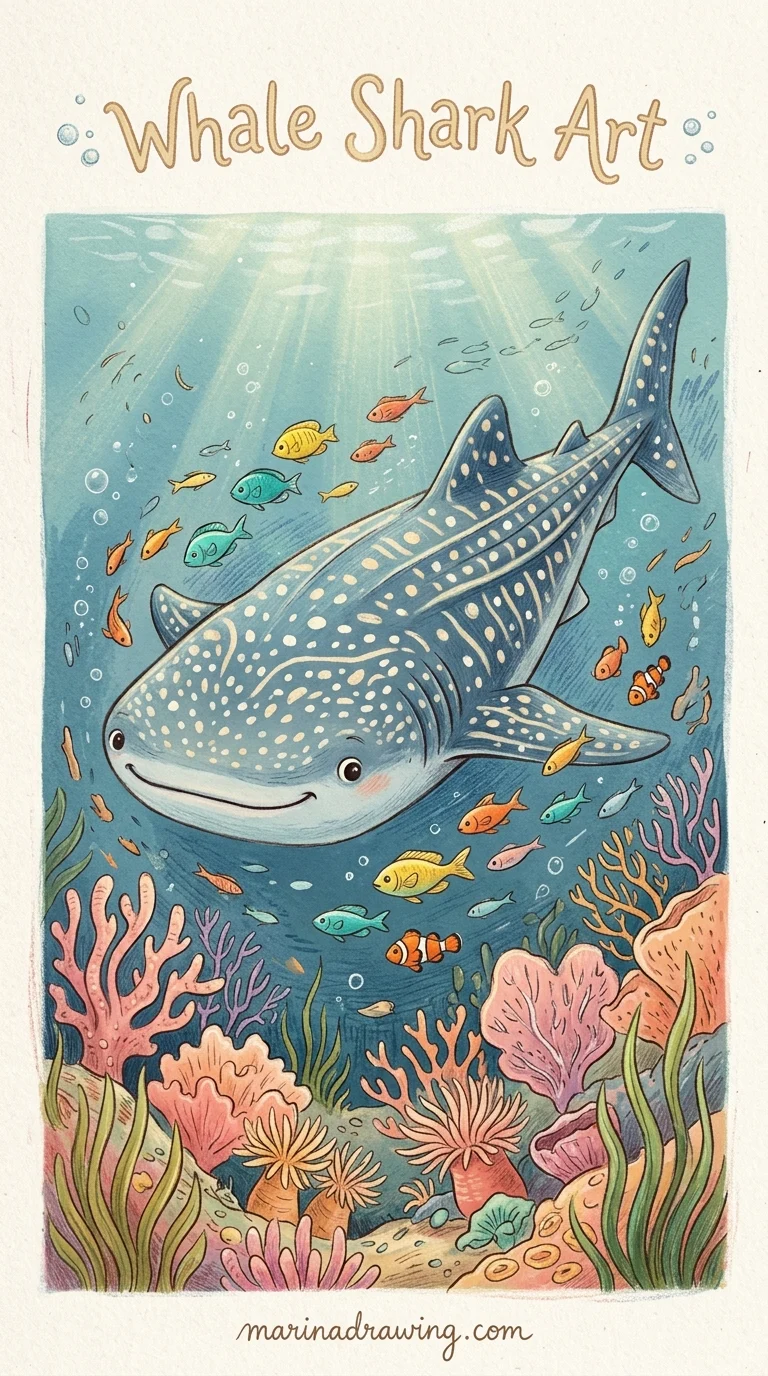
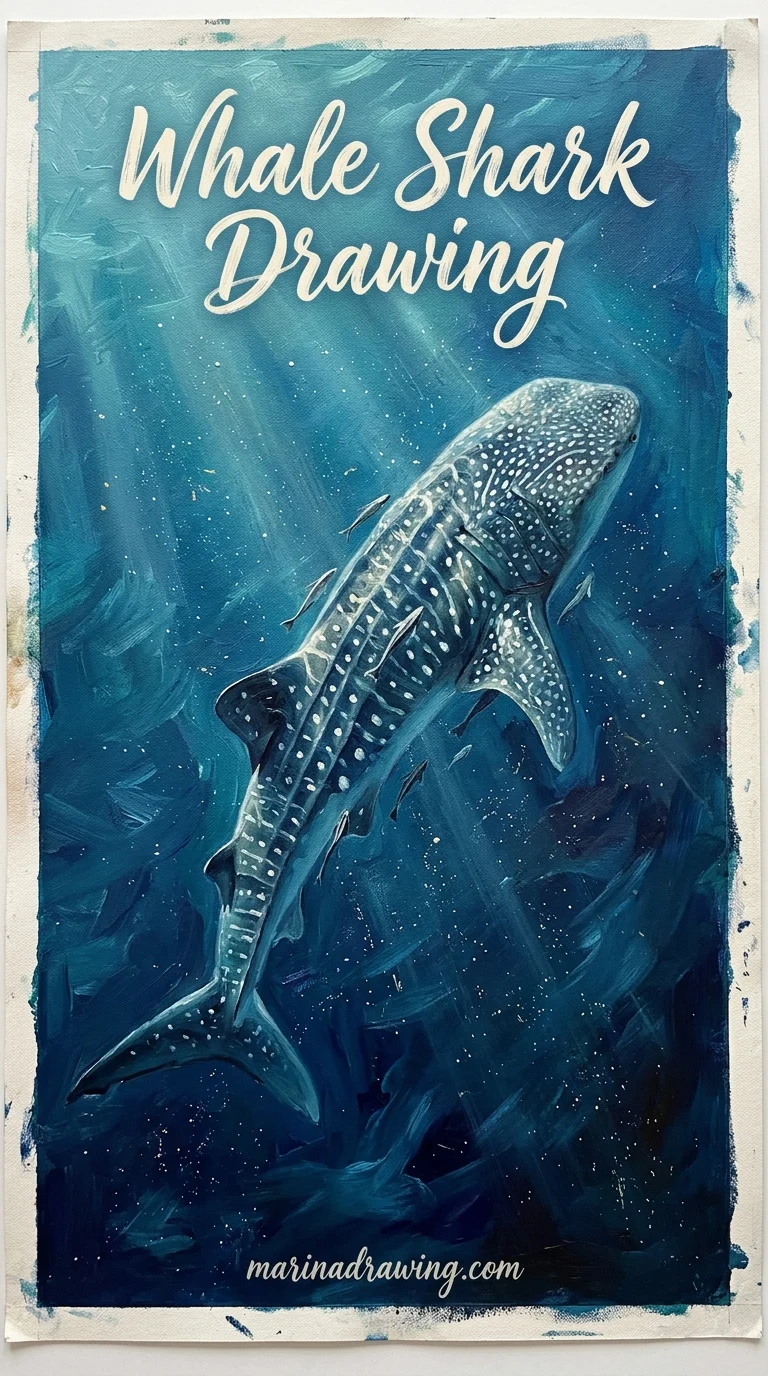
The wide flat head and the spot grid make the whale shark
Every whale shark here starts with the same four light marks, put down before any detail.
- The body. One long oval, deepest behind the head and tapering toward the tail. Keep it nearly horizontal. A whale shark cruises, it does not dive.
- The head. Cut the front of the oval off with a wide, slightly rounded edge. The snout is flat and broad, almost a shovel, where a regular shark has a point.
- The mouth. A long, gently curved line across the very end of the snout. It sits at the front, not underneath.
- The ridges. Three long lines running from behind the head to the tail on each side. They give you the guides your spots will hang on.
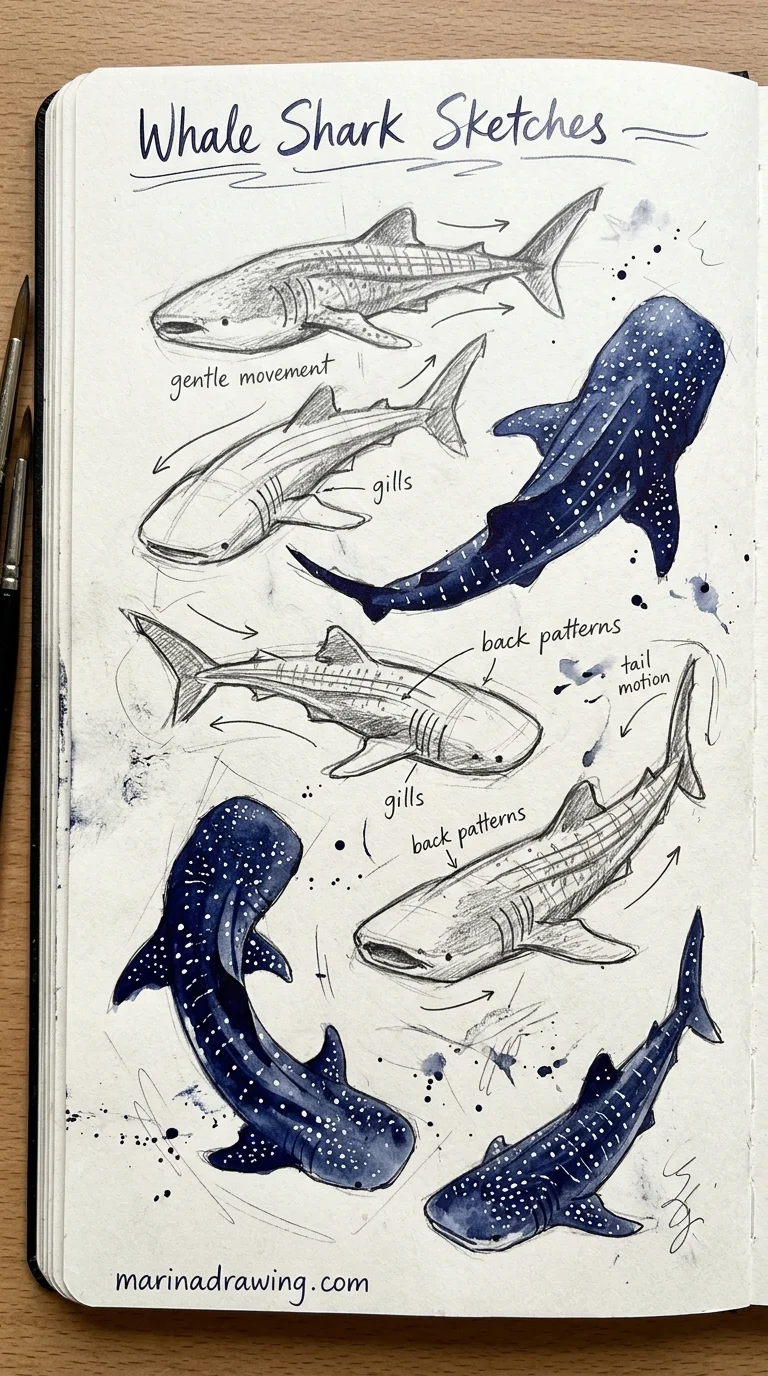
Now the small things. The eyes are tiny and sit low and far to the side of the head, nowhere near the front. Five long gill slits go behind them, curved like parentheses.
Leave the spots for last, and put them down only after the shape is right. I check the snout before anything else.
You decide whether your whale shark works when you flatten the snout. Everything after that is filling in a decision you already made. The same shape-before-detail order carries cute lion drawing ideas, where the mane comes last.
Why your whale shark looks like a regular shark: four mistakes
Among the pages that hold the top spots for this subject, none has a section on how to build the spot pattern, and none shows more than one version of the animal. The page with the most trust in the results draws a plain shark, in three sections and under five hundred words.
| What was checked | Pages that had it |
|---|---|
| A section on how to build the spot pattern | 0 of 5 |
| A set of different whale sharks, each with its own method | 0 of 5 |
| A view from above | 0 of 5 |
| A page about the whale shark rather than a generic shark | 1 of 5 |
Four mistakes account for almost all of the freckled sharks, and you have probably made one of them:
- Your snout is pointed, so the head reads as a shark head and the animal stops being a whale shark in the first line.
- Your mouth sits underneath the head. On a whale shark it is across the front.
- Your spots are scattered at random, or stamped in identical dots, instead of sitting in rows between pale stripes.
- Your eyes are big and near the front, like a cartoon fish. They are small and set well back and low.
A whale shark drawing tutorial in one line is this: shape first, pattern last. The same trap shows up on the giraffe, where the pattern also has to follow the body, and on the elephant.
What you actually need: one pencil and a soft eraser
You need very little for the first seven versions here.
- One sharp 2B pencil for the construction lines.
- A soft kneaded eraser that lifts guides out without scrubbing the paper.
- Cheap printer paper. Whale sharks go wrong in the first minute, so spend nothing on the surface.
- For the watercolor version only: blue paint, white gouache or masking fluid, and thicker paper.
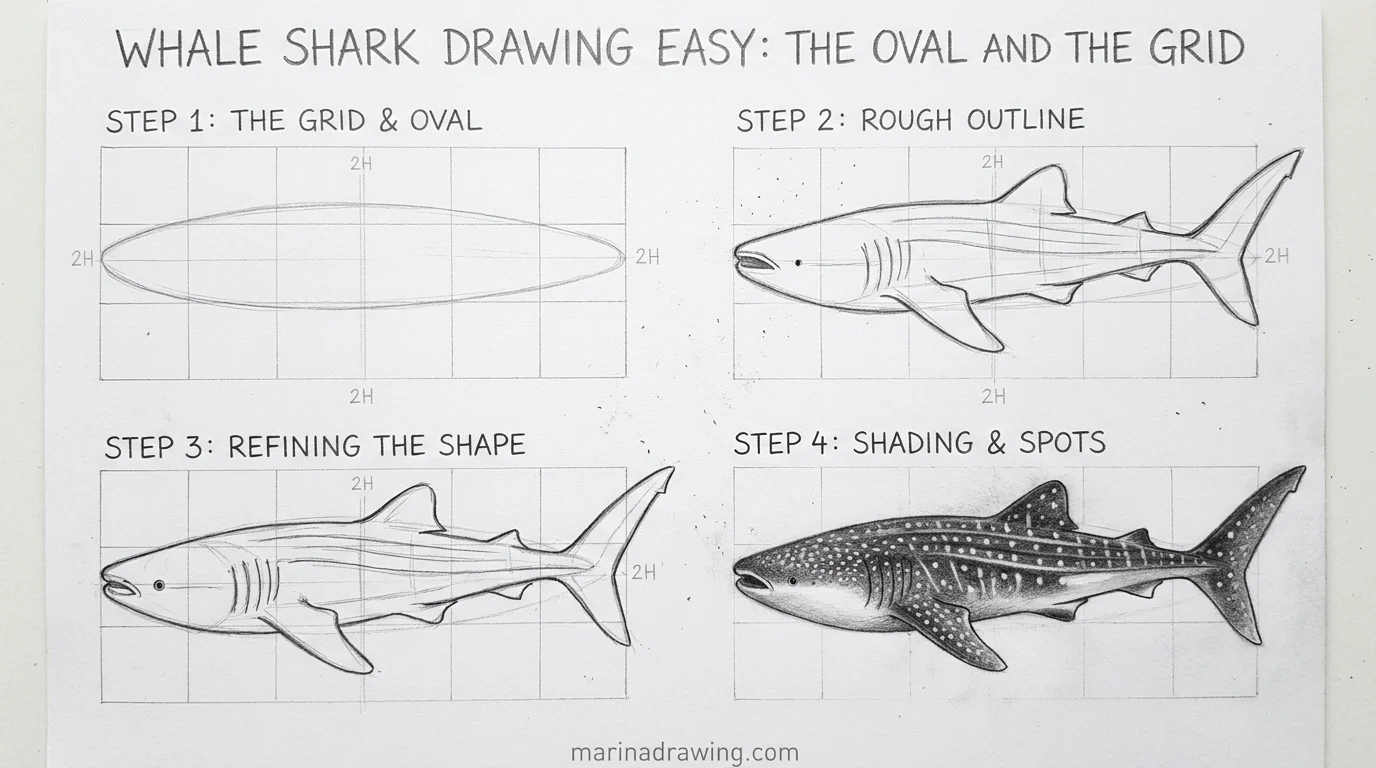
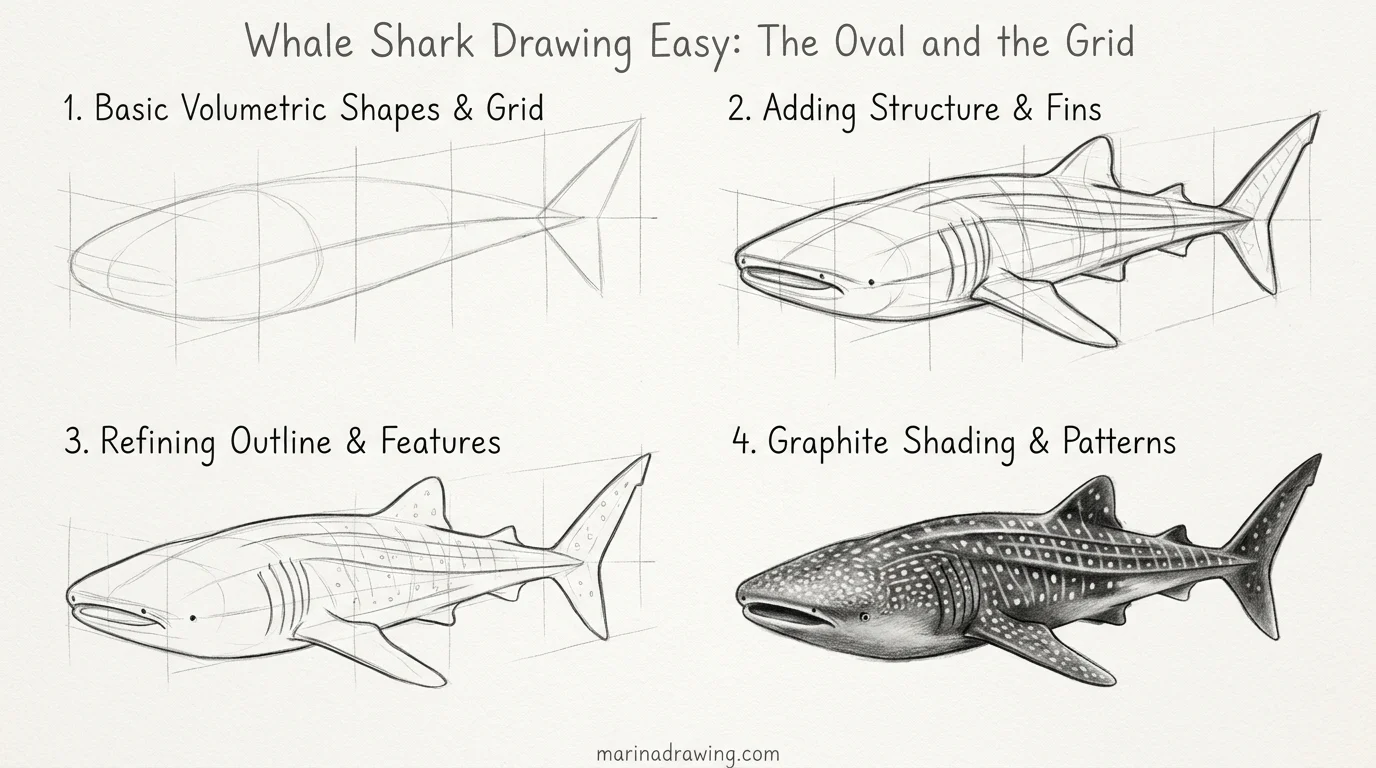
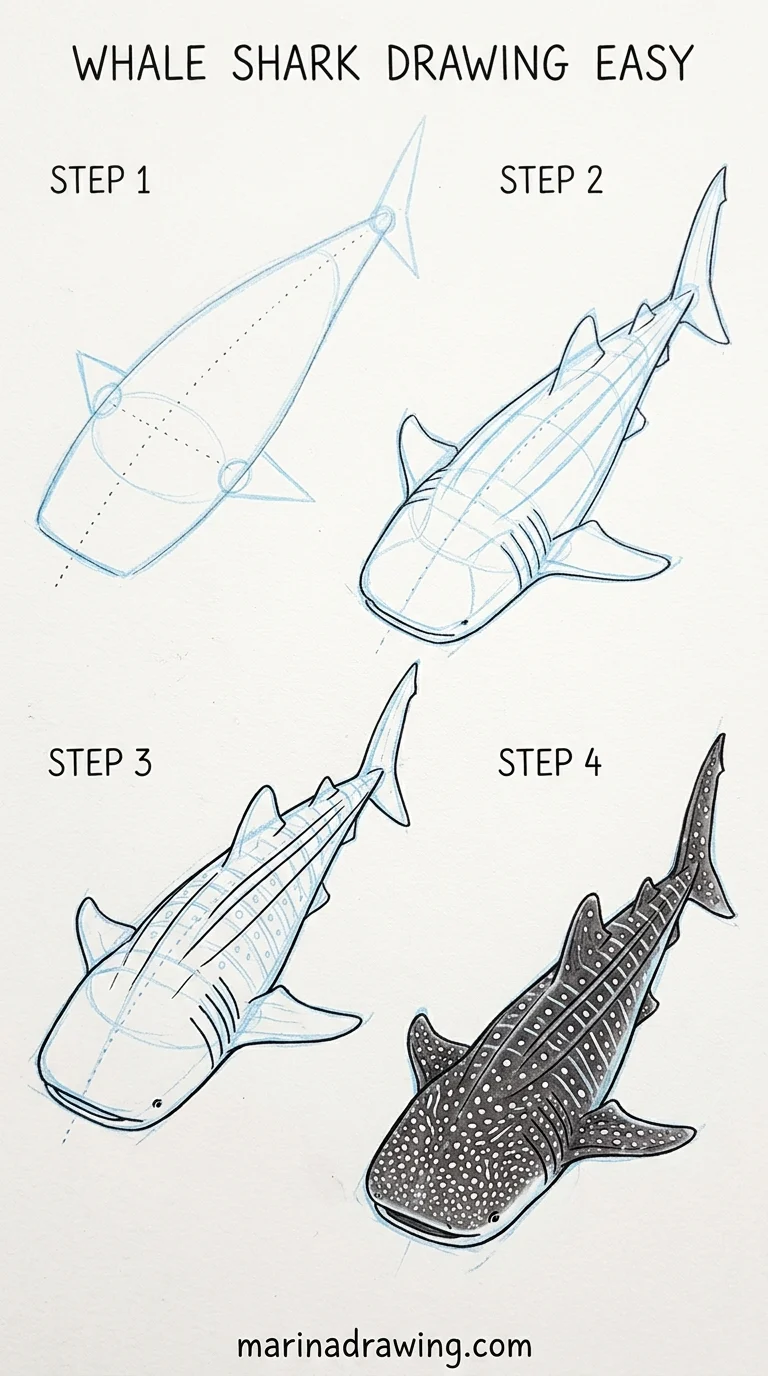
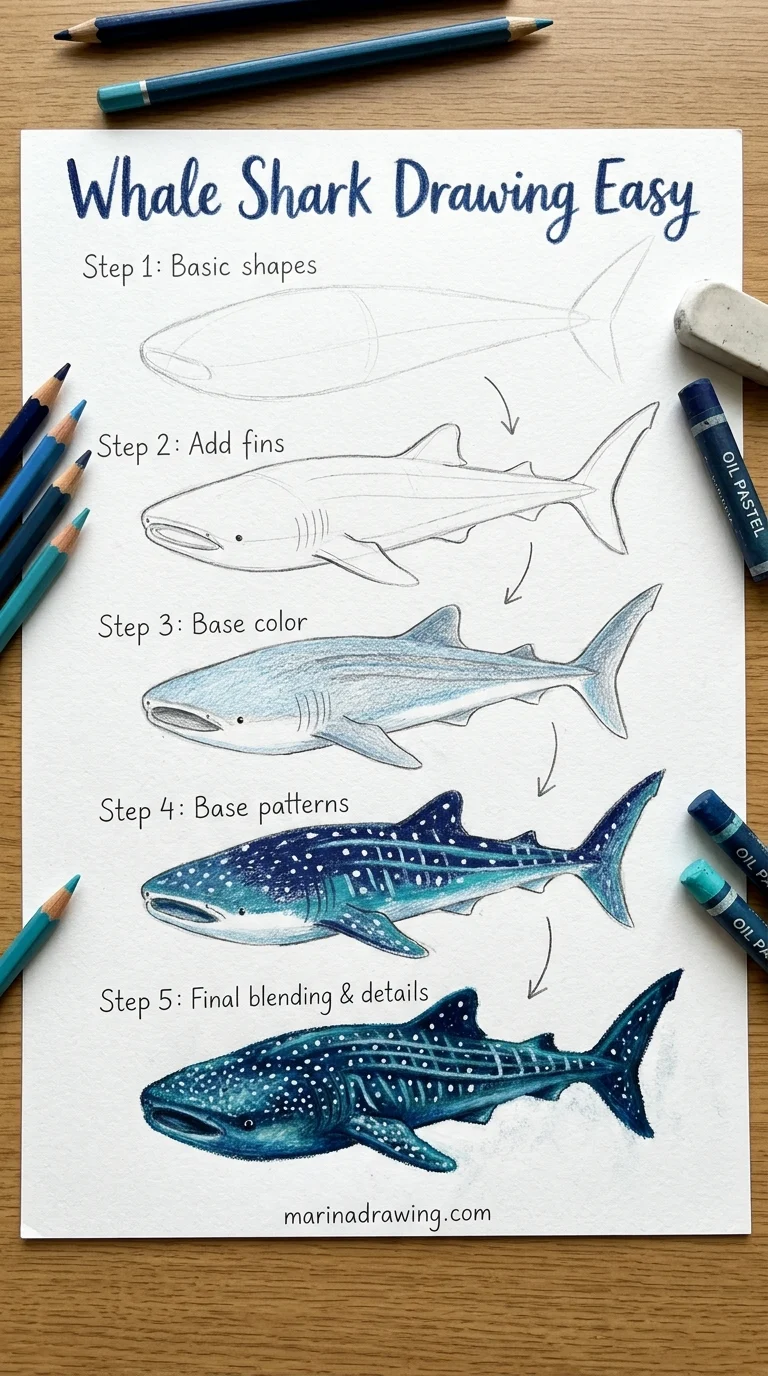
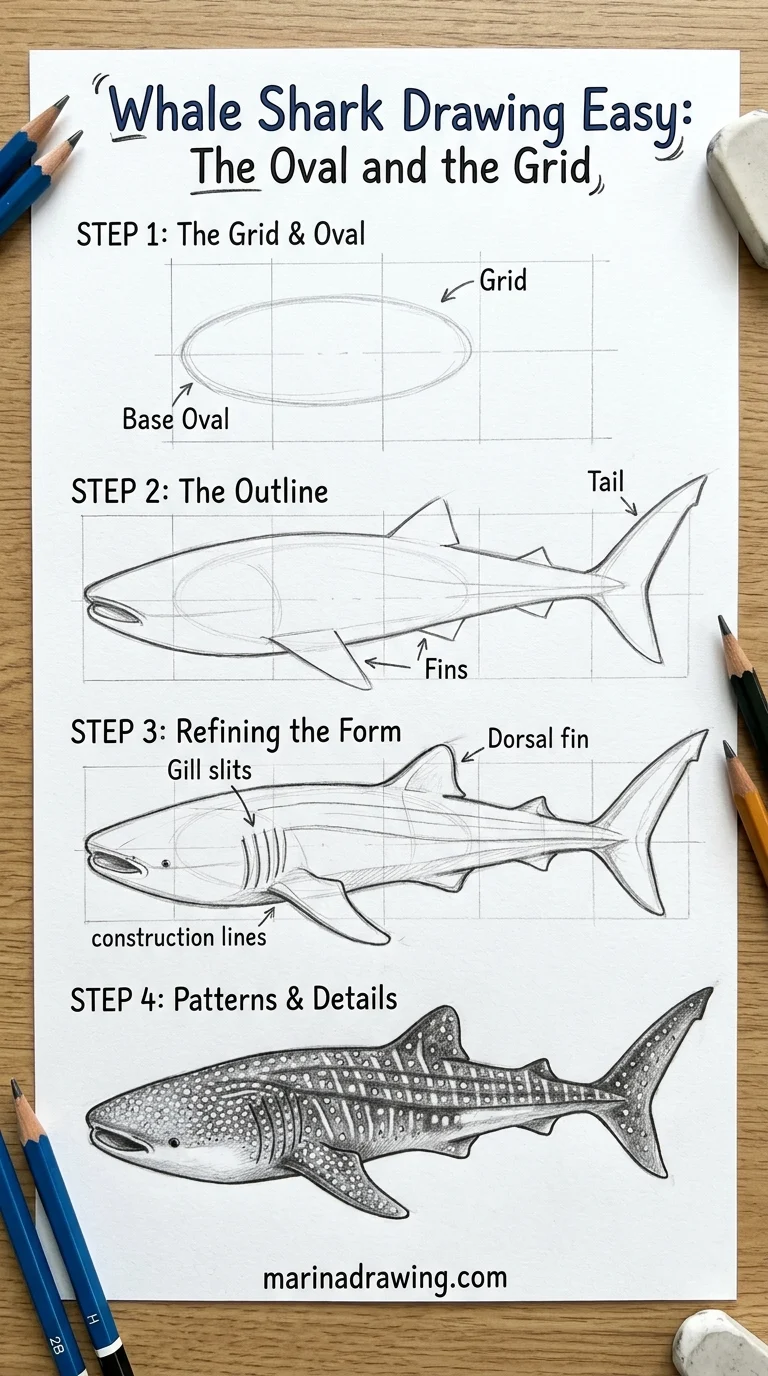
1. Whale shark drawing easy: the oval and the grid
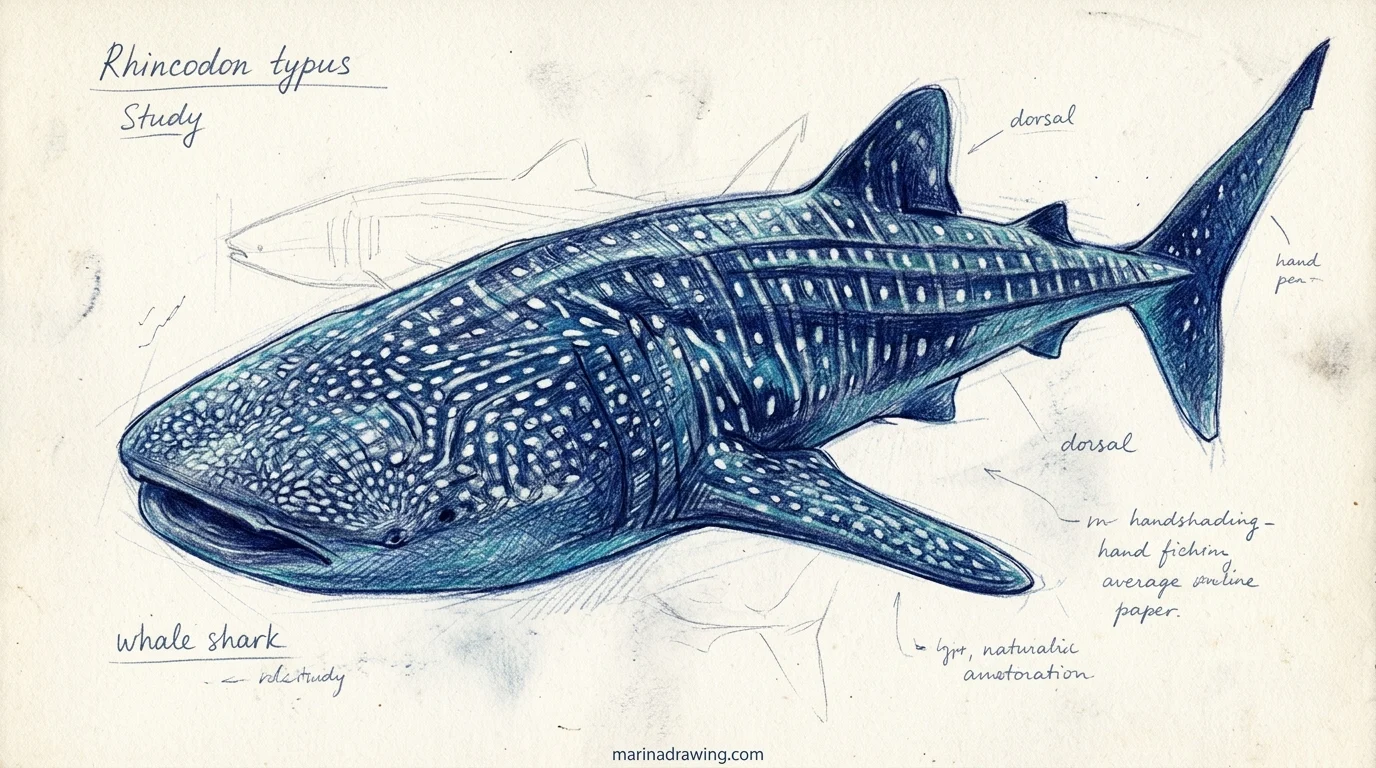
You draw this one first, and kids can do it too. It takes a couple of minutes: a long oval, a flat front, a mouth line, two dorsal fins, two side fins, a crescent tail and three rows of spots. Nothing else.
The tail is the part people get backwards. The upper lobe is longer than the lower one, so the crescent leans. Keep your first dorsal fin tall and set about two fifths of the way back, and the second one small and close to the tail.
Treat it as a five-day challenge: draw it five times, moving the spot rows a little each time, tighter, wider, further apart. Keep your hand loose. I always do it this way, and you will see the animal change before you add a single detail.
2. A whale shark drawing from above
This is the view that fills the autocomplete, and the one nobody explains. From above the animal becomes a long, narrow shape with two broad side fins stretched out like wings.
You start with a centre line. Draw the body as a narrow oval along it, wide at the shoulders, thin at the tail. The head is a blunt rounded rectangle, nothing like a point. Put the pair of side fins at the widest part, angled back.
Spots from above run in lines along the back, so your rows follow the centre line and curve slightly over the shoulders. A tail seen from above is a thin, tilted Y.
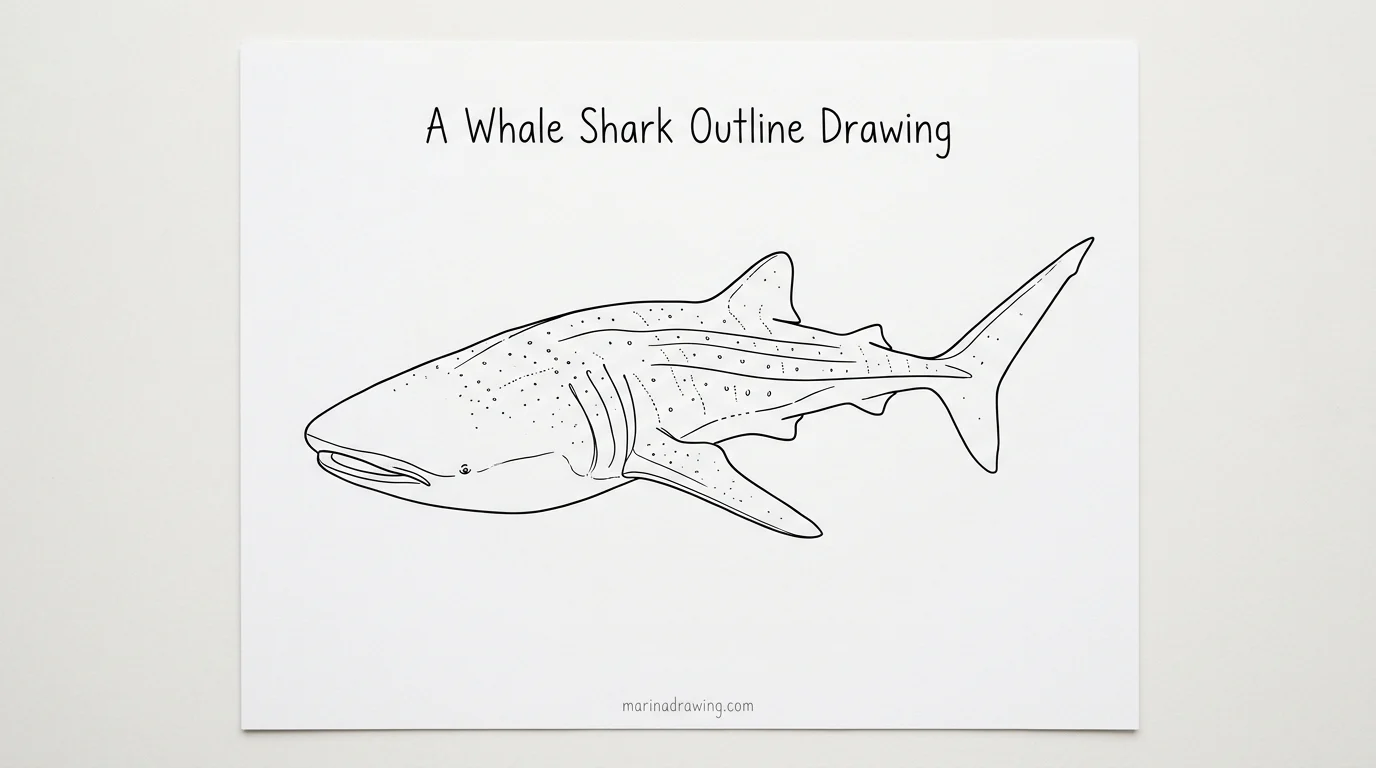
3. A whale shark outline drawing
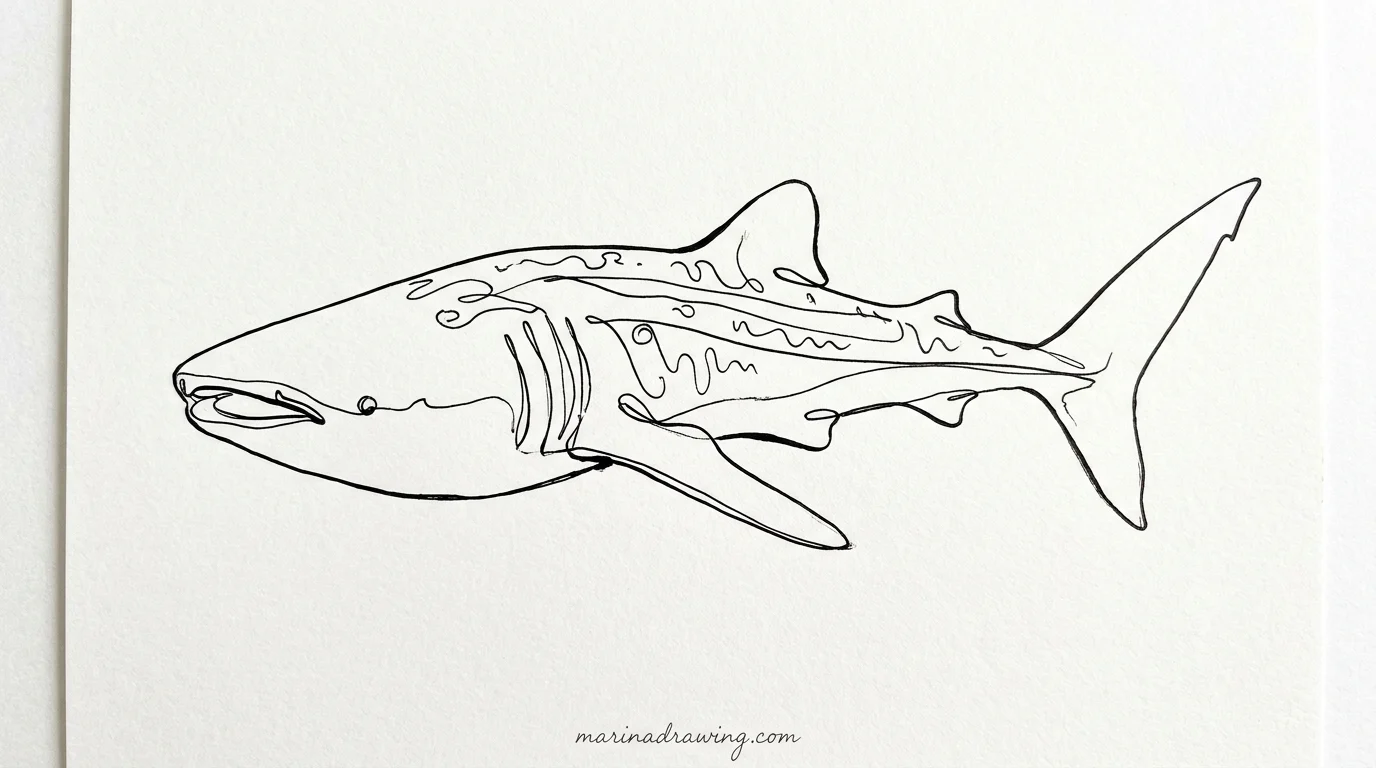
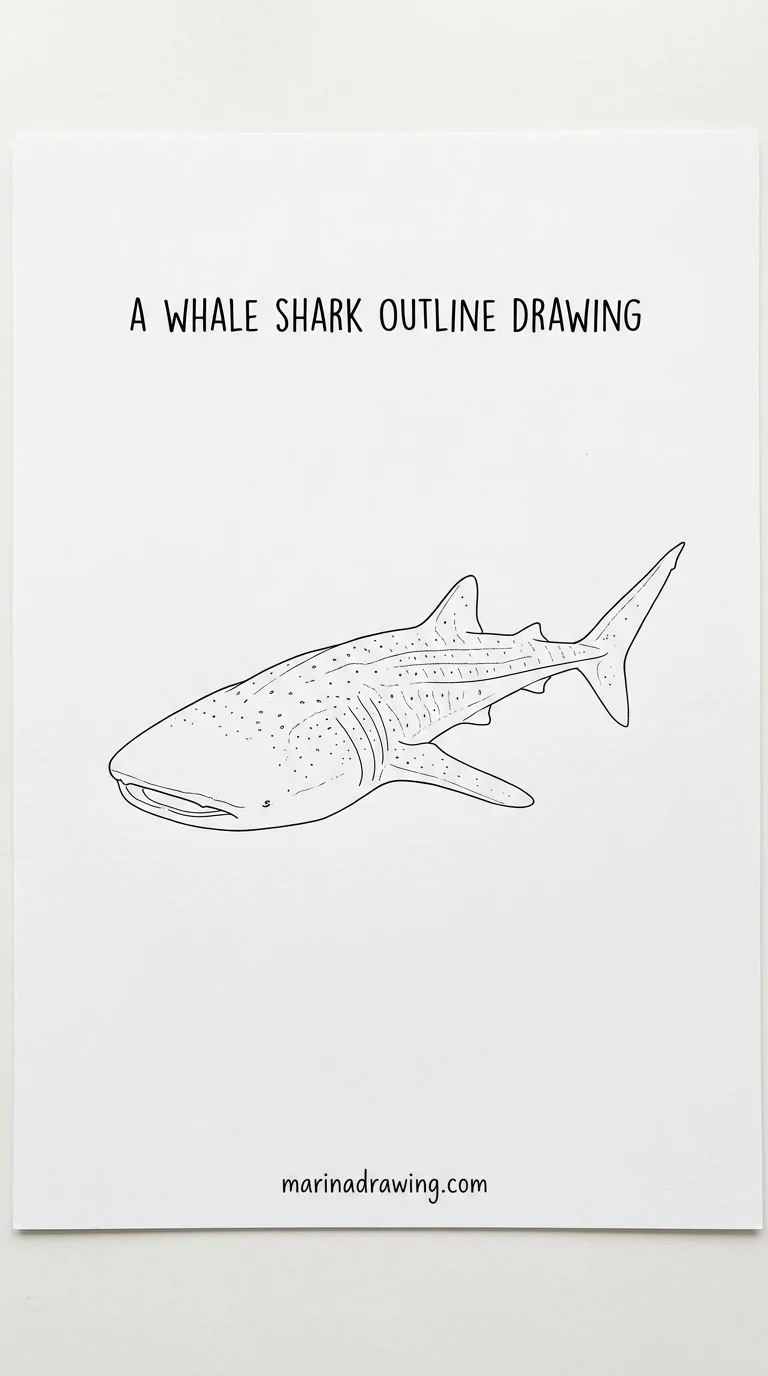
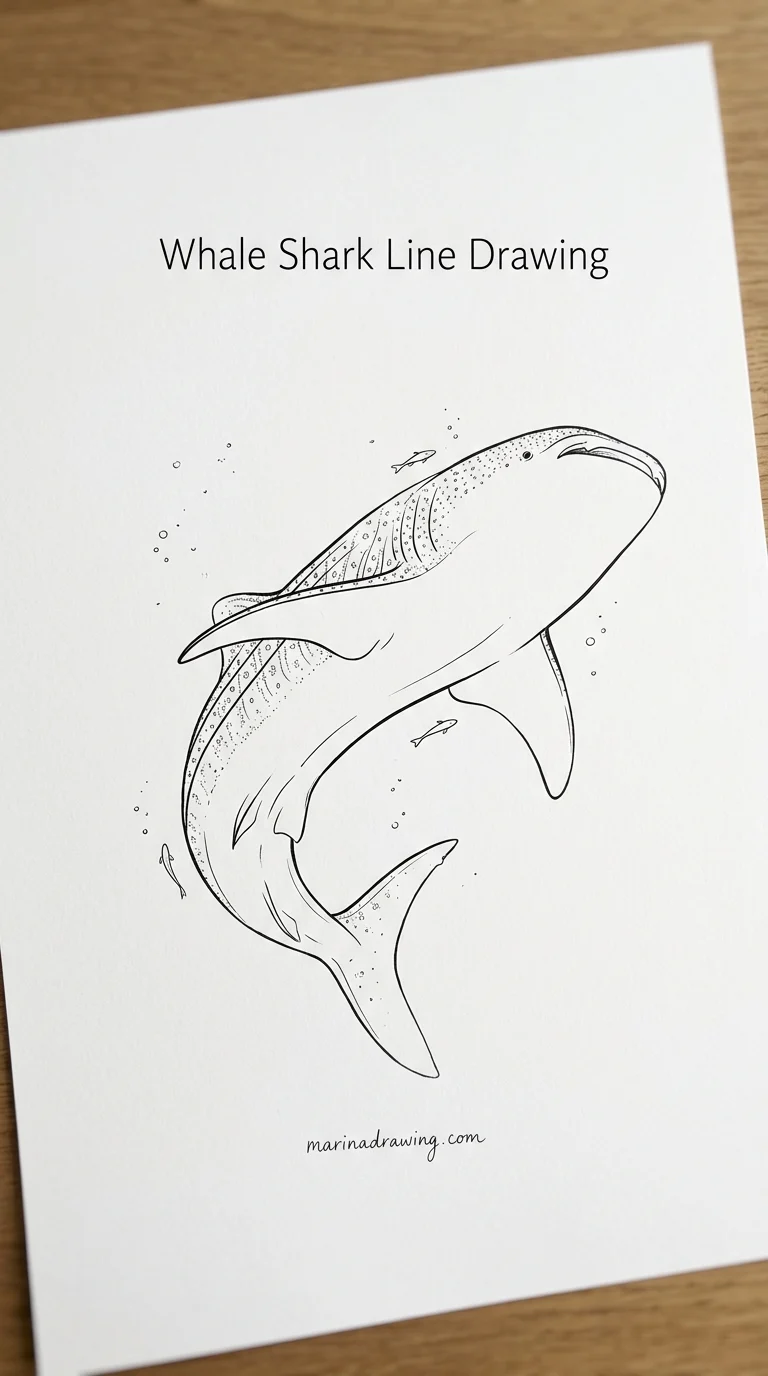
A whale shark drawing outline is the cleanest test of the shape. An outline is the cleanest test of the shape. If it still reads as a whale shark with no spots, the head is right.
Use one steady line weight, thicker than you think, and close every shape. Skip the shading and the spots, and add only the mouth line, the eye and the gill slits.
You can fill it in solid black in your head. If you can still tell it from an ordinary shark, you are done.
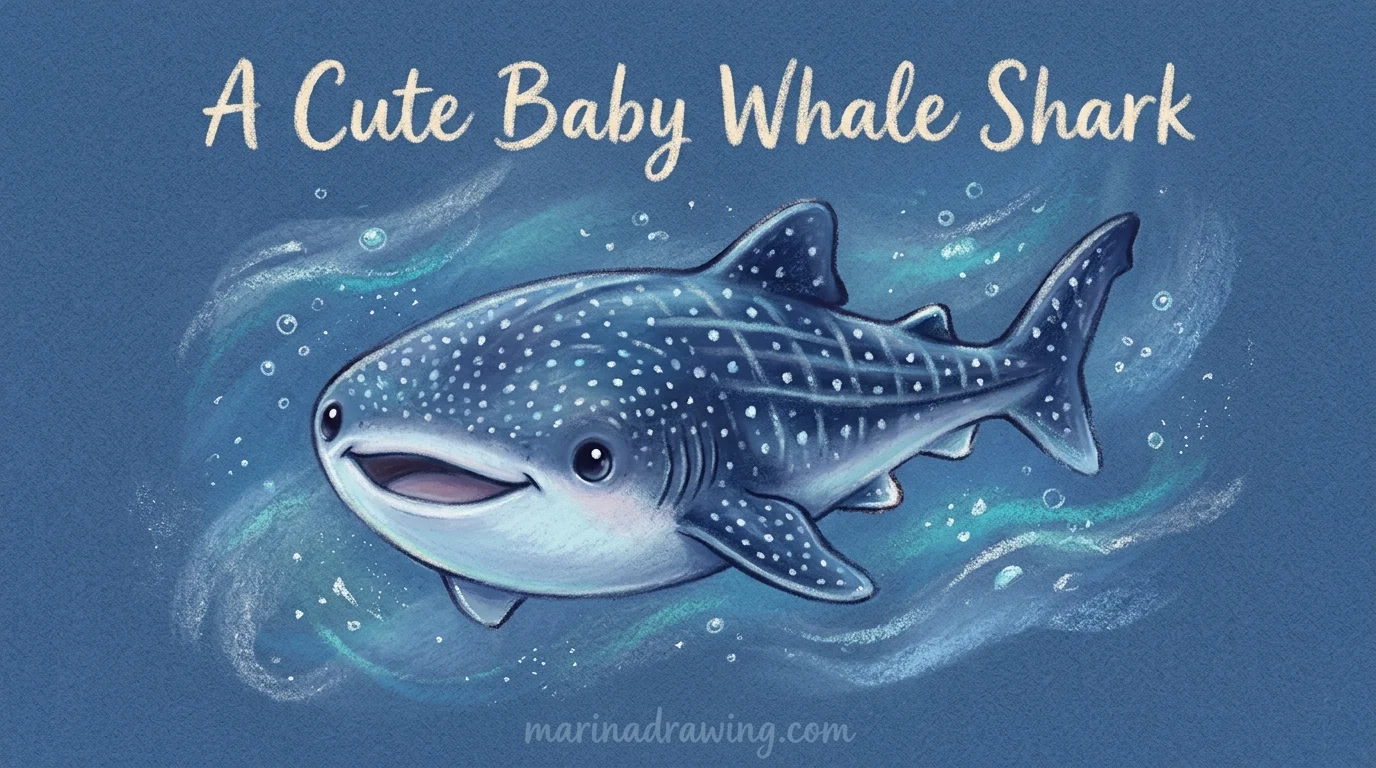
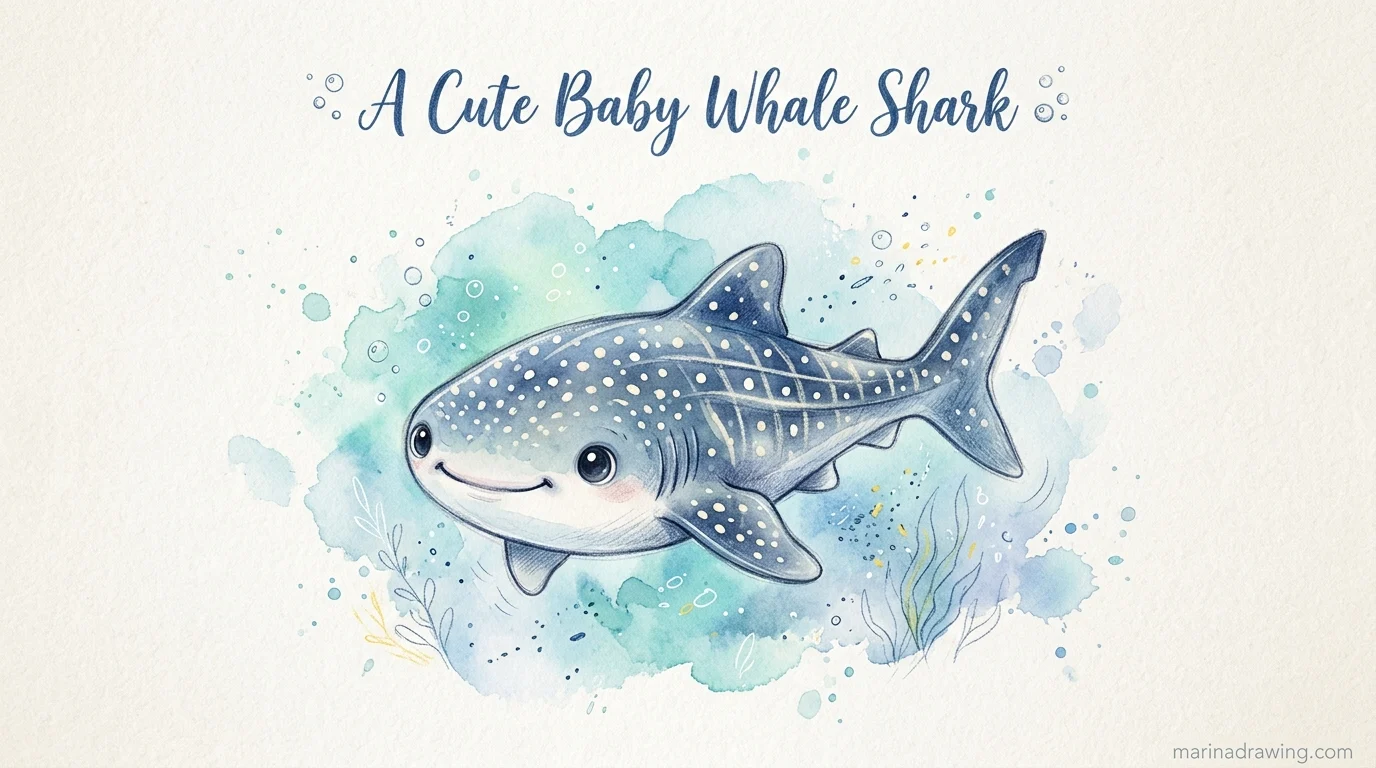
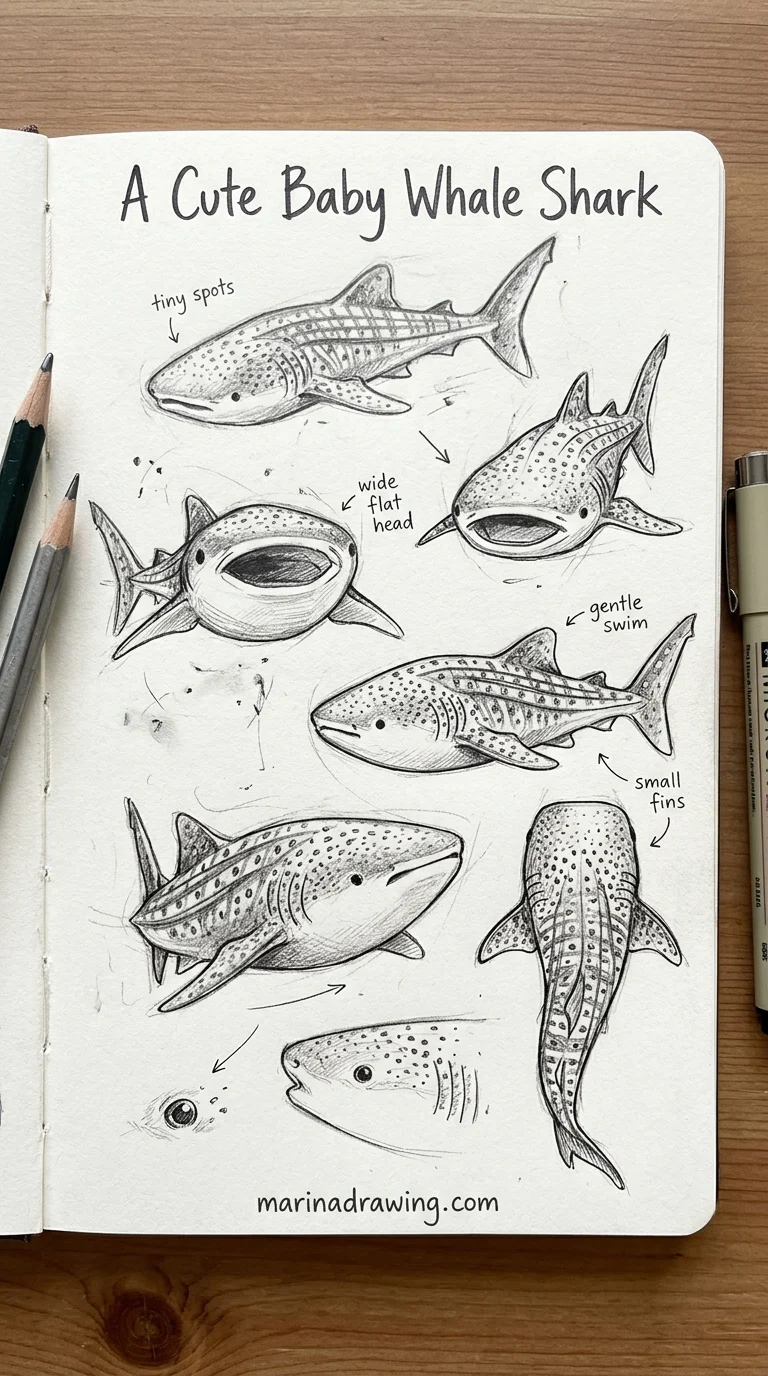
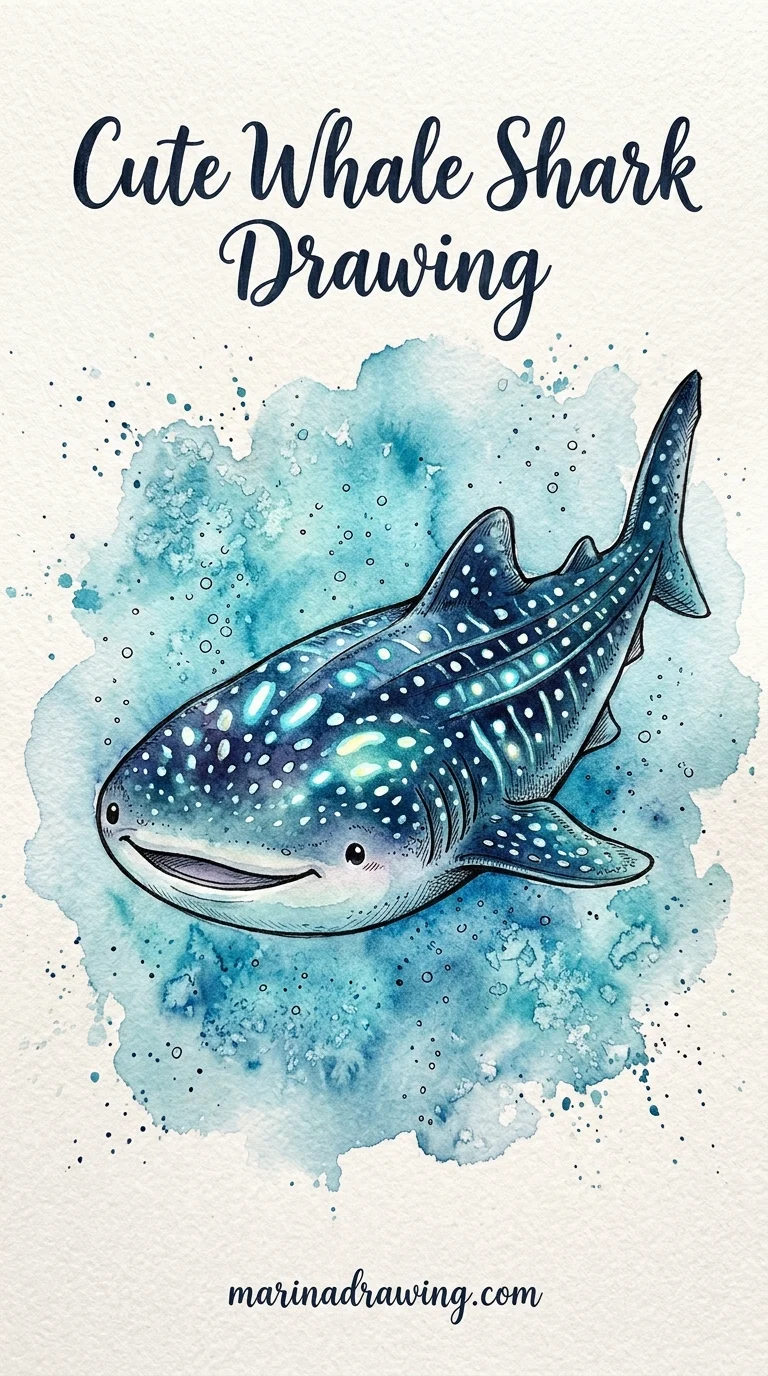
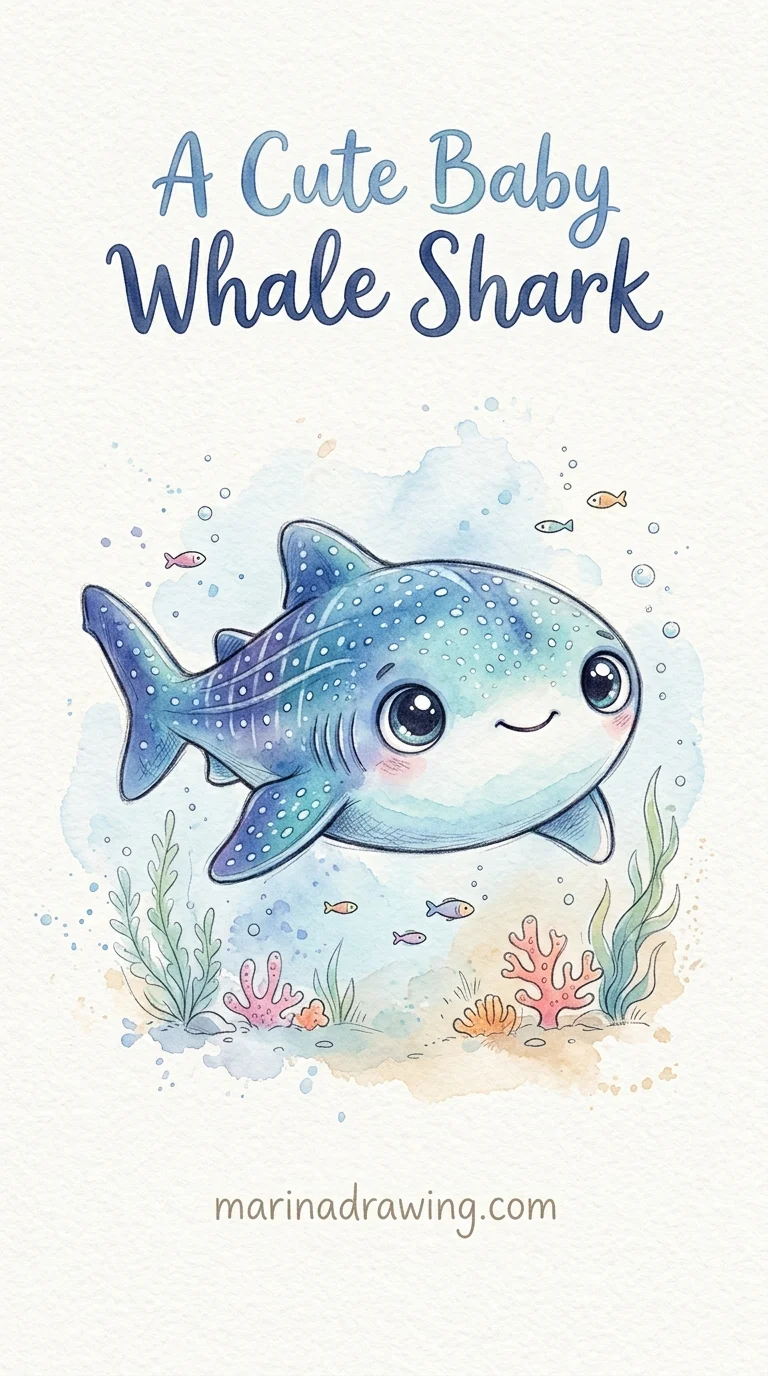
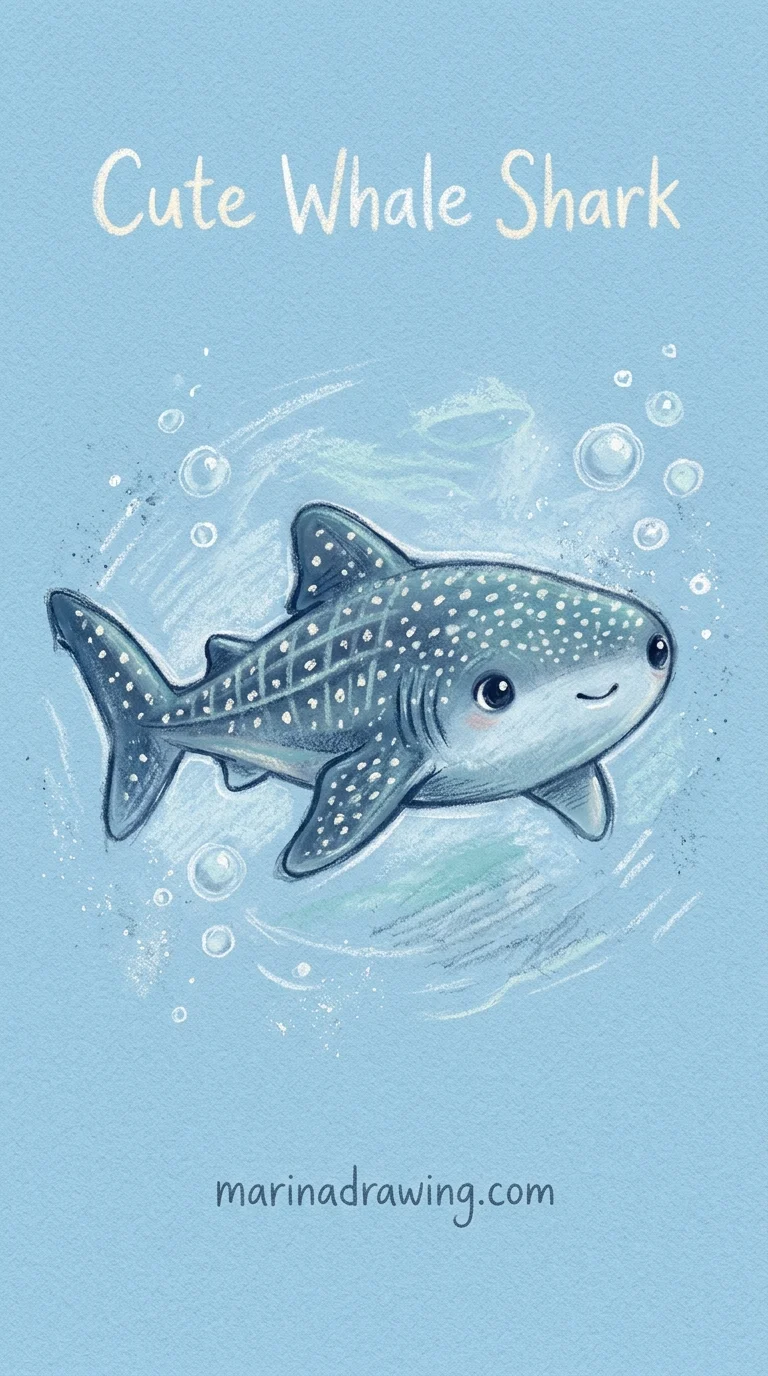
4. A cute baby whale shark
A whale shark drawing cute enough for a sticker is a ratio, not a style.
Give a baby whale shark a head that is large against the body, so your oval is shorter and rounder. Drop the eyes lower than feels right, make them big and round, and keep the mouth a short curved line. Big and low reads as young. Small and high reads as an adult.
Make your fins stubby and your tail small. Cut the number of spots to a handful of large round dots, and space them wide. Too many small ones and the cuteness is gone. Round, low-set features do the same job in cute koala drawing ideas.
For ready-made reference sheets of ocean animals, a library of drawing guides saves guessing.

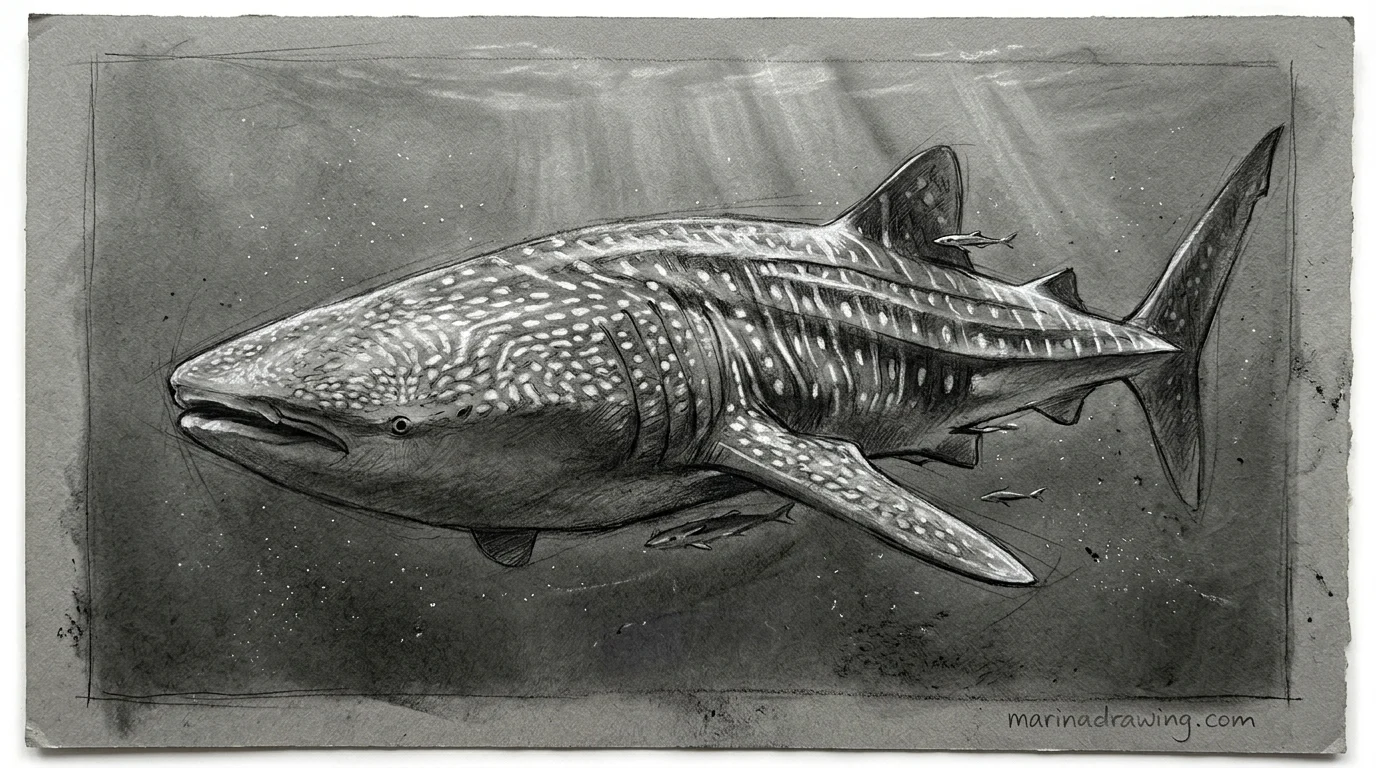
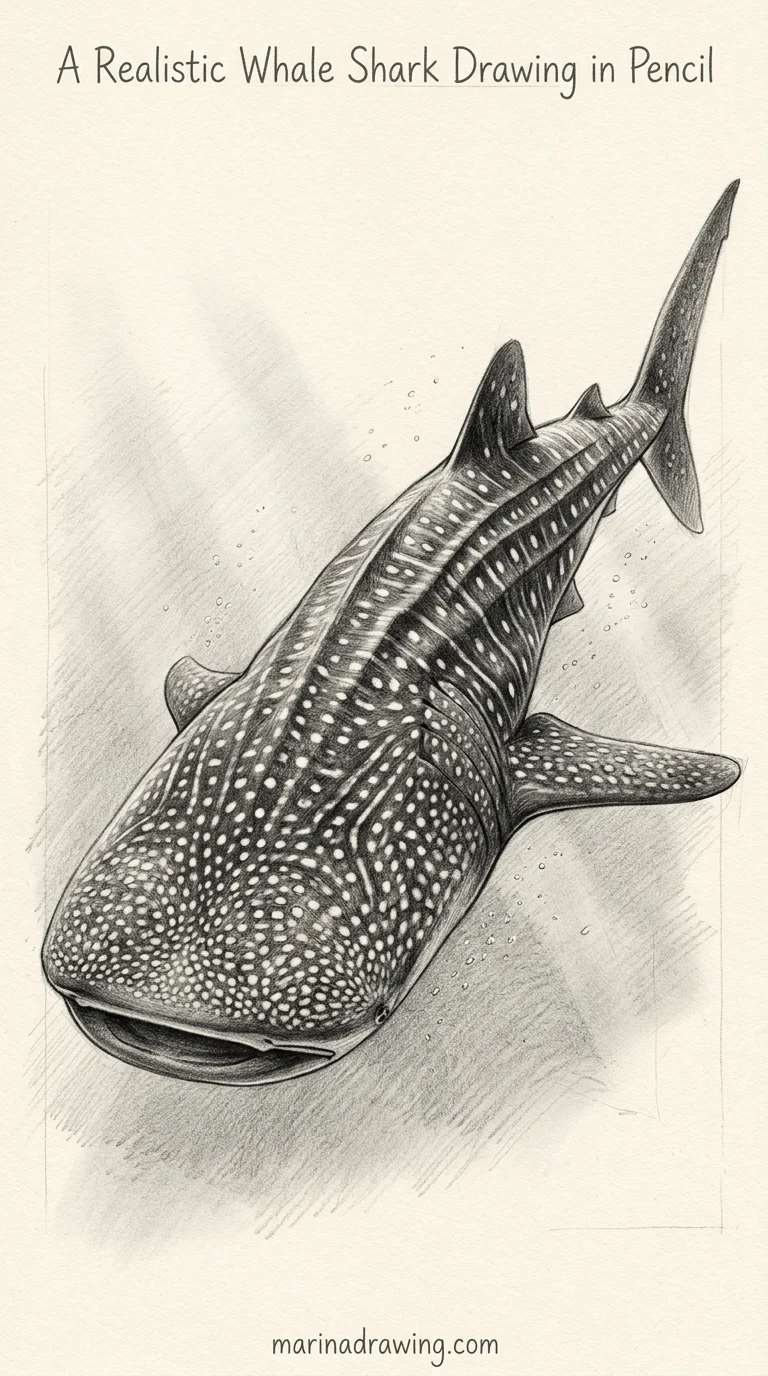
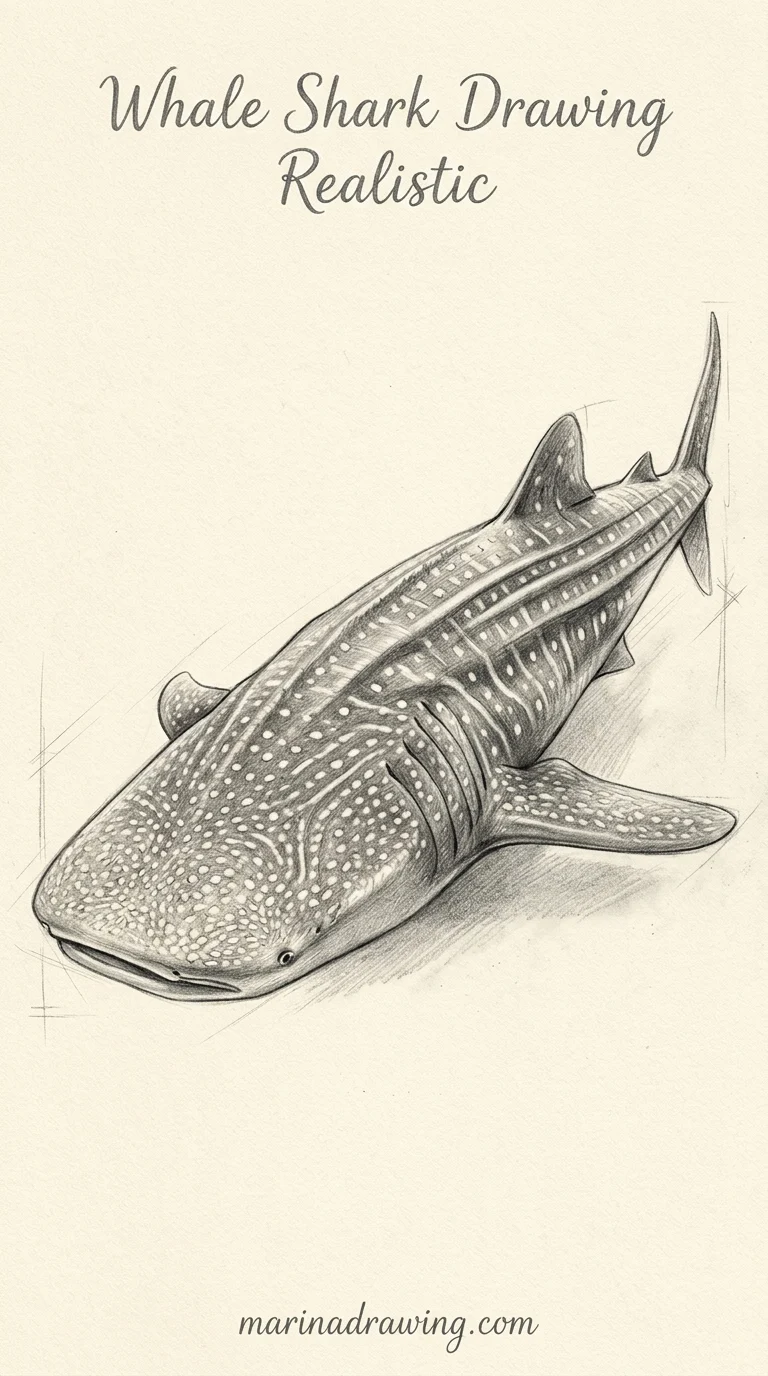
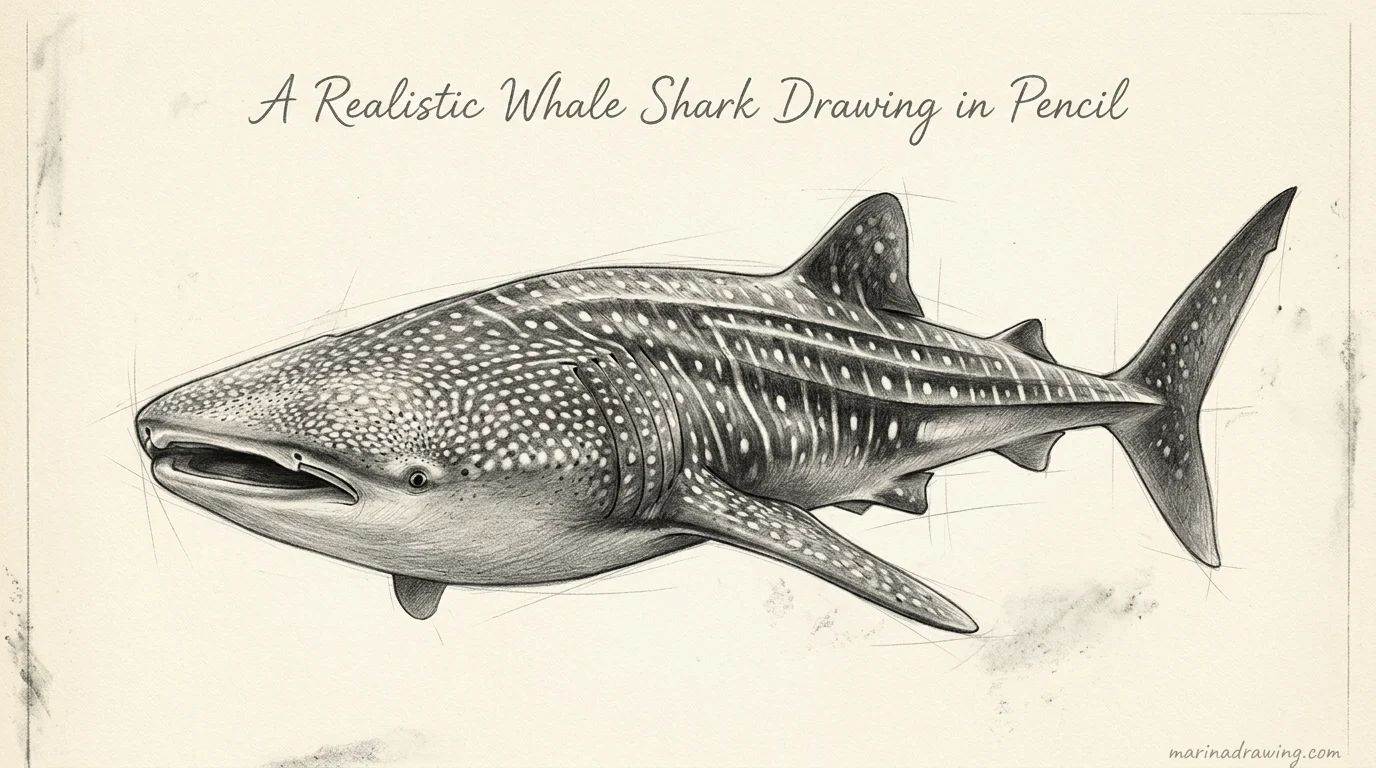
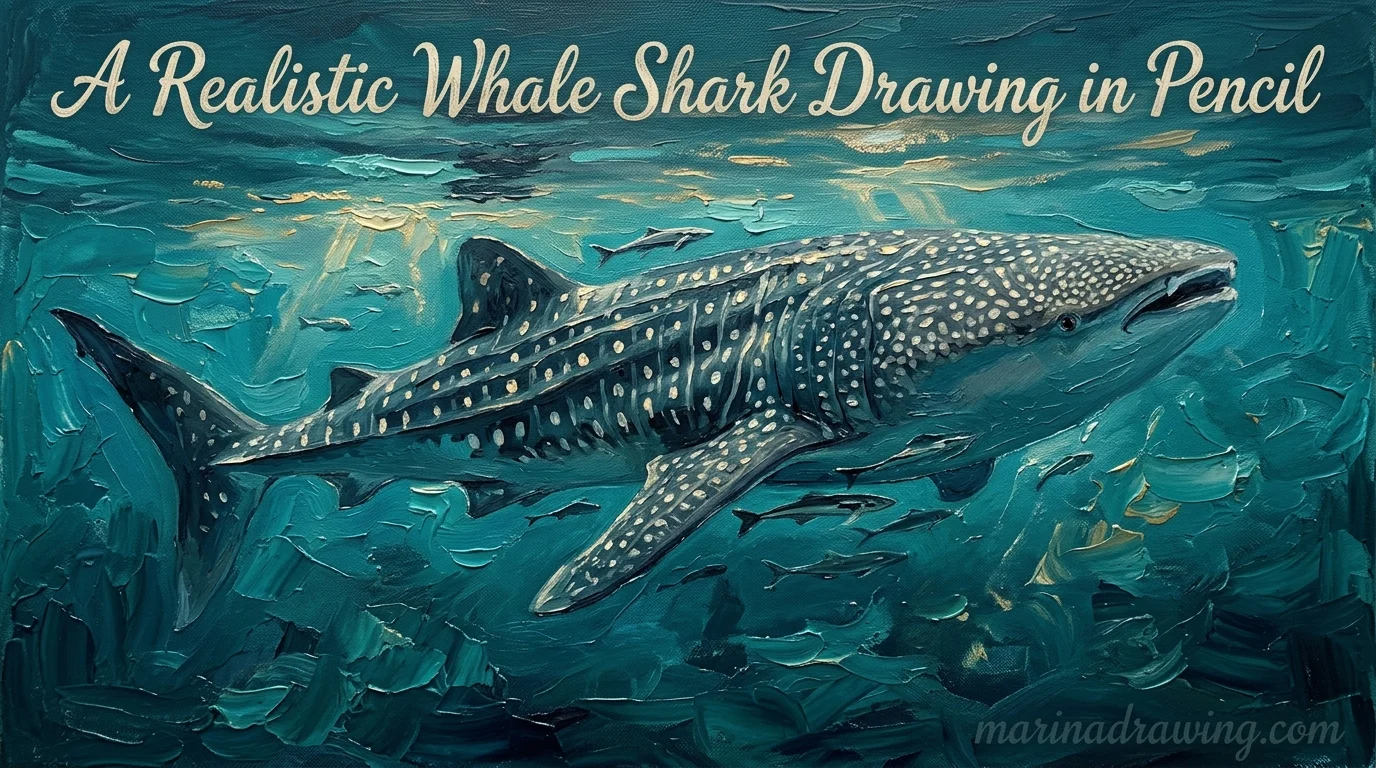
5. A realistic whale shark drawing in pencil
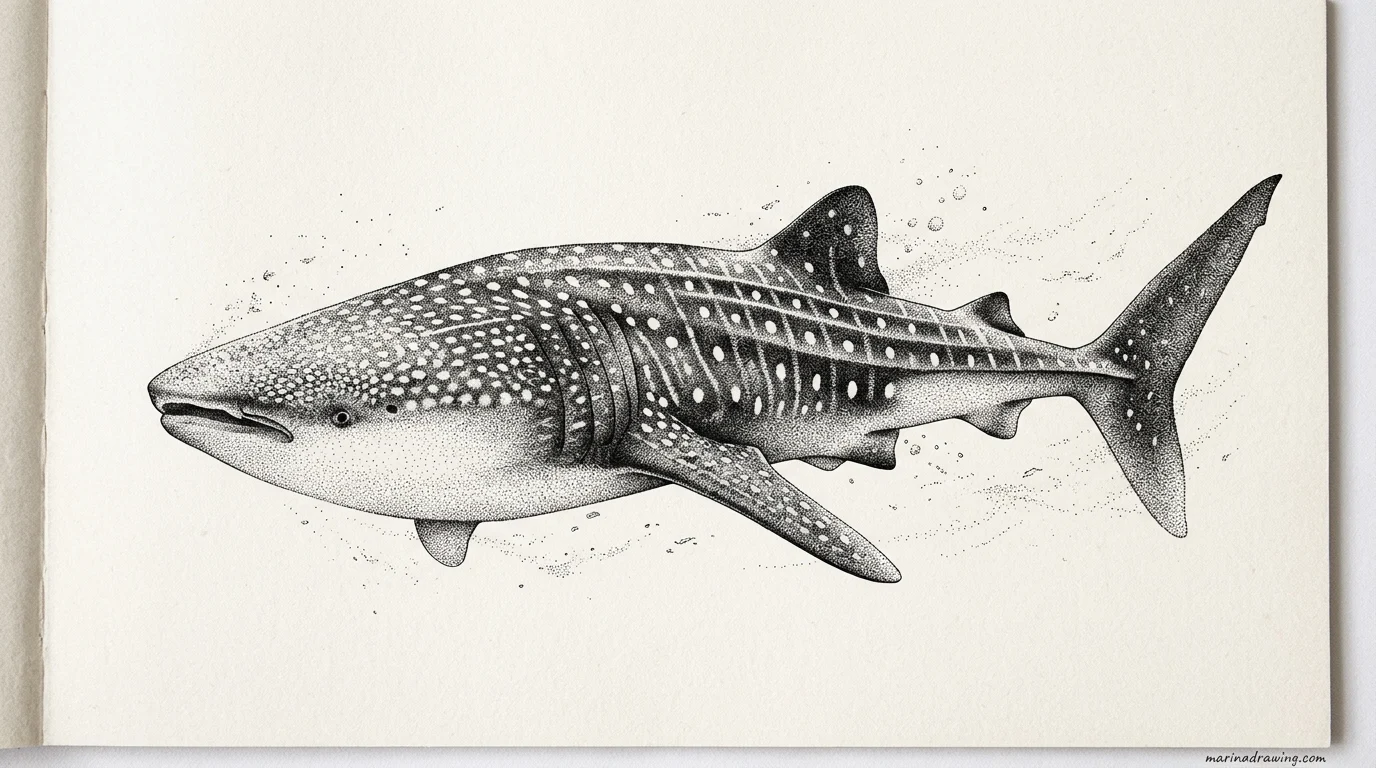
A whale shark drawing realistic enough to pass for a photo study needs tone. The back is a dark grey-blue, the sides are mid grey and the belly is almost white, with a soft transition between them.
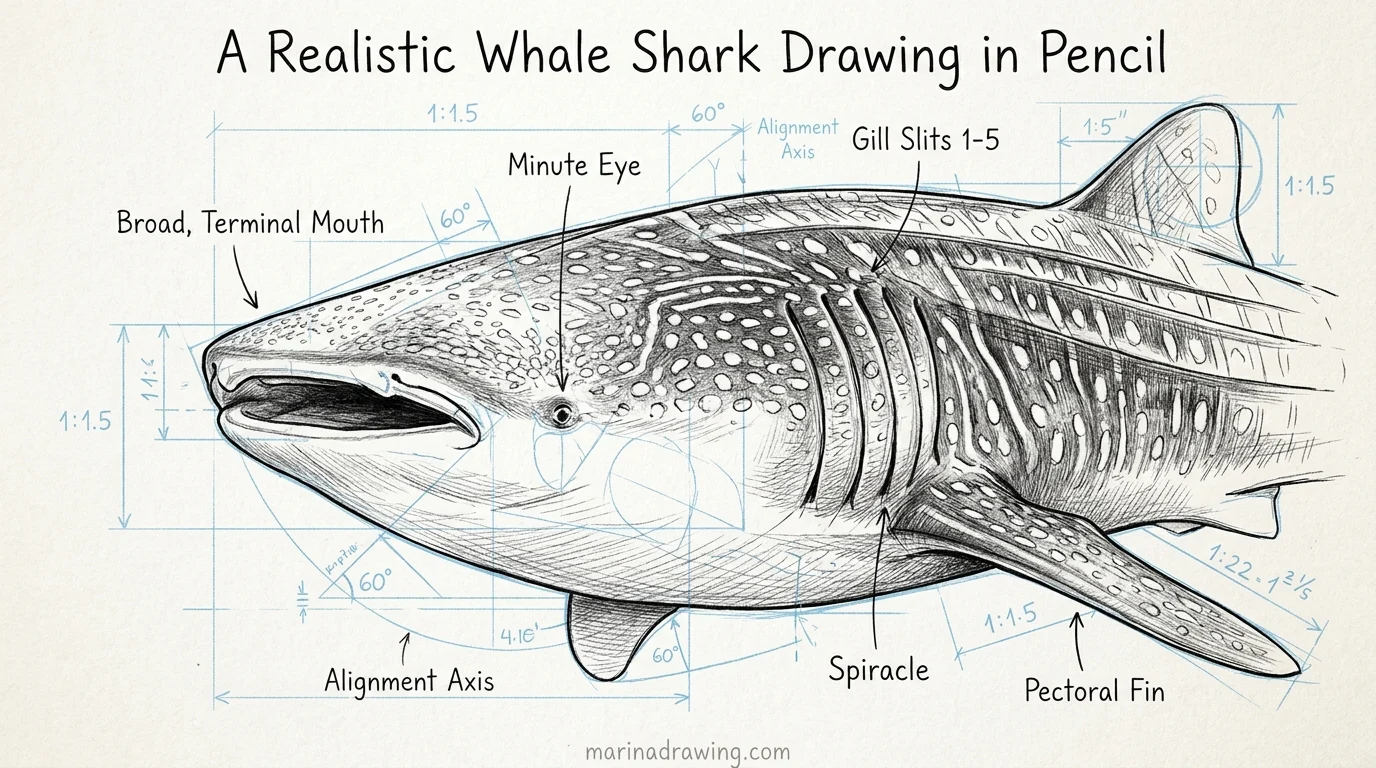
I start with the darkest areas: the top of the head, the back and the upper tail lobe. Then a mid grey down the flanks. The belly gets almost nothing. Pale spots are not drawn, they are left as bare paper or lifted out with the eraser.
The same value habit runs through realistic shading.
If yours looks flat, you are missing a dark, not a detail. This takes an hour, and it is where knowing the shapes stops being enough. The Shading Techniques in Pencil class is a beginner-friendly class on light and shadow.
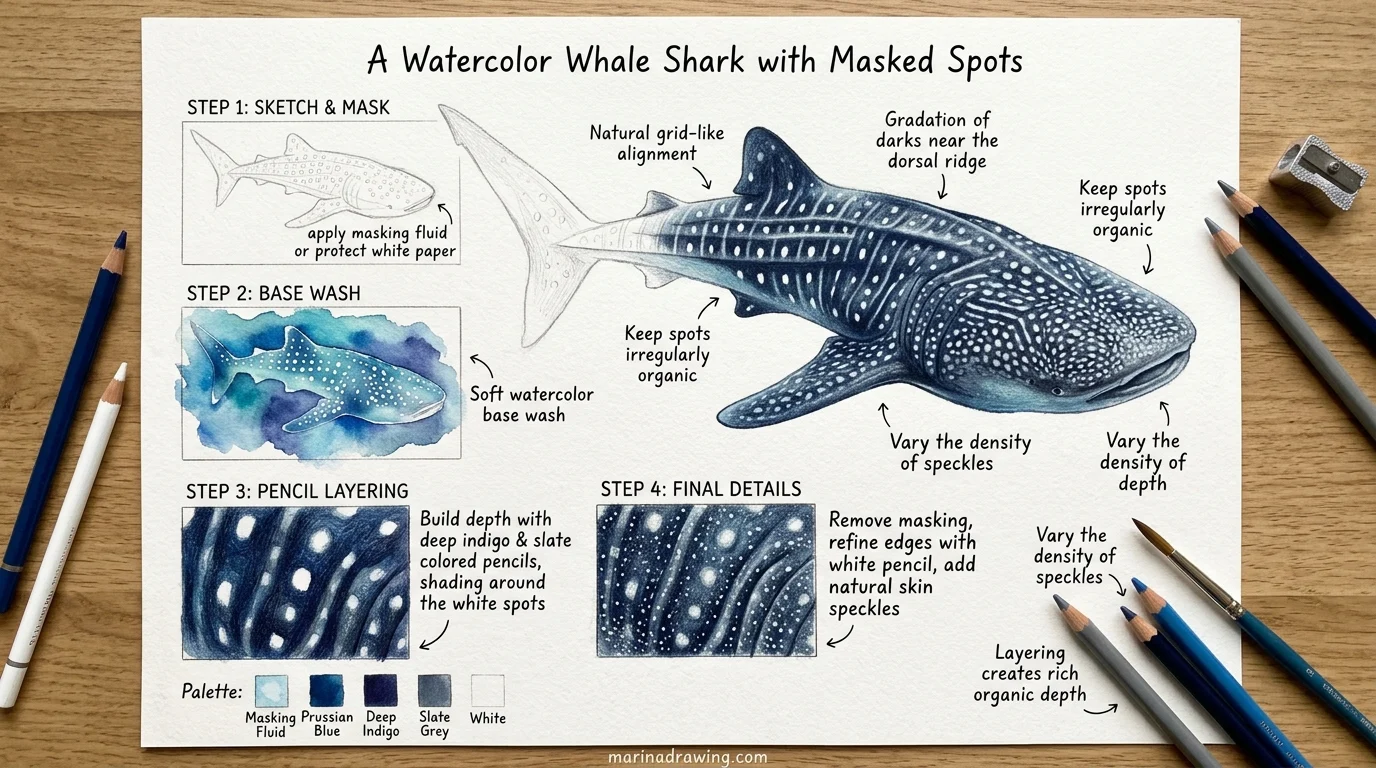
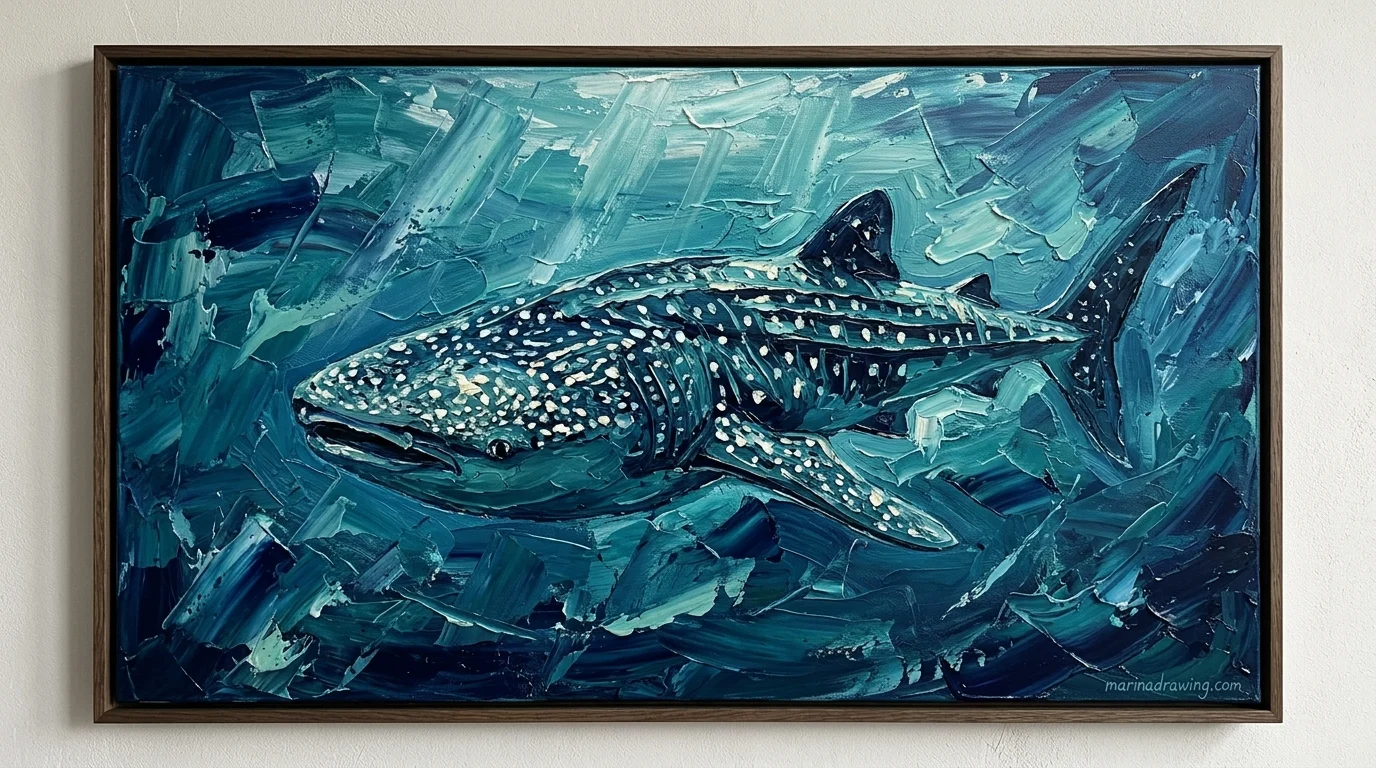
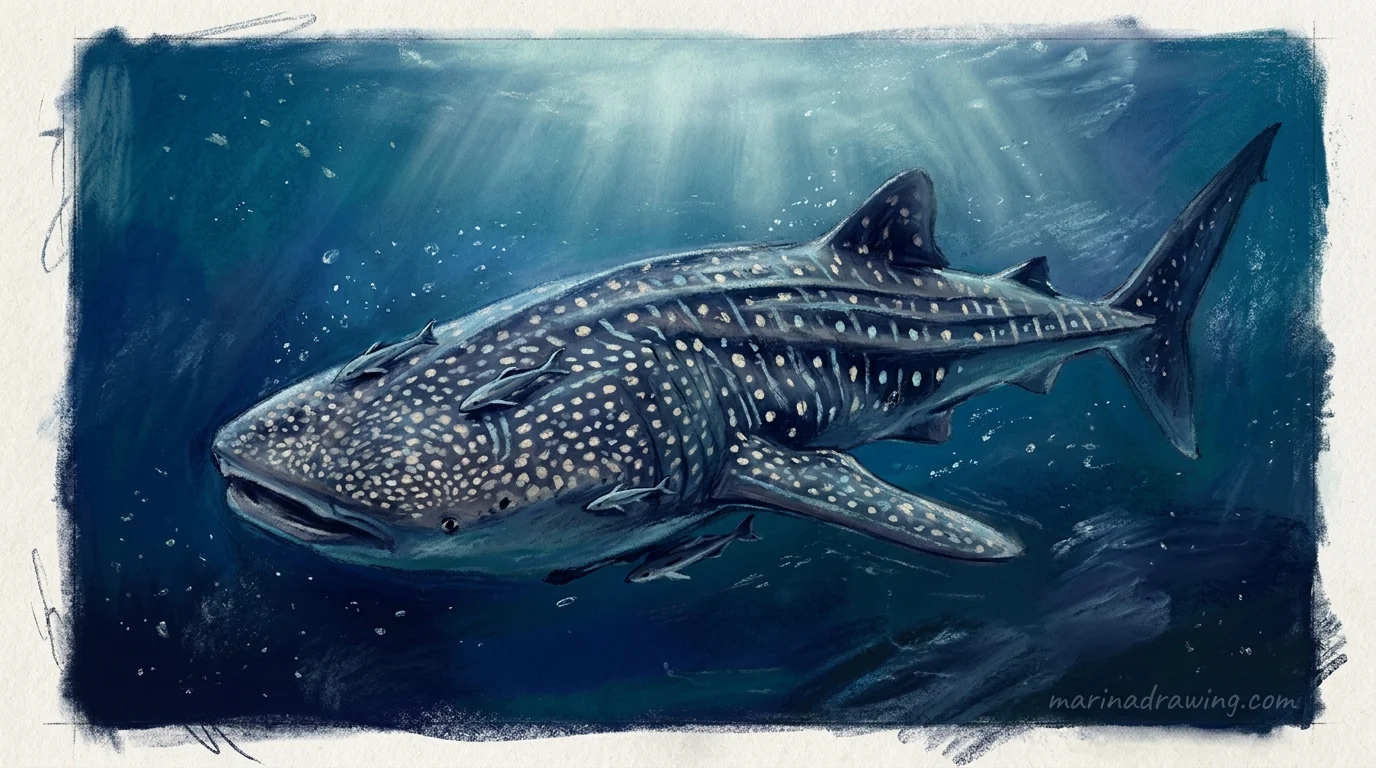
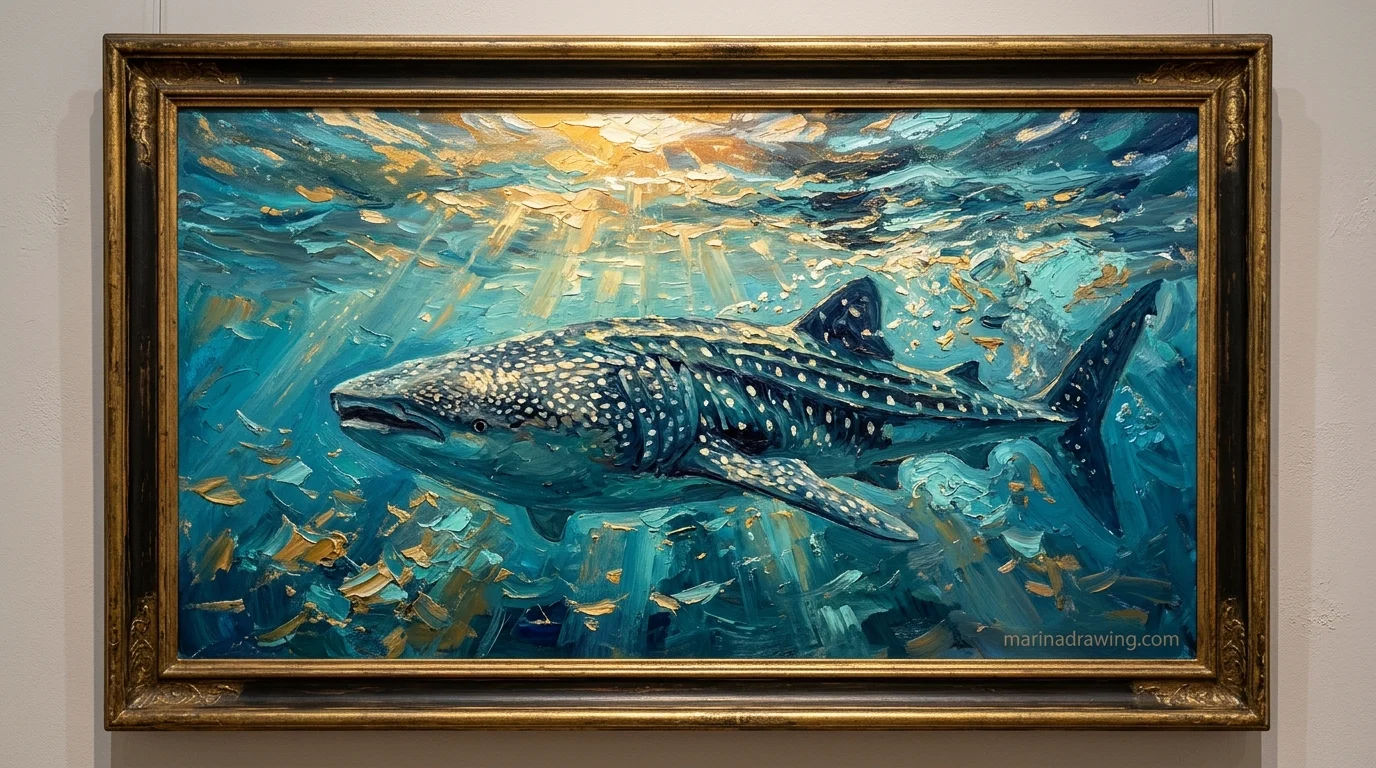
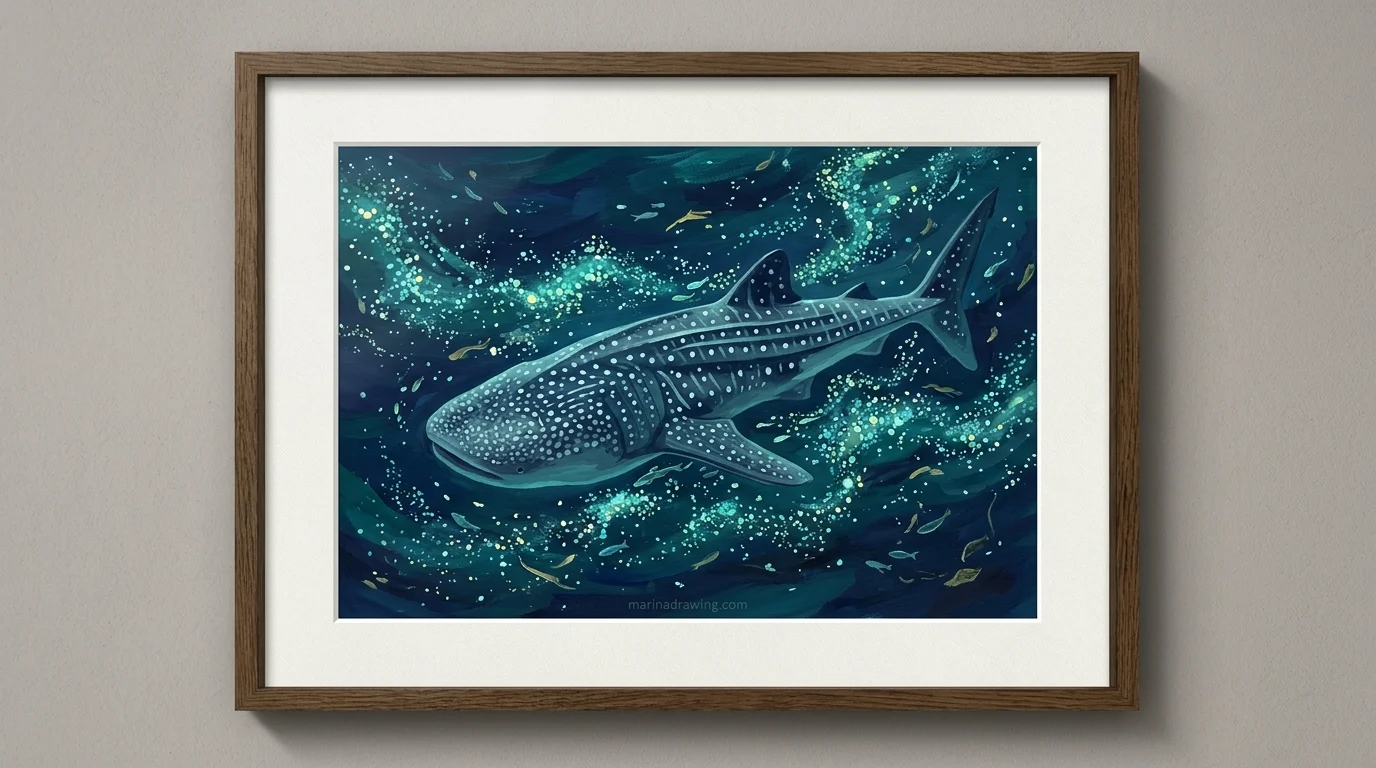
6. A watercolor whale shark with masked spots
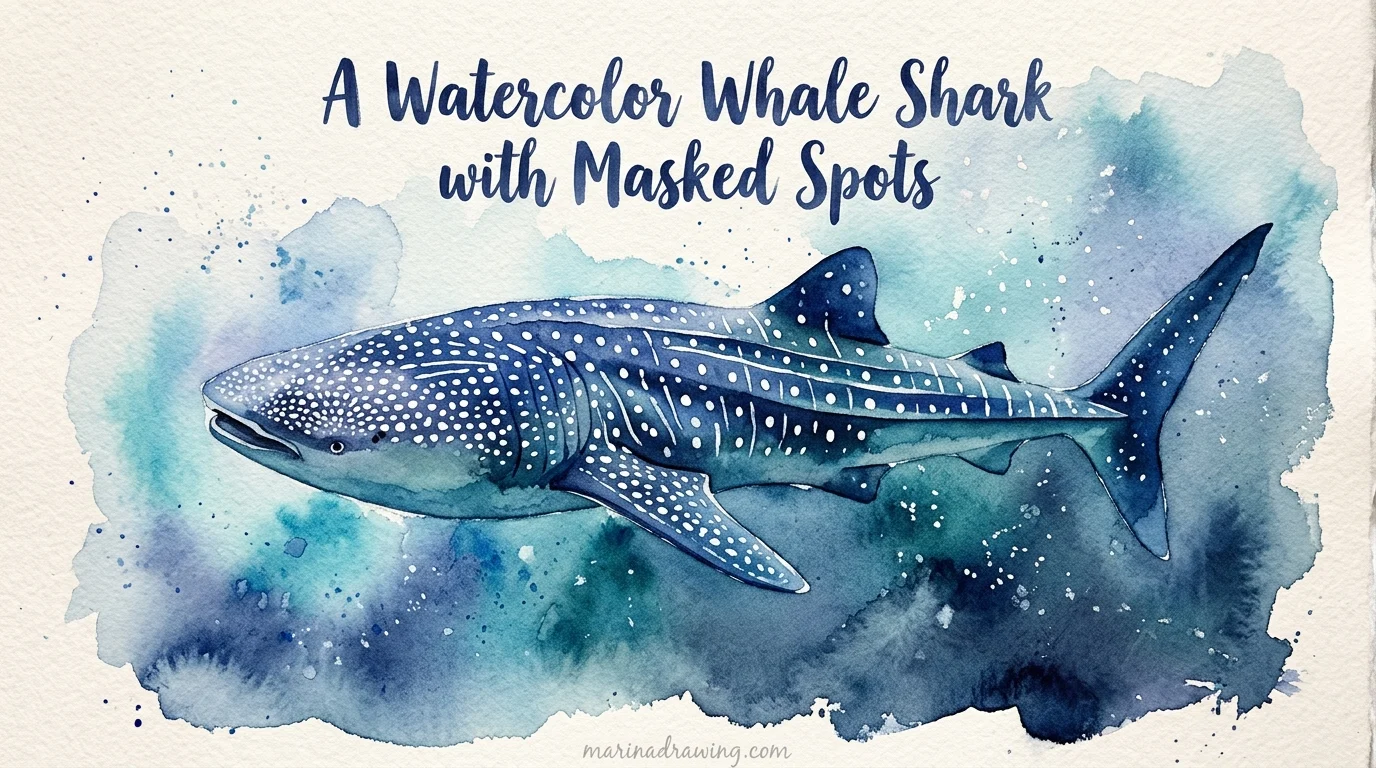
For a blue whale shark drawing in paint, the spots go in first. Dot the masking fluid or a little white gouache along your ridge guides before any paint touches the paper, then wash a blue-grey over the whole body.

Let the first wash dry, and then put a darker blue over the back only. Rub the mask off at the end and the white dots appear in clean rows. That is how you get the look of a night sky on a back.
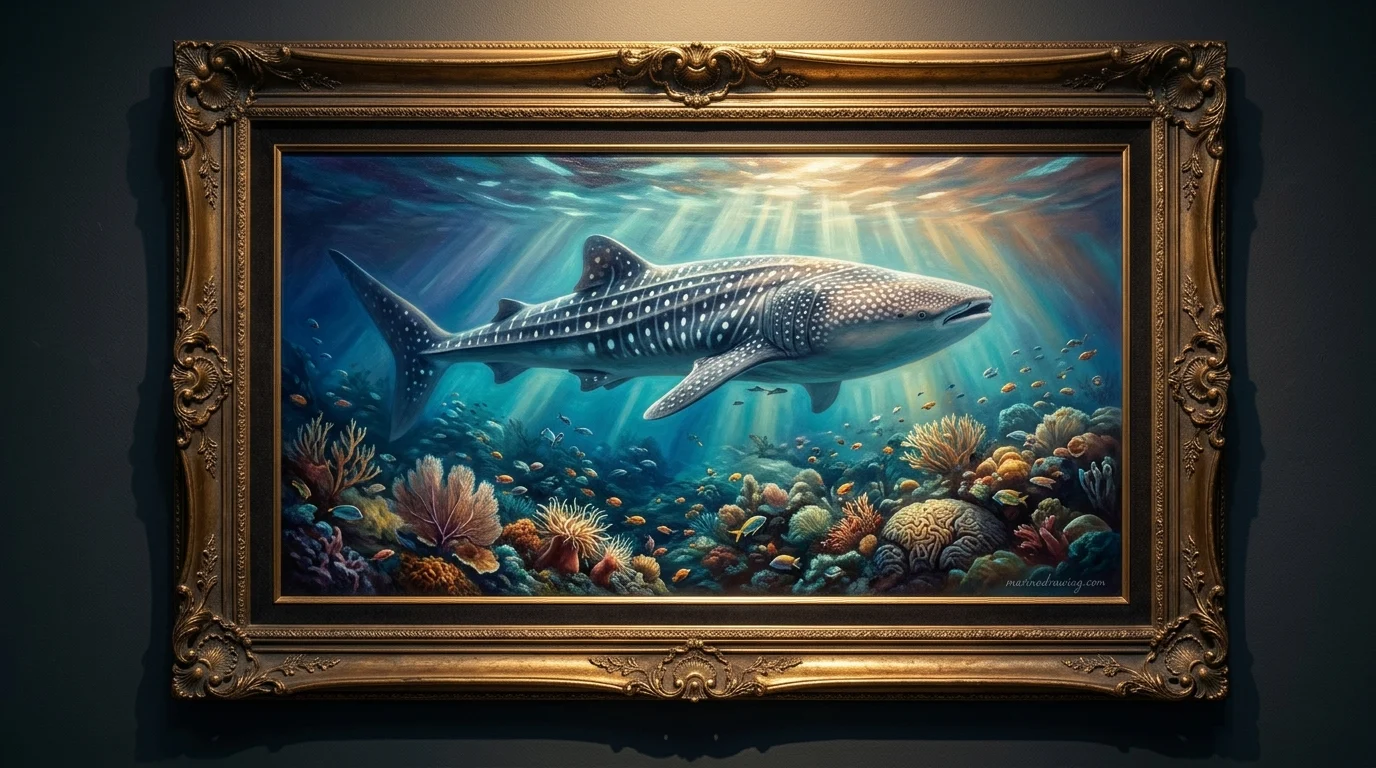
Keep the belly paler with one thin wash. Ocean references help you choose the blues.
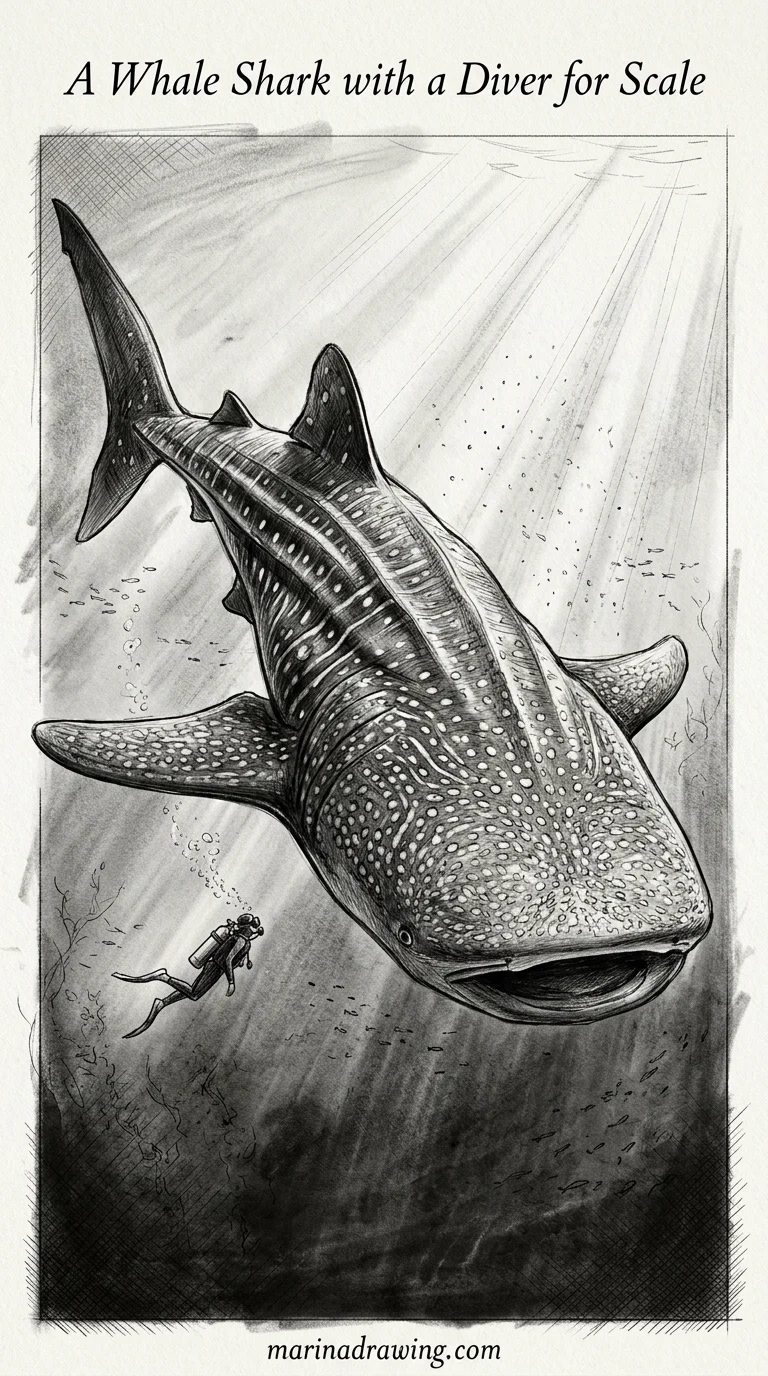
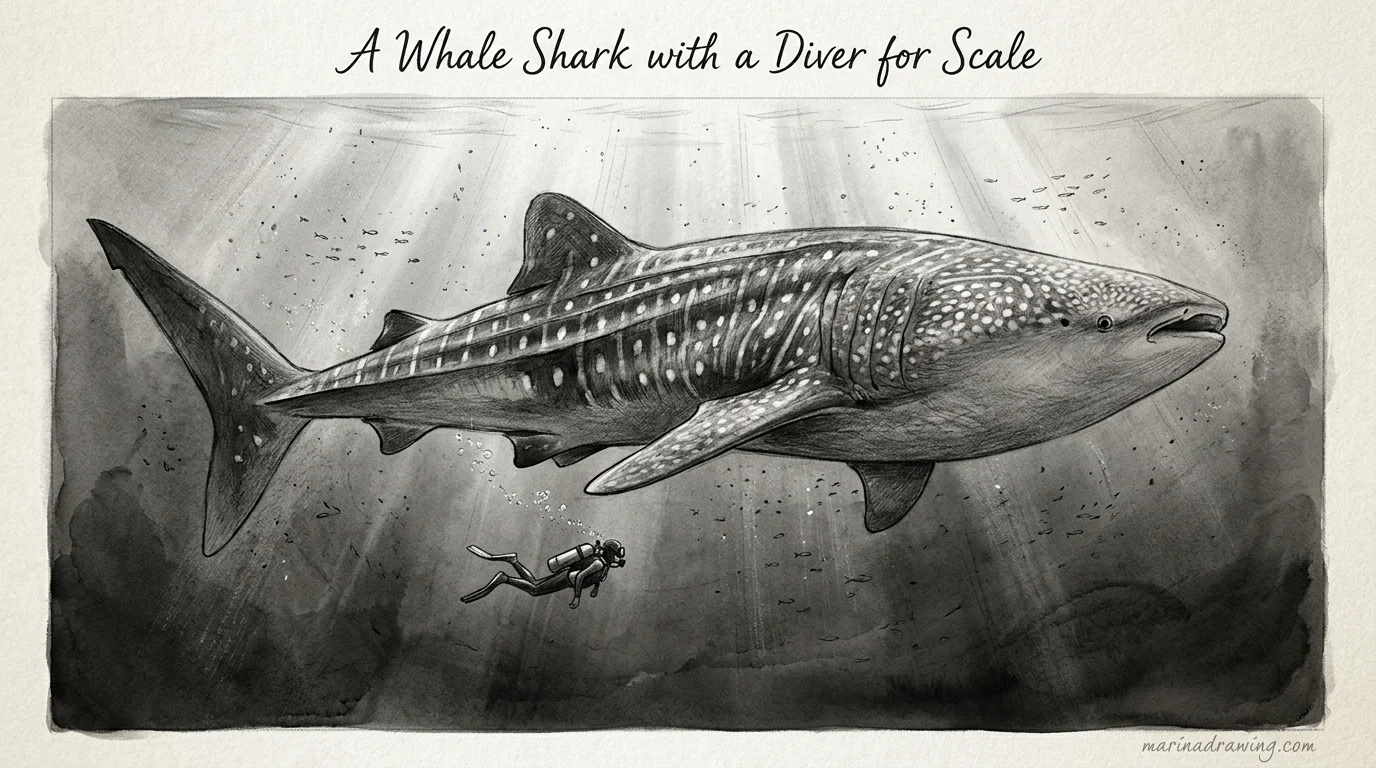
7. A whale shark with a diver for scale
A whale shark is huge, and the easiest way to say so is to draw something small next to it.
Draw the whale shark first, then a small diver in front of the head: a tiny oval body, two arms forward and a pair of fins trailing behind. Keep the diver about the size of the shark’s side fin.
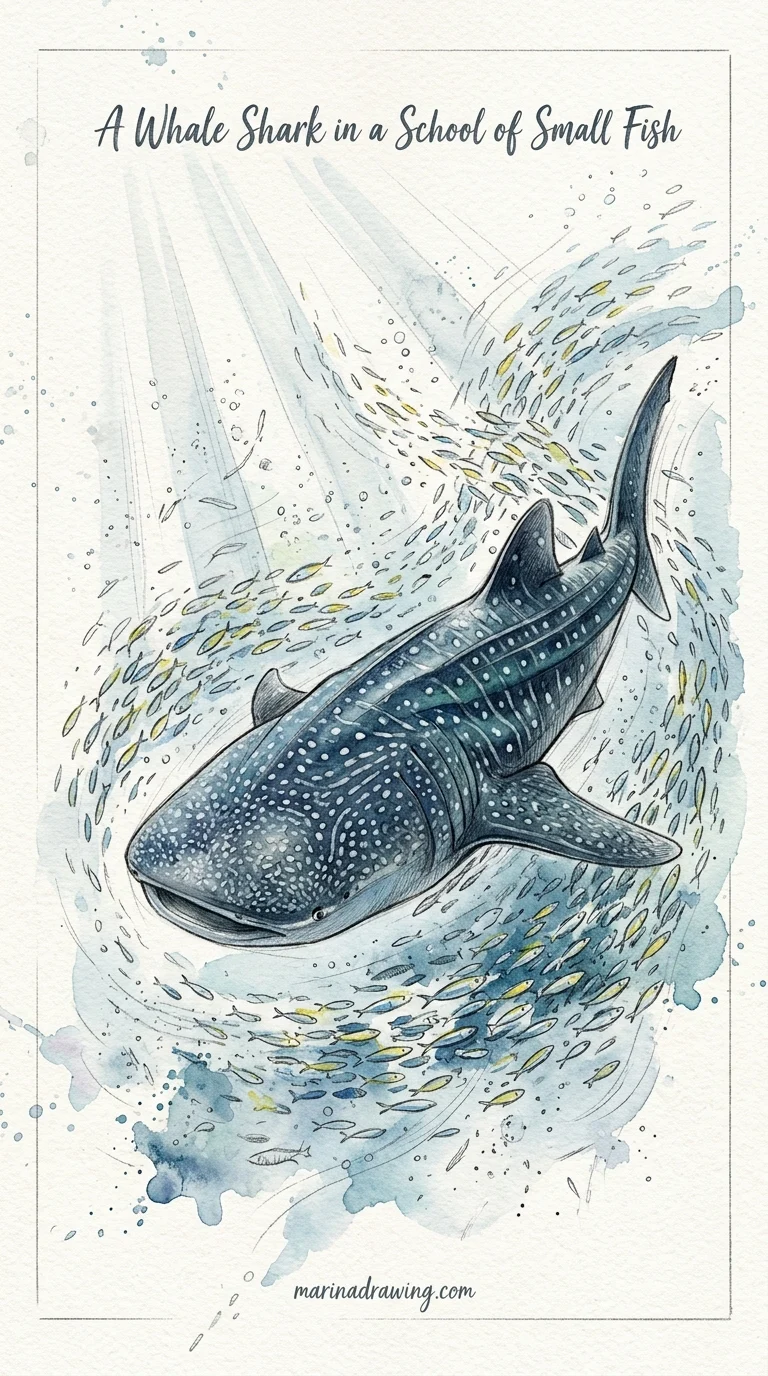
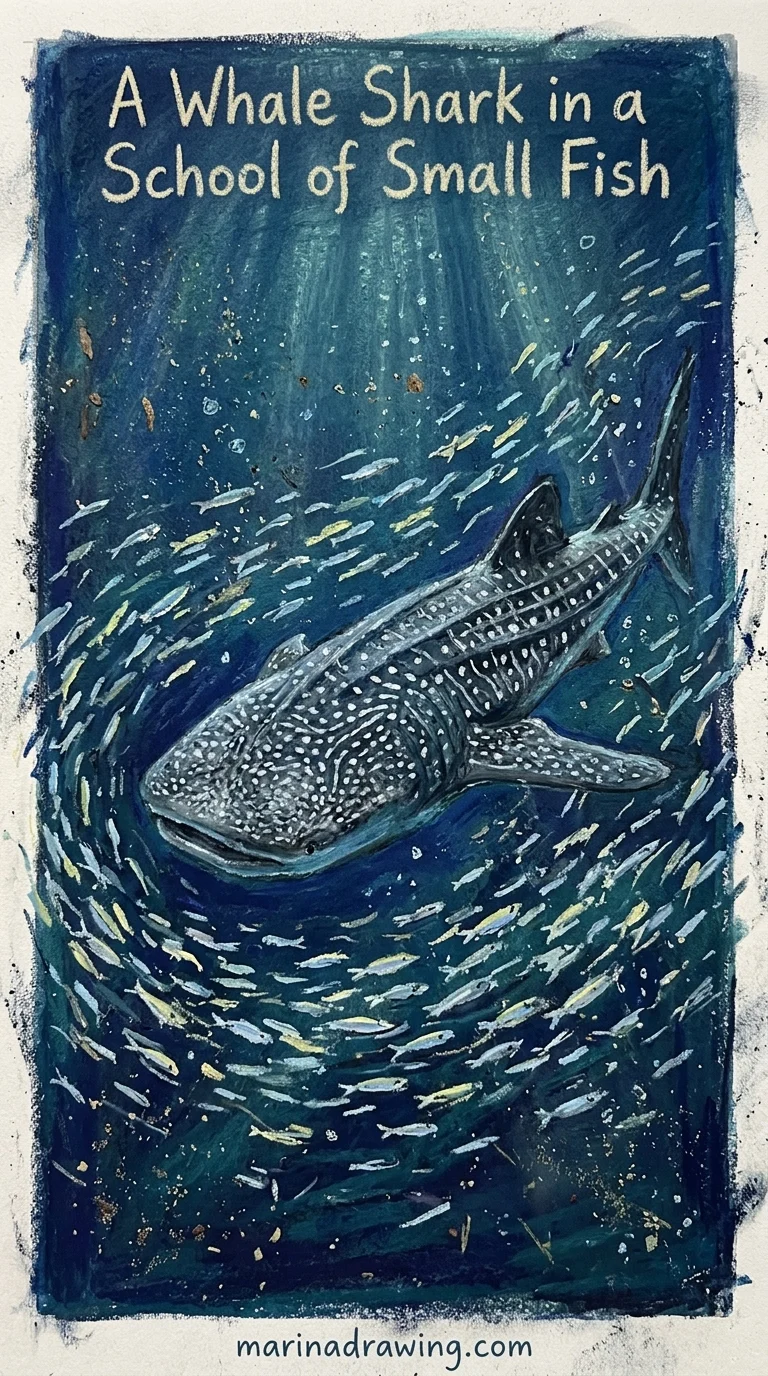
8. A whale shark in a school of small fish
You make the shark the calm centre and the small fish quick marks around it. Draw the shark in the middle of the page first, then add the fish as lens shapes with a small triangle for a tail.
Build the fish like this:
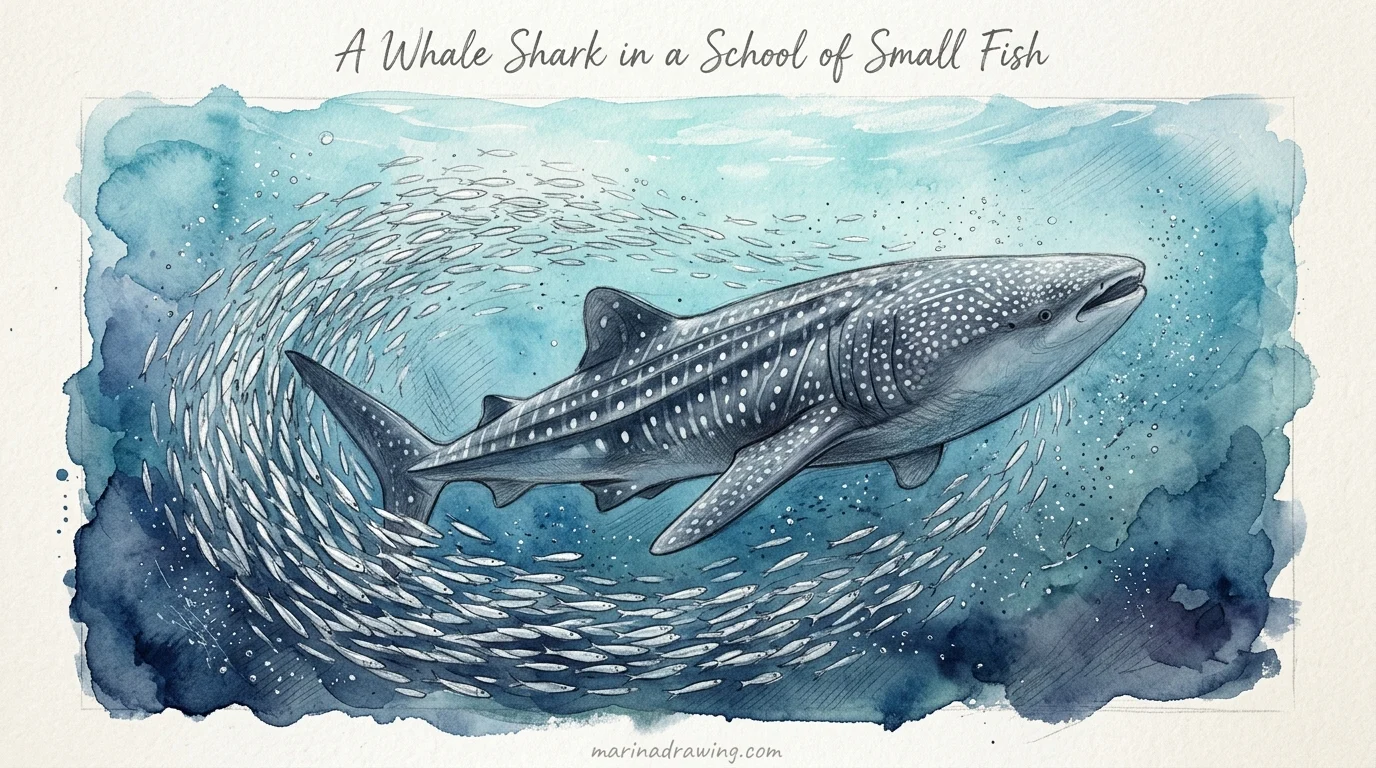
- Group them in loose clusters of three to five, all pointing the same way.
- Leave gaps between clusters, because evenly spaced fish look like wallpaper.
- Keep each fish a fraction of the shark’s side fin.
You want the shark to be the biggest thing on the page by far.
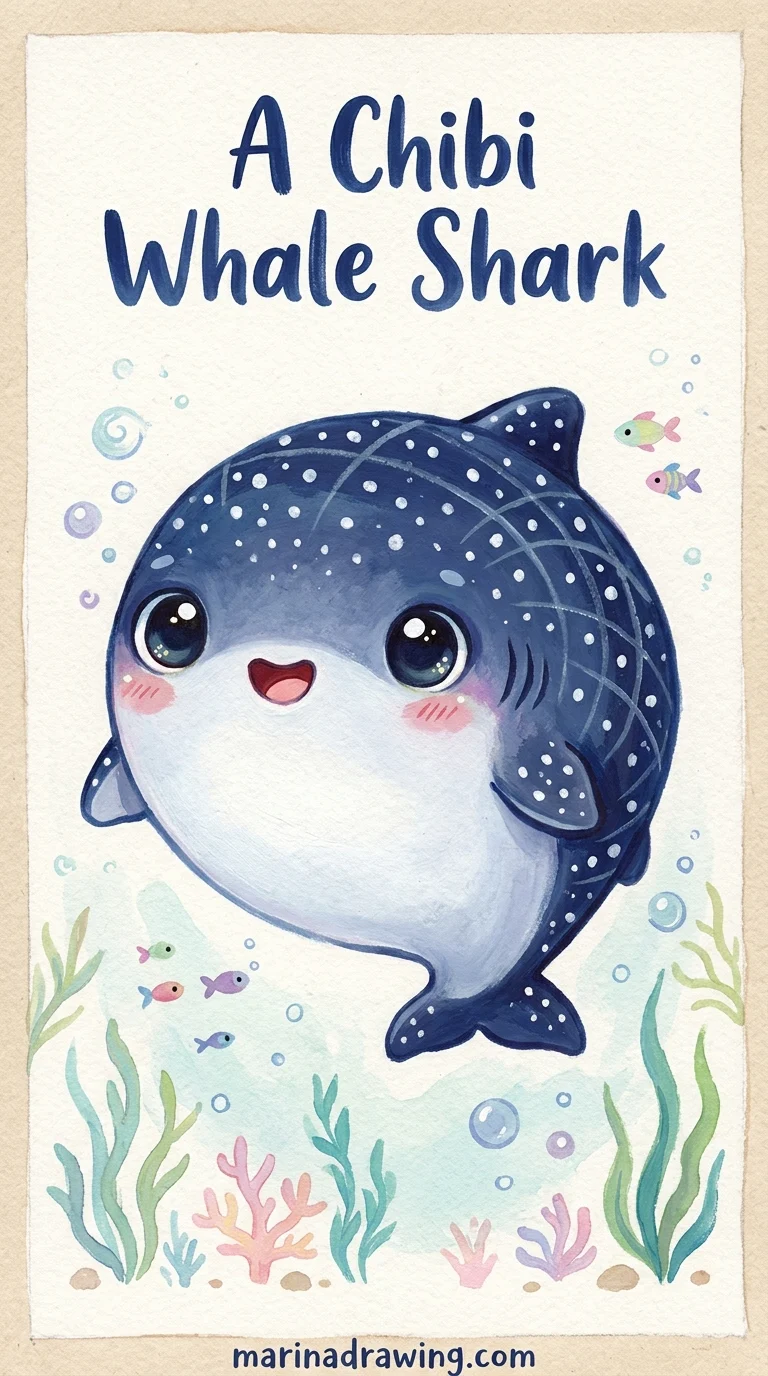
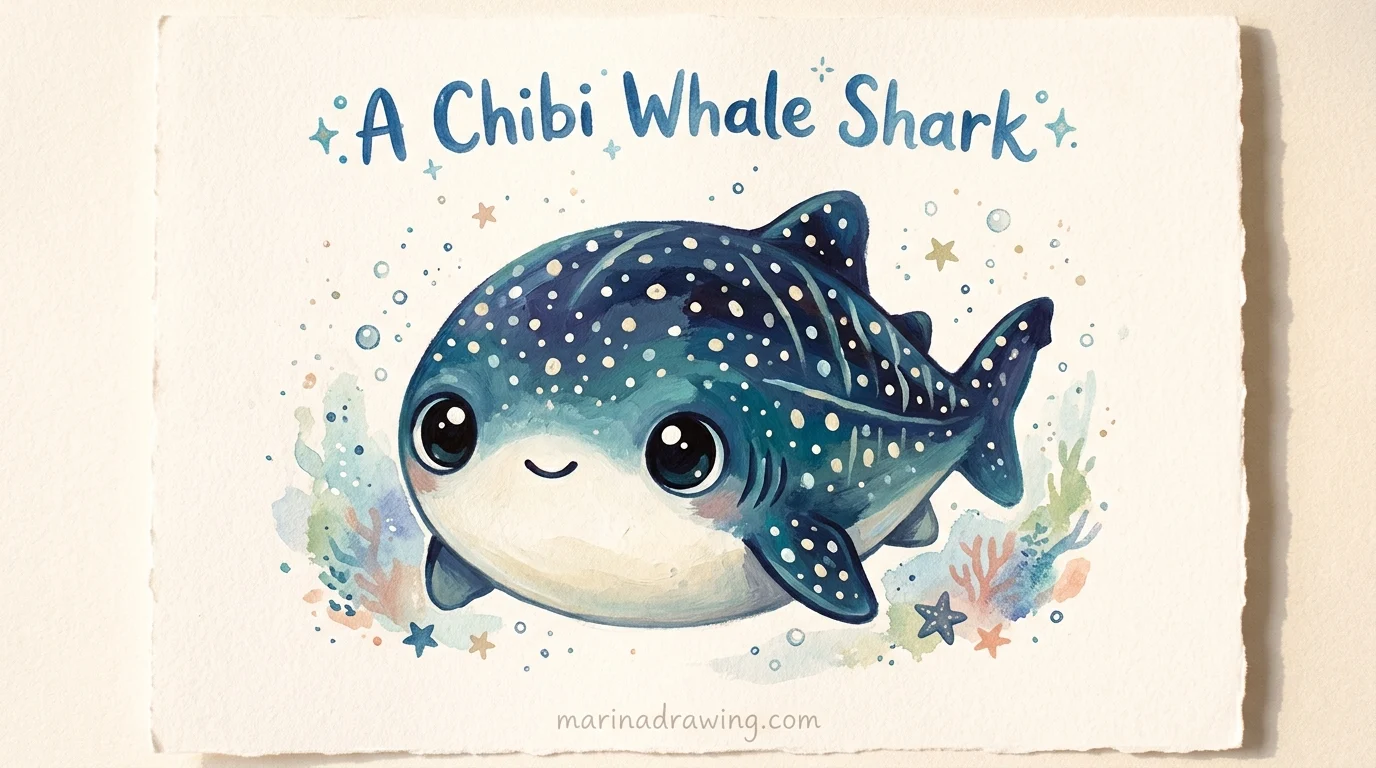
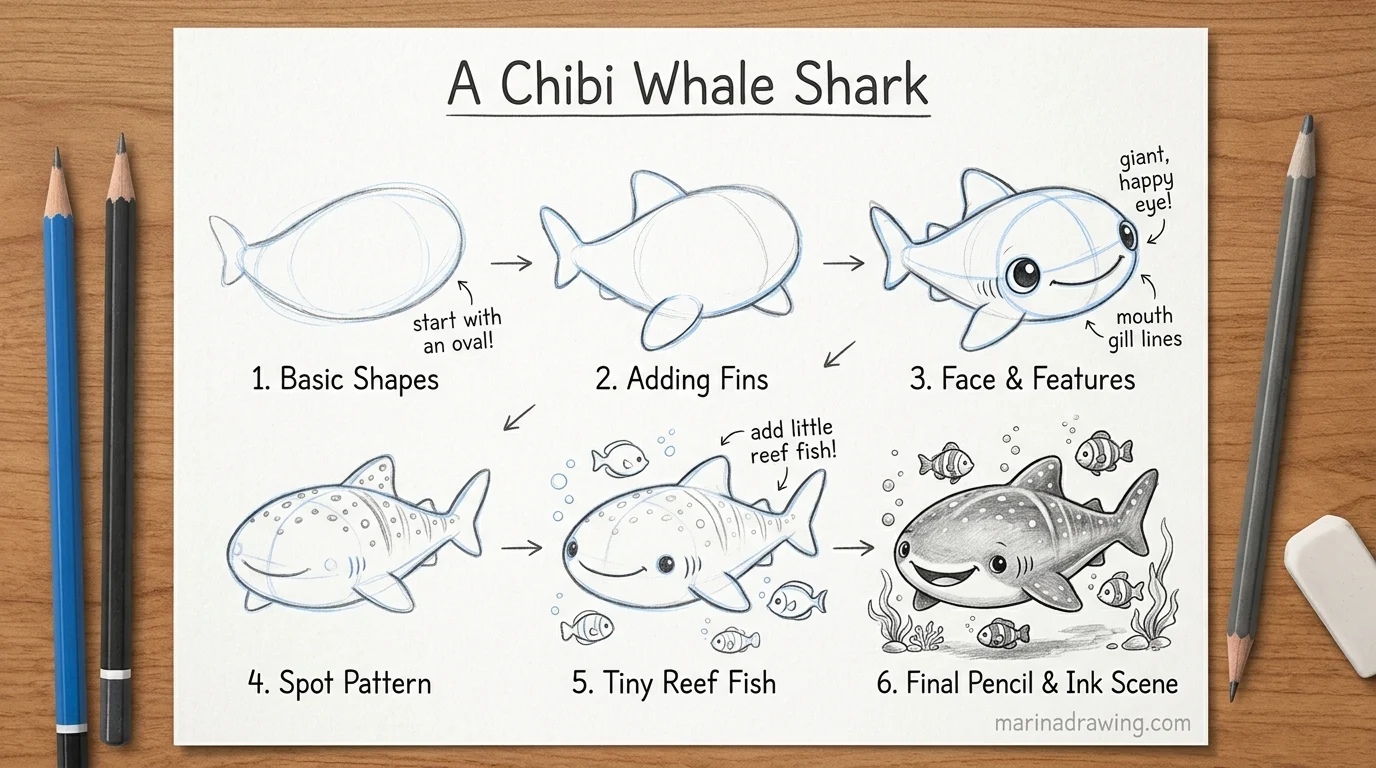
9. A chibi whale shark
Chibi is the baby ratio pushed further. A round, short body, a head that merges into it, tiny dot eyes set wide and a small smile.
You use one line weight, close every shape and add only five or six big spots. I like to stop earlier than feels natural. The silhouette carries everything. Give it a pale belly with a clean curve and stop there. A small round body works the same way in easy rabbit drawing ideas.
Which mistake did you make?
Put your drawing next to this and read down the left column. I still check my own whale sharks against it.
| What you see | What is actually wrong | Your fix |
|---|---|---|
| It looks like an ordinary shark | The snout is pointed and the head is narrow | Flatten the front into a wide, blunt shovel shape |
| It looks like a shark with freckles | The spots are random or identical dots | Draw three ridge lines and place spots in rows between pale stripes |
| The face looks like a cartoon fish | The eye is big and near the front | Make it tiny and place it low and back on the side of the head |
| It looks like a dolphin | The body is short and the tail is horizontal | Lengthen the body and give it a vertical crescent tail with a longer upper lobe |
| It looks flat and grey | No dark back and no pale belly | Darken the back, leave the belly bare paper and soften the join |
If the same row describes every whale shark you draw, your gap is construction rather than practice.
Questions people ask about drawing a whale shark
How to draw a whale shark step by step?
Start with a long oval, flatten the front into a wide snout, then add the mouth line across the end. Next come the two dorsal fins, the side fins and the crescent tail. Spots go in last, in rows.
How to draw a whale shark easy?
Use the oval and grid version: a long body, a flat front, one mouth line, four fins and three rows of dots. About a dozen marks, and it reads as a whale shark.
How to draw a cute whale shark?
Shorten and round the body, drop the eyes low, make them big, and cut the spots to a few large dots. It is a ratio, not extra detail.
How to draw a realistic whale shark?
Build the same oval, then work in three tones: dark back and tail first, a mid grey on the flanks, and bare paper on the belly. Leave the pale spots unpainted or lift them out.
How to draw a whale shark from above?
Draw a centre line, a narrow body along it, a blunt rectangle head, and two wide side fins at the shoulders. Run the spot rows along the line.
How to draw a baby whale shark?
Give it a larger head against the body, big low eyes and fewer, bigger dots. Keep the fins stubby.
Which whale shark should I draw first?
The easy oval and grid one, then the outline, then the cute one.
Key takeaways
- A whale shark is read by its flat, wide head and the mouth at the front, not by its fins.
- Spots sit in rows between pale stripes along three ridges, never scattered.
- The eye is tiny and set low and back. Large and forward turns it into a cartoon fish.
- The tail is a crescent with a longer upper lobe.
- Cute is a ratio: rounder body, big low eyes, fewer and larger dots.
- The realistic one needs tone, so draw the darks first.
Draw two or three and you will know which row is yours. I keep the same habit on other animals: the fox, the duck, plain drawing practice.