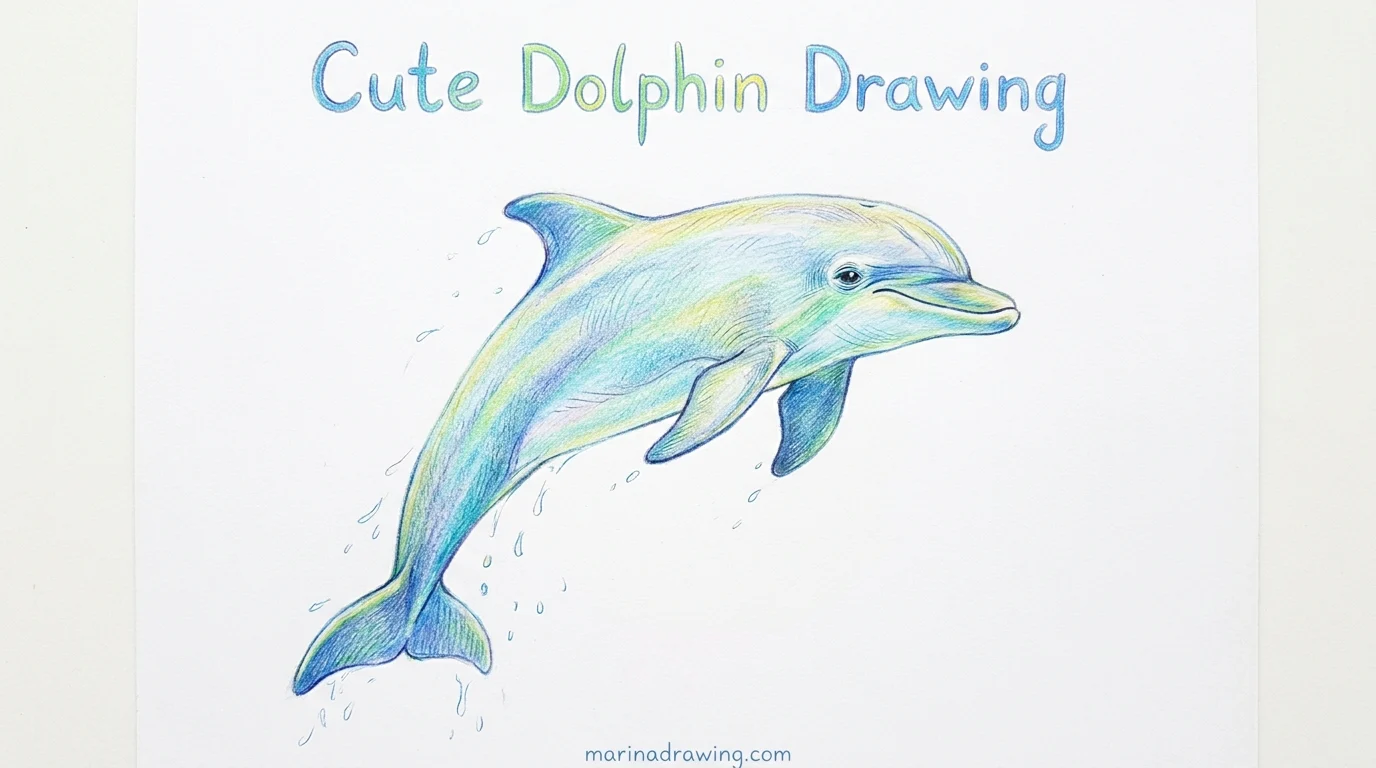
A dolphin is one S-curve from the tip of the beak to the tail, with a few parts hung on it. That is why a dolphin drawing easy enough to finish in ten minutes still works, and why most drawings go wrong in the same three places. If yours looks like a shark in a bath, the shading did not fail. The curve did.
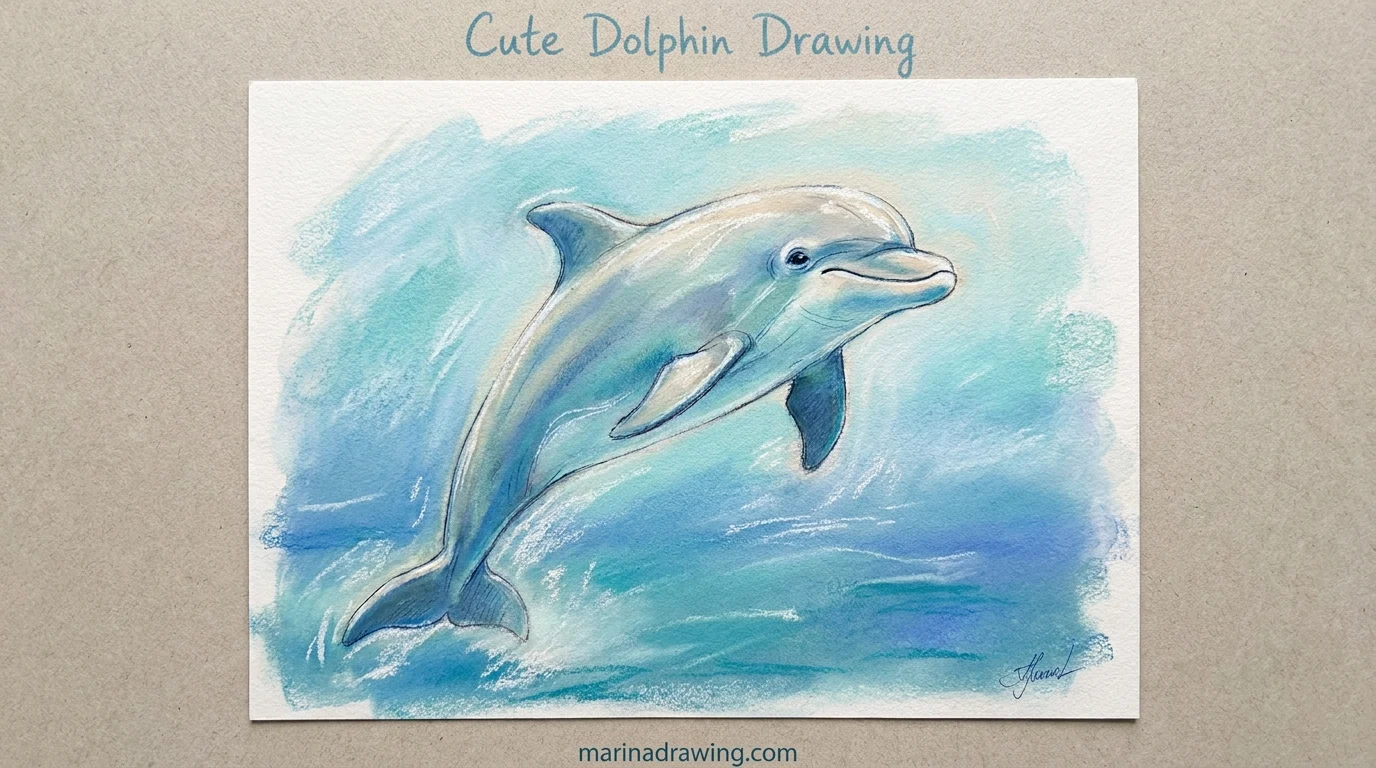
A dolphin reads as a dolphin because of the forehead, the curved fin and the way the tail lies flat, not because of how neatly you outline the body.
A smooth bent body, a rounded forehead over a short beak, a fin that sweeps back, and a tail that is wider than it is tall. Lose those and you get a shark, a tuna or a cucumber with eyes.
Quick answer: draw one long S-curve for the spine, build the body around it thick in the middle and thin at the tail, then add a rounded forehead, a short beak and a back-swept fin halfway along the back. Pick your dolphin from the seven below, then read the table near the end for your mistake. To follow a drawing step by step, a dolphin drawing class goes from simple outlines to detailed illustrations.
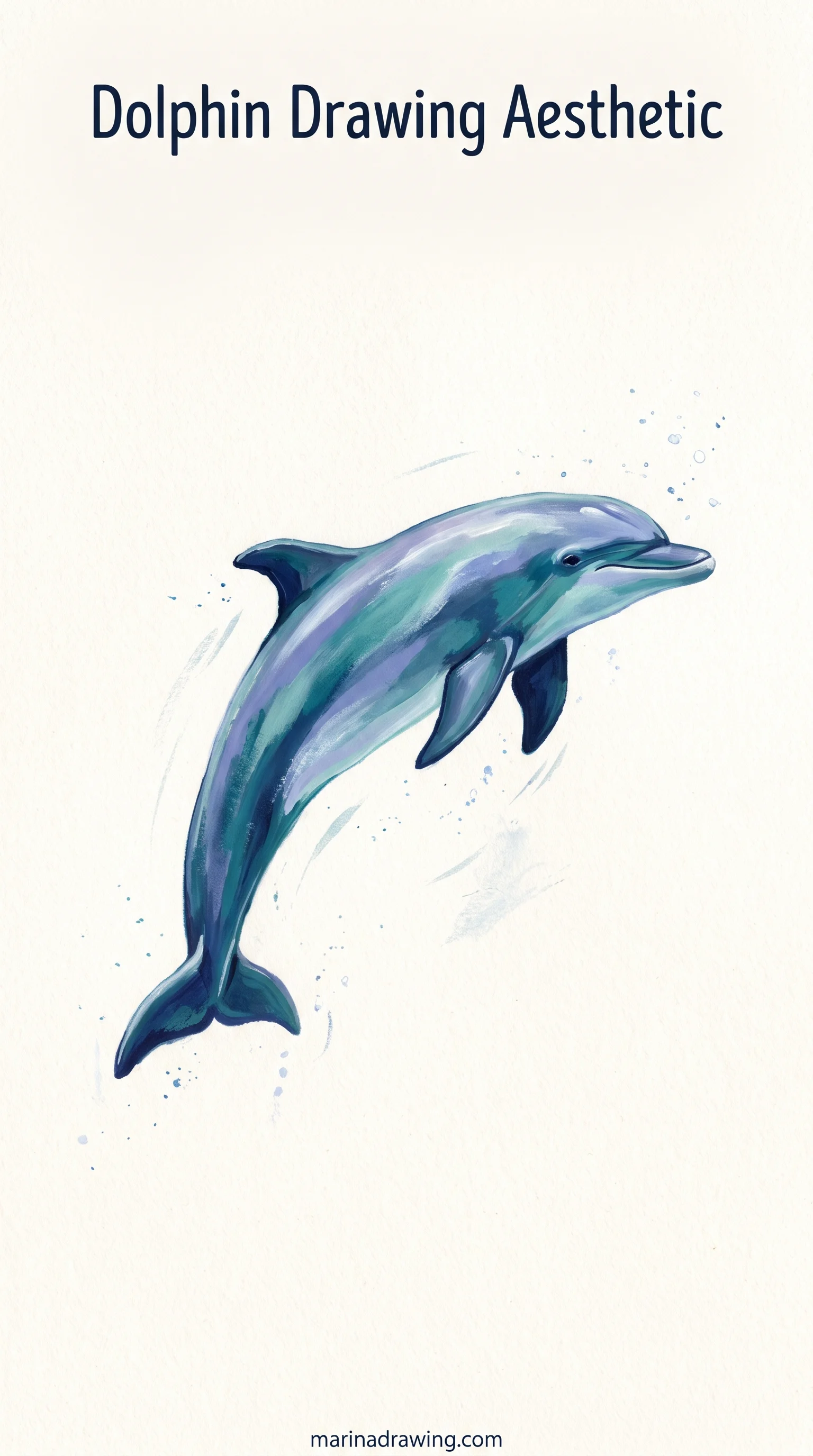
A dolphin is one S-curve, not a fish with a fin
Every dolphin here starts with the same four light marks, put down before any detail.
- The spine. One long, gentle S-curve across the page. Make it a single stroke if you can, and leave it faint.
- The body. Wrap a shape around the spine: thickest about a third of the way from the head, then tapering smoothly to a narrow tail stalk.
- The head. A rounded forehead rising from the front of the body, with a short beak pushed out in front of it. The forehead is a bump, not a slope.
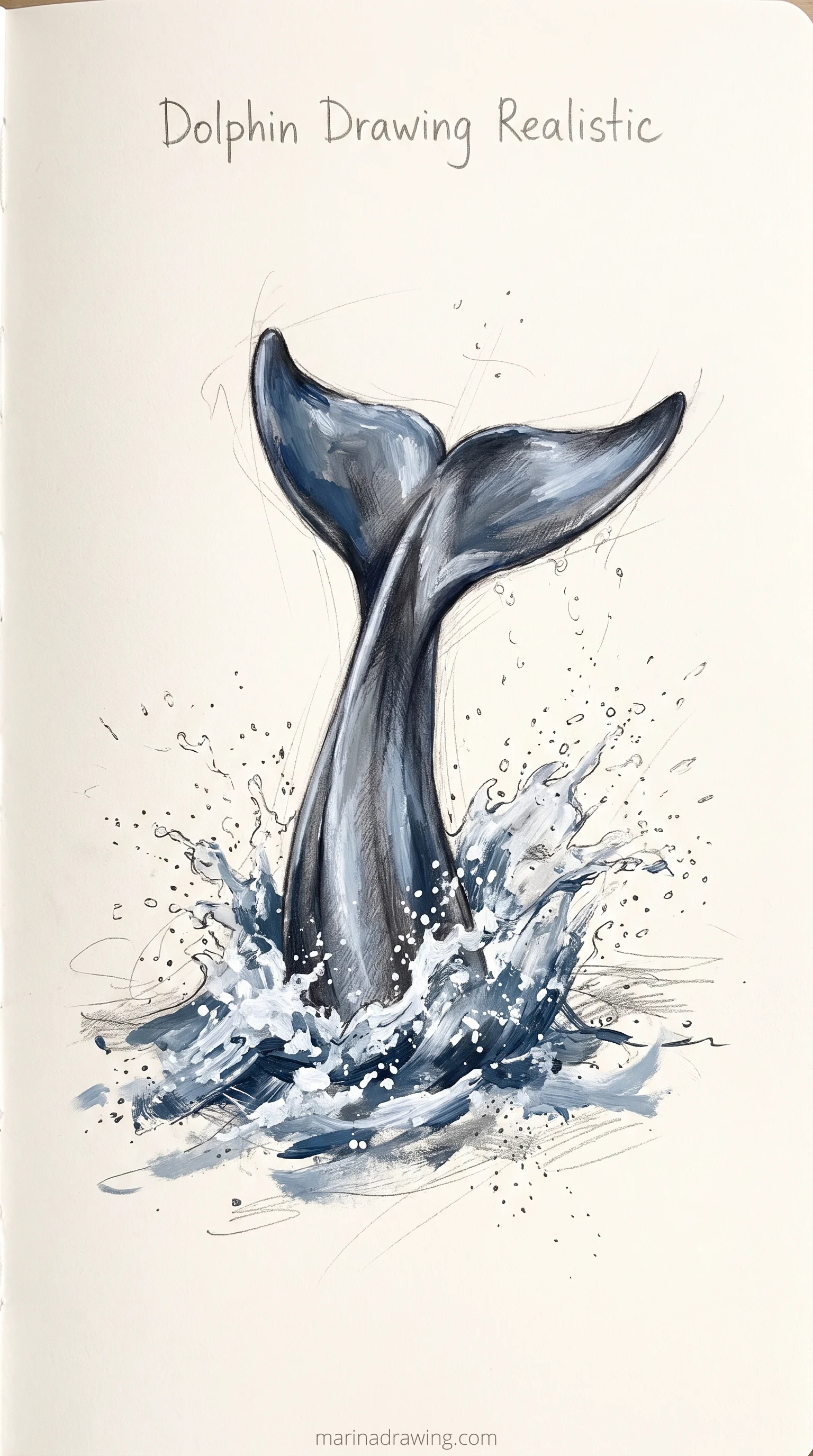
- The tail. At the end of the stalk, a flat wedge with a notch in the middle. A dolphin tail lies horizontal, unlike a fish tail, which stands upright.
Now the parts. A curved fin halfway along the back, a flipper low on the side just behind the head, a tiny eye above the corner of the mouth, and a small dot or crescent on top of the head for the blowhole. Keep the mouth as a single line running back from the tip of the beak.
Check the spine while your pencil still lifts. Once the curve is right, the rest almost draws itself.
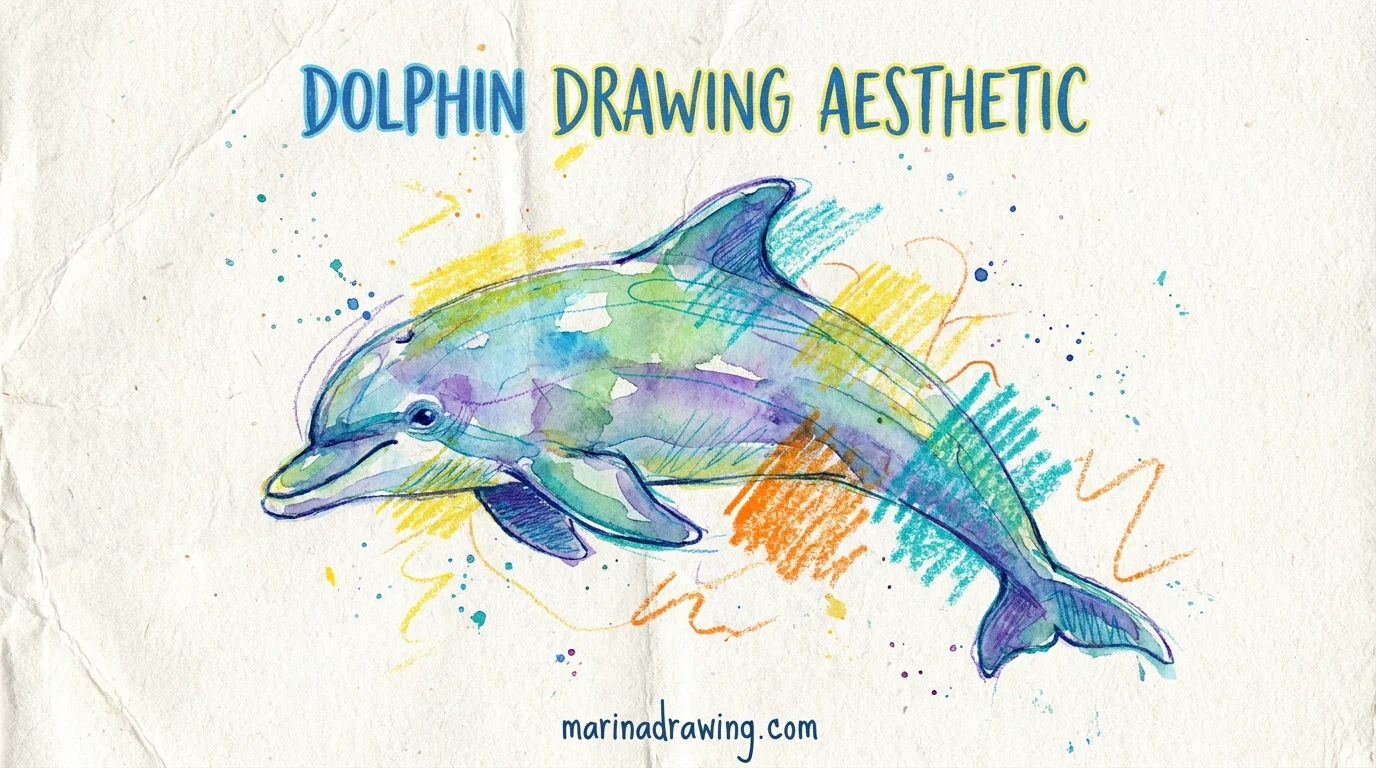
You decide whether your dolphin works when you draw the spine. Everything after that is filling in a decision you already made. A tall animal works the same way in these giraffe drawing ideas, where the neck line is the decision.
Why your dolphin looks like a shark or a fish: four mistakes
Of five pages that turn up for this subject, none teaches you to draw a dolphin in pencil. They are watercolour lessons, a forum thread, a sketchbook prompt list and a word game. None has a section on what goes wrong with the fin or the tail, and none puts several different dolphins side by side.
| What was checked | Pages that had it |
|---|---|
| A page about drawing a dolphin in pencil | 0 of 5 |
| A section on common fin and tail mistakes | 0 of 5 |
| A set of different dolphins, each with its own method | 0 of 5 |
| The forehead explained as a separate shape from the beak | 0 of 5 |
Four mistakes account for almost every shark, and you have probably made one of them:
- Your tail stands upright like a fish’s, when a dolphin’s lies flat.
- Your fin is a straight triangle, when it curves back like a hook.
- Your head slopes in one line to a pointed snout, with no forehead bump above the beak.
- Your flipper sits in the middle of the belly like a leg, when it belongs low and close behind the head.
All four are placement problems you settle in the first minute, which is why another set of steps rarely helps. The steps are fine. The thing they skip is the thing you got wrong.
The same trap shows up on the penguin and the owl.
What you actually need: one pencil and a soft eraser
You need very little for every dolphin here.
- One sharp 2B pencil for the guides and the final lines.
- A soft kneaded eraser that lifts the spine out without scrubbing the paper.
- For the grey and blue sections, a mid grey and a light blue pencil. Two are enough. If you later want to paint the same dolphin, the construction carries over unchanged.

1. Dolphin drawing easy: curve, beak and fin
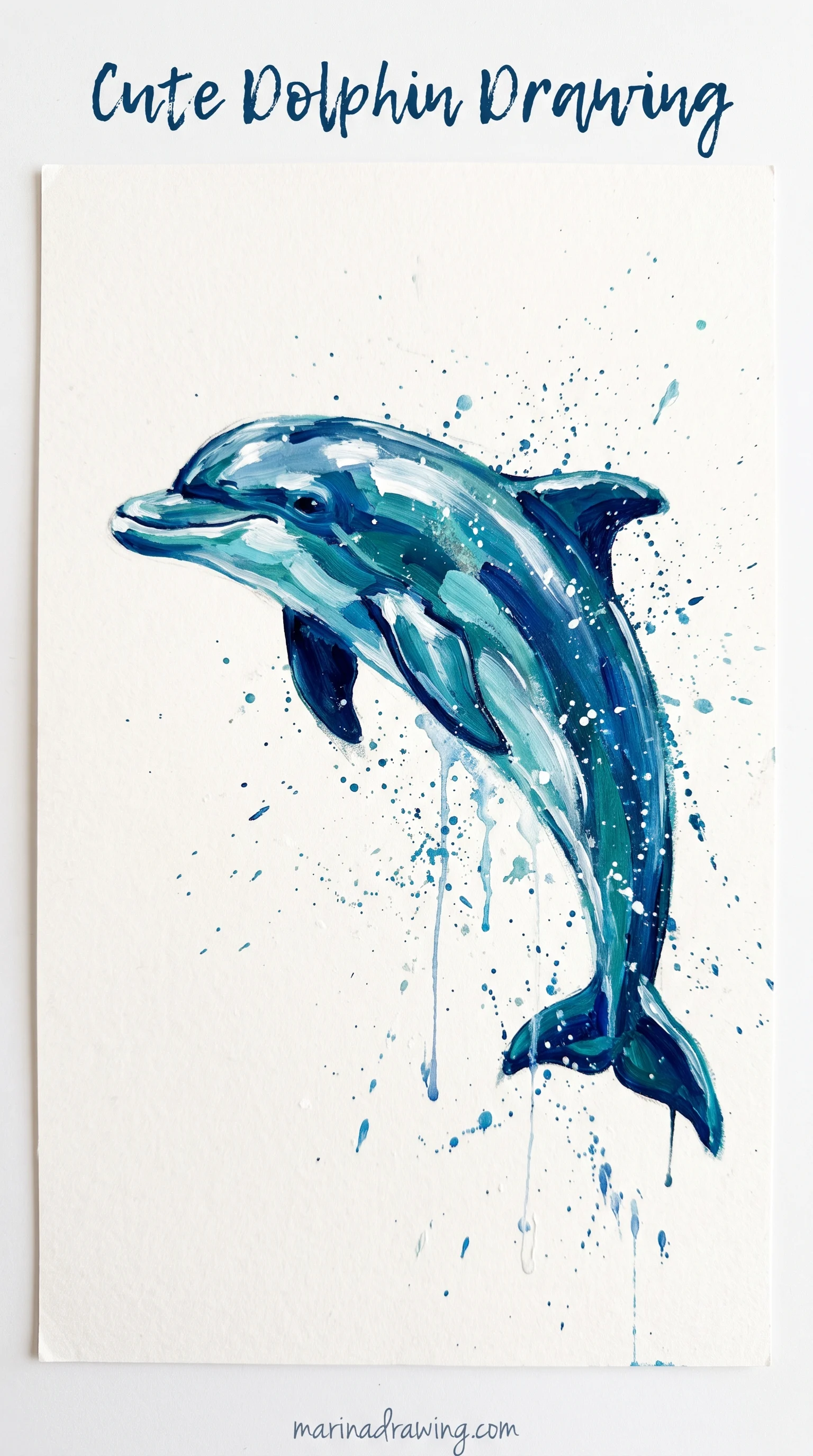
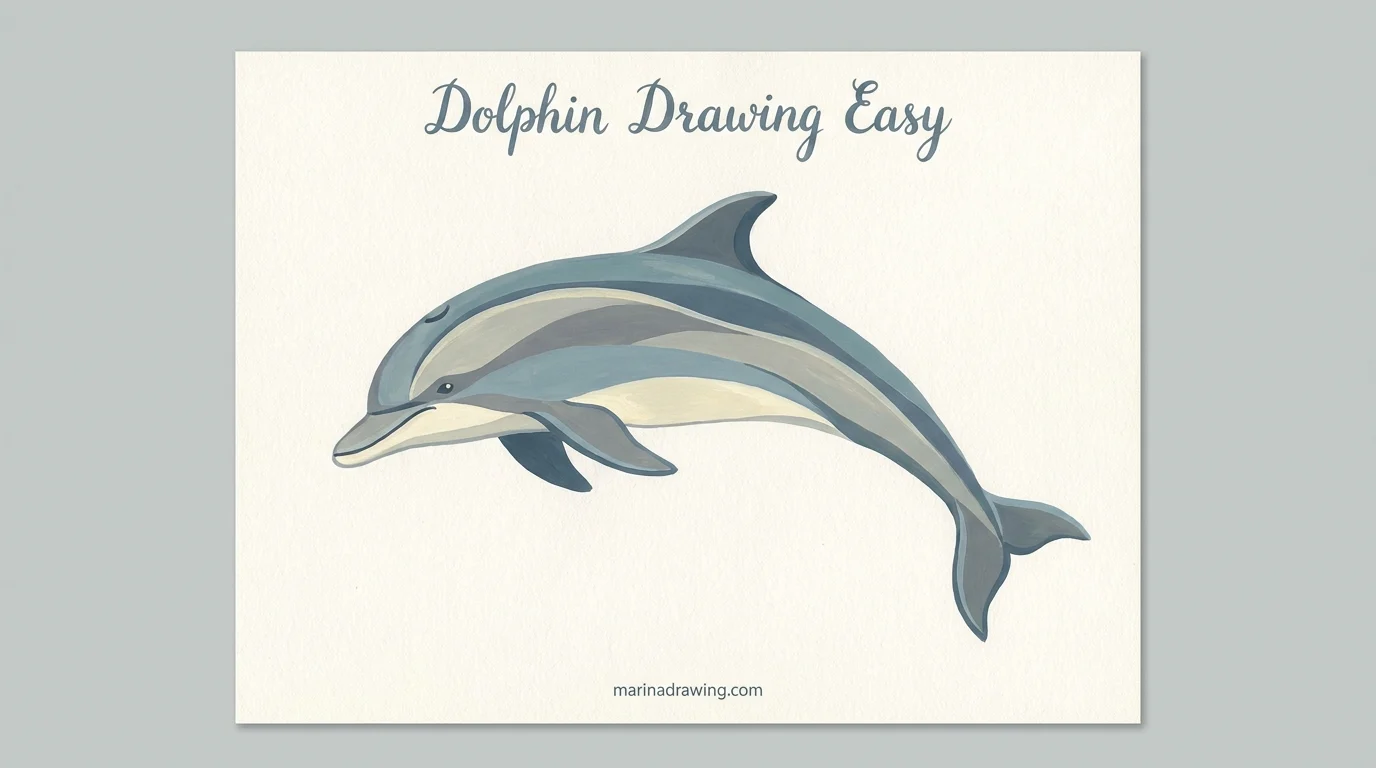
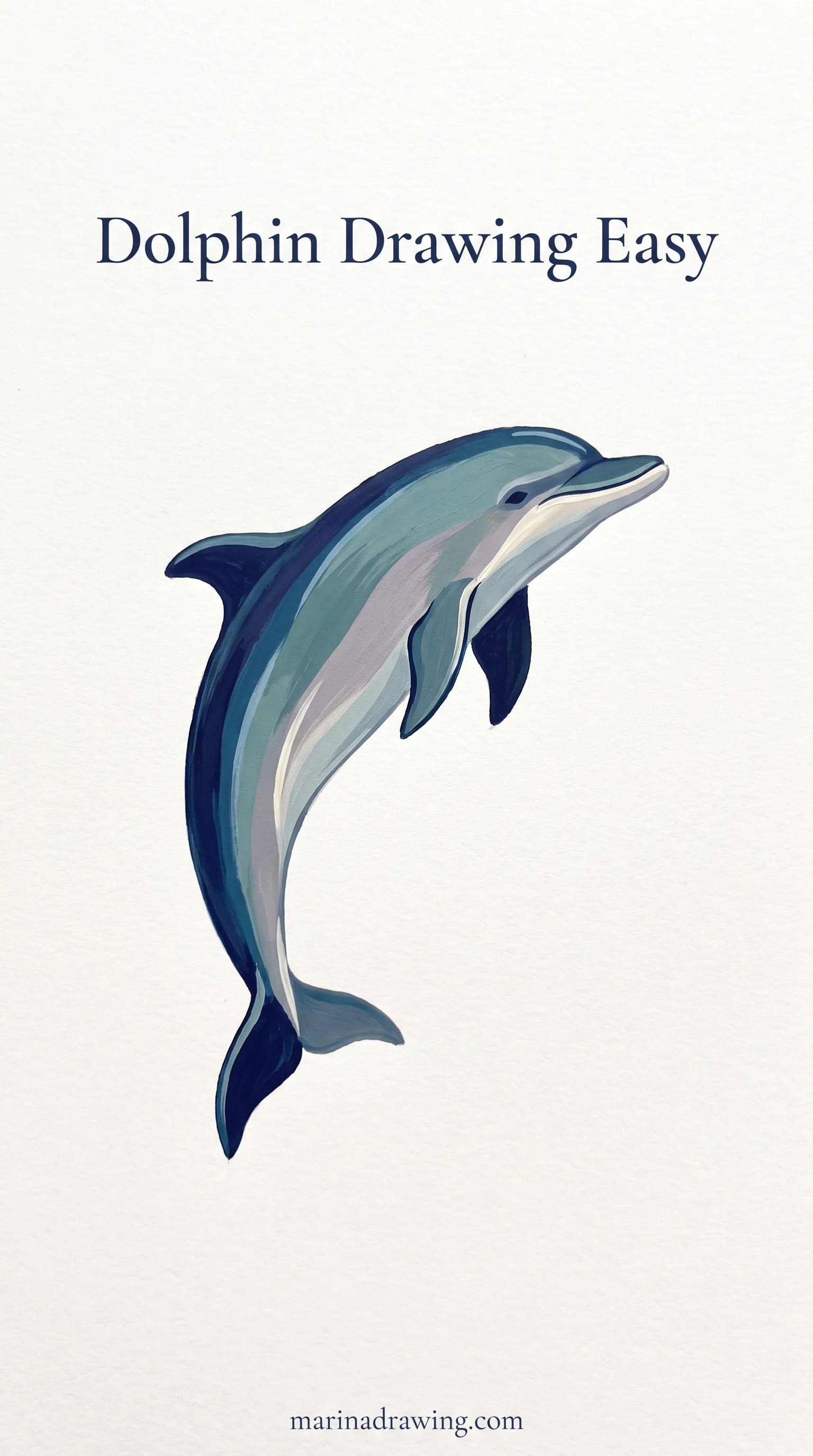
I draw this one first. It takes about ten minutes: the S-curve, a body wrapped around it, a rounded forehead with a short beak, a hooked fin, one flipper and a flat notched tail. Add an eye and a smile line and you are finished.

You make a few dozen marks, and you can read it as a dolphin from across the room.
Treat it as a five-day challenge: draw it five times, bending the spine a little more each time. You will see the animal come alive before you add a single detail.
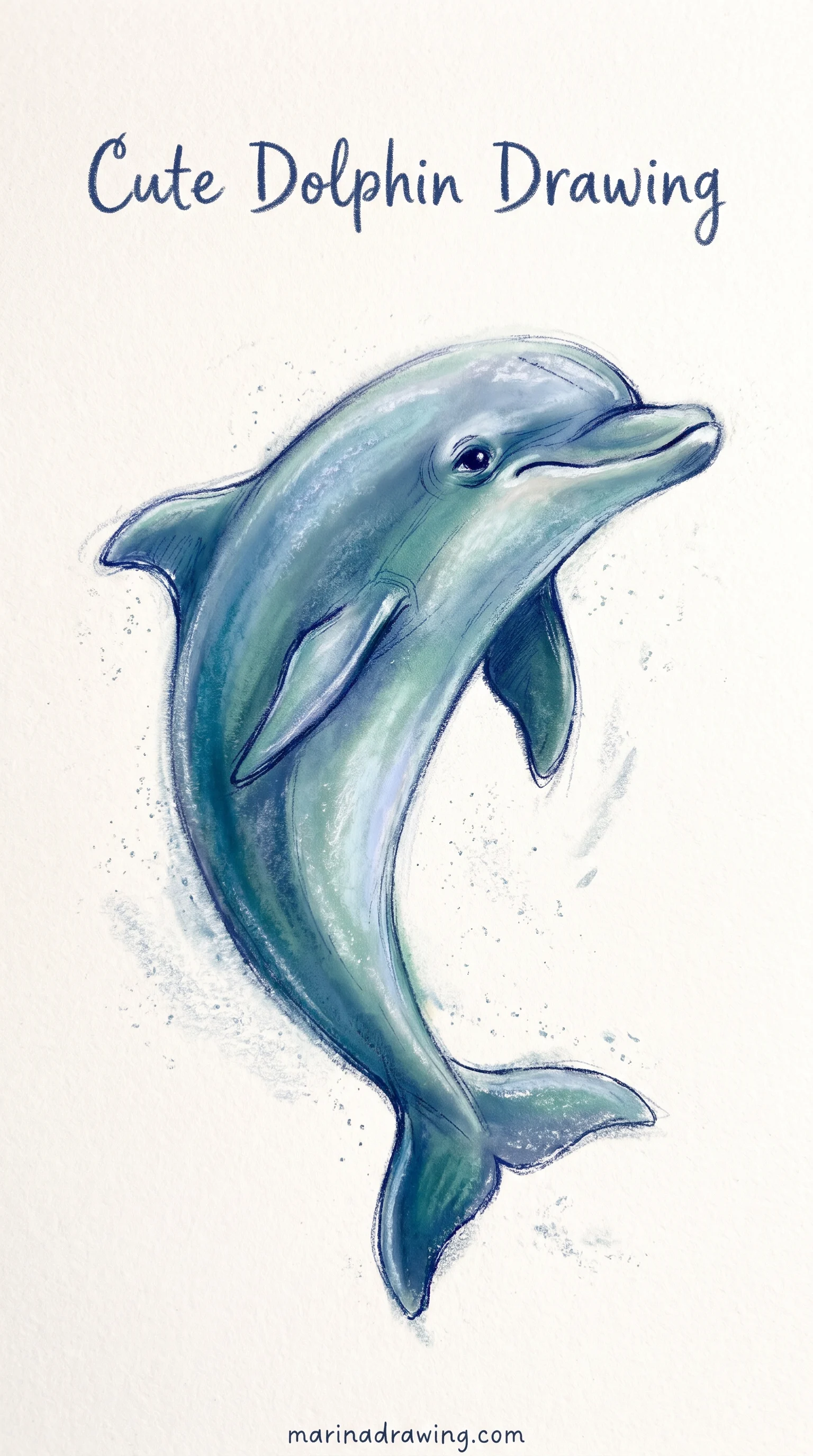
2. A cute dolphin drawing
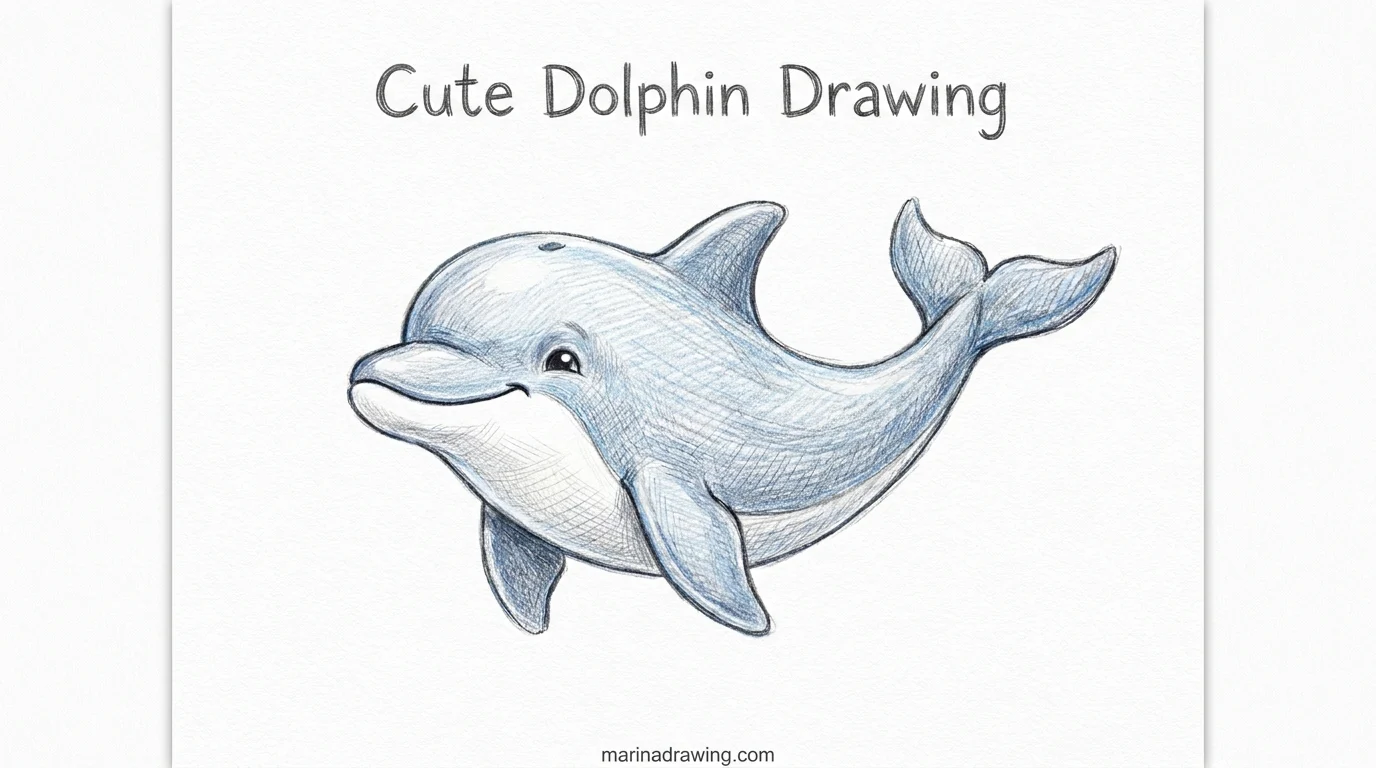
A cute dolphin drawing is a ratio, not a style.
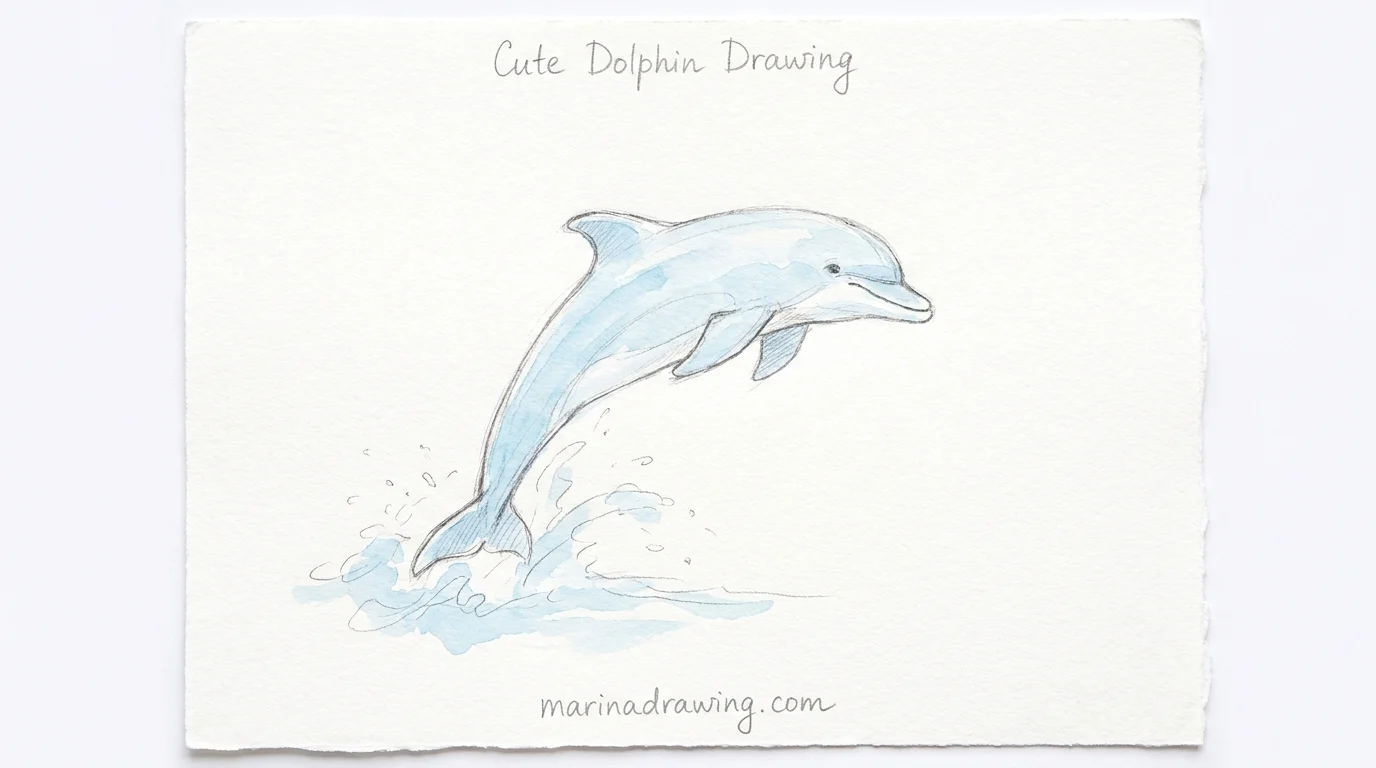
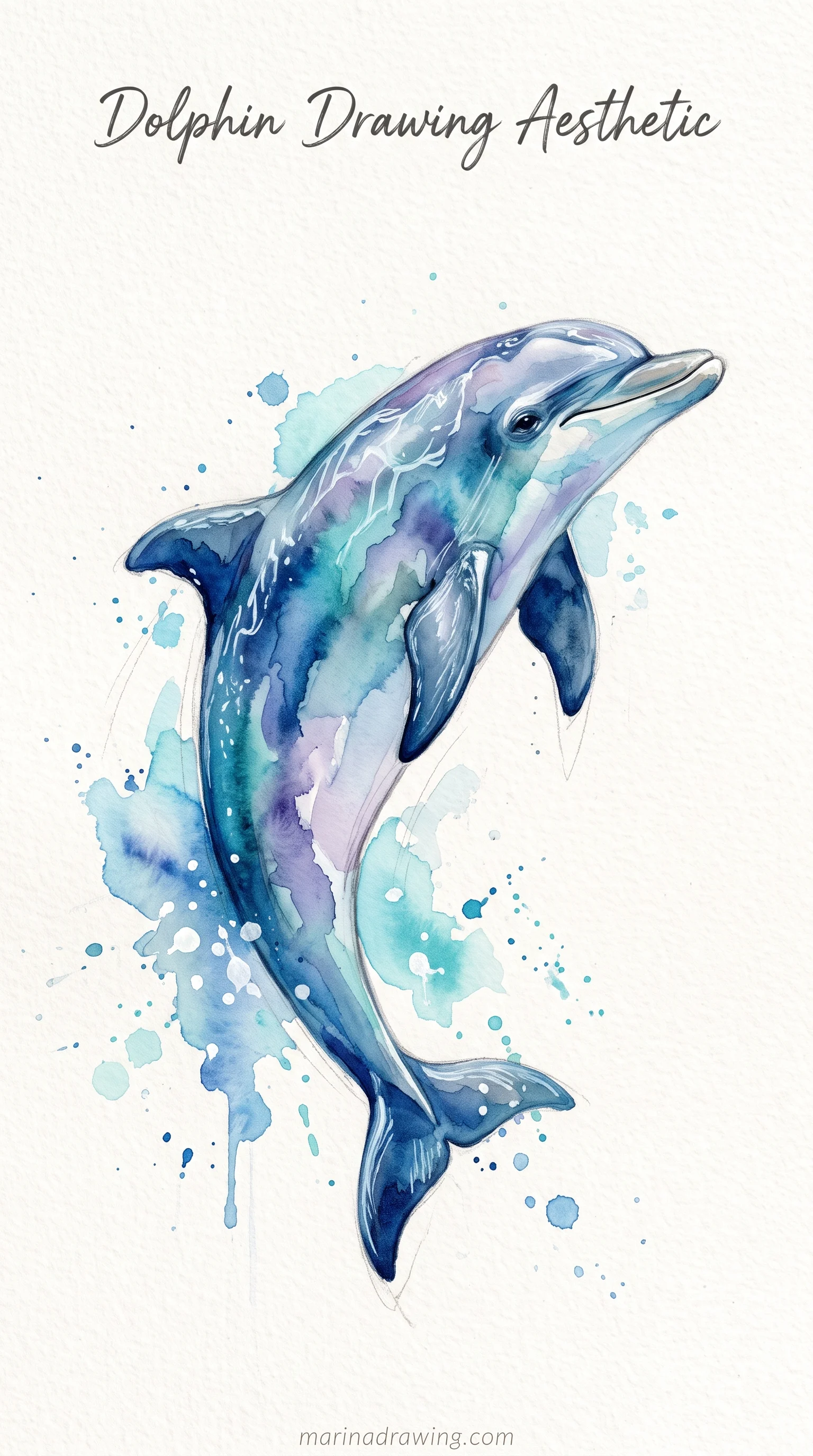
Give a cute dolphin a head that is big against the body, so the forehead takes up nearly a third of the whole length. Drop the eye low, make it big and round, and keep the beak very short. Low and big reads as young. Small and high reads as an adult.
Then shorten the body so it curls into a fat comma, and round off the fin and tail so no edge comes to a hard point. Add a small curved smile and two cheek marks. A big head and a round body also carry the squirrel drawing ideas.
For ready-made sheets of rounded animal outlines, a library of drawing guides saves guessing.
3. A dolphin jumping out of water
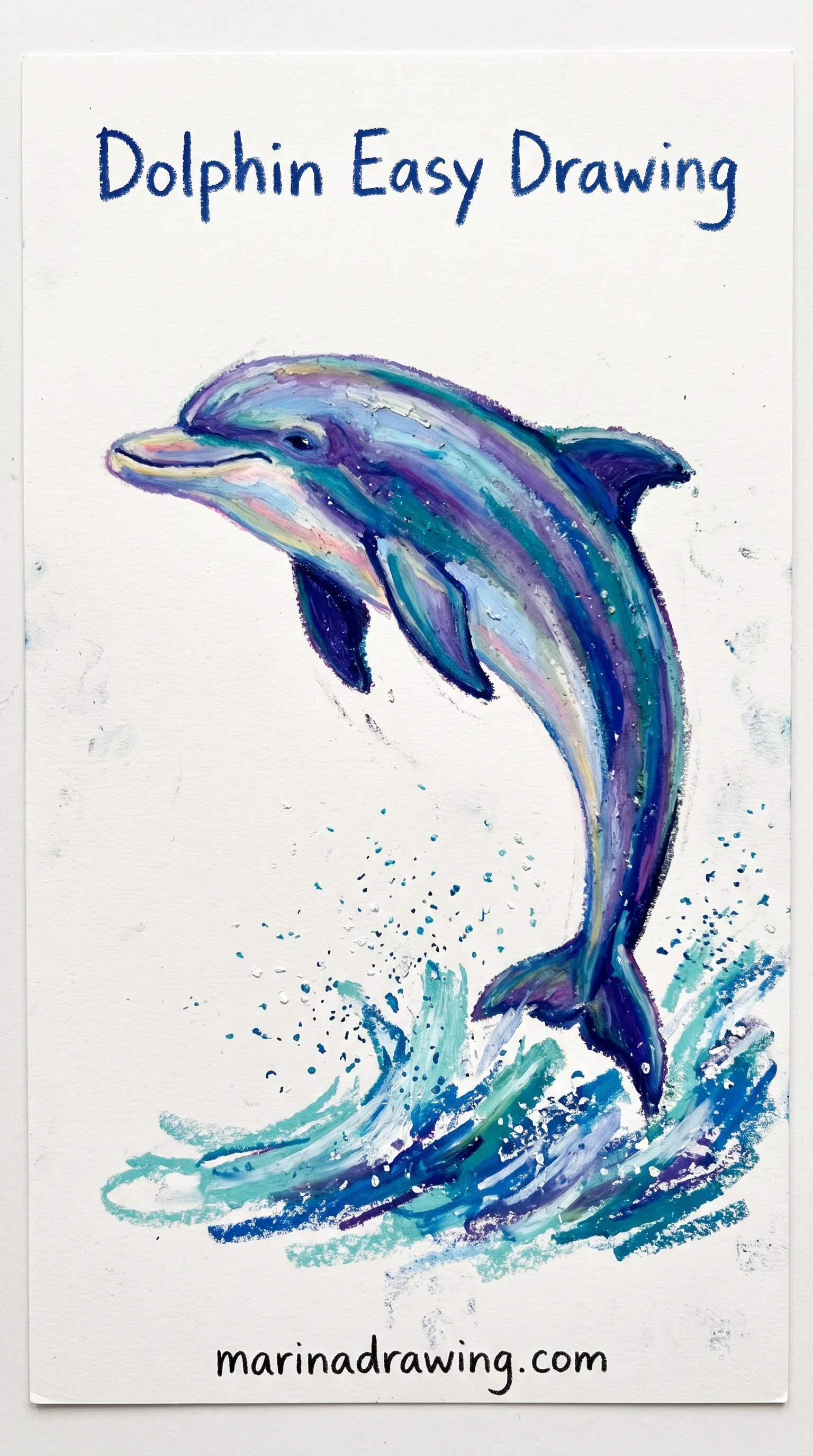
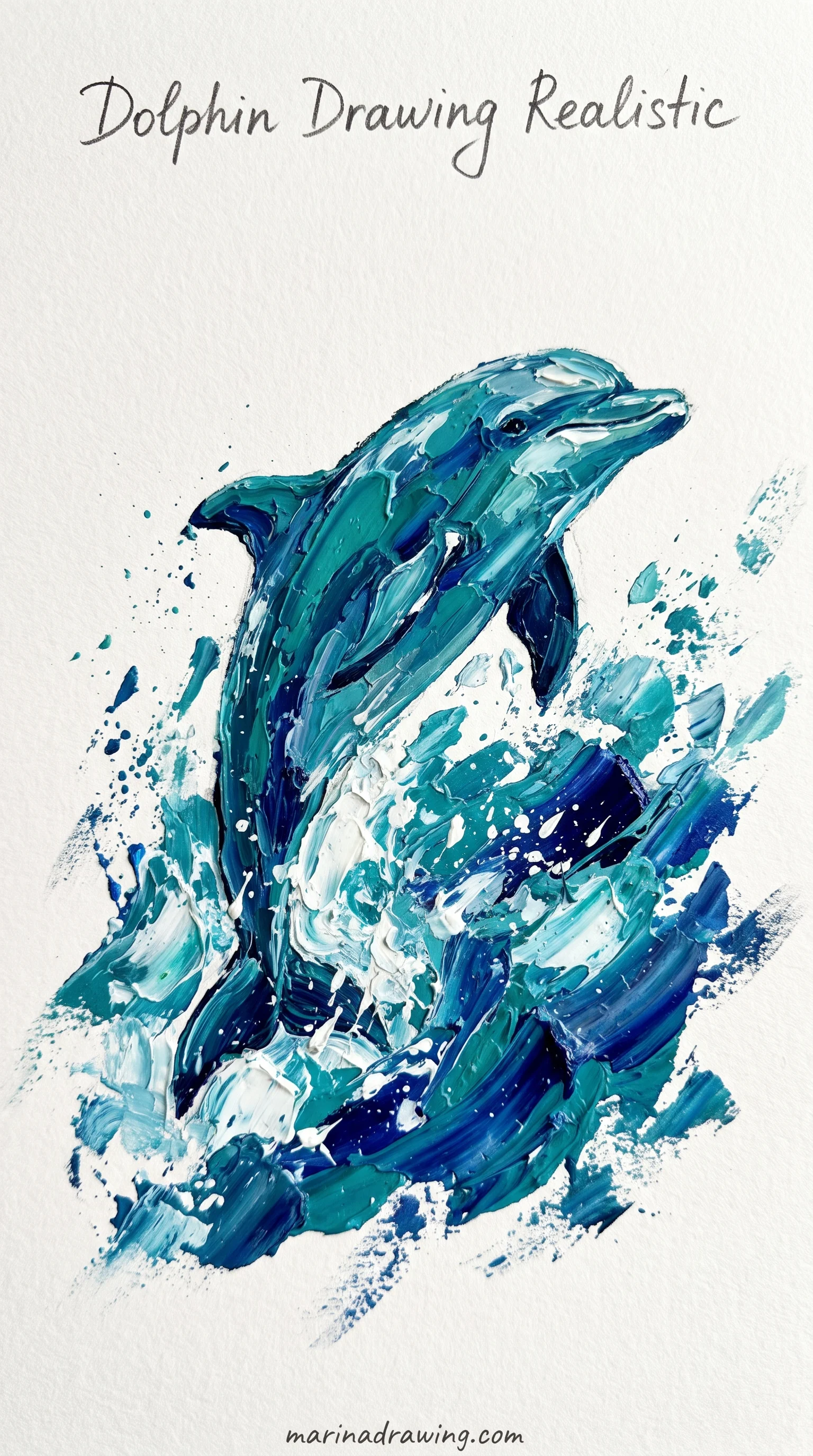
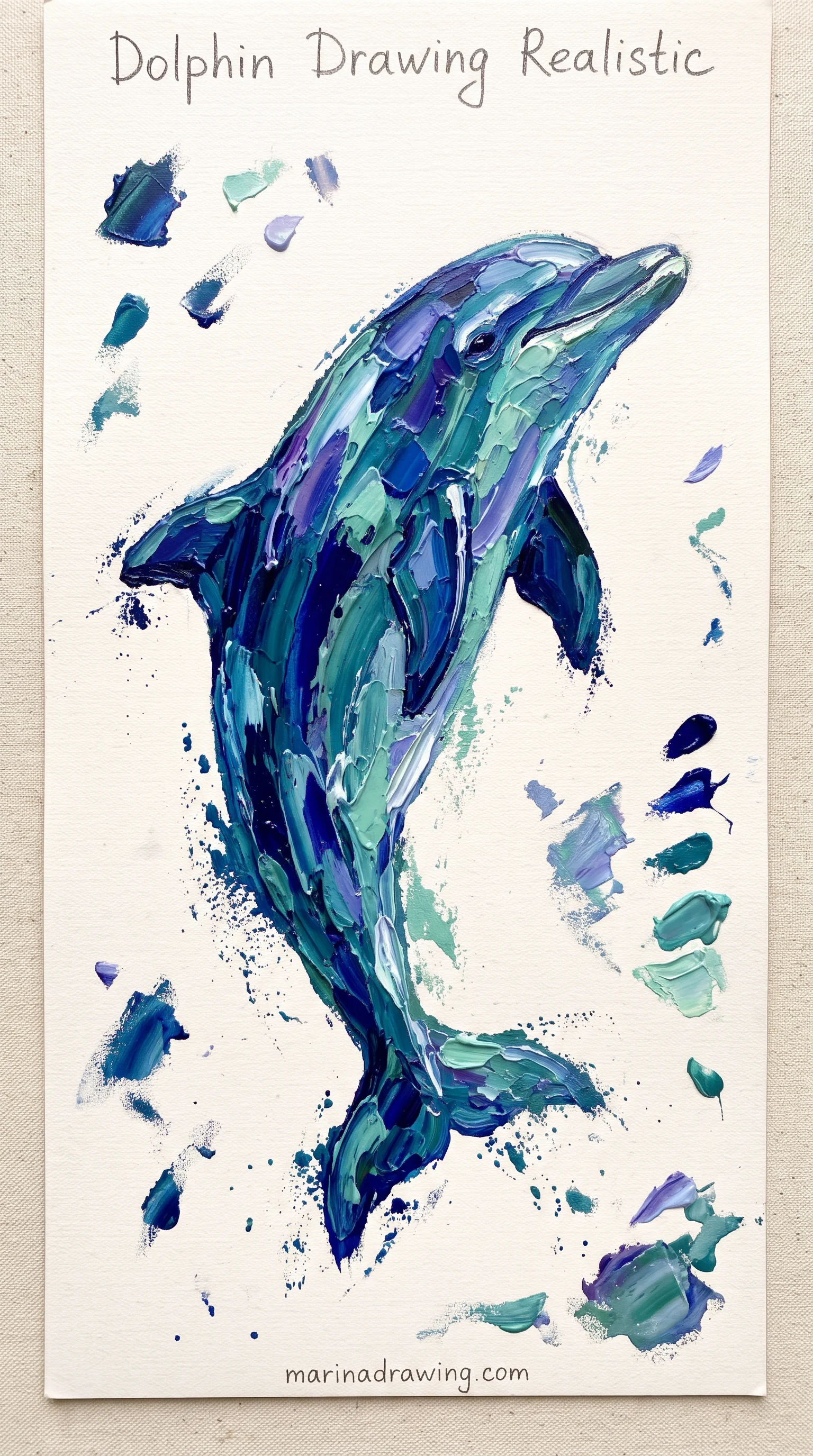
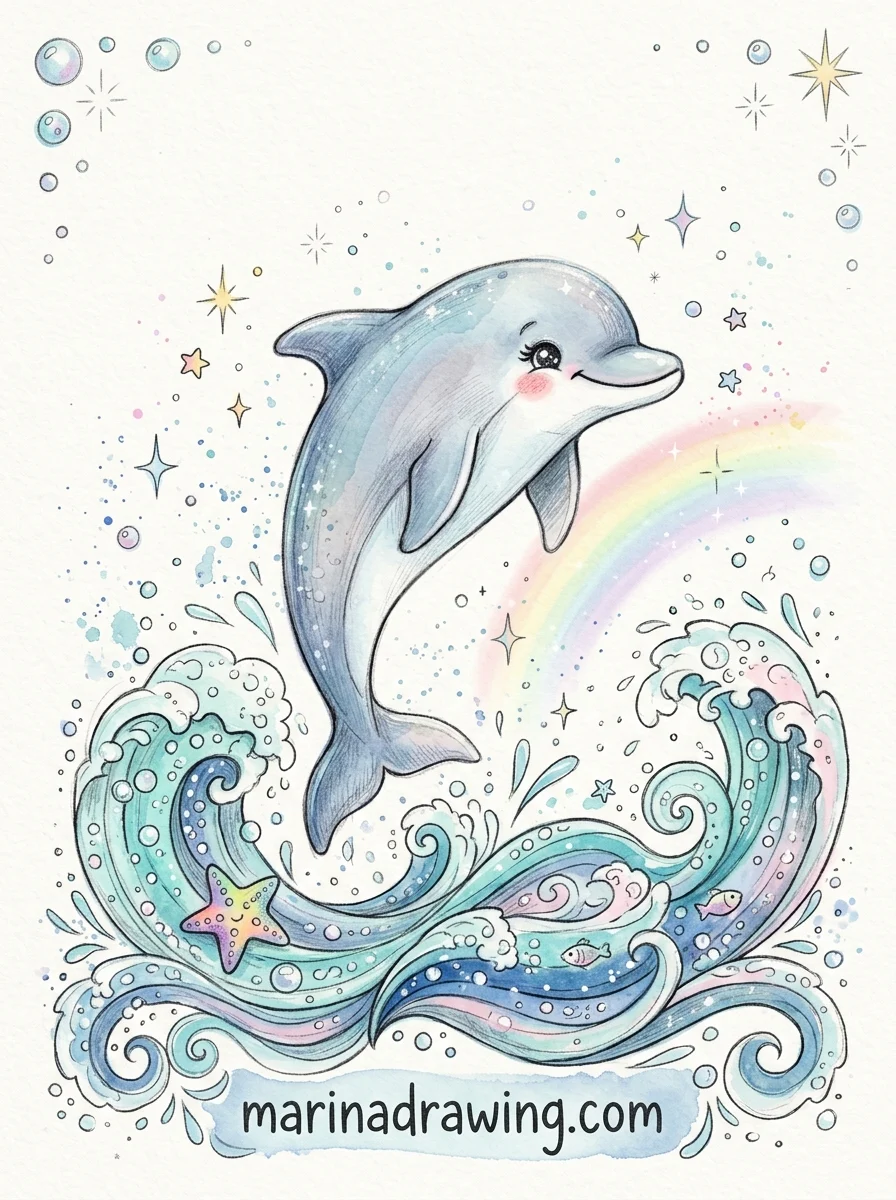
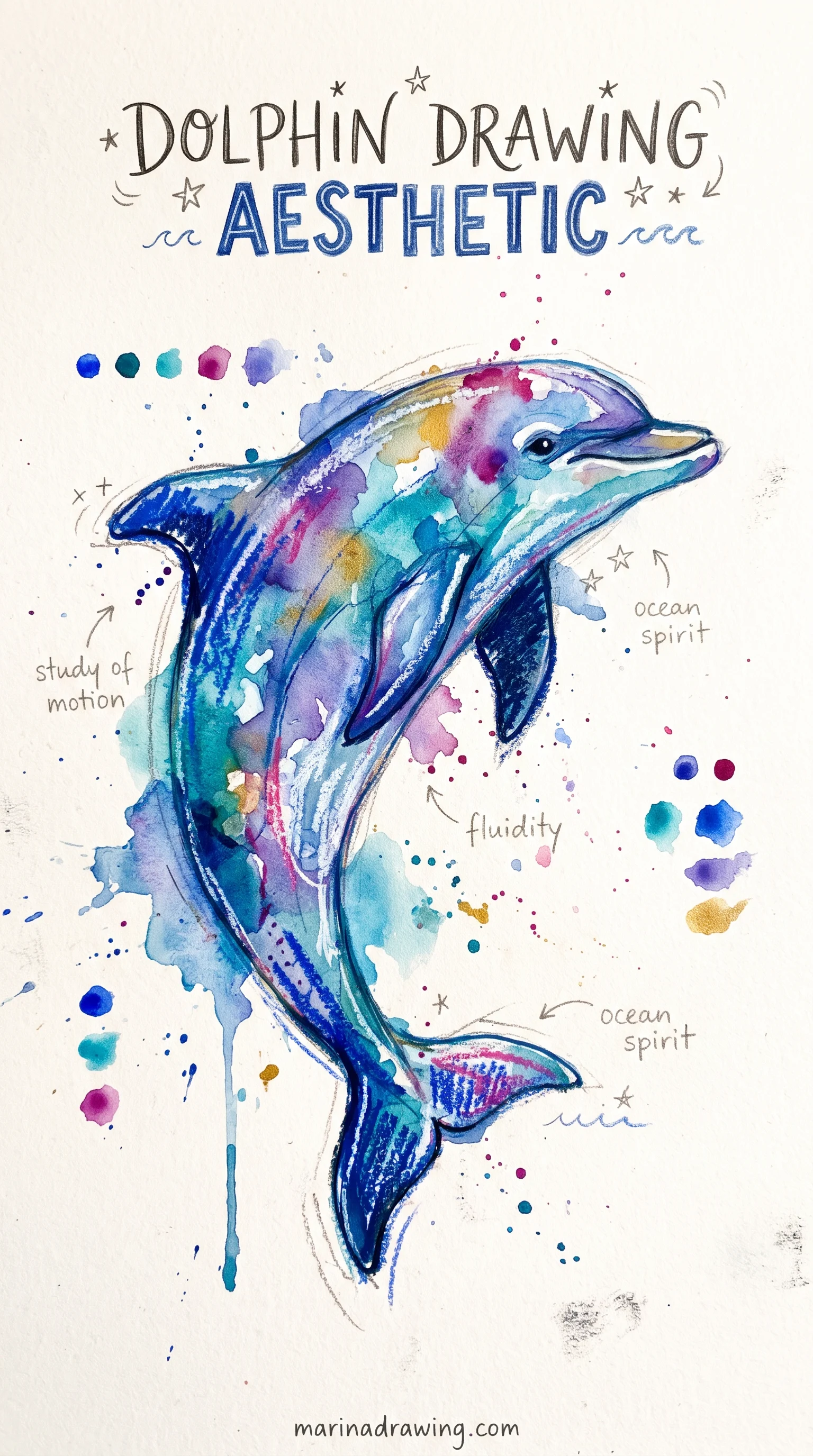
A dolphin jumping out of water drawing is the same dolphin bent harder. Instead of a gentle S, draw a banana-shaped arc with the beak pointing up and the tail dropping behind.
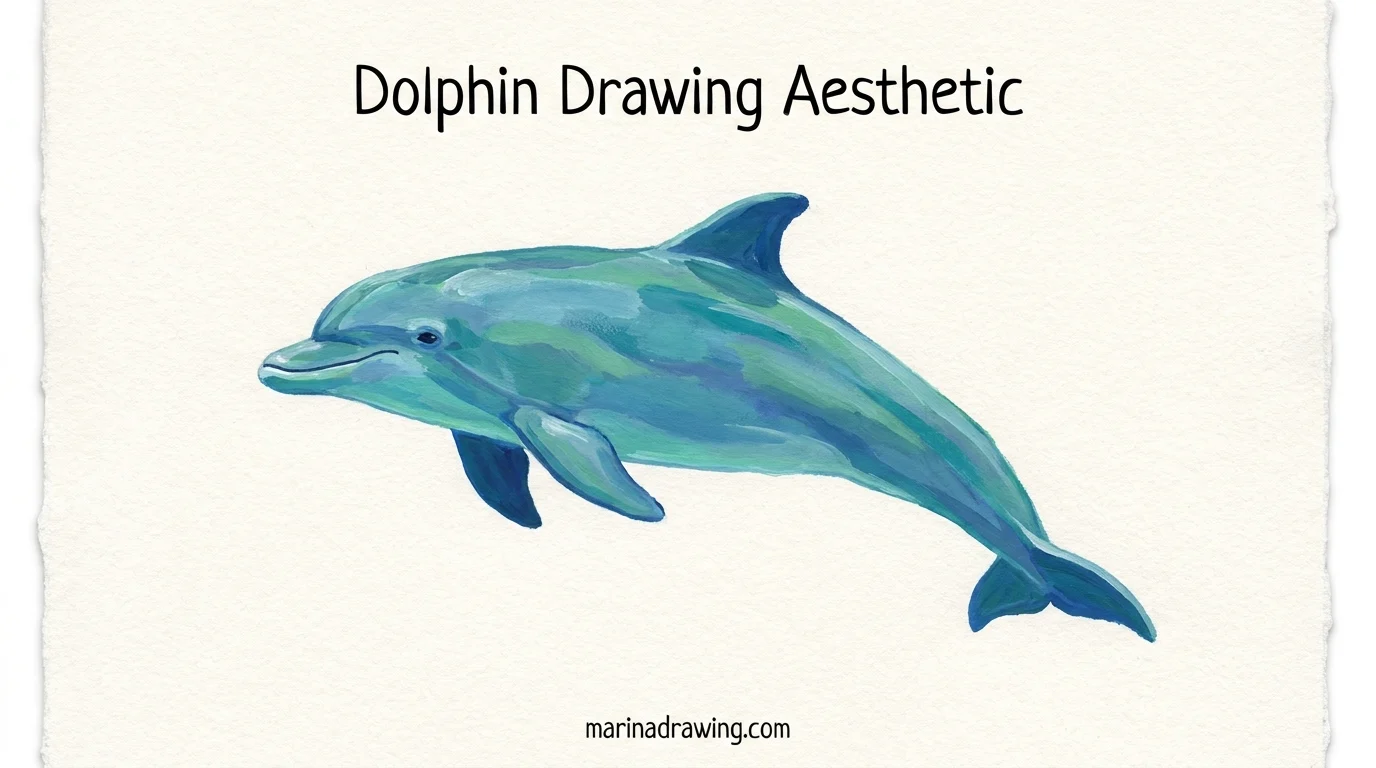
Build the body around the arc as before, but let the tail turn so you see it edge-on: a thin wedge instead of a flat fan. The flipper tucks back against the side, and the fin sits at the top of the curve.
Water finishes the picture. Draw the surface as a loose line under the tail, add three or four curved strokes where the body left the water, and a few drops flying off the beak. Keep them light and few.
4. A simple dolphin drawing in one outline
A dolphin drawing simple enough for one outline strips the drawing down to silhouette, so you see every mistake. There is nothing to hide behind.
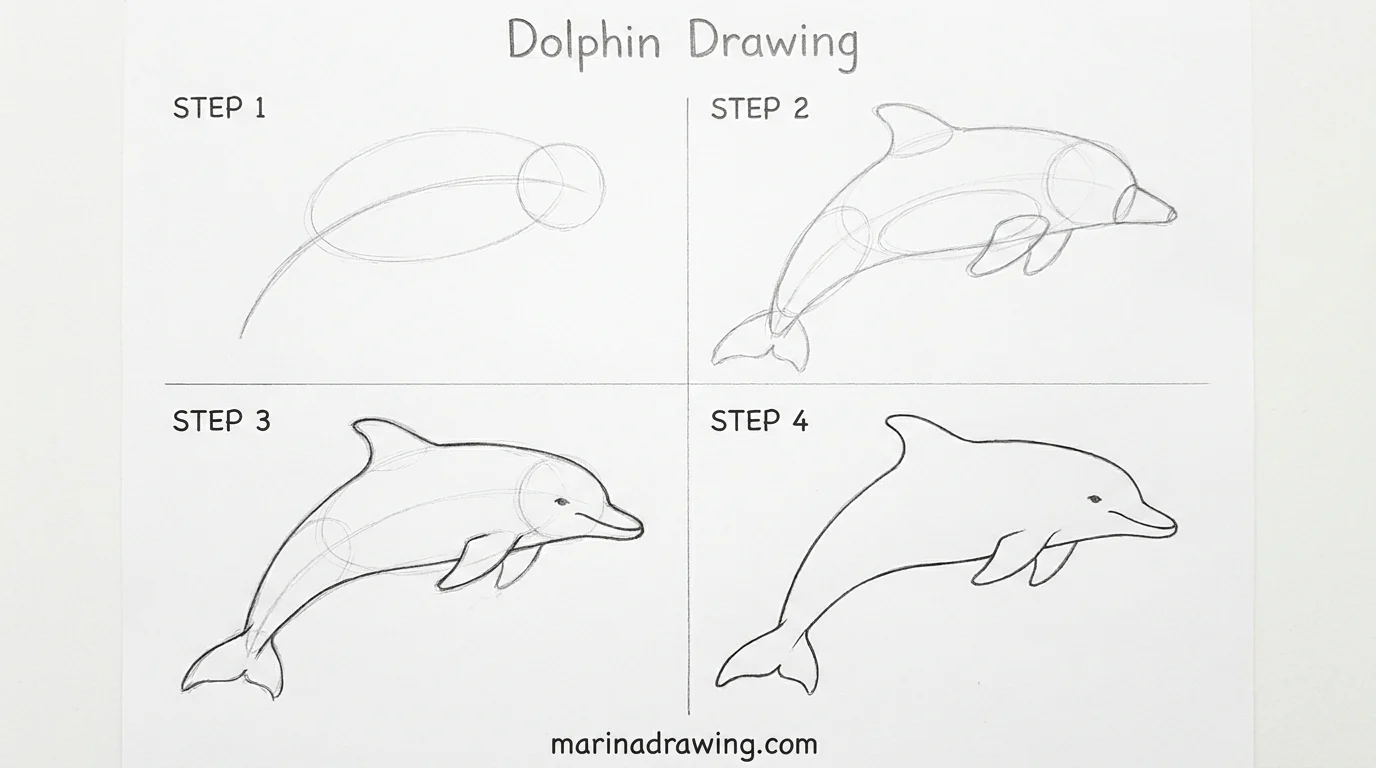
Use one line weight, a little thicker than feels natural, and close every shape. Run the line from the tip of the beak over the forehead, down the back past the fin, out to the tail, and back along the belly without lifting more than twice.
If the animal still reads as a dolphin when you fill the silhouette solid, the drawing is done.
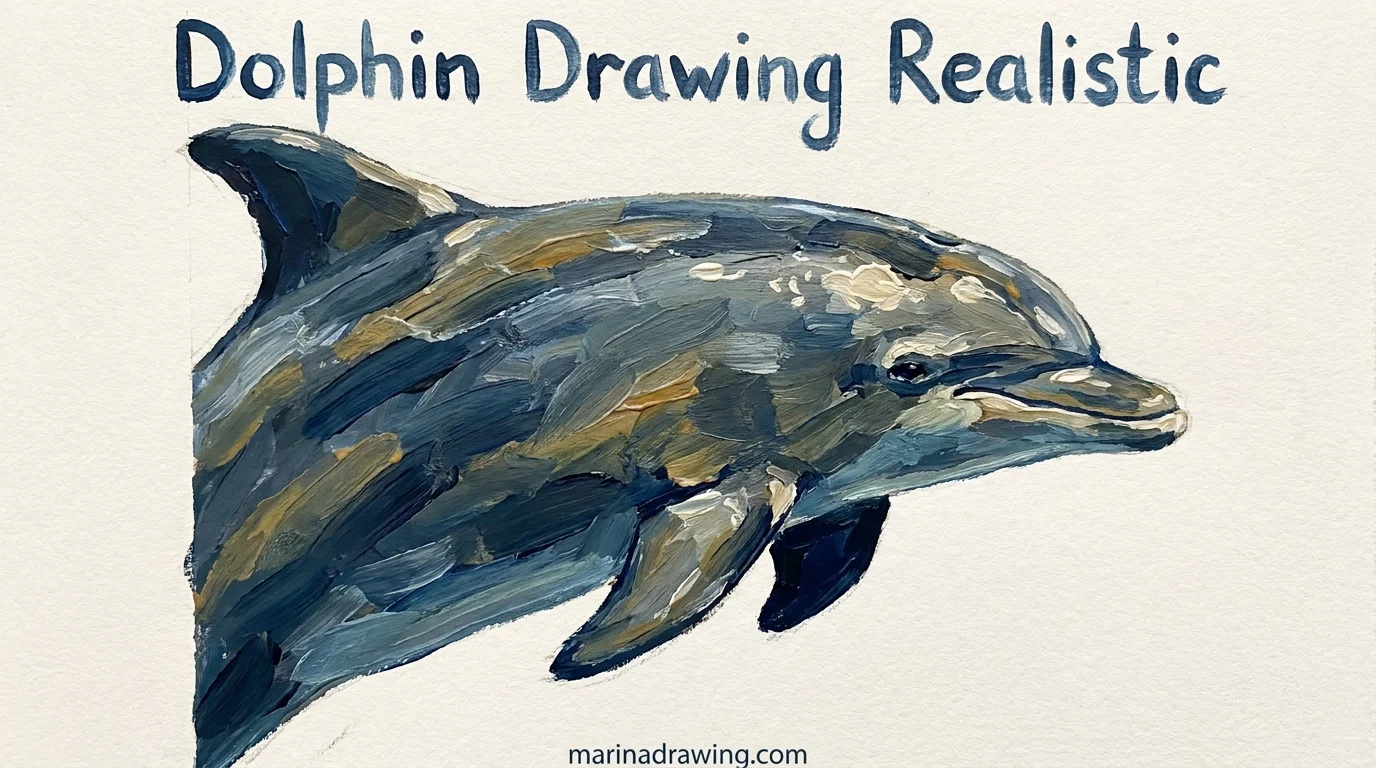
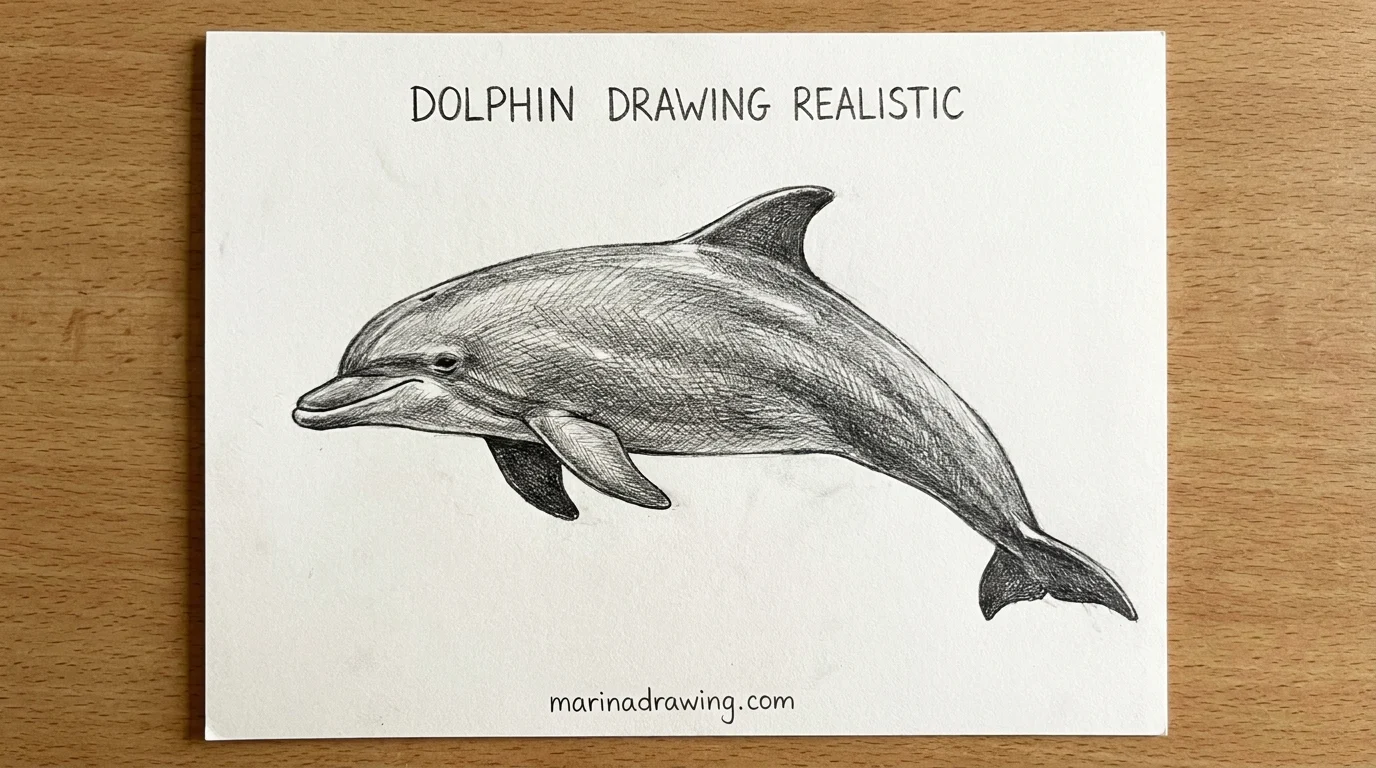
5. A realistic dolphin drawing in pencil
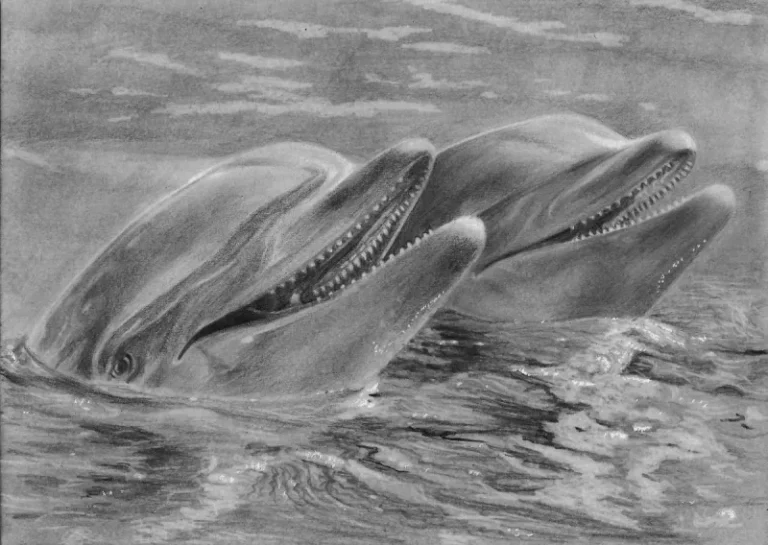
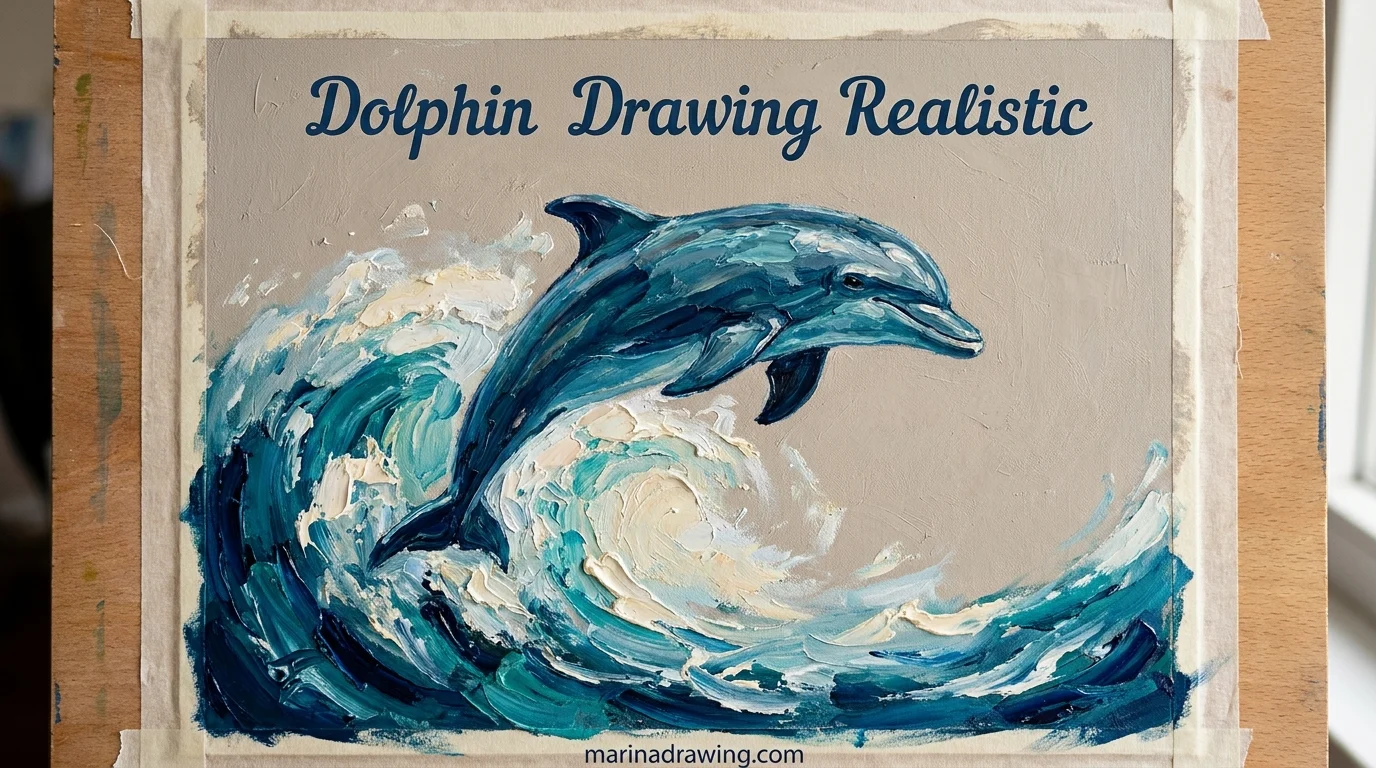
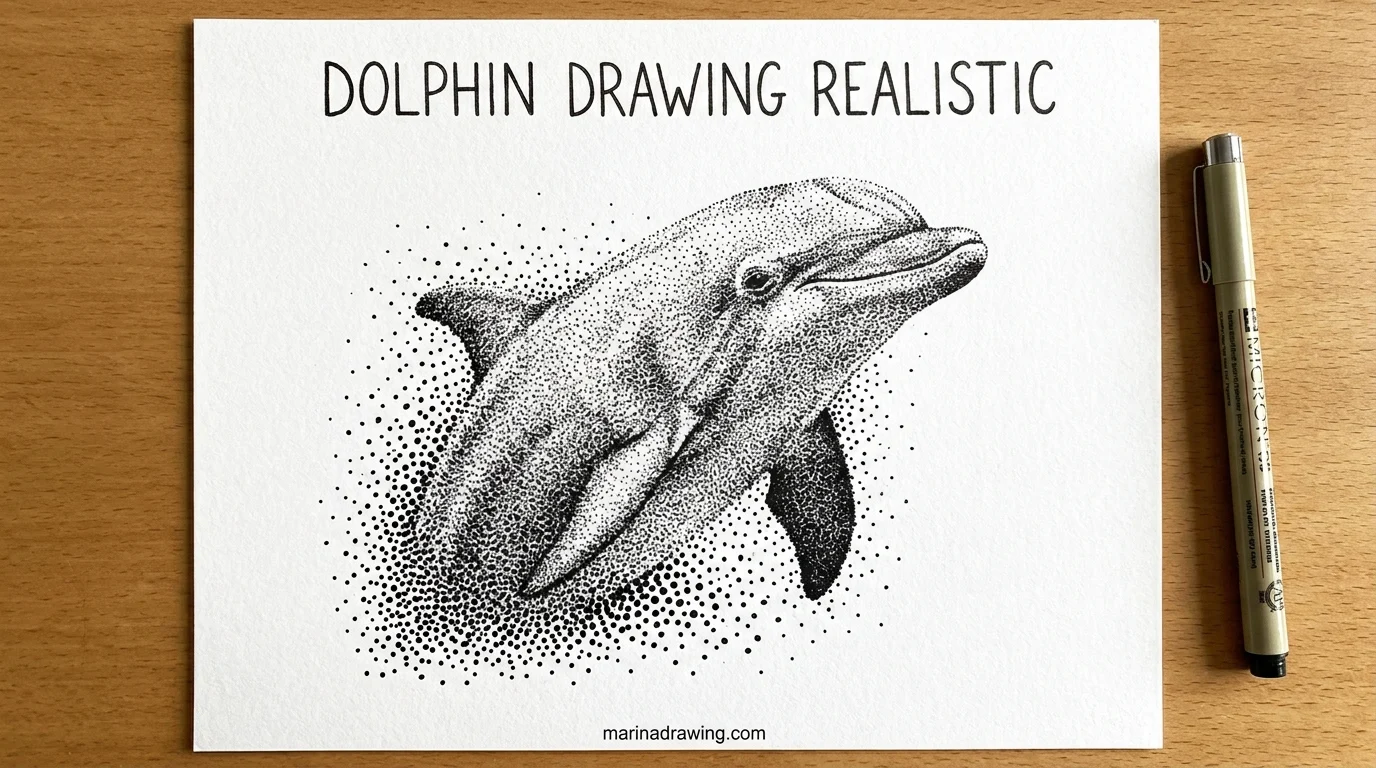
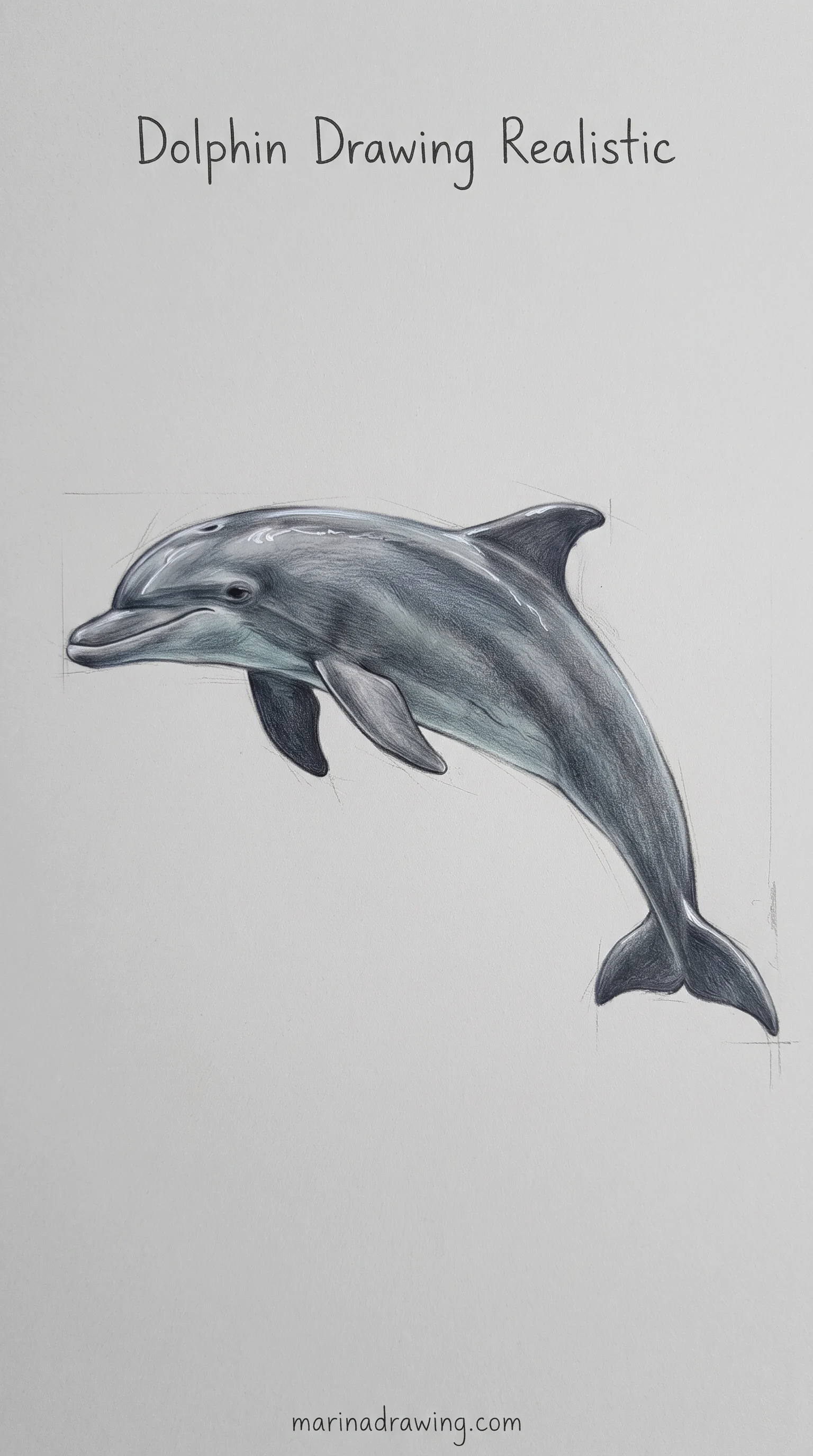
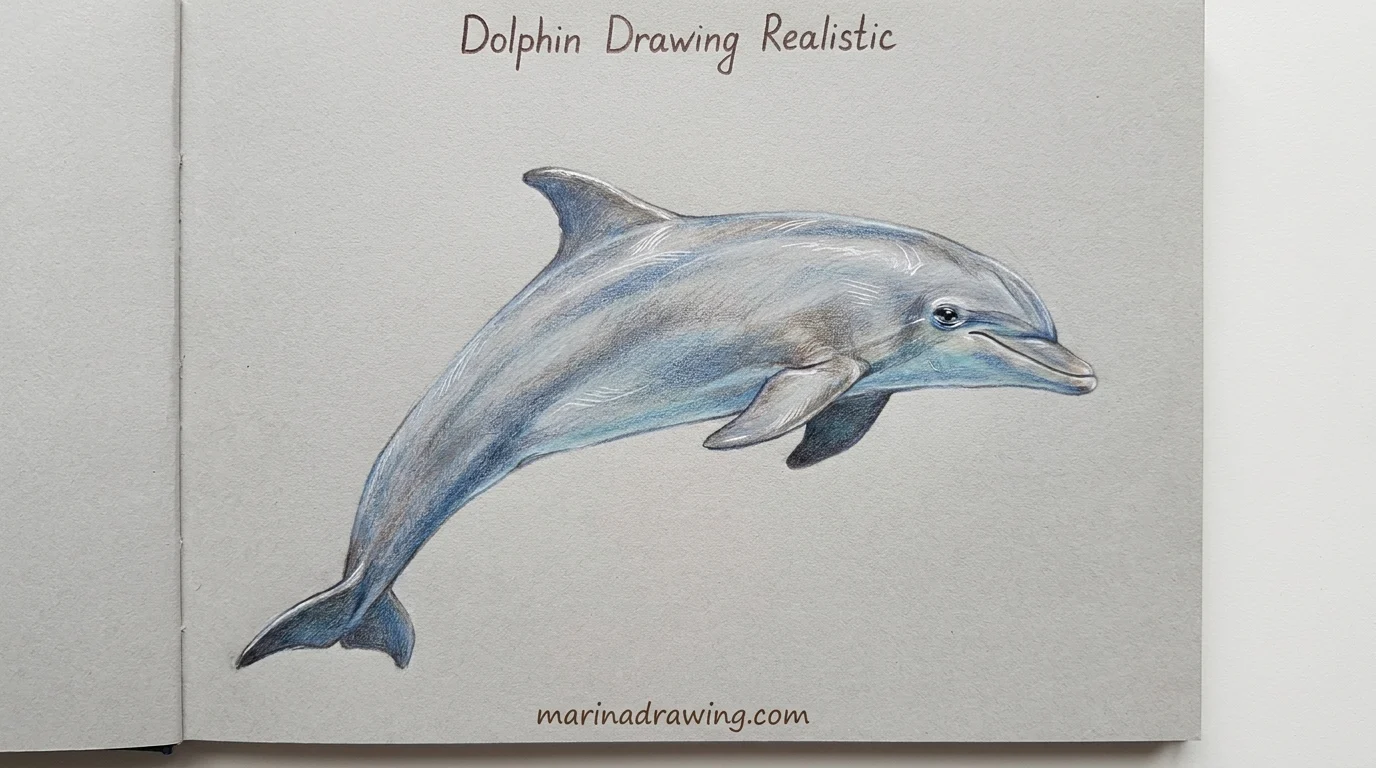
A dolphin drawing realistic enough to fool a glance needs tone. The back is a dark grey, the sides fade to mid grey, and the belly is nearly the white of the paper. That change from dark top to pale underside is what makes the body look round.

I start with the darkest areas: the back along the spine, the shadow under the fin, the eye. Then a mid grey down the sides, built with long strokes that follow the curve of the body. Last, almost nothing on the belly, just a soft shadow where it meets the water.

The same value habit runs through realistic shading.
If yours looks flat, you are missing a dark, not a detail. This one takes a couple of hours, and it is where knowing the shapes stops being enough. A pencil shading class covers light and shadow with practical exercises.
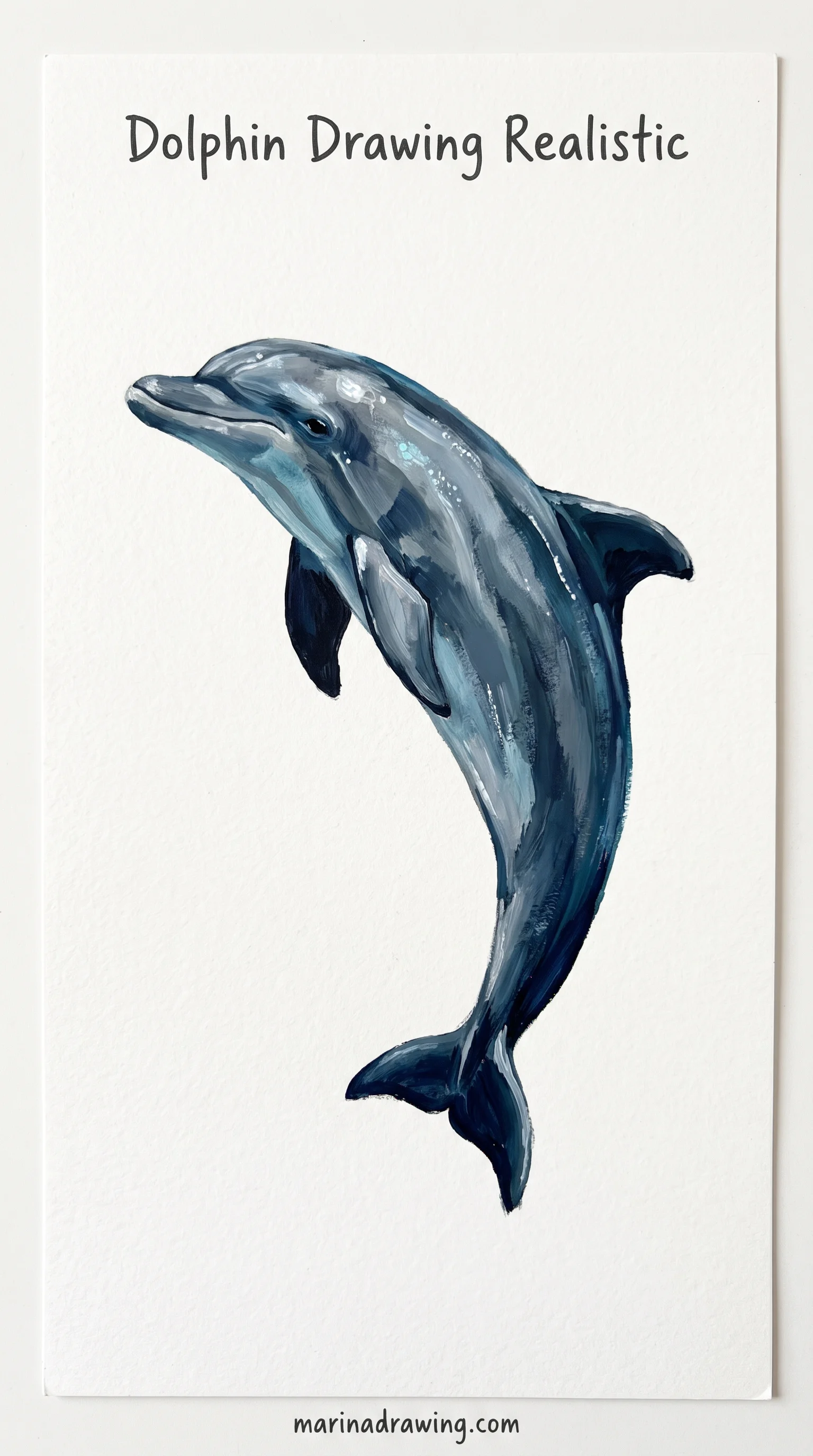
6. A pink river dolphin drawing
A pink dolphin drawing needs different proportions, because the pink river dolphin is a different animal. It has a long thin beak, a very round forehead, small eyes and a low ridge along the back instead of a tall fin.
Start with the same spine, but make the beak nearly as long as the head. Lift the forehead into a steep bulge, then draw the ridge as a low bump about two-thirds of the way back. The flippers are broad and paddle-shaped, bigger than on the sea dolphins above.
For colour, lay a light grey base, then warm it with a pale pink over the sides and belly. Press lightly. Pink pencil goes garish fast, so build it in thin layers and leave the back greyer than the belly.


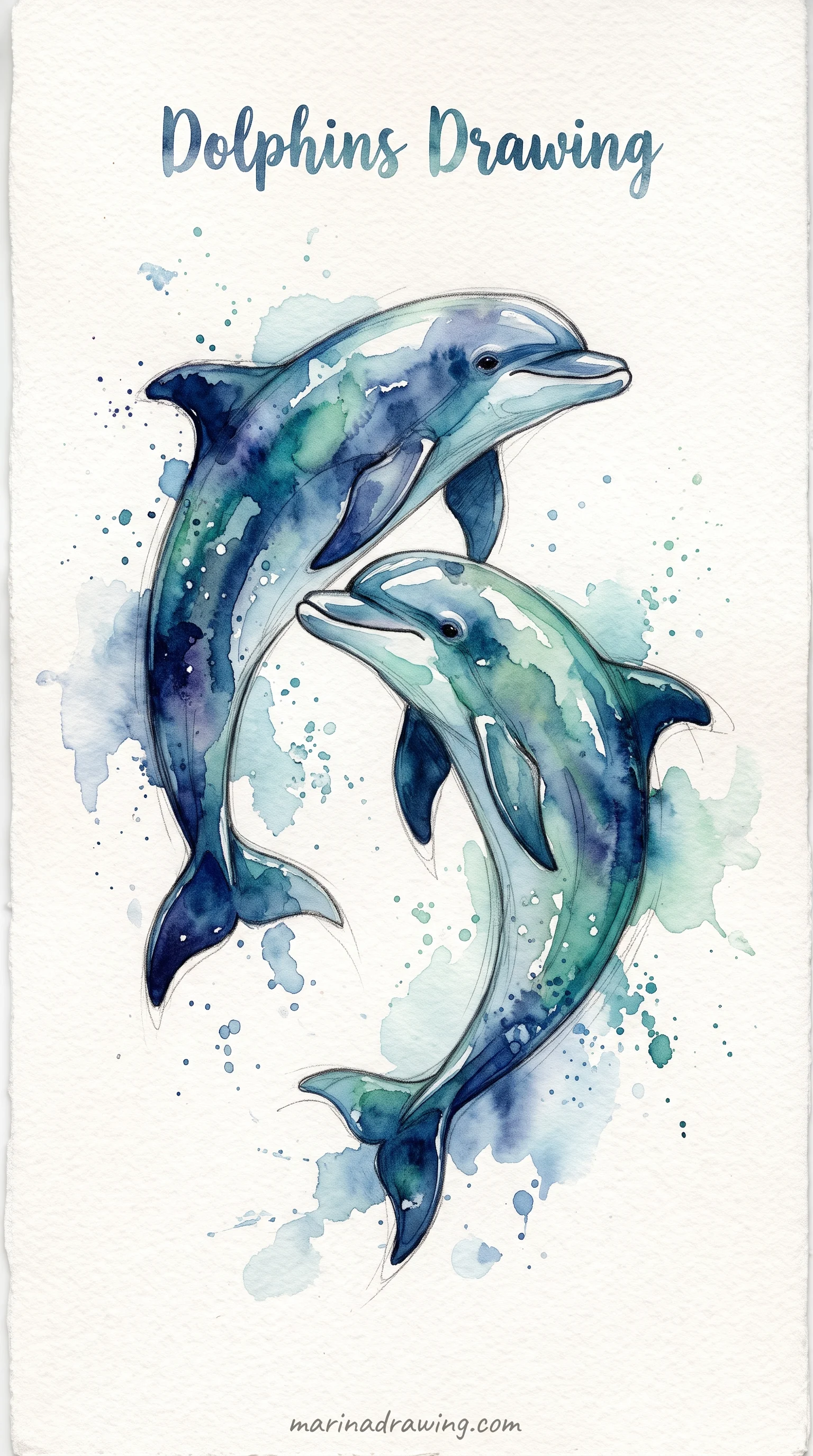
7. Two dolphins swimming together
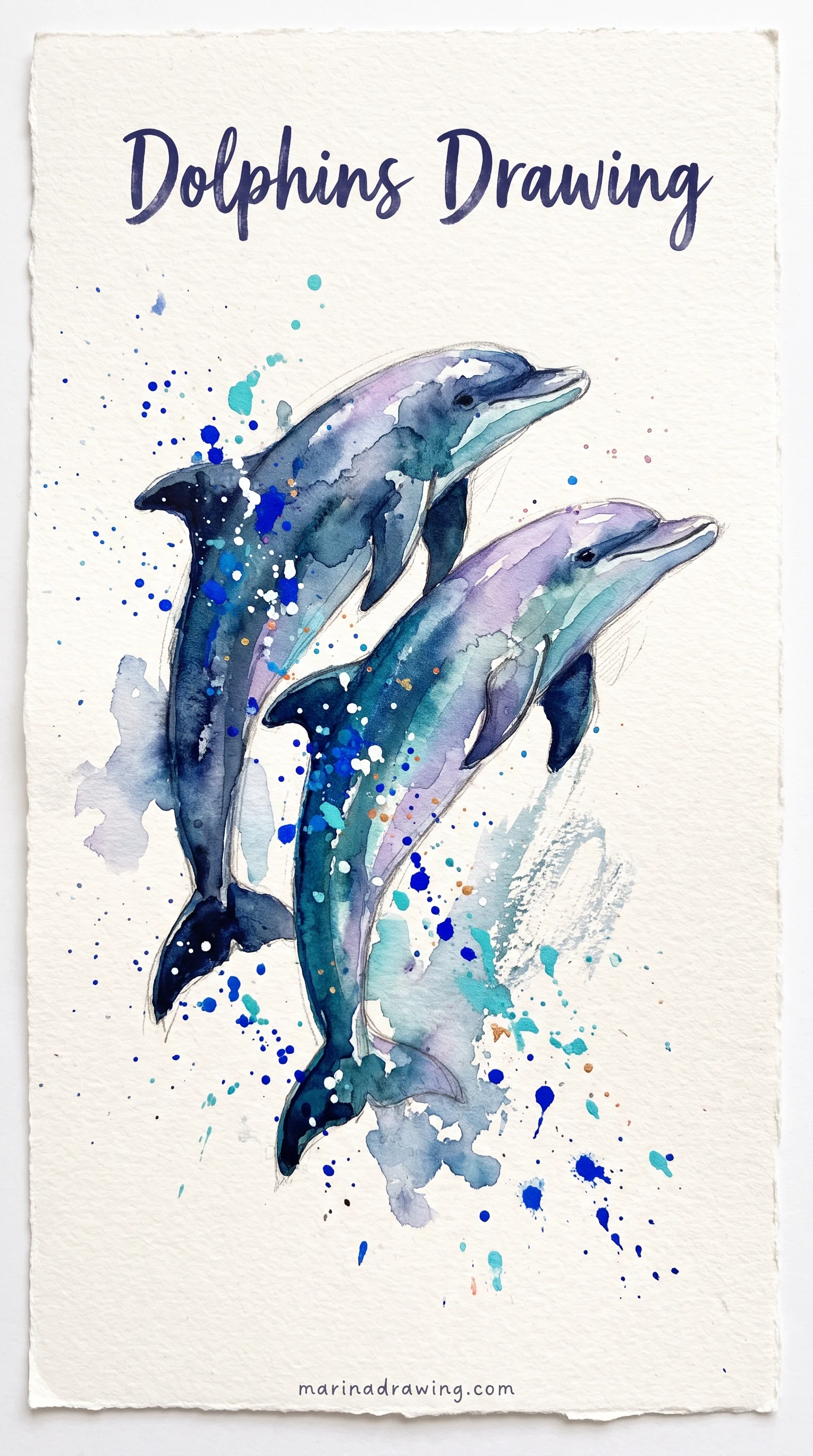
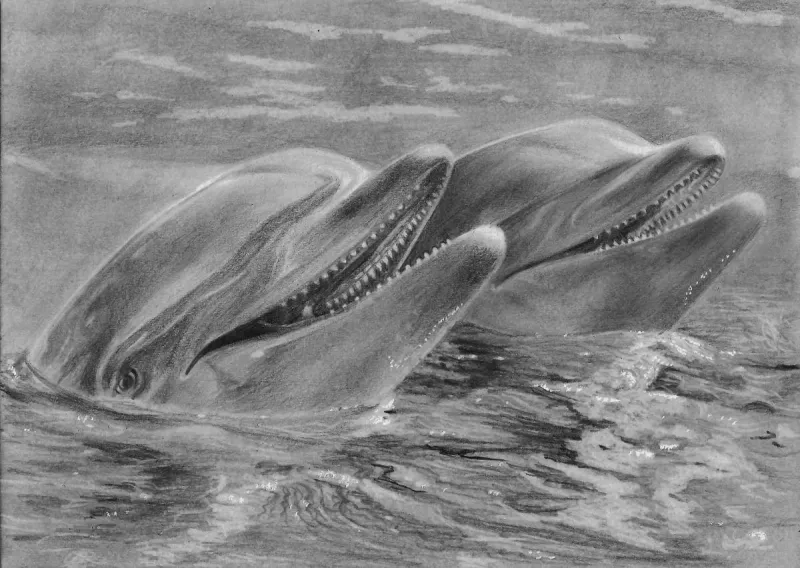
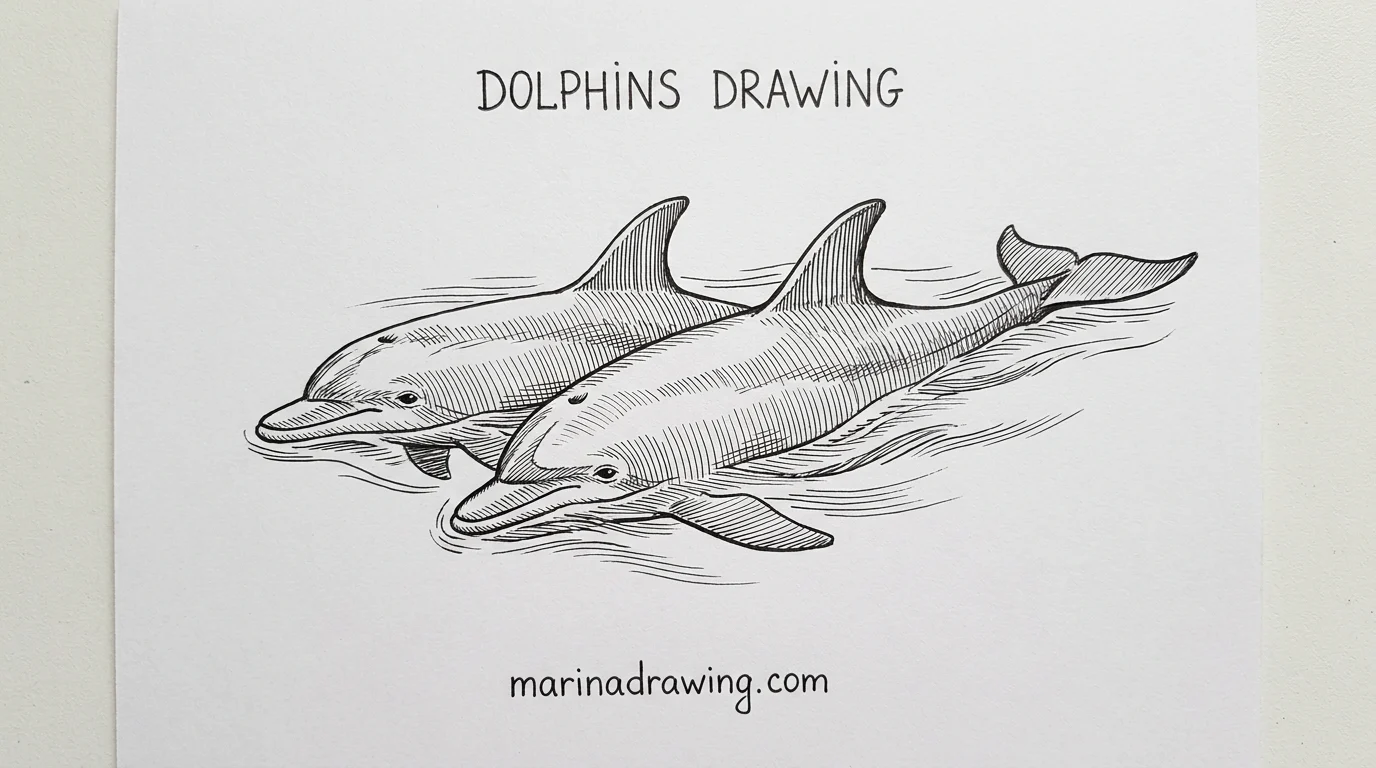
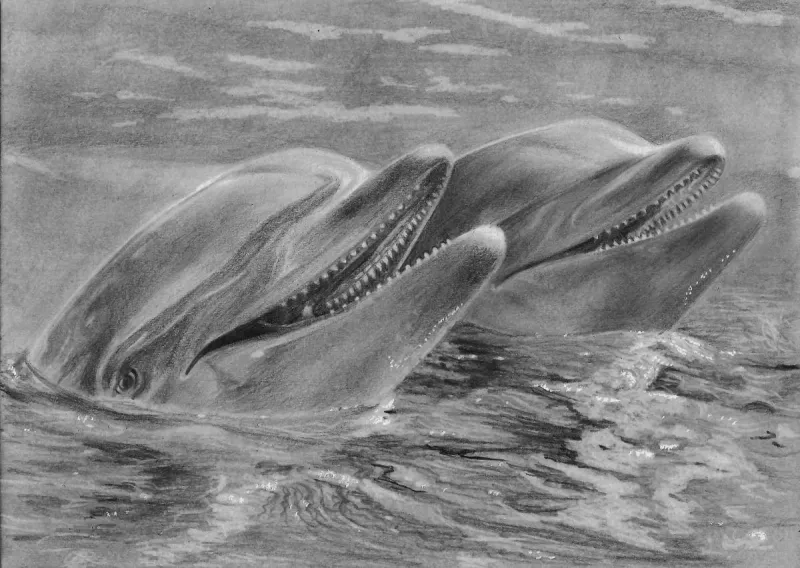
Dolphins drawing as a pair add one problem: overlap. Draw the front dolphin completely first, then draw the second behind it and stop its lines where they meet the first body.
Make the second one smaller, about half the length, and put it close to the first one’s flipper, swimming the same direction. That reads as a mother and calf without a single extra detail. Tilt the two spines slightly apart so the curves do not run parallel.
A few short lines under the pair, and one long wavy line above, give you water and no need for a background. Add a low horizon line and it becomes a small seascape.
Which mistake did you make?
Put your drawing next to this and read down the left column. I still check my own dolphins against it.
| What you see | What is actually wrong | Your fix |
|---|---|---|
| It looks like a shark | The fin is a straight triangle and the head slopes to a point | Curve the fin back like a hook and add a rounded forehead above a short beak |
| It looks like a fish | The tail stands upright | Draw the tail as a flat wedge with a central notch |
| It looks like a cucumber | The body is the same width from head to tail | Make it thickest a third of the way back and taper to a narrow stalk |
| It has legs | The flipper sits in the middle of the belly | Move it low and close behind the head, swept back |
| The face looks blank | The eye is too far from the mouth line | Put a tiny eye just above the corner of the mouth |
If the same row describes every dolphin you draw, your gap is construction rather than practice.
Questions people ask about drawing a dolphin
How to make a dolphin drawing easy?
Draw one long S-curve, wrap a body around it that is thickest near the head, add a rounded forehead with a short beak, a hooked fin and a flat notched tail. Add nothing until you can see a dolphin.
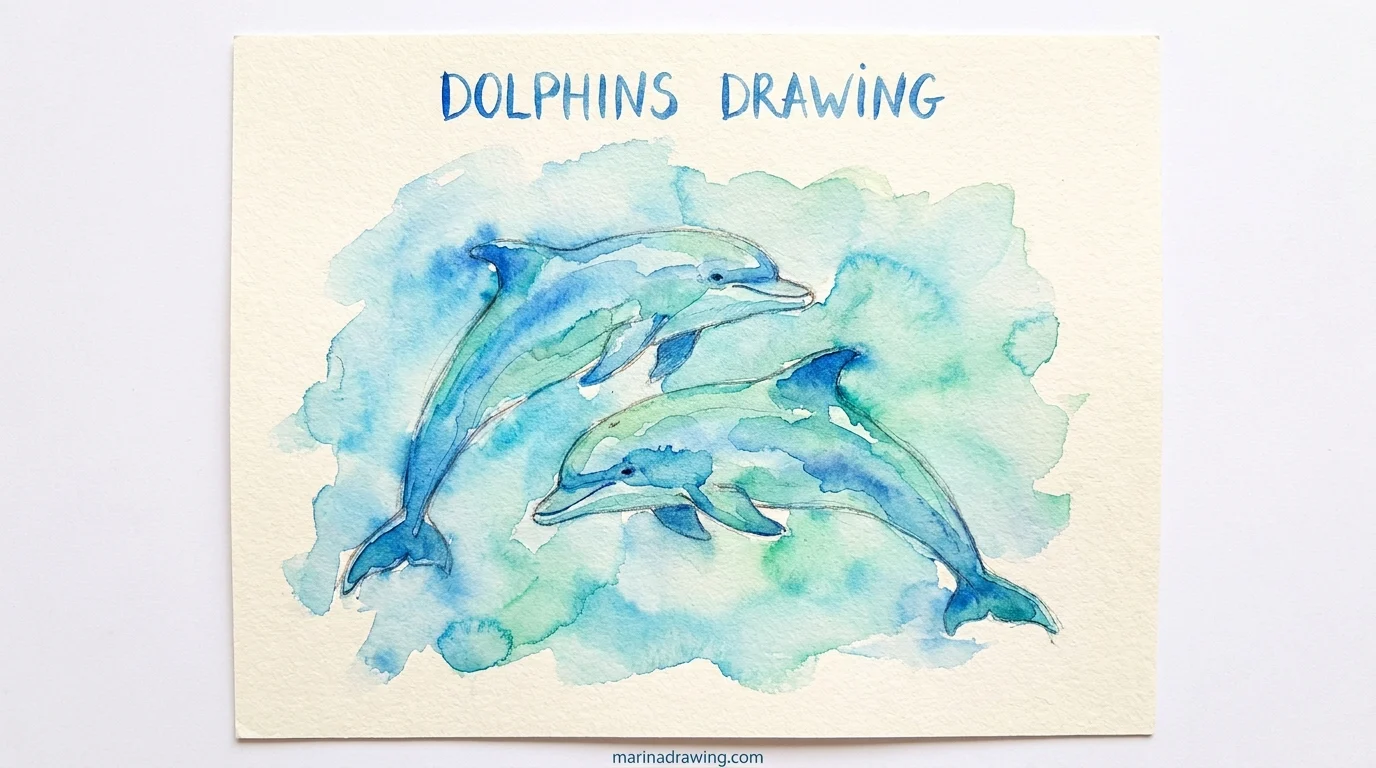
How do you draw a dolphin step by step?
Start with the spine curve, then the body, the head, the tail, and last the fin, flipper and eye. Fill in tone after the shapes are right.
How to make a cute dolphin drawing?
Enlarge the head to nearly a third of the length, keep the beak very short, set a big round eye low, and round off every fin. Big and low reads as young.
How to draw a real dolphin?
Use the same spine and body, then add tone: dark grey on the back, mid grey on the sides, near-white belly. Draw the darks first and let the paper be the belly.
How to draw a dolphin for kids?
A big arc for the back, a rounded nose, a triangle fin and a tail made of two leaf shapes. Nothing to shade, so it finishes before interest runs out.
How do I draw a dolphin jumping out of water?
Bend the body into a banana arc with the beak up, show the tail edge-on, and add a few curved water lines and drops. Keep the water light.
Which dolphin should I learn to draw first?
The easy one, then the cute one, then the jump.
Key takeaways
- A dolphin is one S-curve with parts hung on it. Draw the spine first.
- The tail lies flat, wider than it is tall. An upright tail makes a fish.
- The fin curves back like a hook. A straight triangle makes a shark.
- A rounded forehead sits above a short beak. Without it the head is a snout.
- Cute is a ratio: big head, low big eye, very short beak.
- The realistic one needs tone, so draw the darks first and keep the belly pale.
Draw two or three and you will know which row is yours. I keep the same habit on other animals: the fox, the peacock, plain drawing practice.