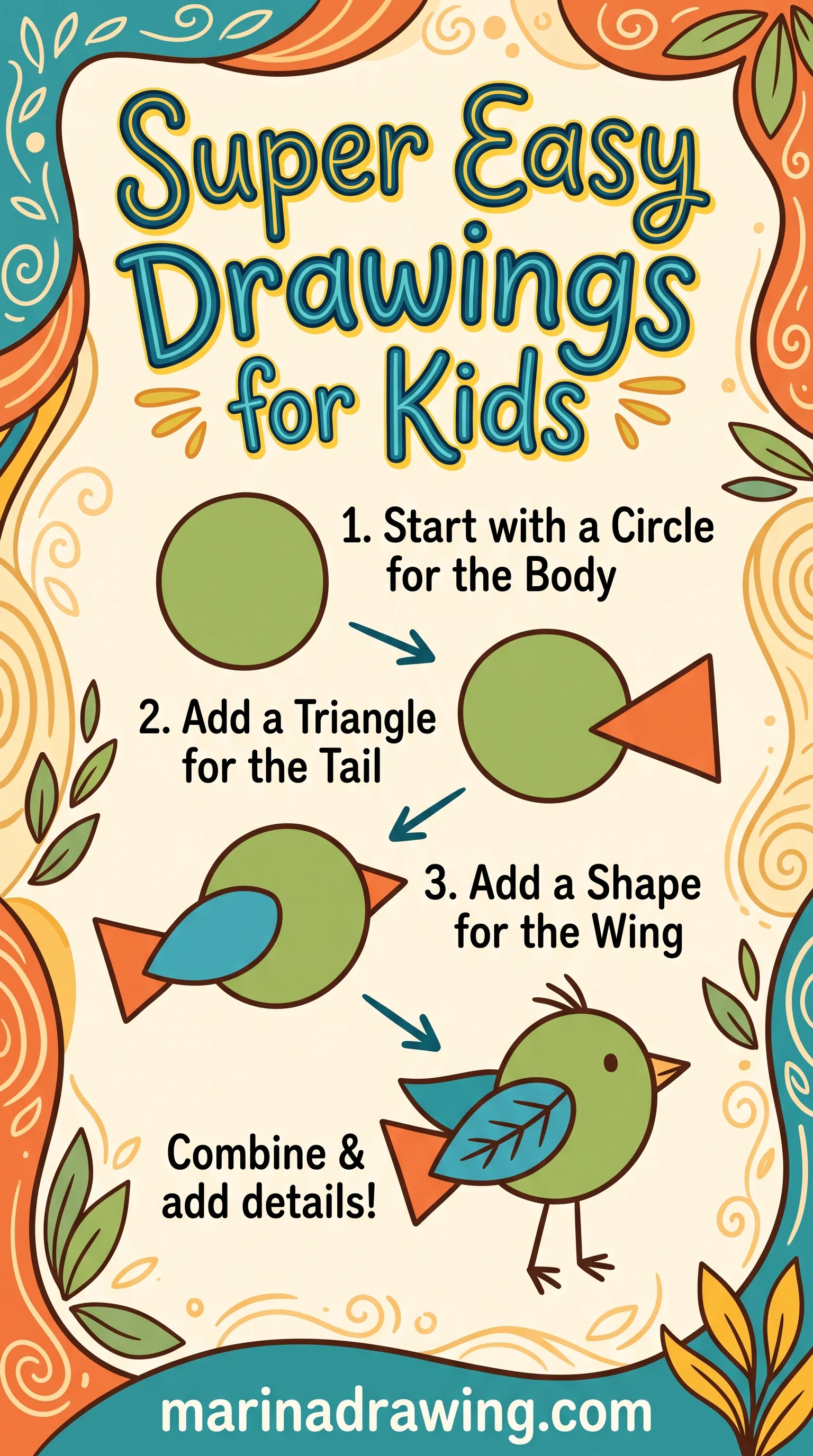
Pick the subject by how many shapes it takes, not by how cute it looks. If you want easy drawings for kids step by step, count the shapes before you start: four to six large forms, no small marks repeated over and over. That one rule decides whether your child finishes the drawing alone or puts the pencil down halfway through it.
A cat, a fish, a house with a tree, a face or a rocket each come out of four to six large shapes. That is one sitting, ten to fifteen minutes, and your child finishes it alone.
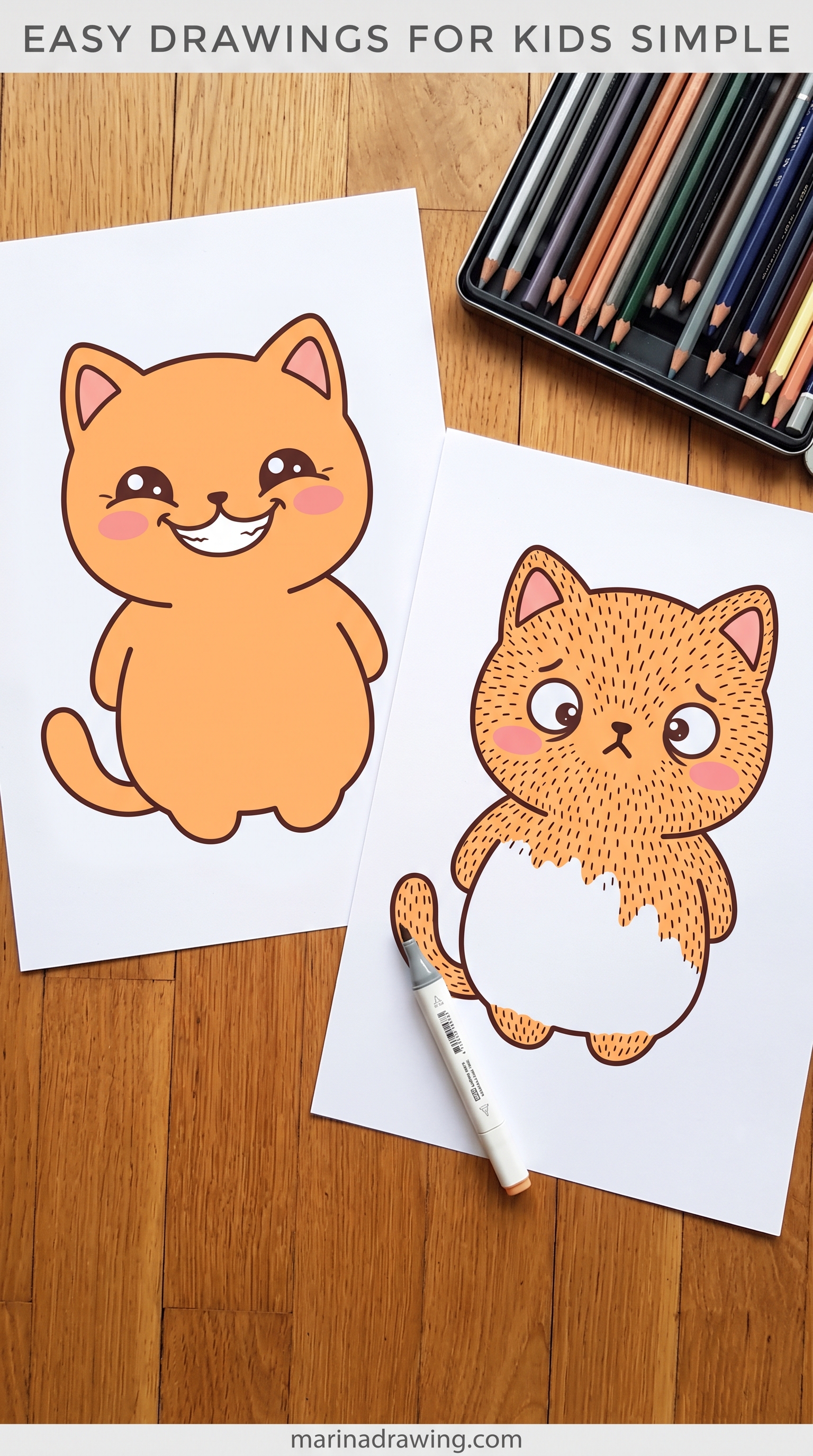
Anything made of small repeated marks is not easy for them, however simple the finished picture looks to you. Fur. Scales. Bricks.
I count the shapes out loud with a child before every sitting, and I have yet to see that rule fail.
A child does not lose interest in drawing. They lose interest in a drawing that never gets finished.
 Pin it
 Pin it
Why the Subject, Not the Child, Decides Whether It Gets Finished
You pick a subject the way you would pick one for yourself: something they like. A dinosaur, a unicorn, the family dog.
Then the drawing stalls halfway. They get restless, you finish the last few lines, and they put down the pencil having watched you complete their picture.
You did not do anything wrong. You picked the subject the way an adult picks one.
Next time you ask them to draw, they say they can’t.
The subject was never too hard for them. A dinosaur you draw as four ovals and two lines is not hard.
It was too long. Every subject has a shape count — how many distinct forms your child places before the drawing reads as finished. And their attention runs in minutes, not shapes.
I learned this the slow way, watching kids abandon subjects I had called easy.
When the count outlasts the minutes, the drawing gets abandoned. They file that as failure, not as a drawing that simply ran too long.
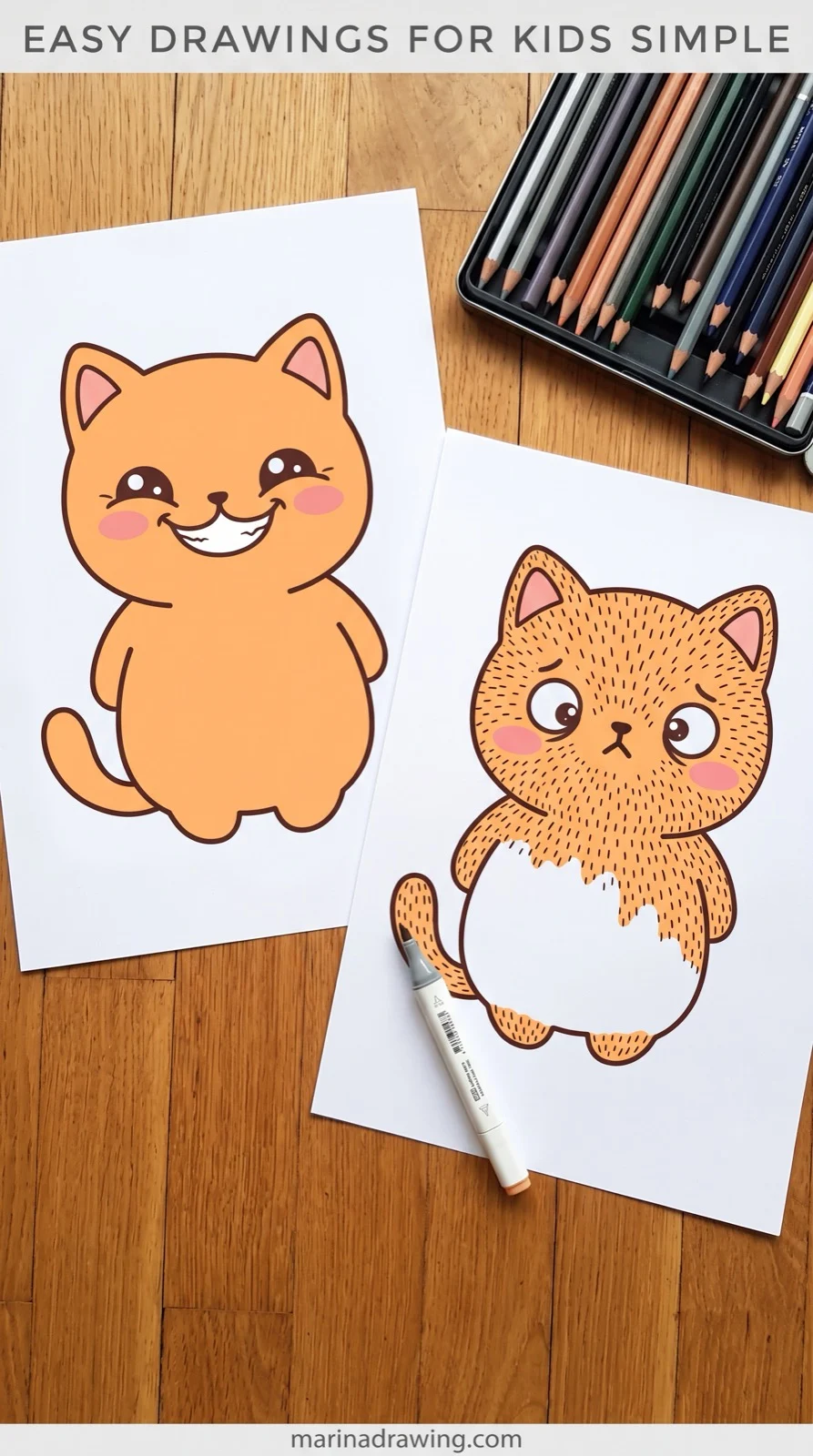
So a fish with drawn-in scales is not an easy drawing, even though you would call that outline simple. The outline is one shape. The scales are dozens.
Your child is not drawing a fish at that point. They are doing dozens of small repetitive marks, which is a different task.
 Pin it
The fix: you choose by count before you choose by content. Four to six large shapes, no small repeated detail, and your subject is right whatever it happens to be a picture of.
Before you start, count the shapes the finished drawing needs.
Does any part need the same small mark four or five times over? You drop it, or you swap it for one bigger shape.
Whiskers are three lines, so you keep them. Fur is a hundred lines, so you cut it.
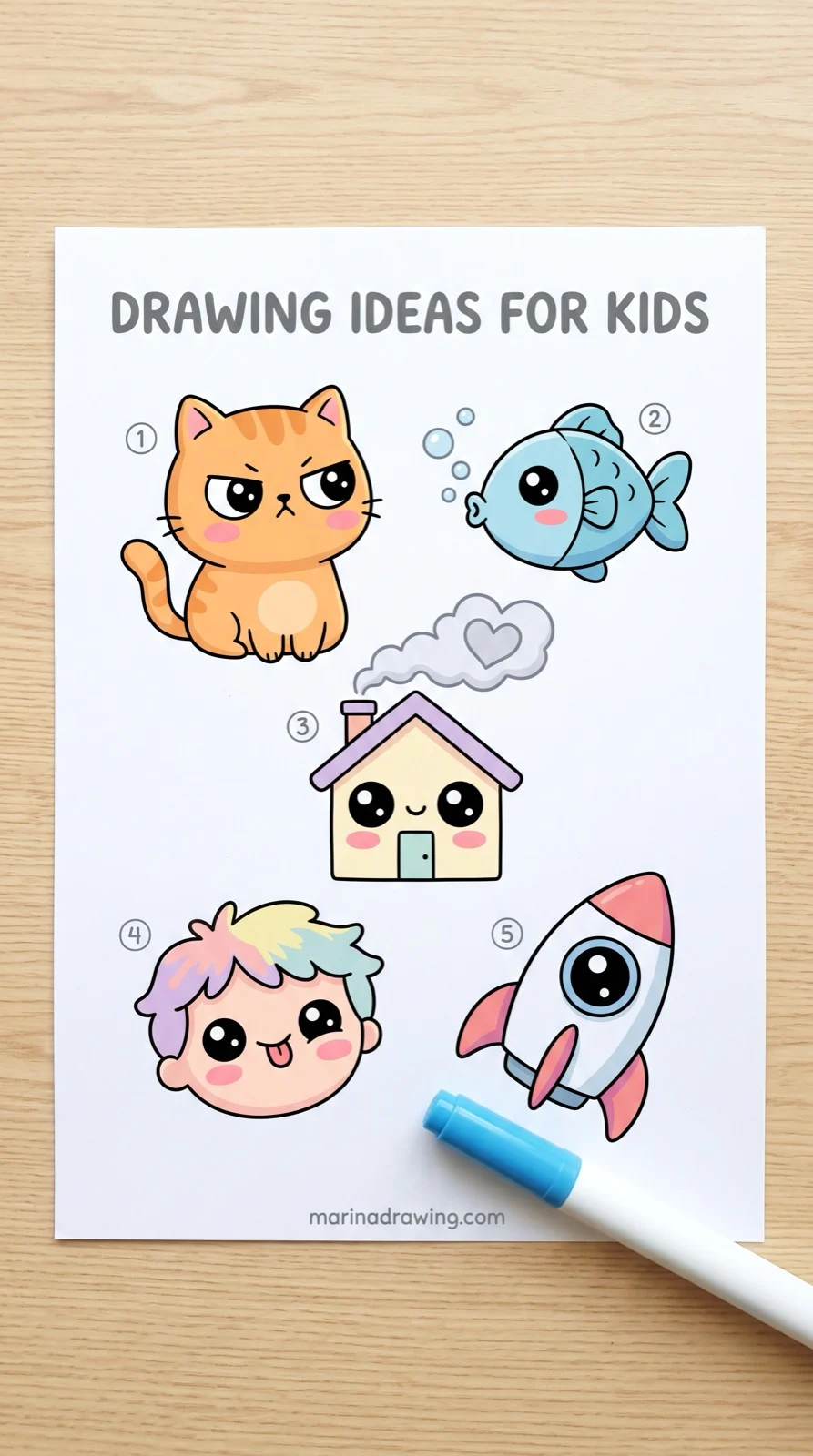
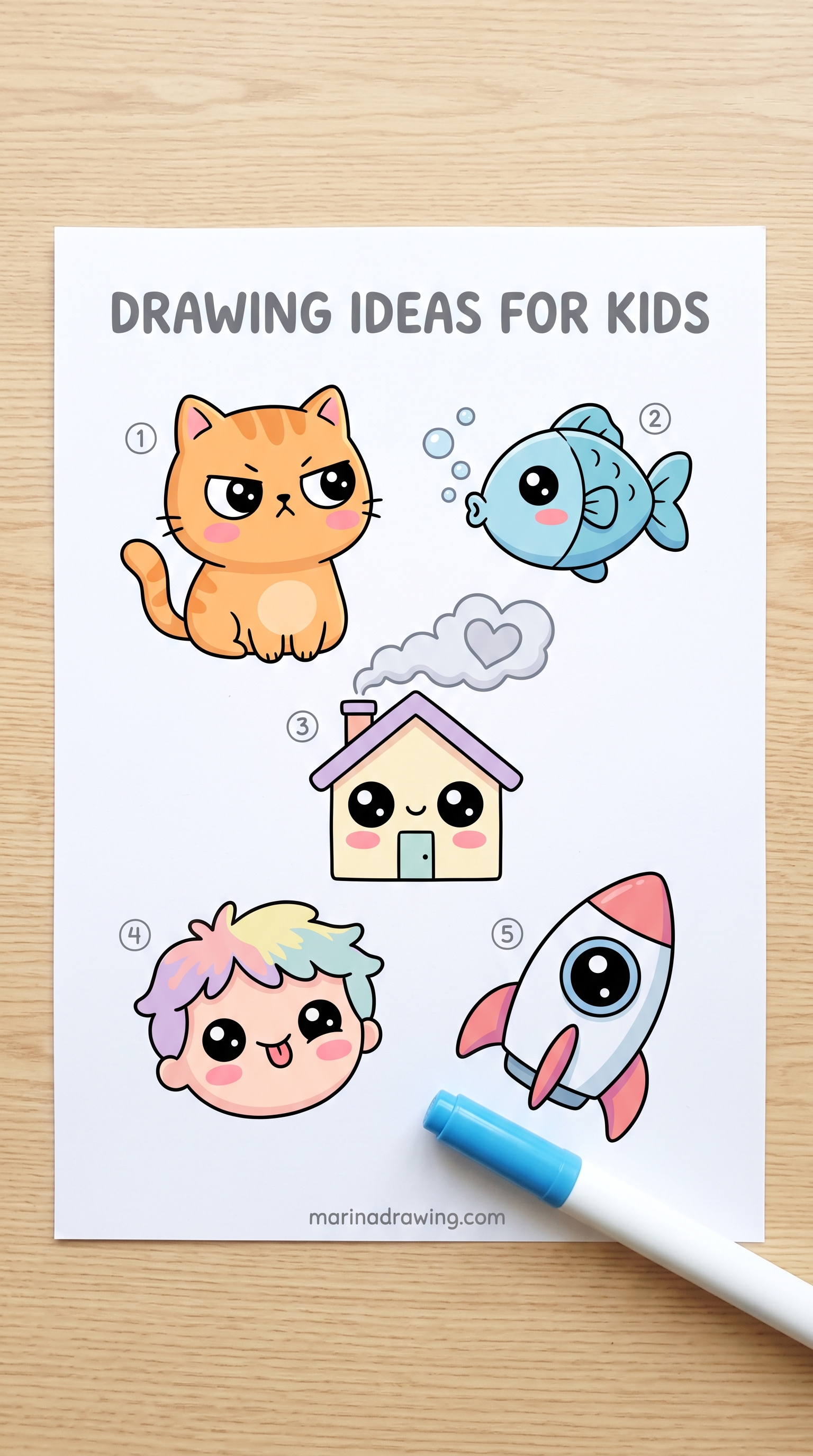
Below are five subjects that hold to four to six shapes. Take the numbered steps in order — each one tells you what is on the page and what still isn’t.
Easy Drawings for Kids Step by Step: Five Subjects to Finish Tonight
42 hours of pencil drawing training, lifetime access
The video course I point plateaued students to — full lessons on portraits, hands, and realistic shading, not another short tutorial.
 Pin it
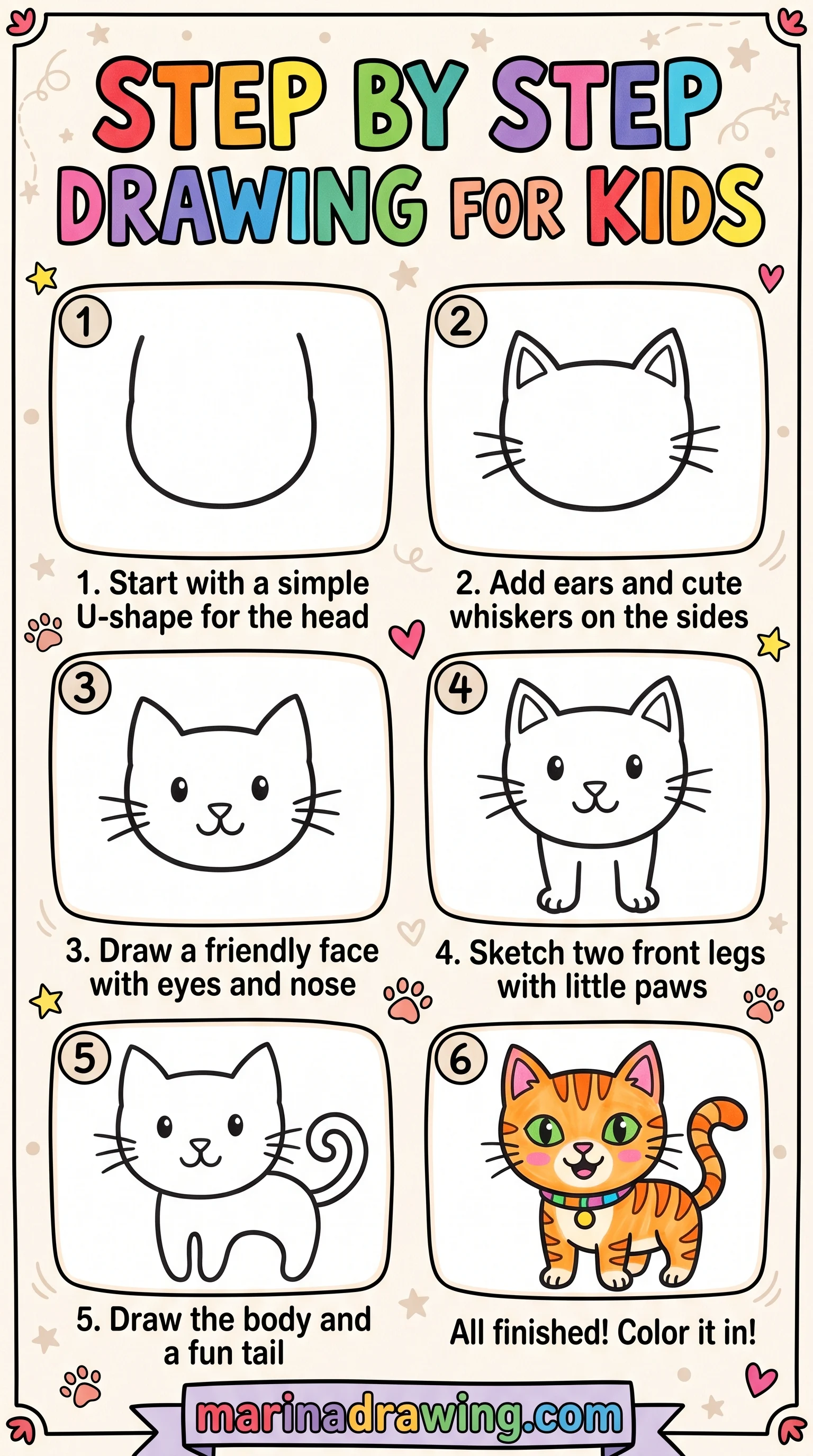
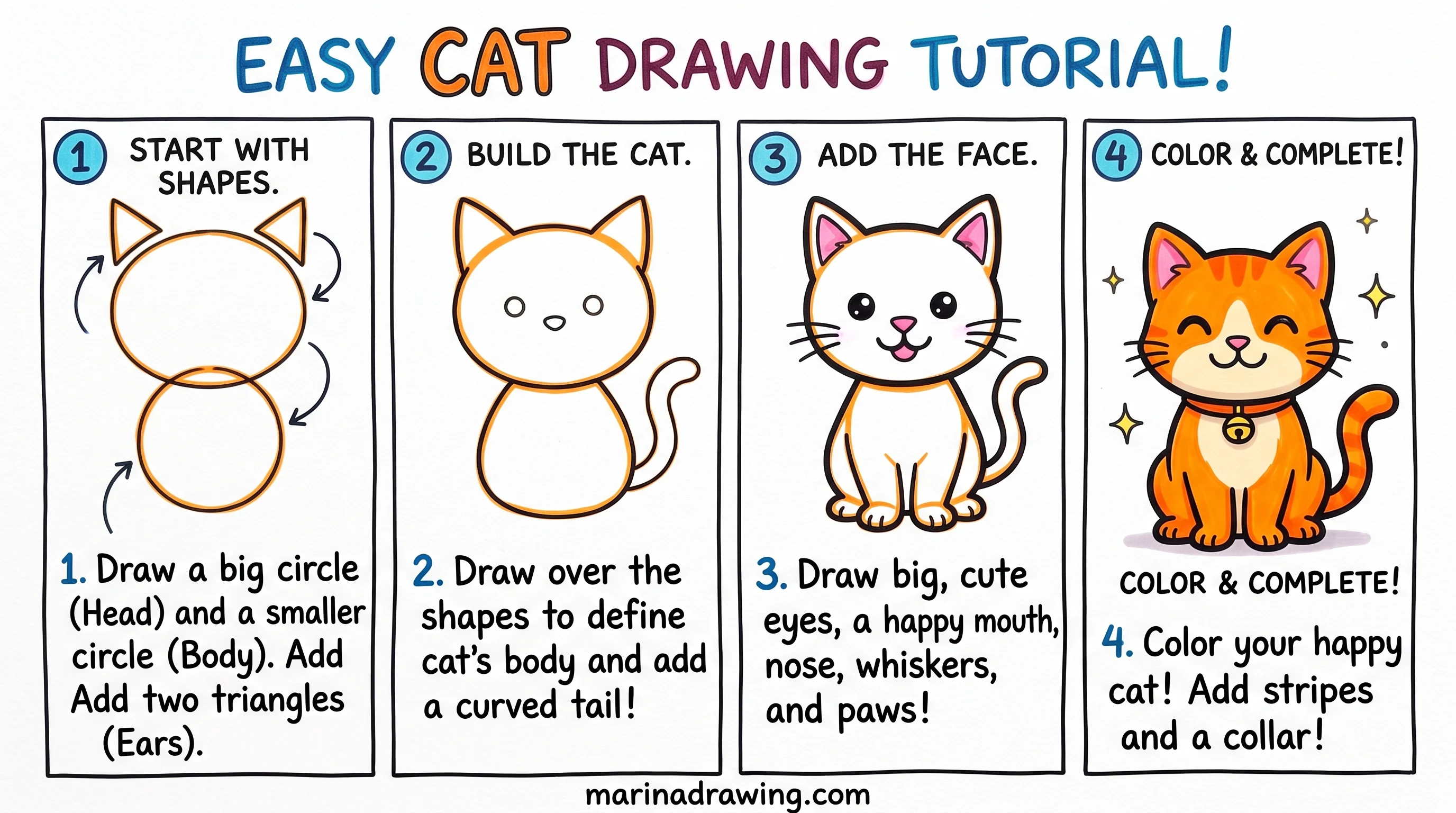
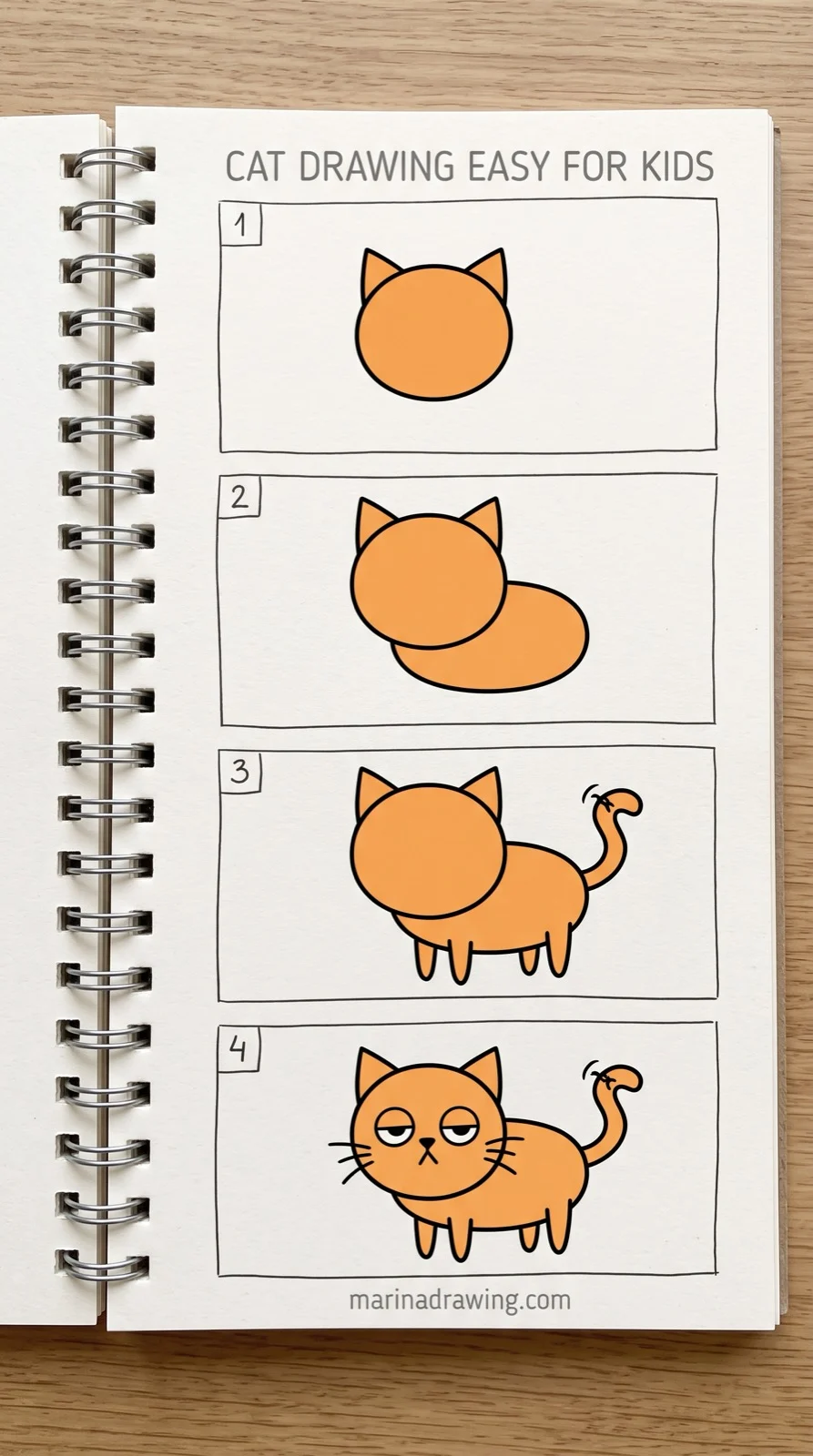
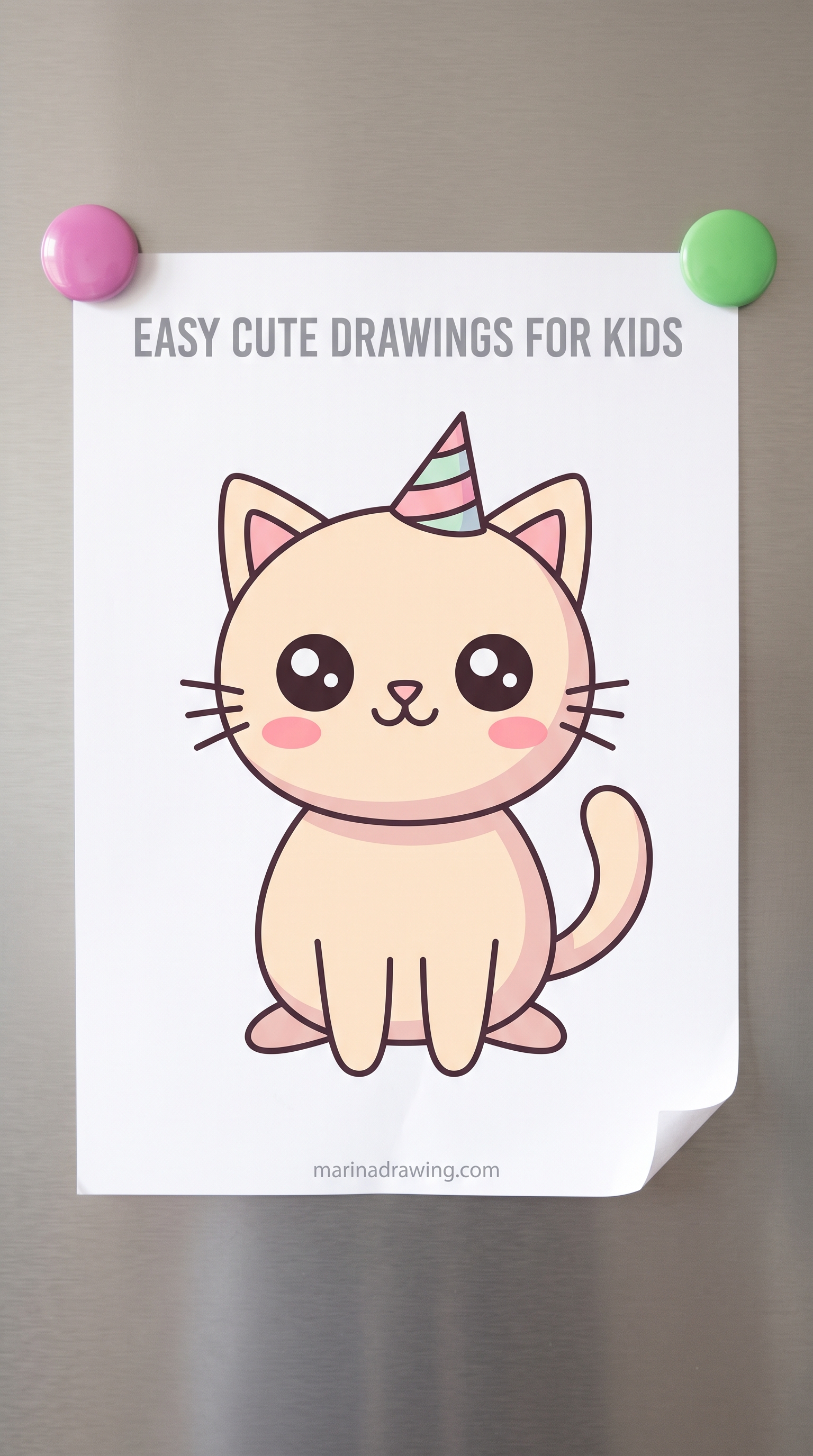
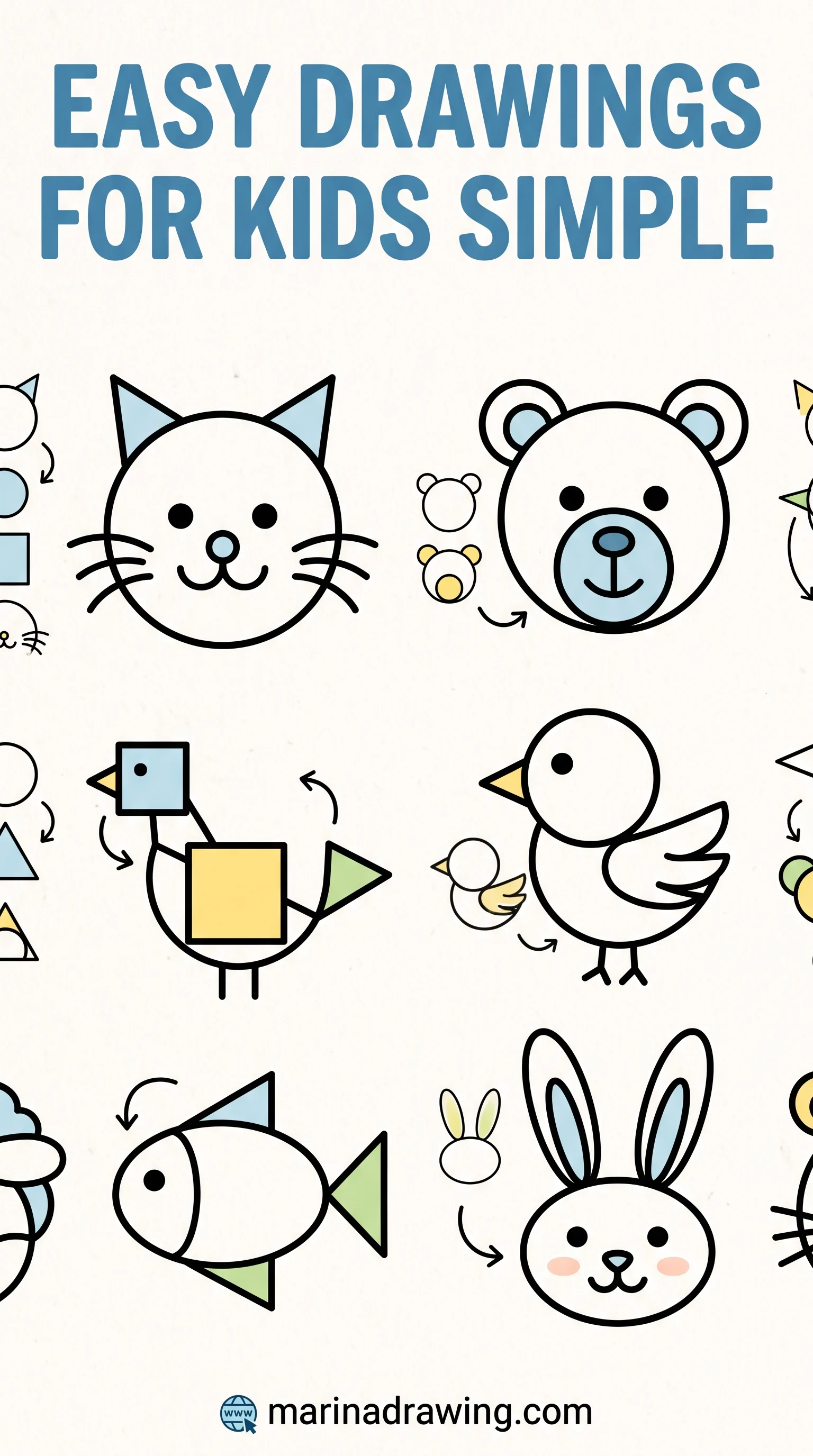
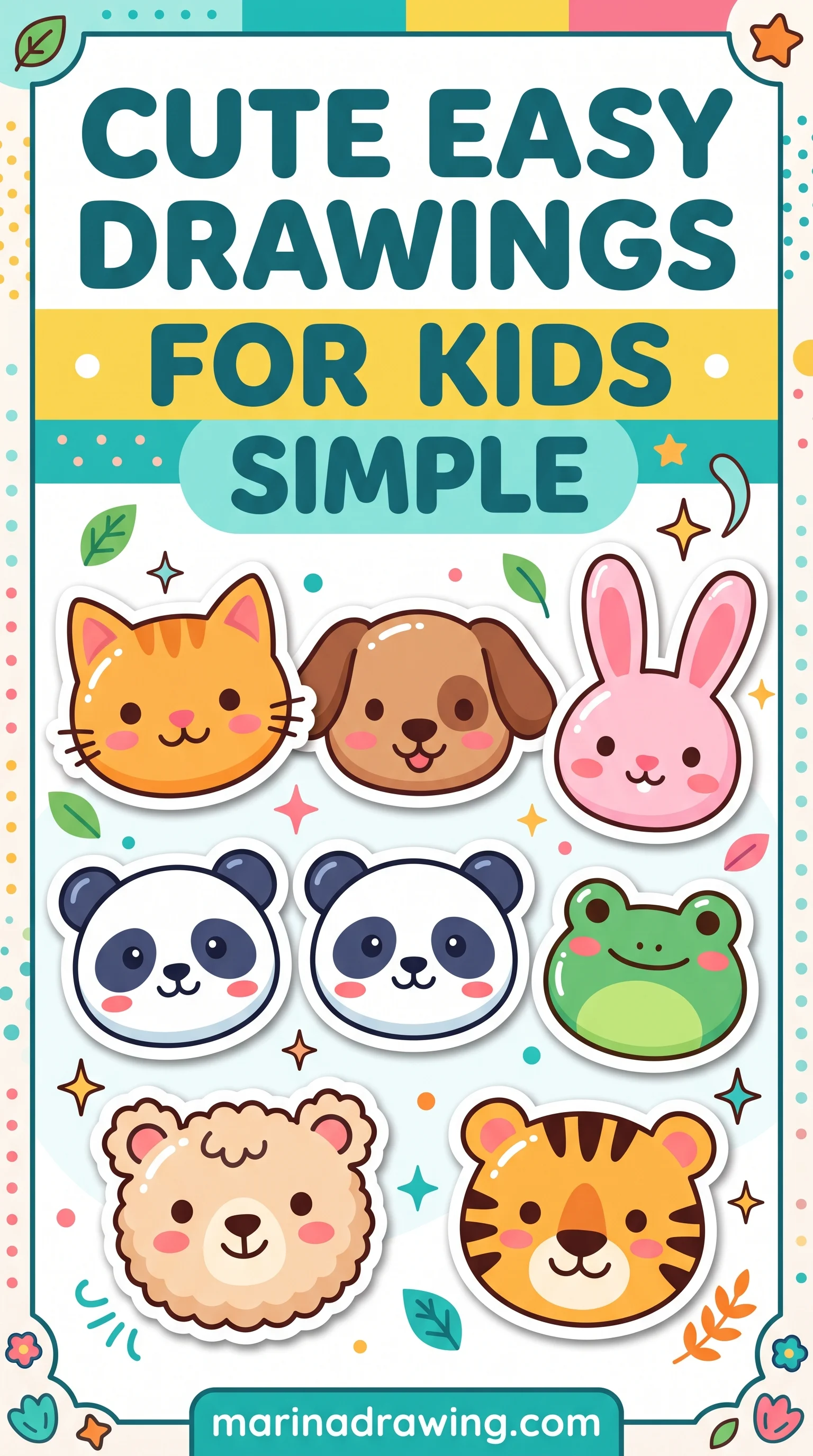
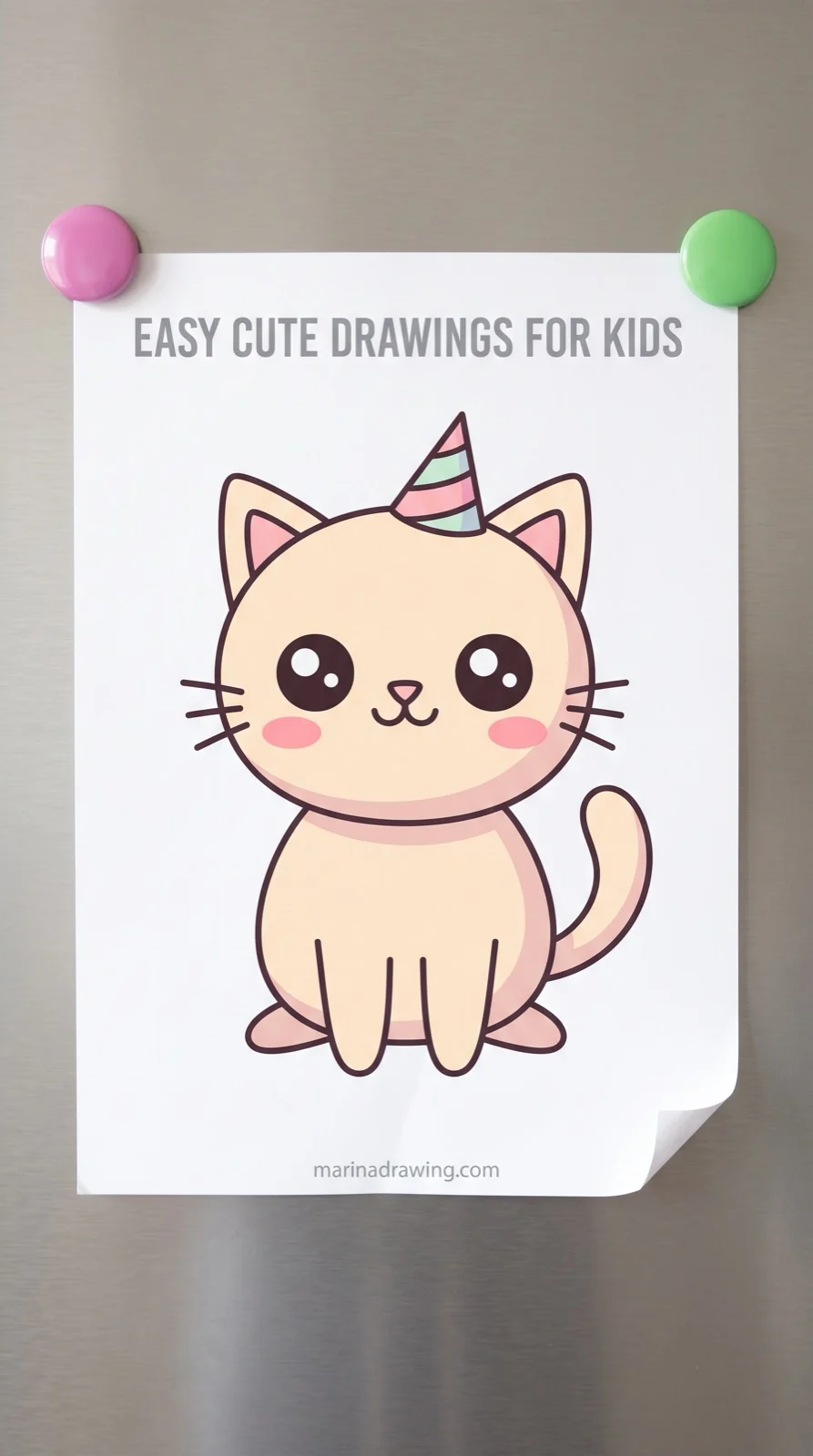
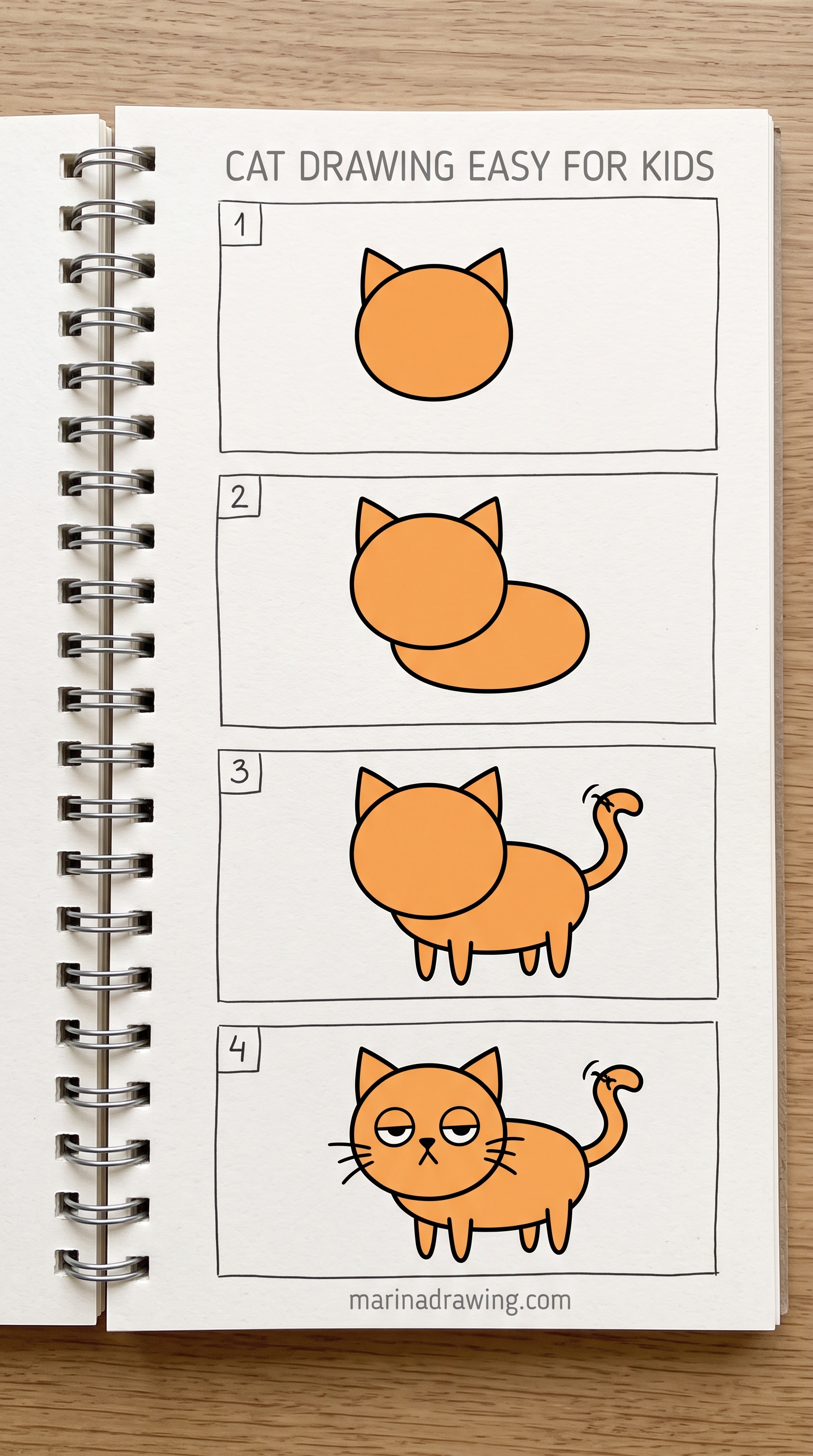
A cat
- One circle — the head.
- Two triangles on top — ears.
- One oval below it — the body.
- Four short lines, one curve — legs and tail.
- Two dots, a triangle, three whiskers a side. Done.
 Pin it
 Pin it
 Pin it
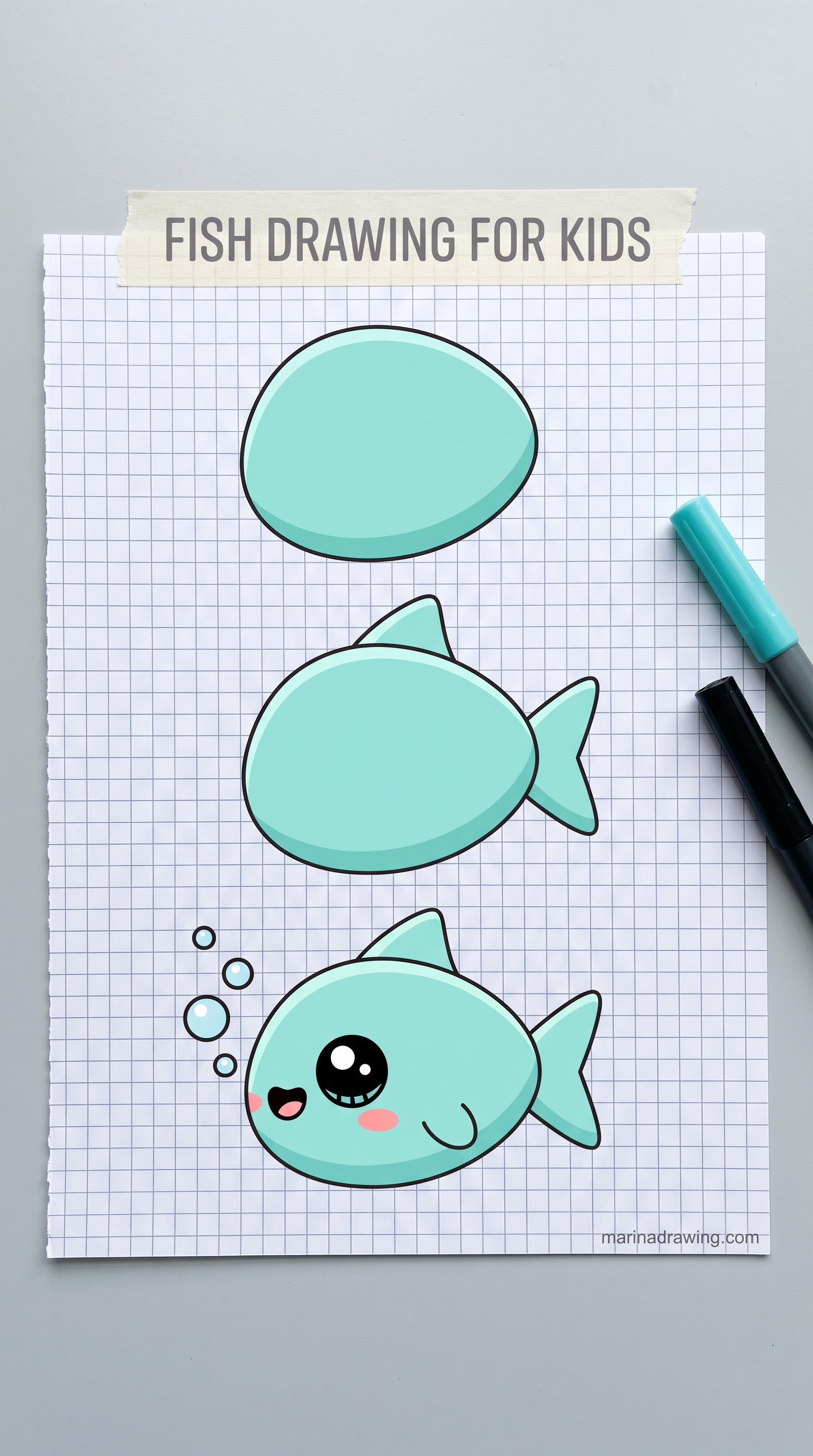
A fish
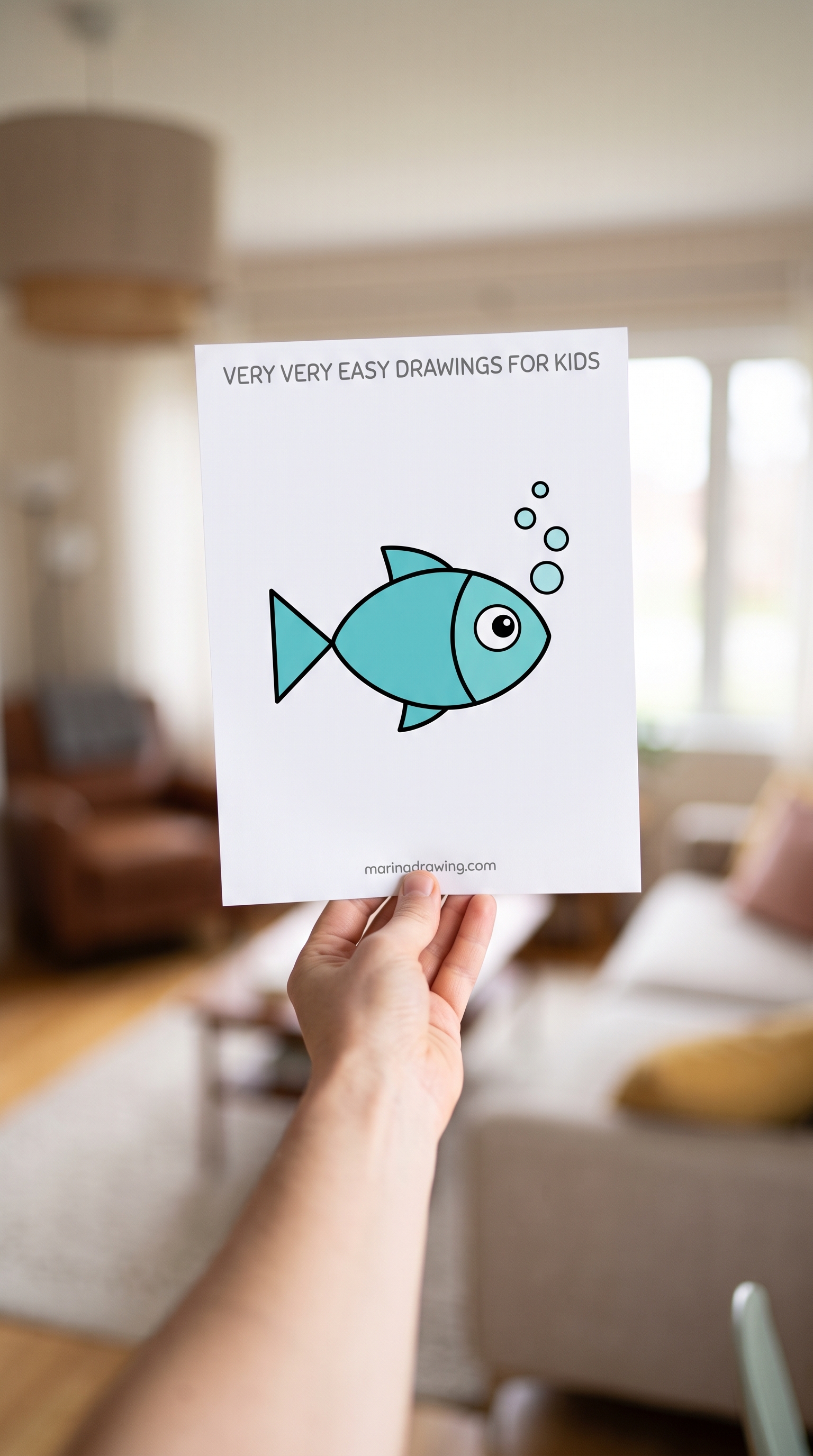
- Draw one oval, angled slightly, for the body.
- Add a triangle at the back of the oval for the tail fin.
- Add one small triangle on top for a dorsal fin.
- Add one dot for the eye and one curved line for the mouth.
- Optional: two or three short curved lines near the body to suggest motion in the water. Stop there, do not add scales.
 Pin it
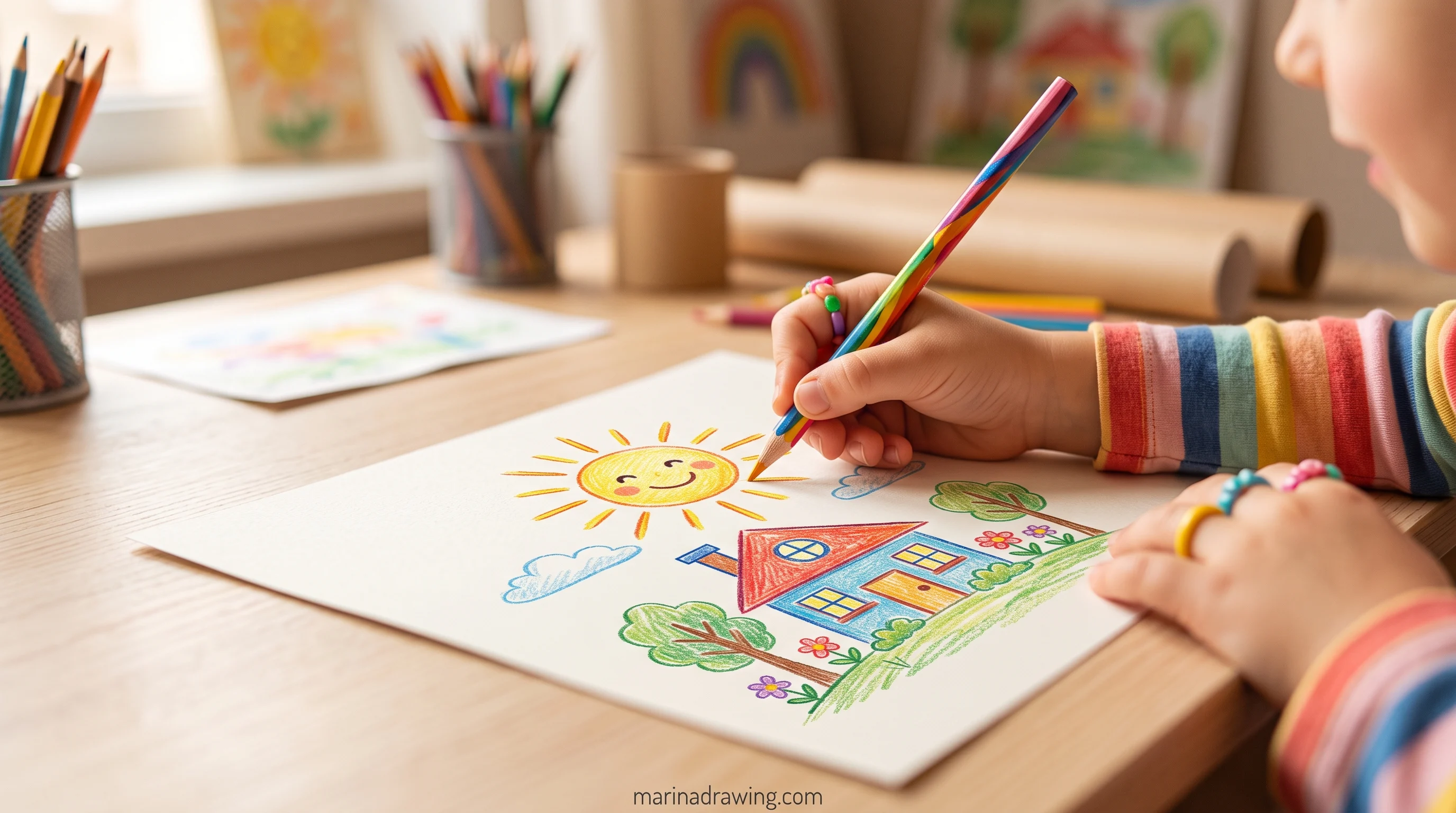
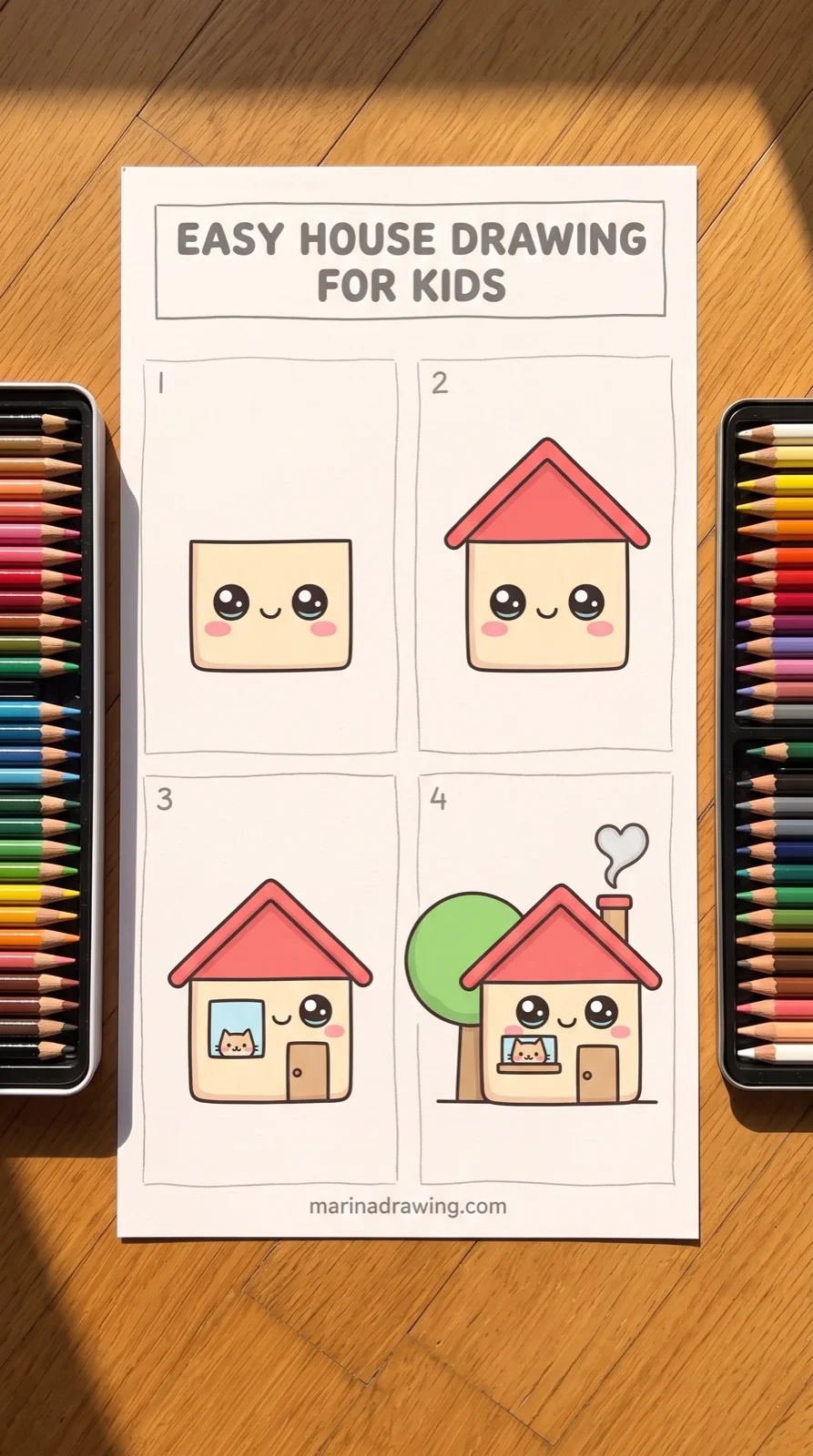
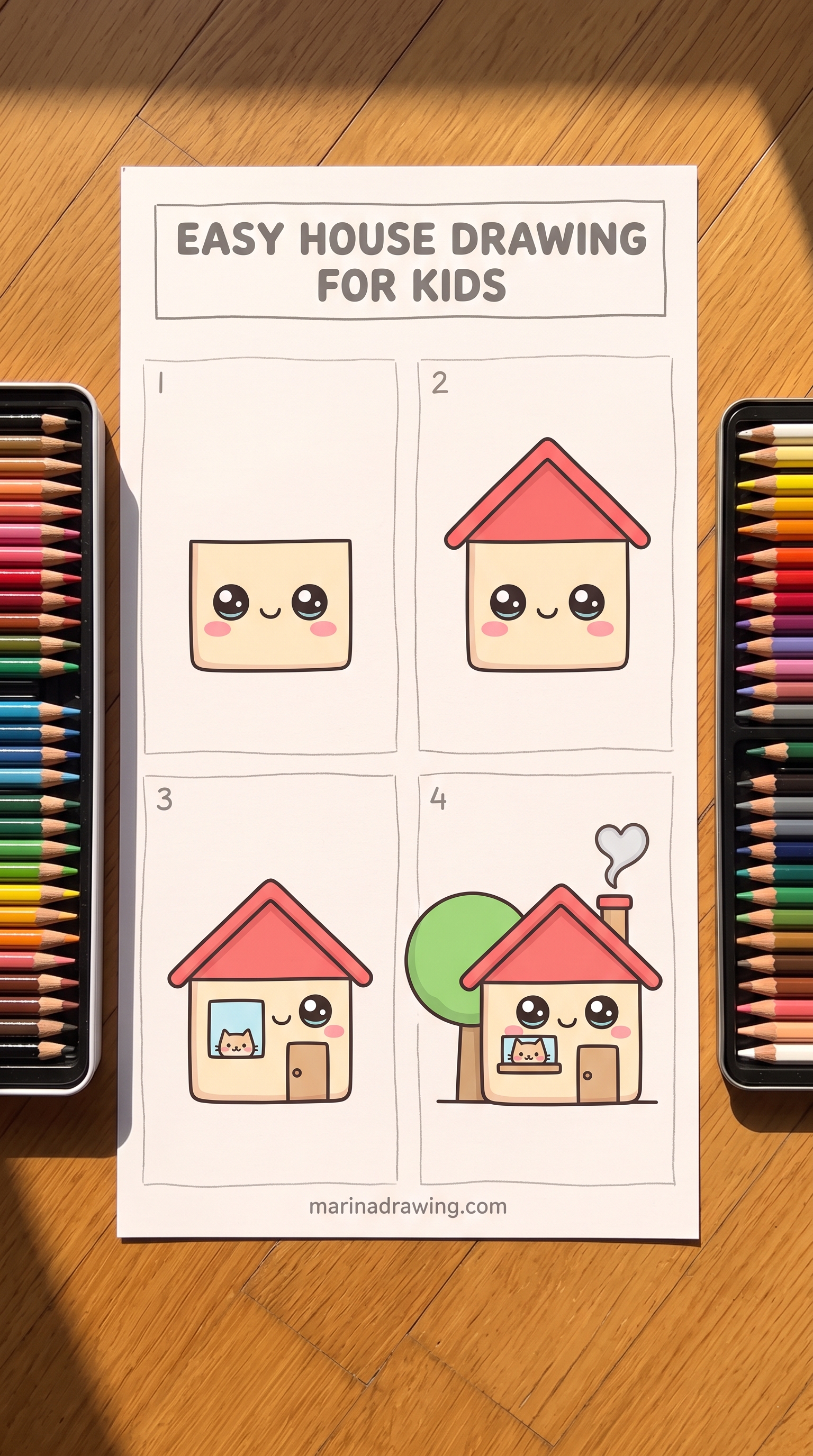
A house with a tree
- Draw one square for the house body.
- Add a triangle on top for the roof.
- Add one small square for a window and one small rectangle for a door.
- To the side, draw one circle or cloud shape for the tree top and one straight line down for the trunk.
- The house and tree are both complete as shapes. Stop, or add a single chimney rectangle if there’s still interest.
 Pin it
 Pin it
 Pin it
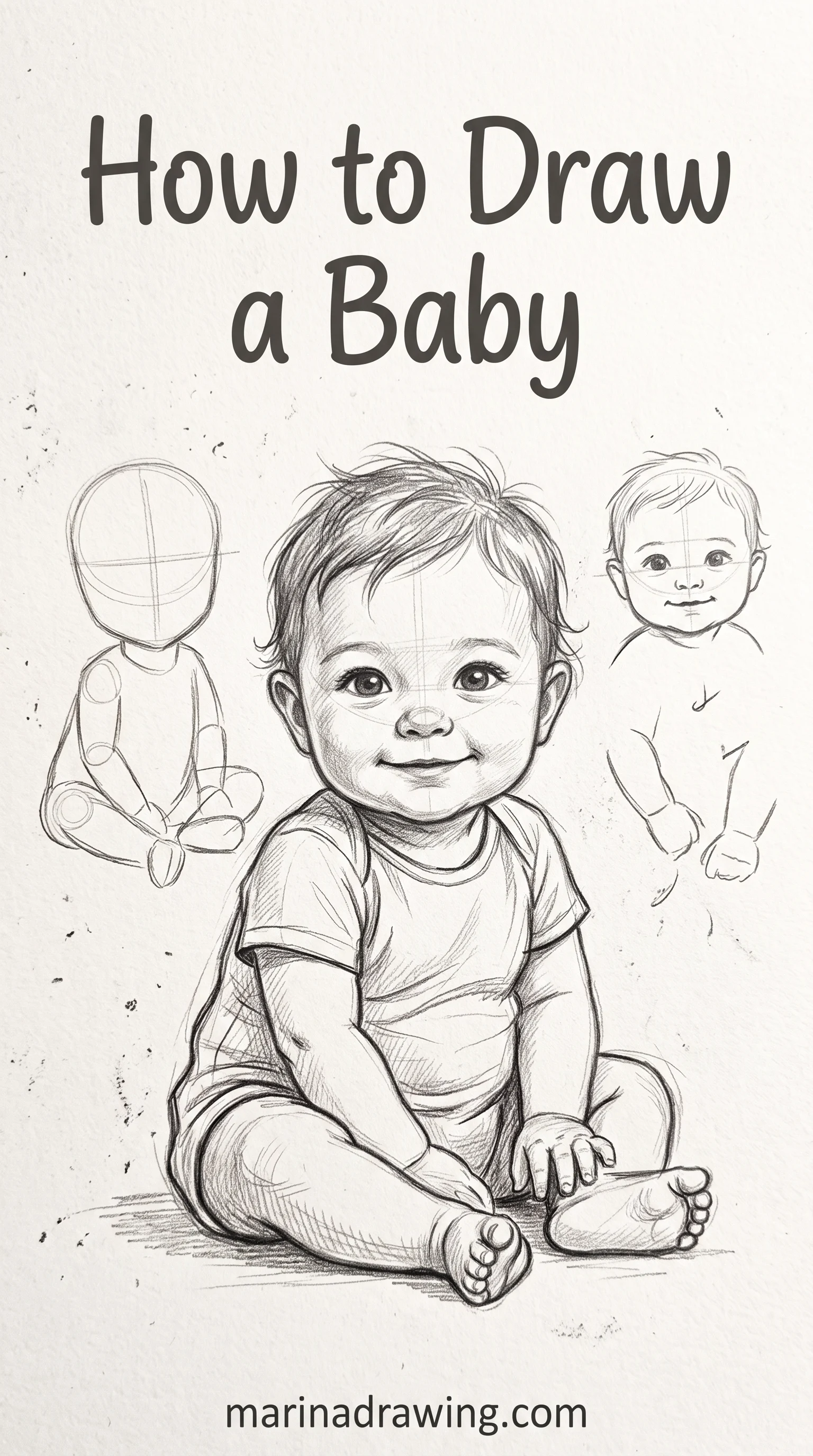
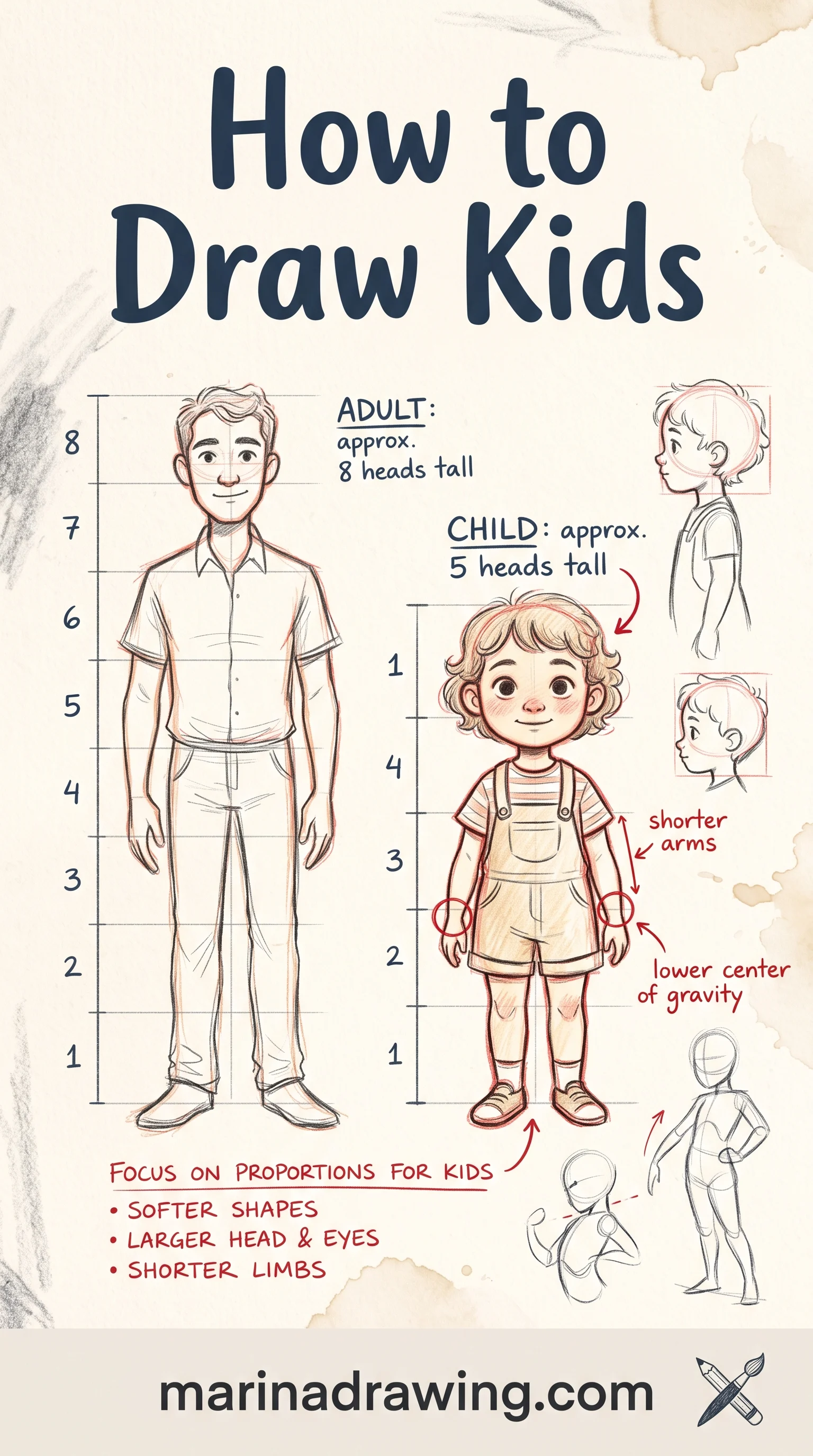
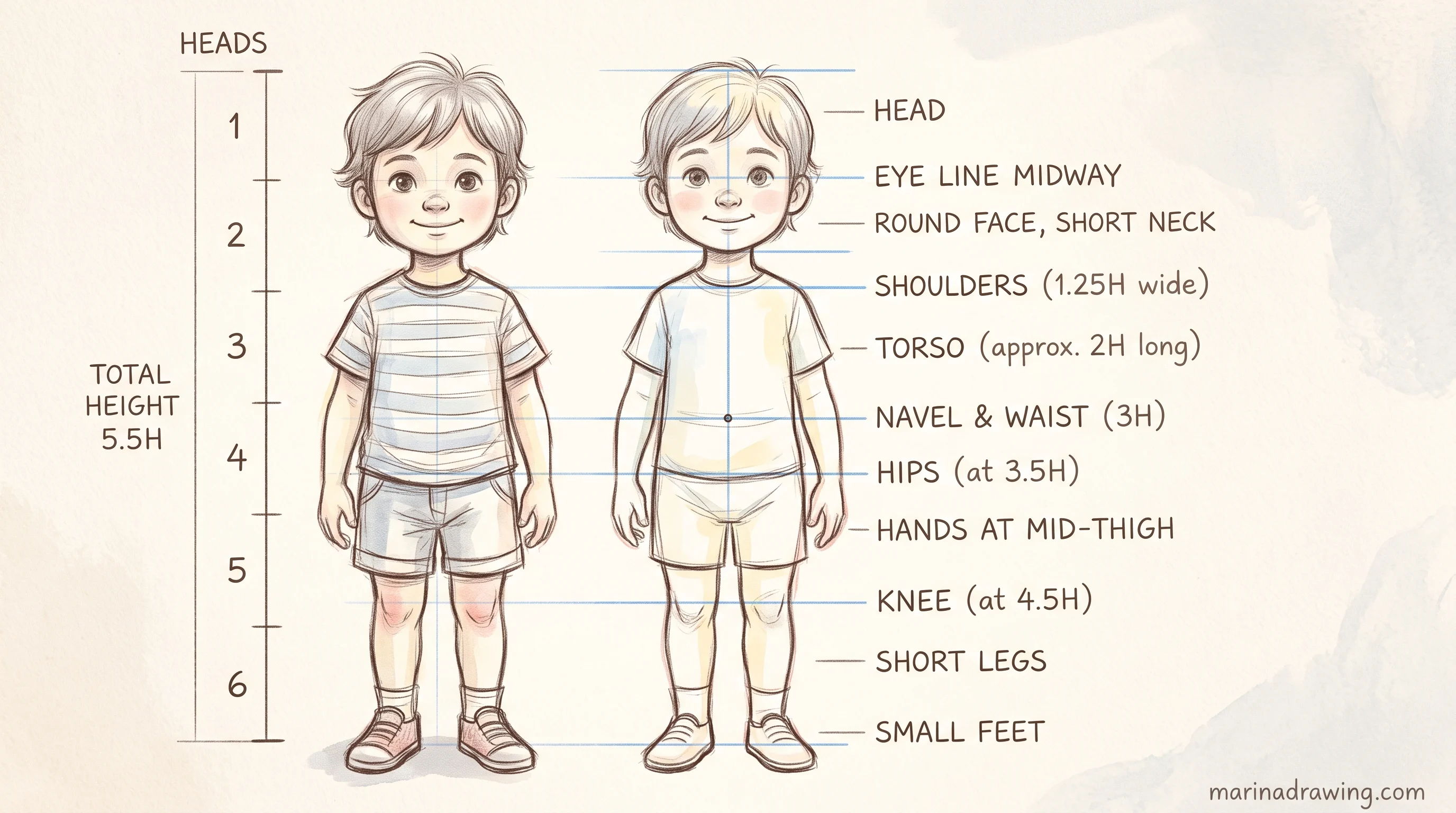
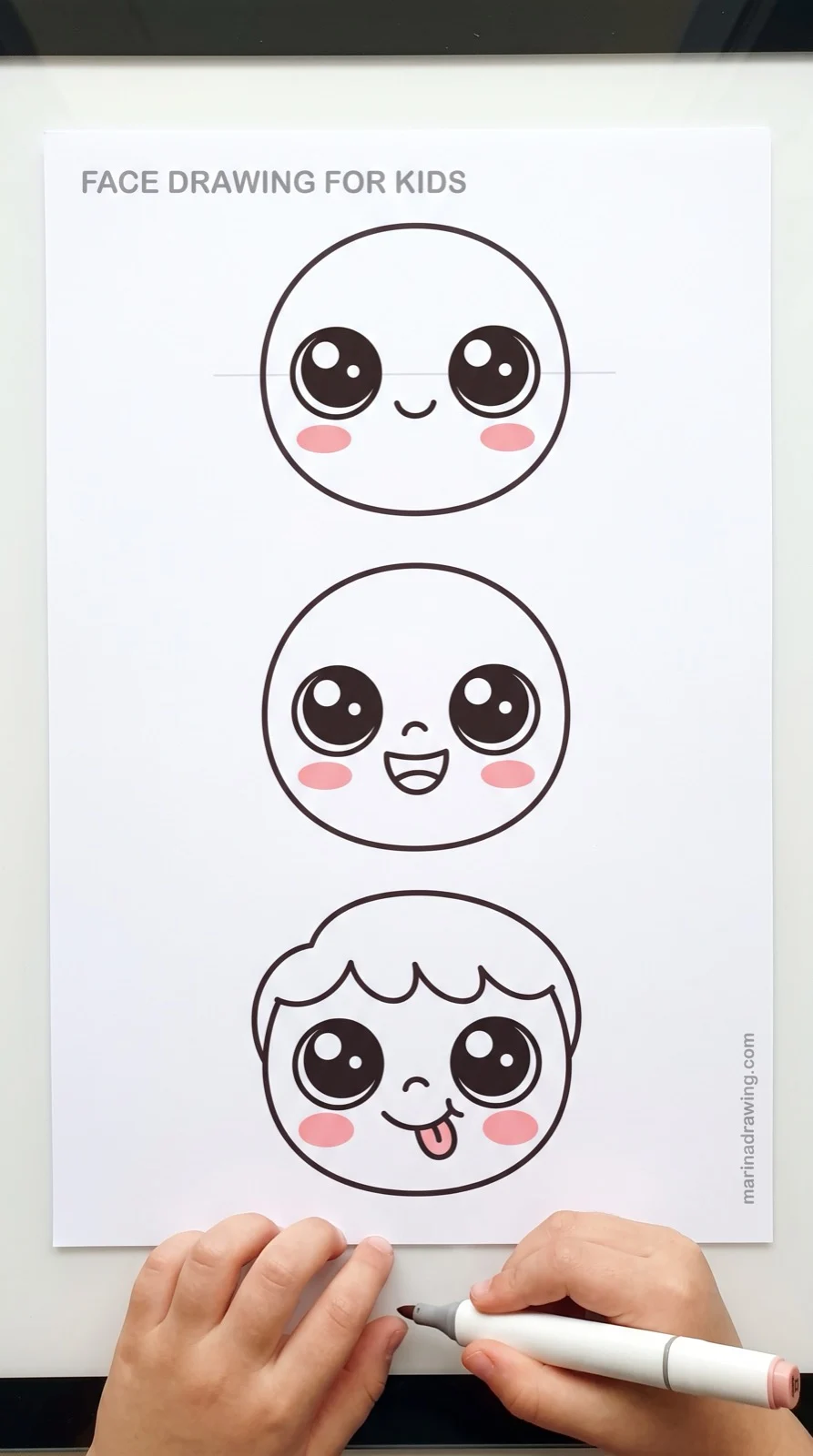
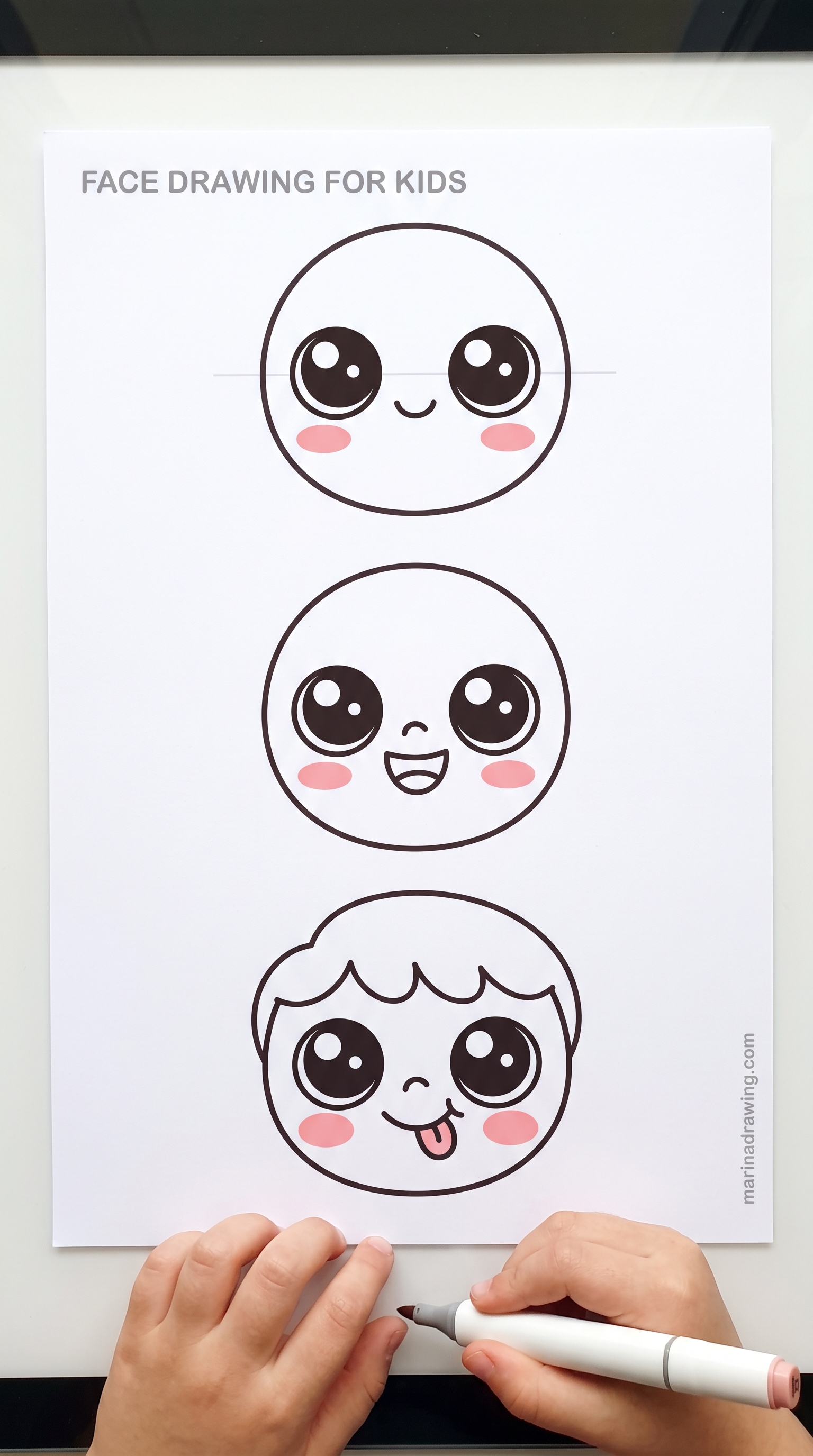
A face
- Draw one large circle for the head outline.
- Add two dot or oval eyes roughly at the halfway line of the circle.
- Add one curved line or small triangle for the nose, below the eyes.
- Add one curved line for the mouth, below the nose.
- Add hair as a few thick lines or one shape along the top of the circle, not individual strands. The face is finished.
 Pin it
 Pin it
 Pin it
 Pin it
 Pin it
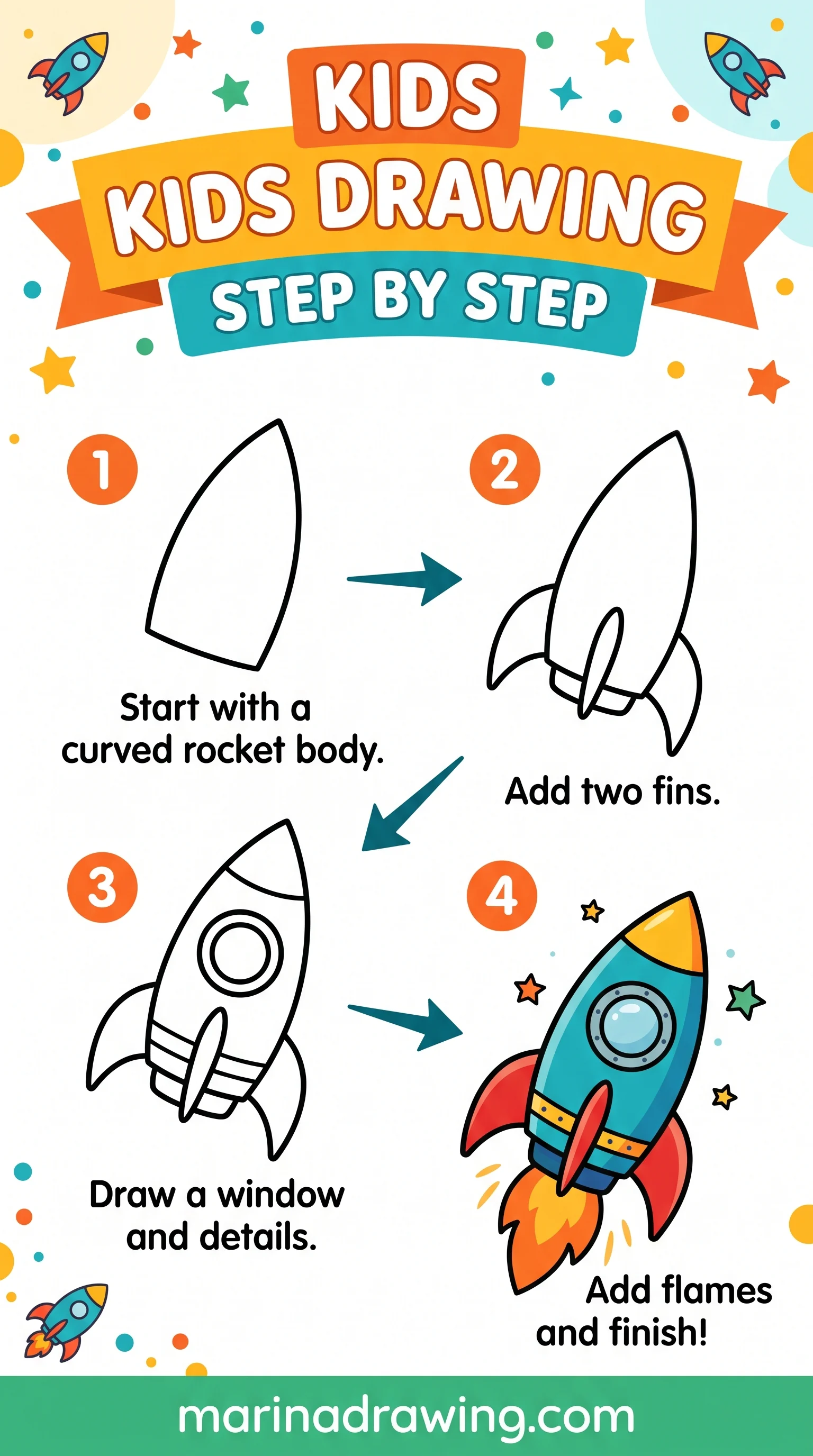
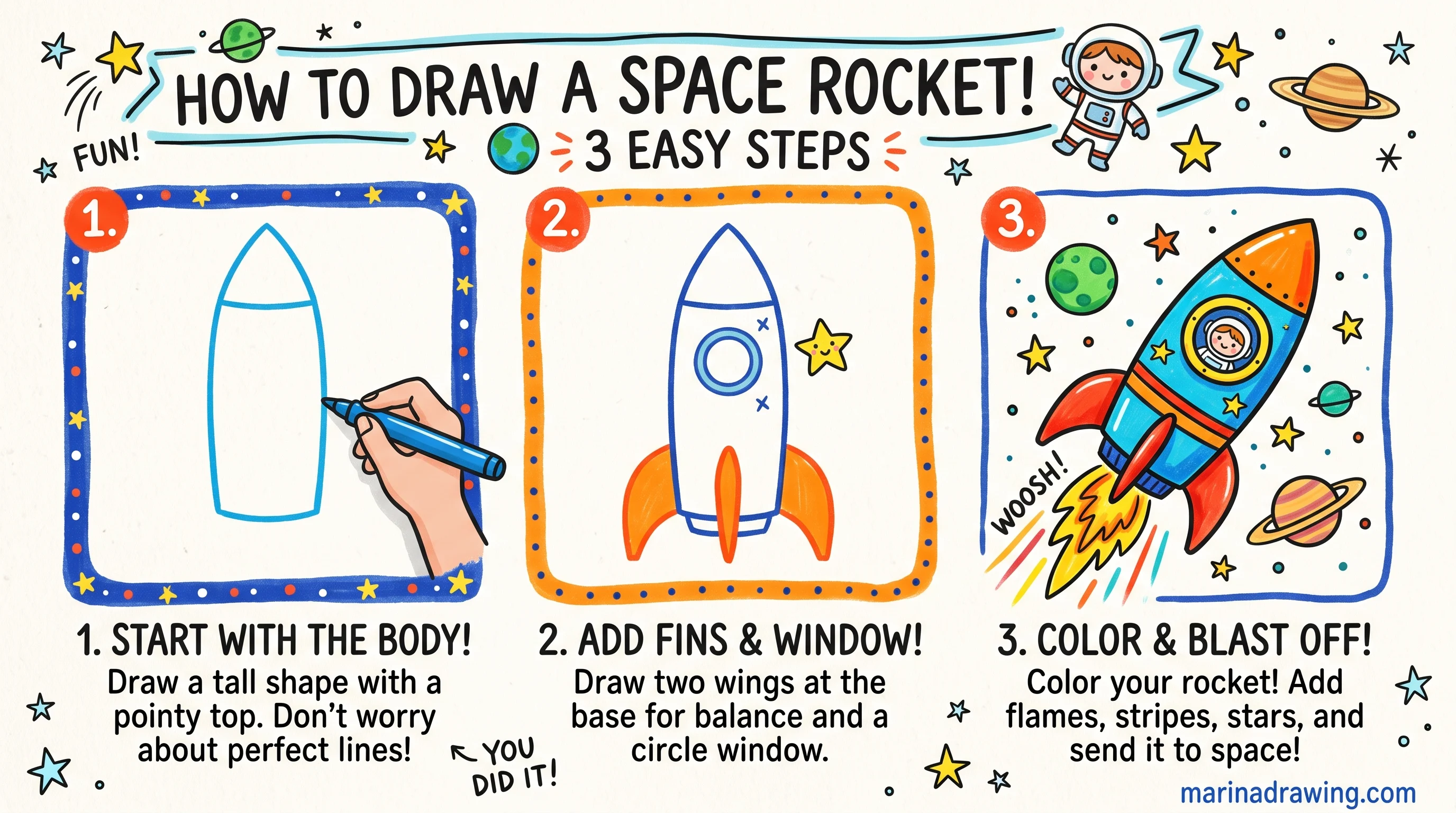
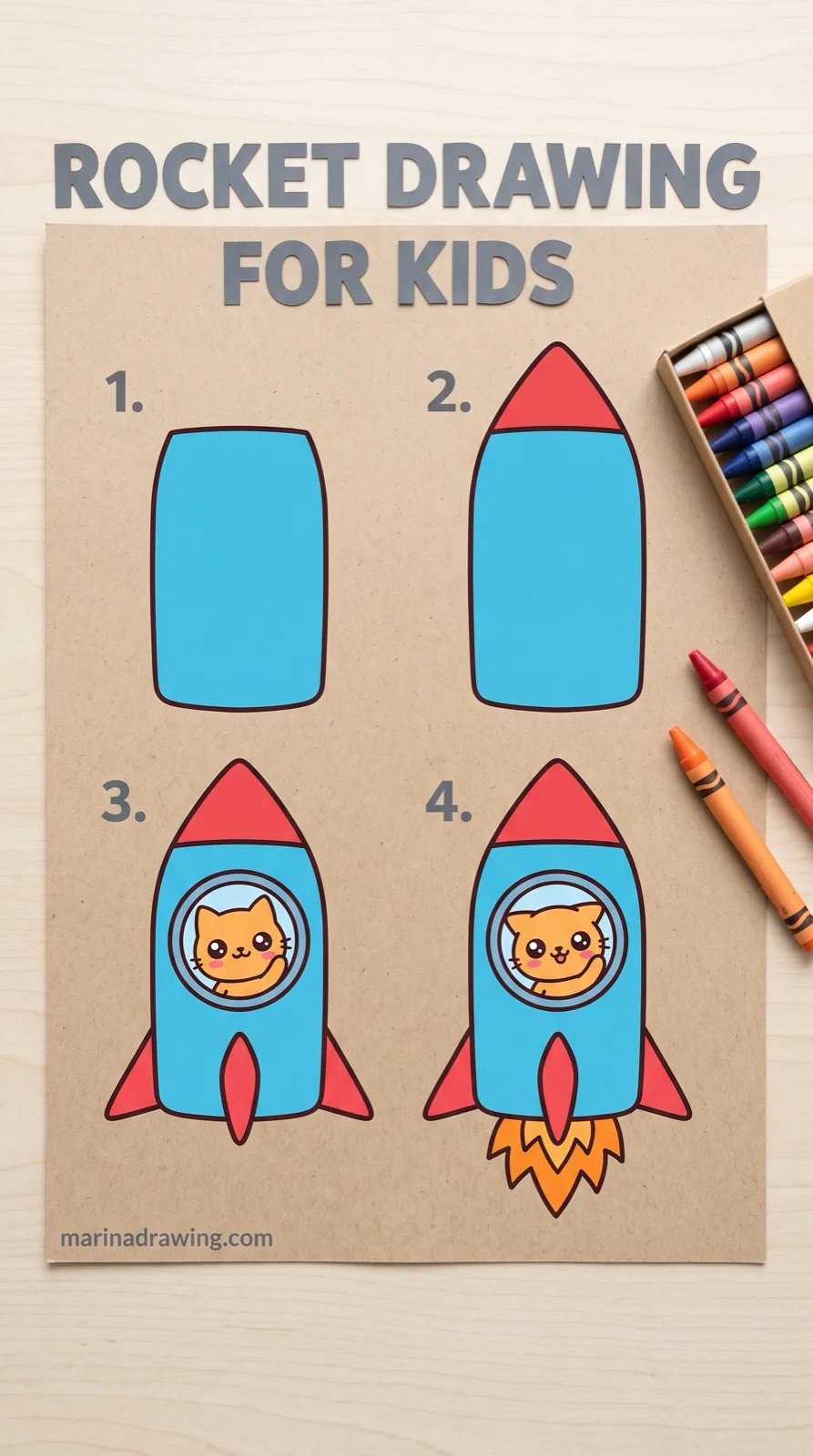
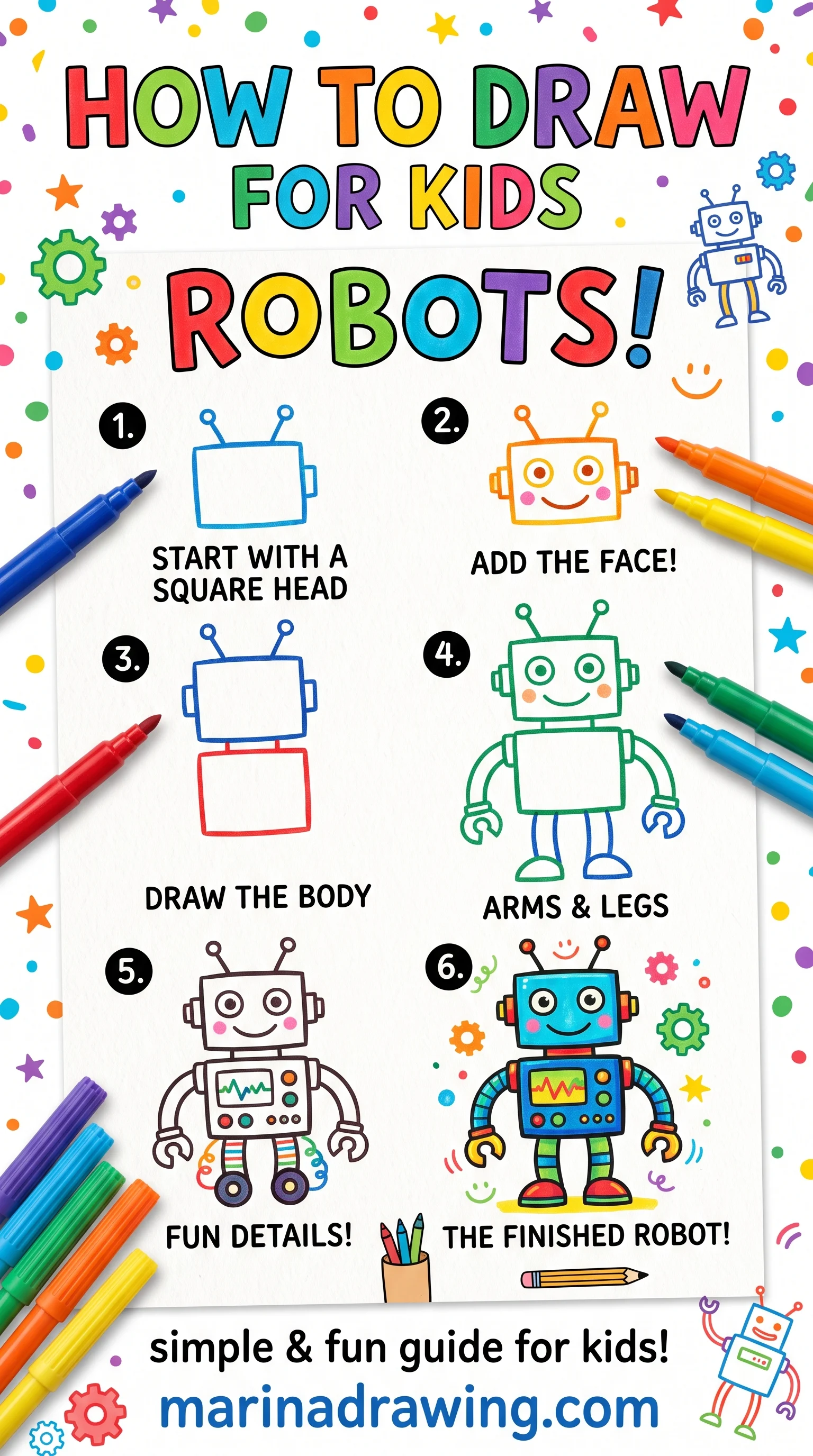
A rocket
- Draw one tall rectangle with a rounded top for the rocket body.
- Add a triangle at the top point for the nose cone.
- Add two small triangles at the bottom sides for fins.
- Add one circle window in the middle of the body.
- Add a few short zigzag or wavy lines under the rocket for flame. Stop there, the rocket is done.
 Pin it
 Pin it
 Pin it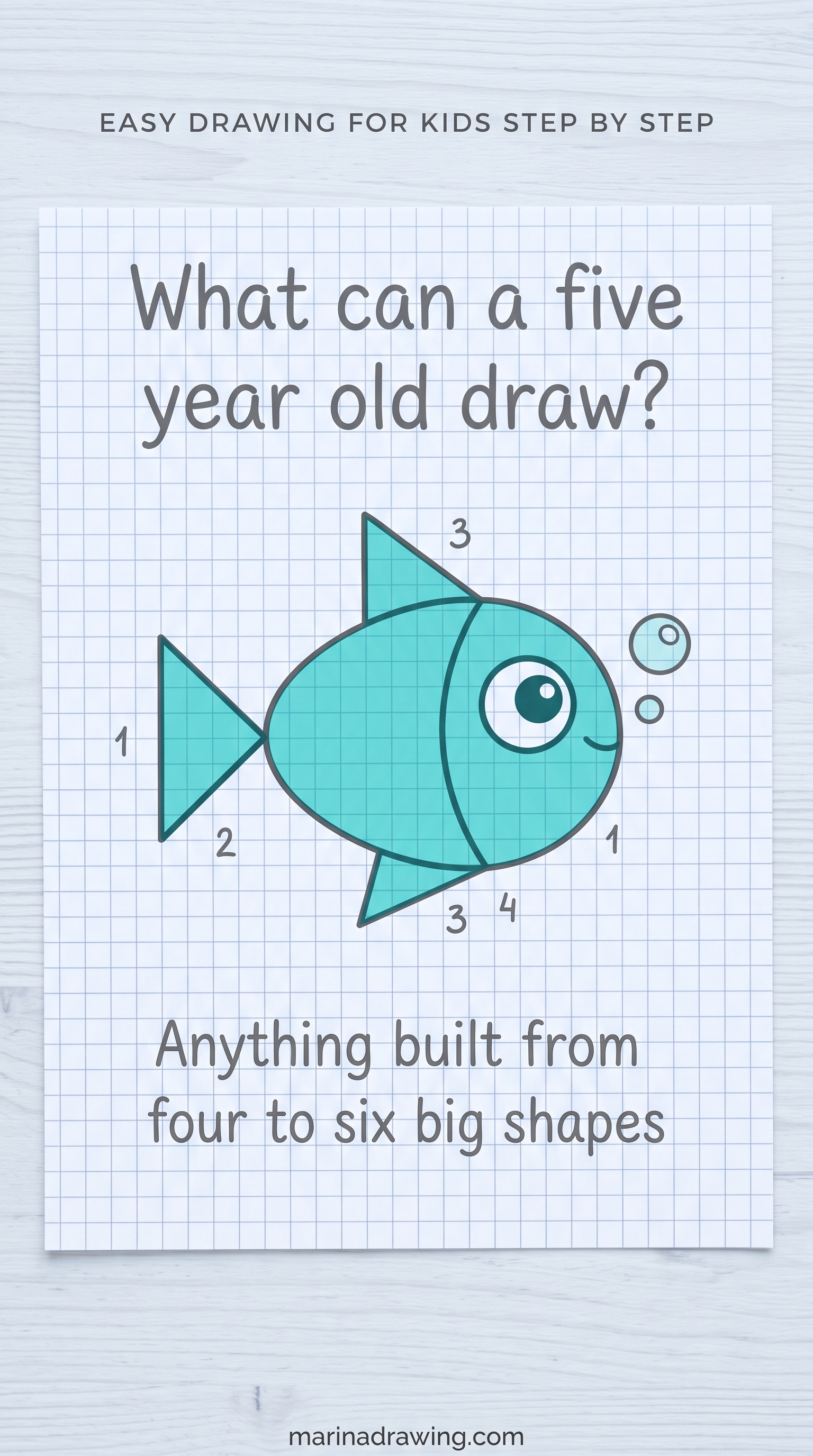
 Pin it
 Pin it
Five Checks That Keep Your Sitting From Falling Apart
You run these before your child picks up the pencil, or while the drawing is still a few shapes in and easy to change.
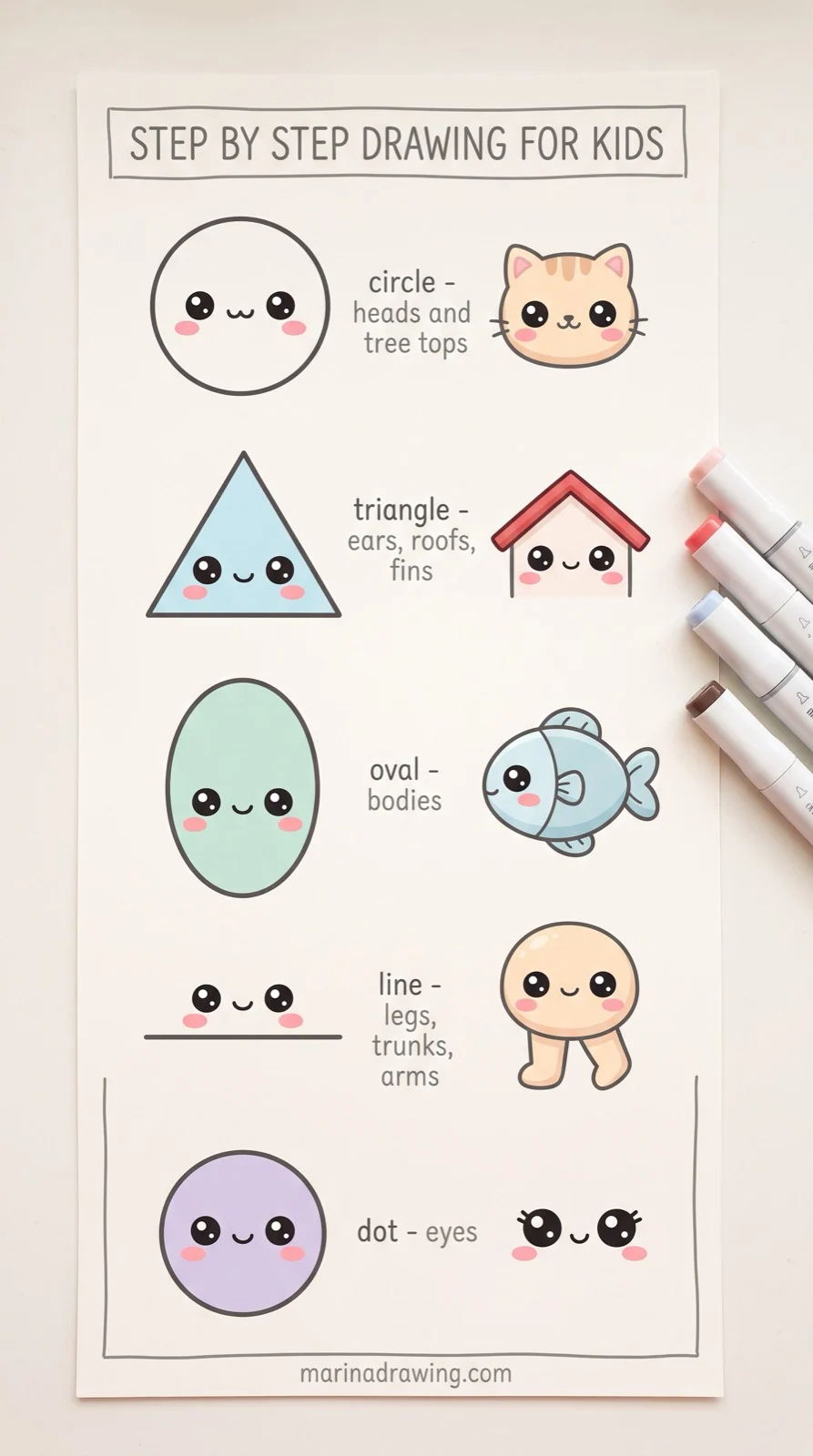
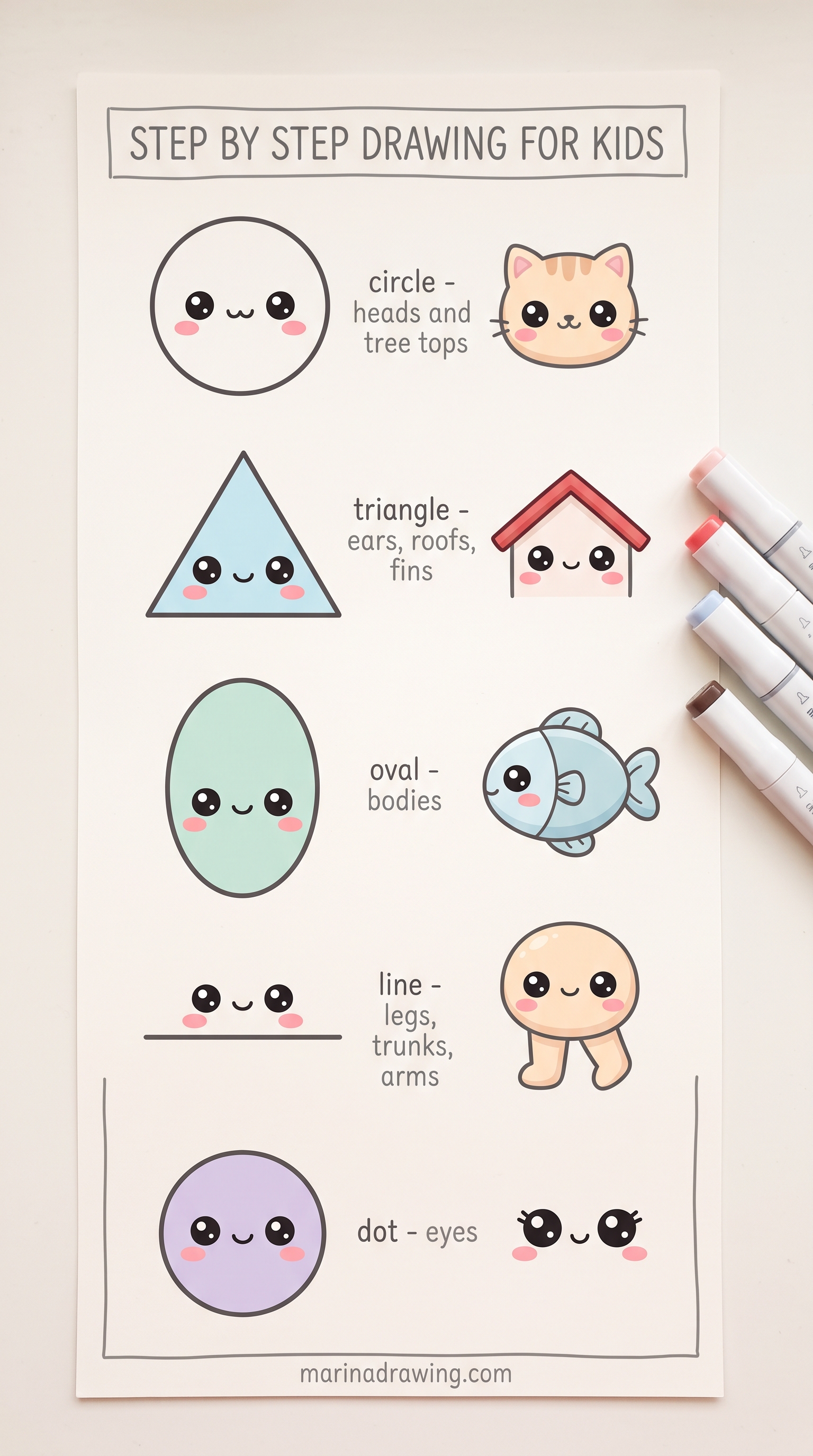
Count the shapes out loud before you start. Say the plan: circle, triangle, oval, line, dot.
Past six or seven, you simplify the subject first. You have failed the check if you count more than six forms, or any form they would repeat four or five times.
 Pin it
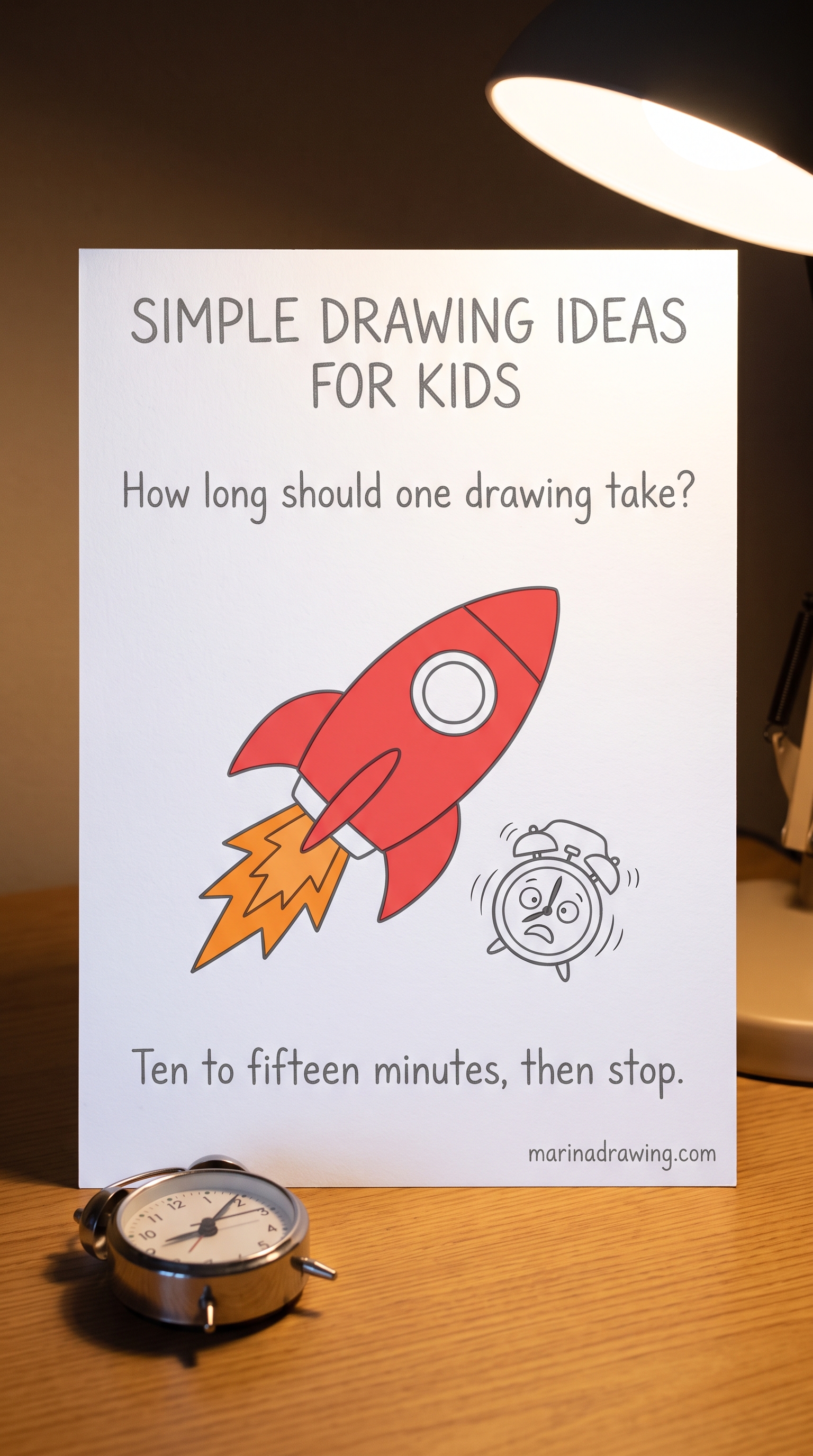
Time the sitting, not the drawing. Most kids hold focus for ten to fifteen minutes here.
If a subject keeps running past that with your child, it is too long for them right now, not too hard. You have failed the check when they ask “is it done yet” or get up before the last shape.
Ask them to name what’s missing. Stop partway and ask what shape comes next.
If they can say it, you gave them an order they can hold in their head. A shrug means you need fewer, bigger steps.
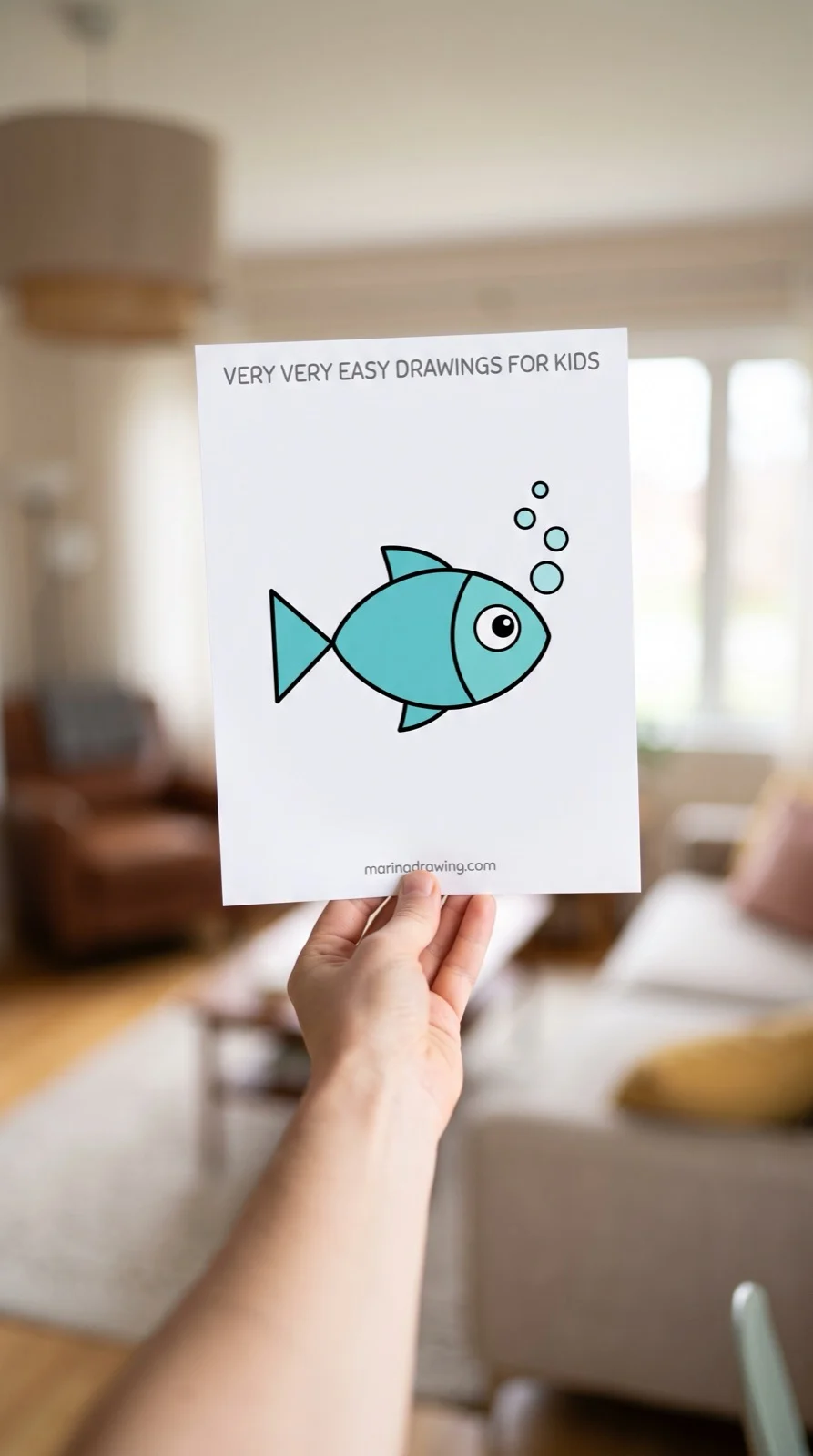
Look at the drawing from across the room. Hold it up, or step back.
A finished four-to-six-shape drawing should read as a cat, a fish, a house at a glance. If you can only make it out inches from your eye, the check failed.
 Pin it
Ask if they want to draw it again. That is your real test of whether the sitting worked.
A flat no points back to length, not to talent.
 Pin it
 Pin it
Three Mistakes Parents Make During the Sitting
Mistake: correcting proportions mid-drawing. You reach over to fix an ear or straighten a line, and the drawing stops being theirs.
It also teaches them to wait for your correction instead of finishing.
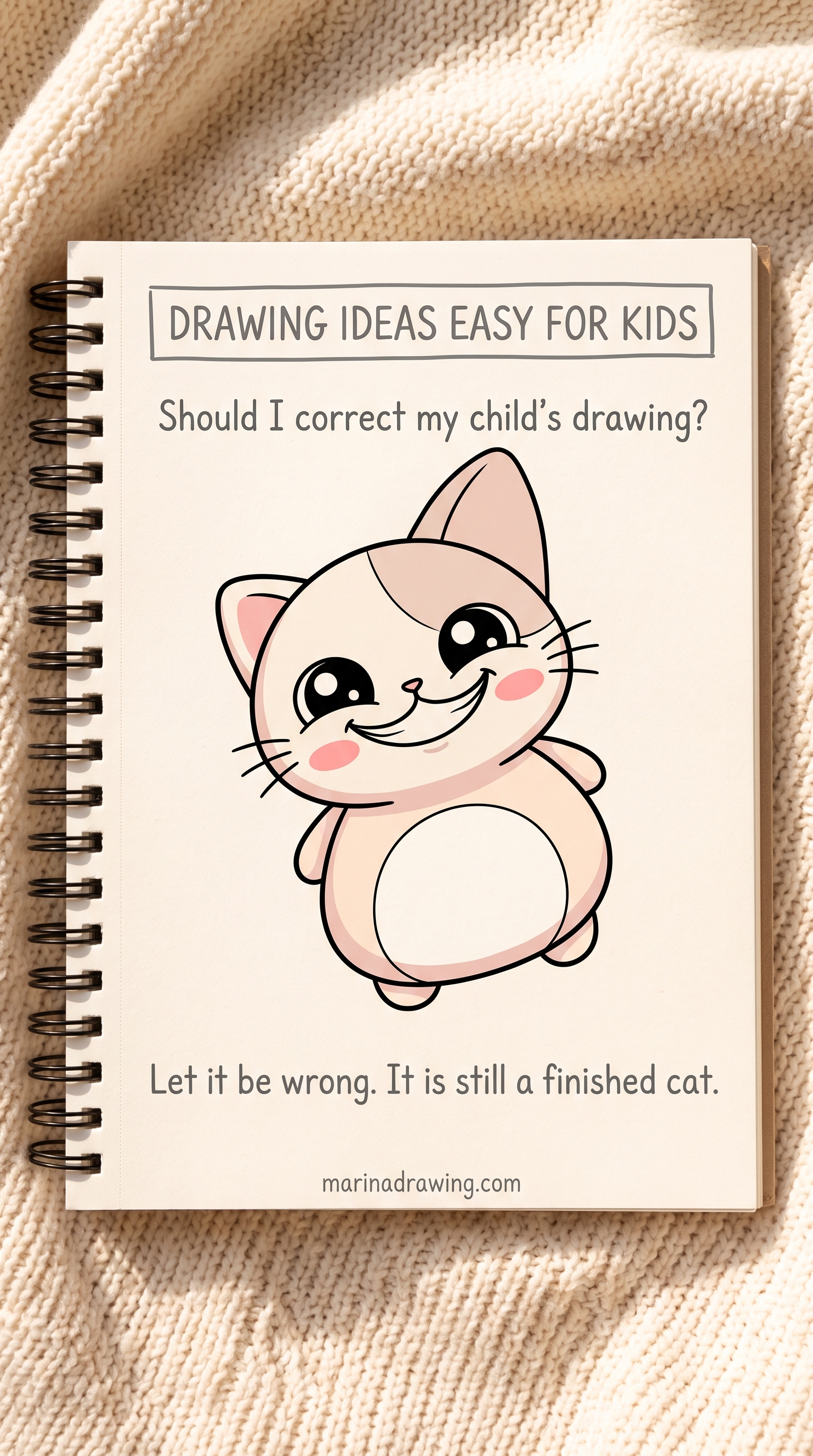
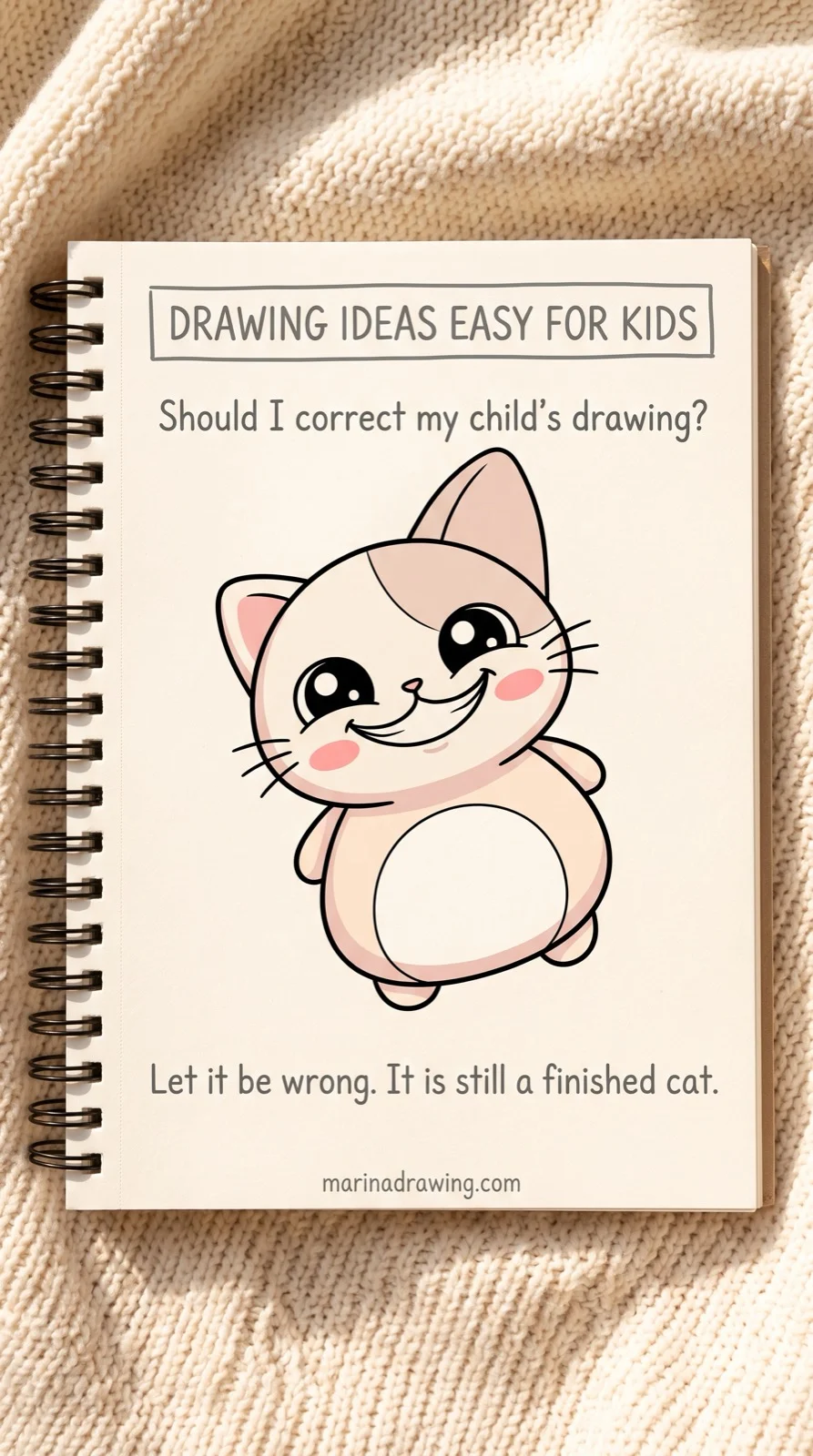
The fix: let proportion be off. A cat with one giant ear and one tiny one is still a finished cat. Save the comment for after, and make it a question about the next drawing.
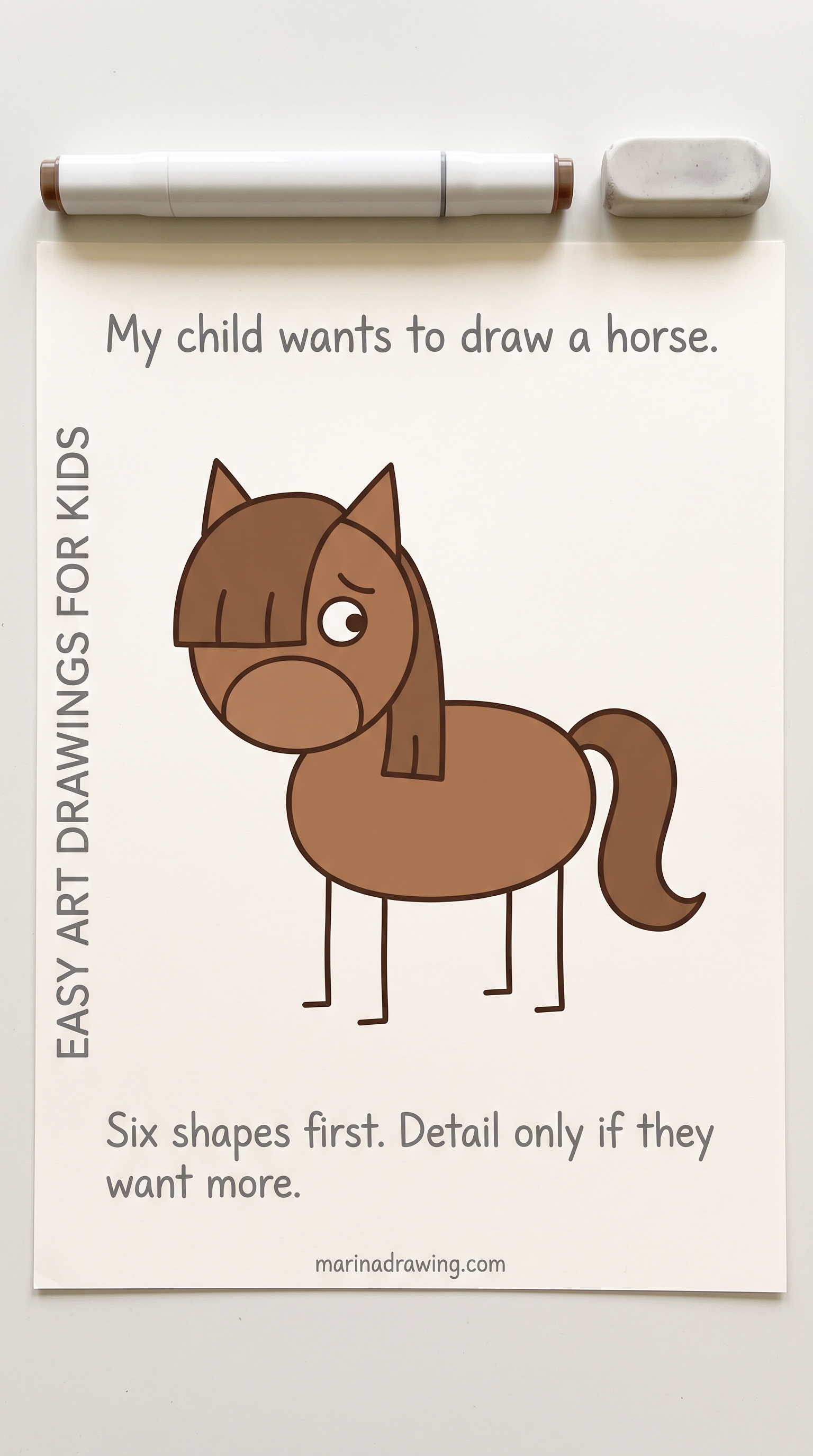
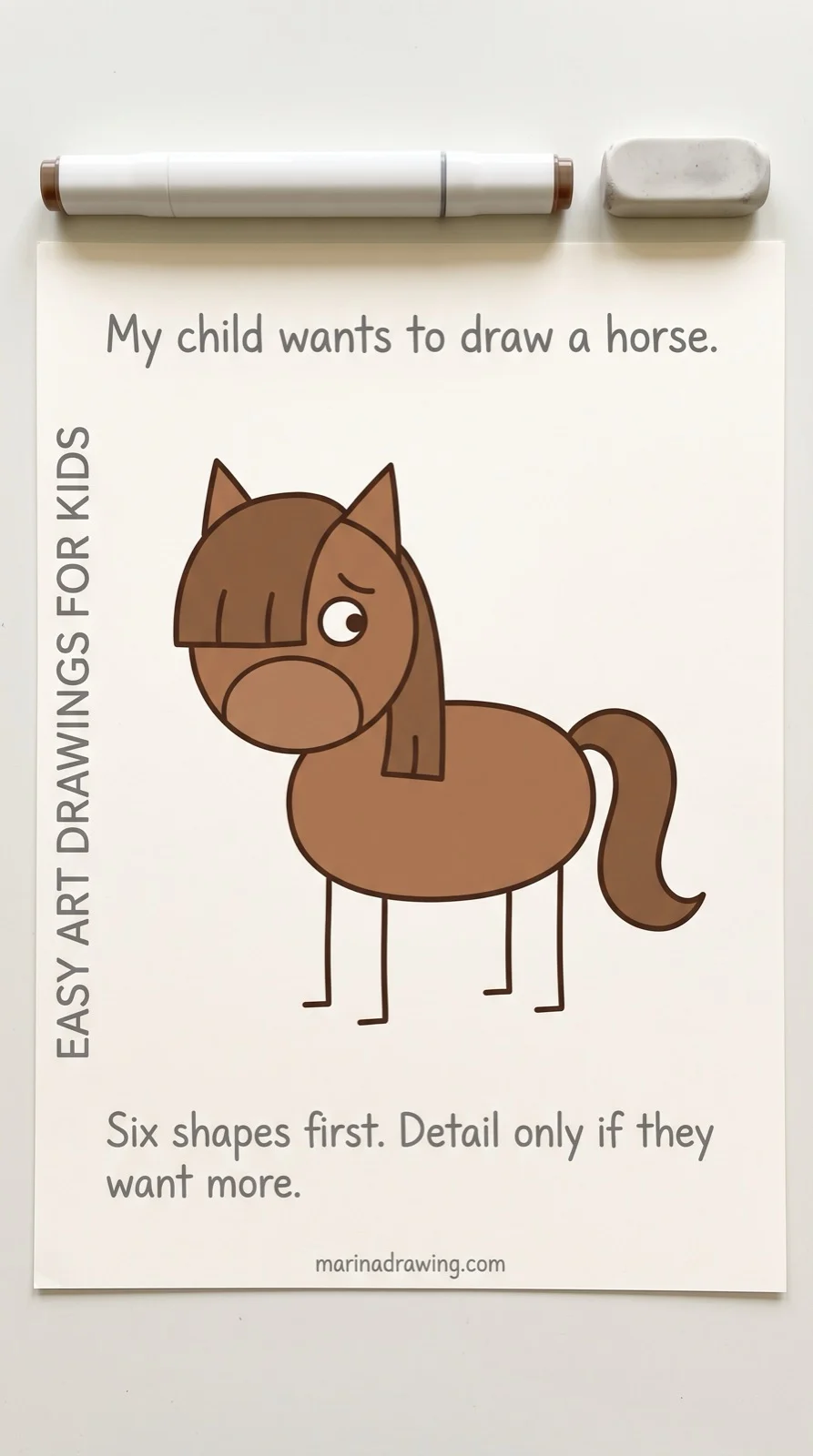
Mistake: picking the subject from what they love, not from the shape count. A child who loves horses asks for a horse. A mane, legs at the right angle and a tail run well past six shapes.
The fix: draw the six-shape horse first — circle head, oval body, four line legs, triangle ears, a few mane lines.
Detail goes on a second pass, and only if they want to keep going.
 Pin it
Mistake: praising the picture instead of the finishing. “That’s beautiful” teaches them to chase your compliment on the result.
“You finished the whole thing” teaches them the finishing is the win, and that is what brings them back tomorrow.
The fix: name the completion, not the quality.
Honest note: none of this makes your child improve fast. Nothing here teaches proportion, shading or anatomy, and it isn’t meant to.
A one-sitting drawing has one goal: they finish something, and they want the pencil again tomorrow.
If you want technical accuracy soon, this will feel slow to you, and a structured lesson with an adult teaching proportion suits you better.
Adults show the same pattern. Across four drawing forums I kept a tally of 193 posts by self-taught artists between April 1 and August 23, 2026: heavy structured practice takes the enjoyment out, and people stop drawing altogether. Kids quit for the same reason, only faster.
 Pin it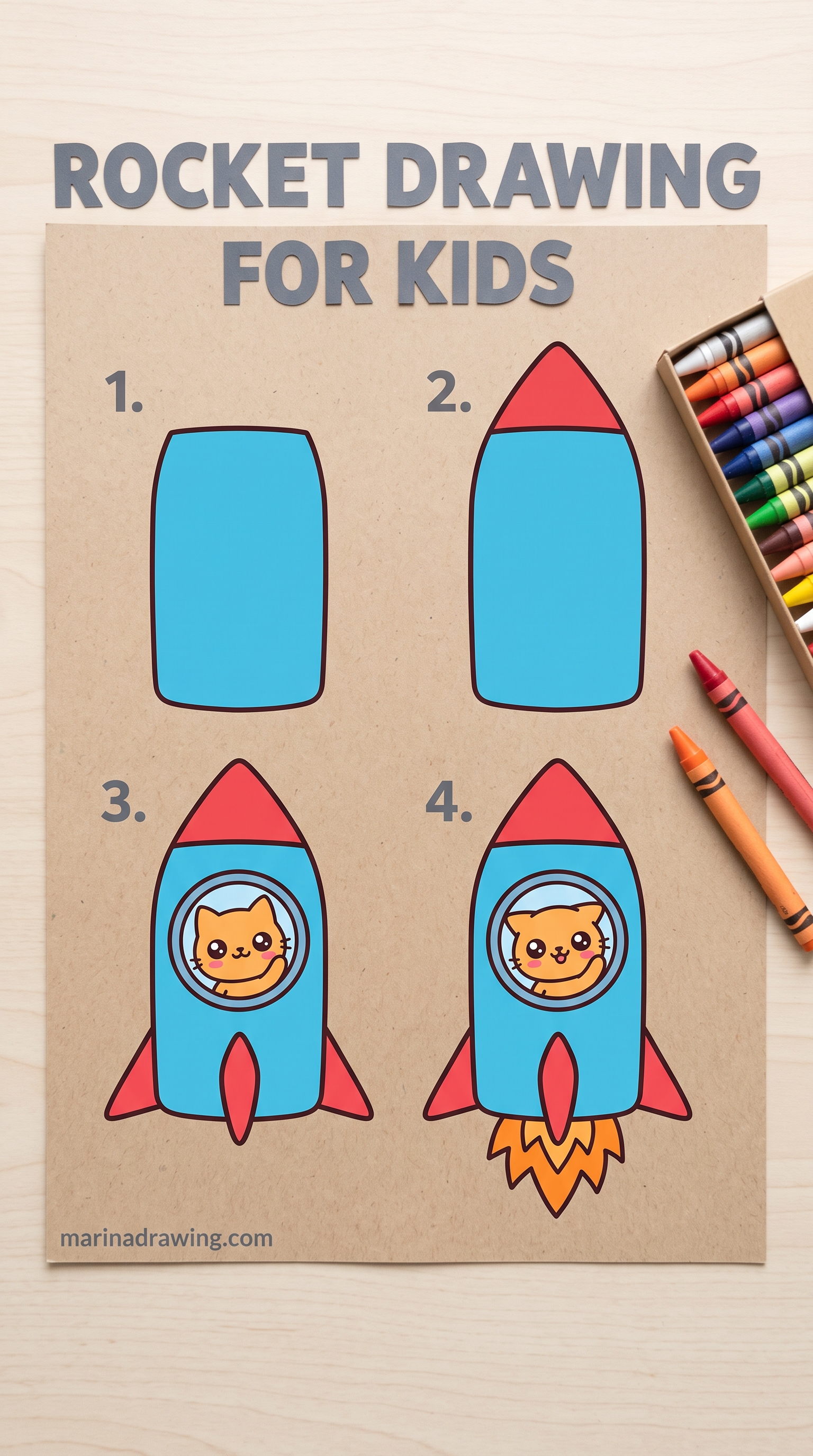
 Pin it
 Pin it
Thirty to Sixty Minutes Tonight, and What a Month Changes
42 hours of pencil drawing training, lifetime access
The video course I point plateaued students to — full lessons on portraits, hands, and realistic shading, not another short tutorial.
Tonight, in 30 to 60 minutes: pick one subject from above and say the shape count out loud first.
Then draw it together — they work on their own paper while you narrate the steps. Don’t draw your own copy for them to watch.
One subject, one sitting. You stop even if they want more, so it ends on momentum instead of boredom.
Over a month of sittings like that, you will see two things change.
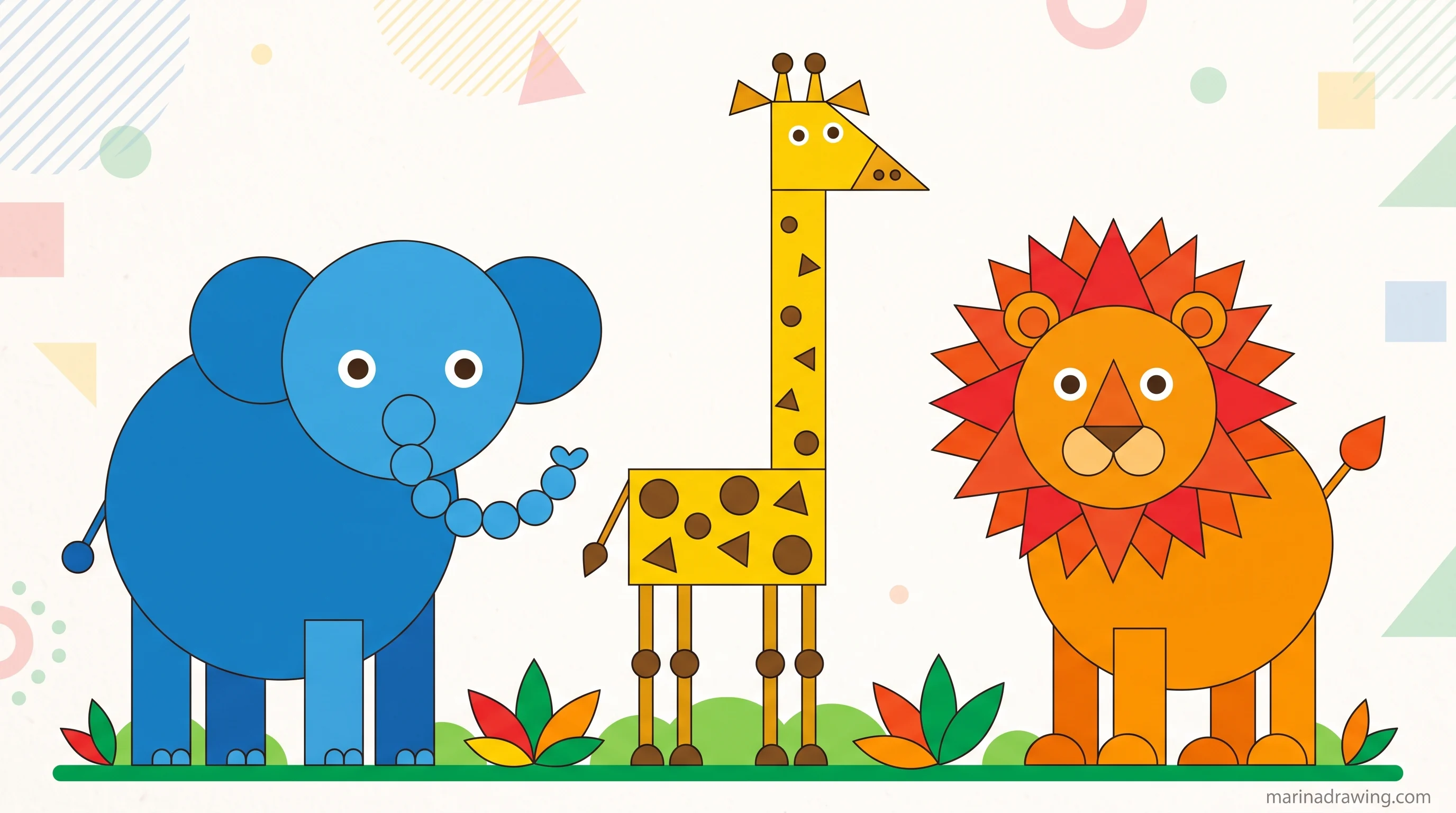
They start naming the shapes before you ask. Any subject breaks into a few large forms, and that carries to whatever they draw next — not just the five here.
And the sittings stretch on their own. A child who has finished ten drawings in a row has stopped expecting to fail partway through, and at this age that expectation is most of what attention span is.
 Pin it
 Pin it
 Pin it
Where Your Child Goes After These Five Subjects
Once they finish the five above without stalling, you add one shape, not one subject.
A cat becomes a cat sitting on a box. A rocket gets a planet behind it. The count goes from five to six, and the sitting stays the same length.
I hold a child at six shapes for weeks before going to seven. The jump people regret is the one straight to a detailed animal.
When they start asking for subjects you cannot break down on the spot, that is the point to put a short structured course in front of them rather than guessing at the build order yourself.
Questions Parents Ask Before the First Session
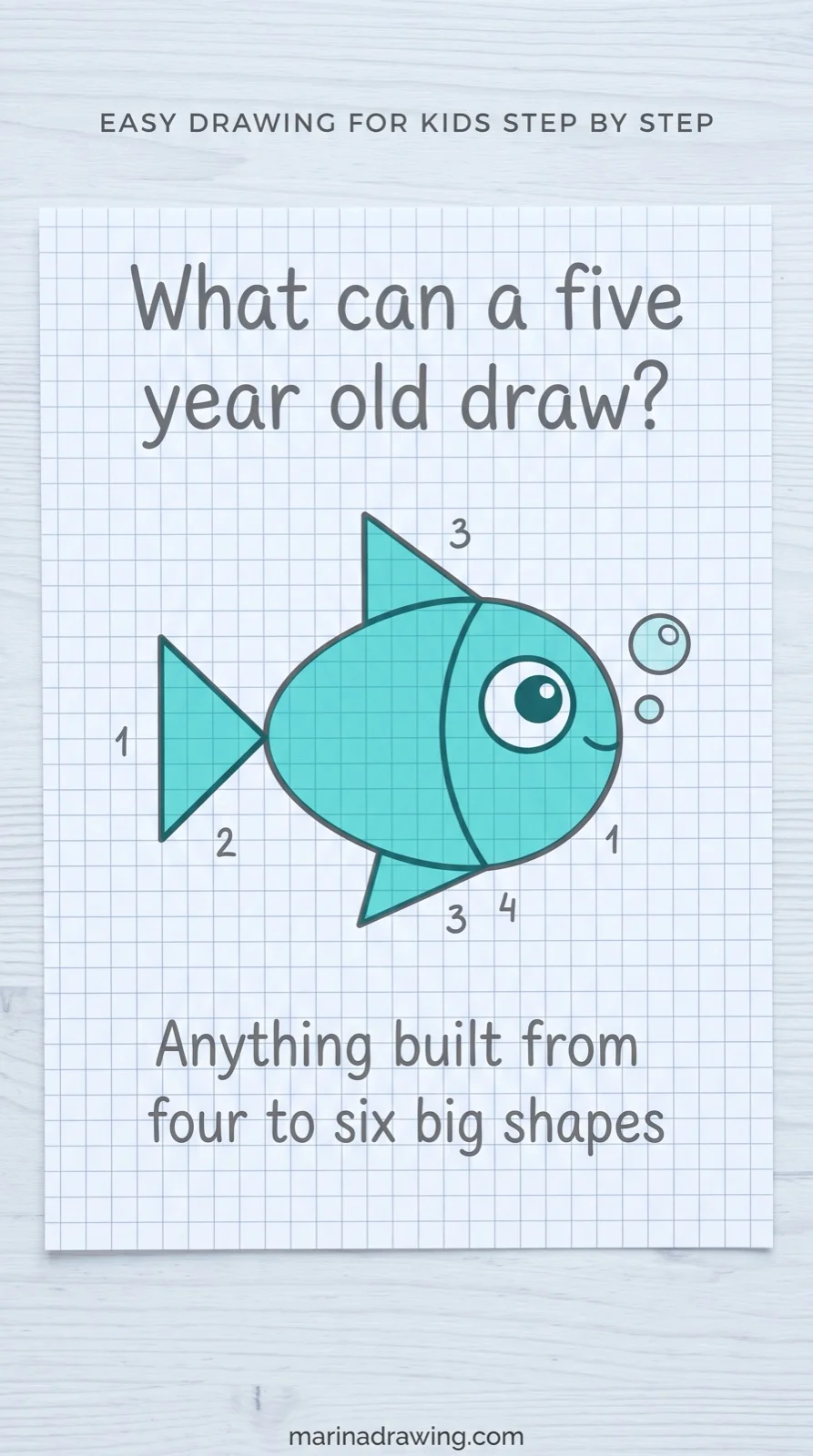
What can a five year old draw?
Anything you build from four to six large shapes with no small repeated detail. The cat, fish, house with a tree, face and rocket above are all sized for this age.
Fur, scales, individual fingers or brick-by-brick detail run too long for most five year olds, even when the outline looks simple to you.
 Pin it
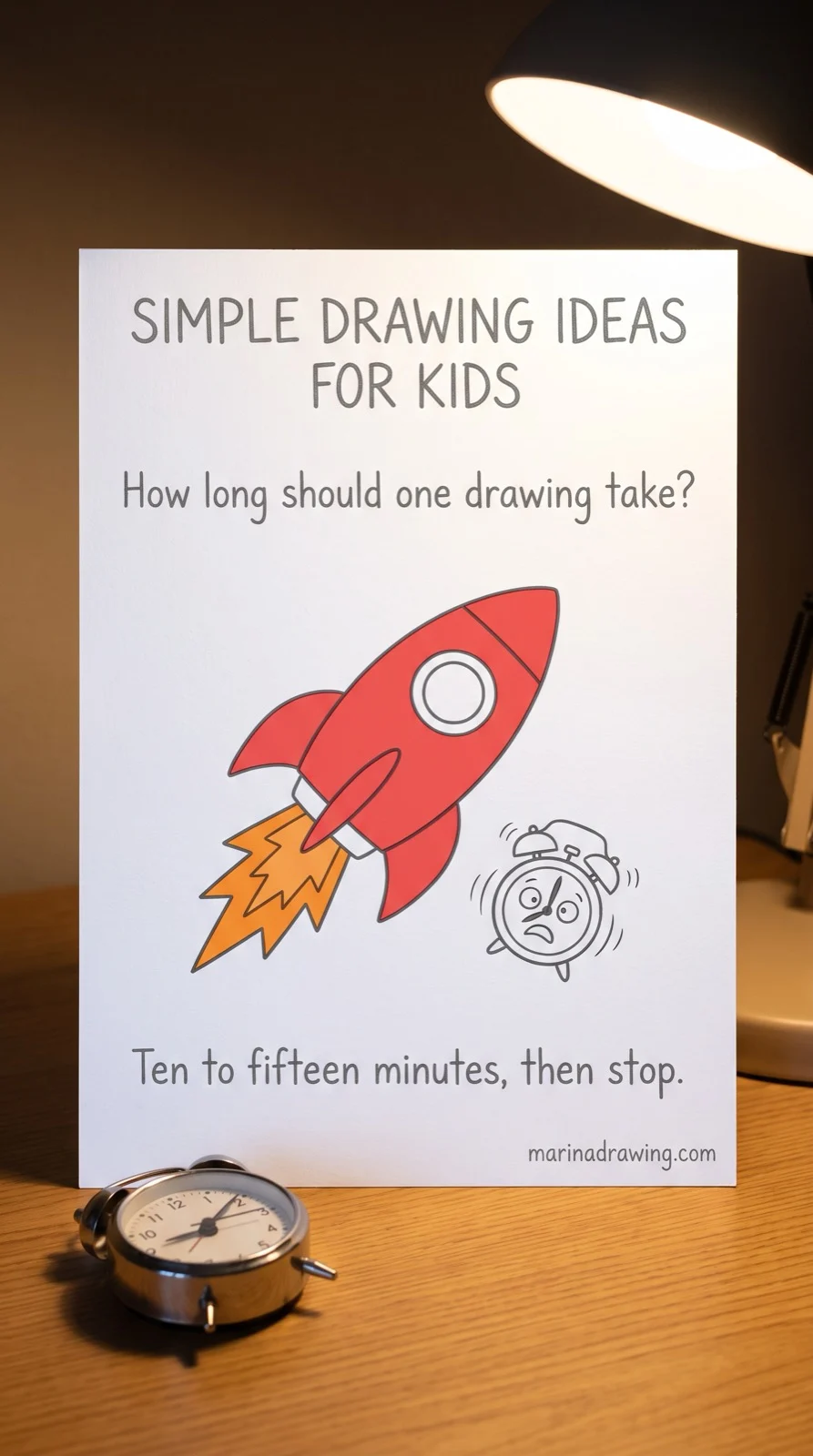
How long should one drawing take?
Ten to fifteen minutes for most kids this age, which is why four to six shapes is the right ceiling.
If your child needs longer than that to sit still, shorten the subject instead of pushing the same sitting length.
 Pin it
Should I correct my child’s drawing?
Not while they are drawing it. Let proportion be off and let the drawing be theirs.
If you have something to say, save it for after and make it a question about the next drawing, not a fix to this one.
 Pin it
 Pin it
 Pin it
How to make an easy cat drawing for kids
Give them the five shapes above and nothing else: circle, two triangles, oval, legs and tail, face. You say the shape, they draw it.
I never draw my own copy alongside them — they stop drawing and start copying you.
Skip the fur. That is the step that ends the sitting.
Best easy drawing for kids with pencil — what should they use?
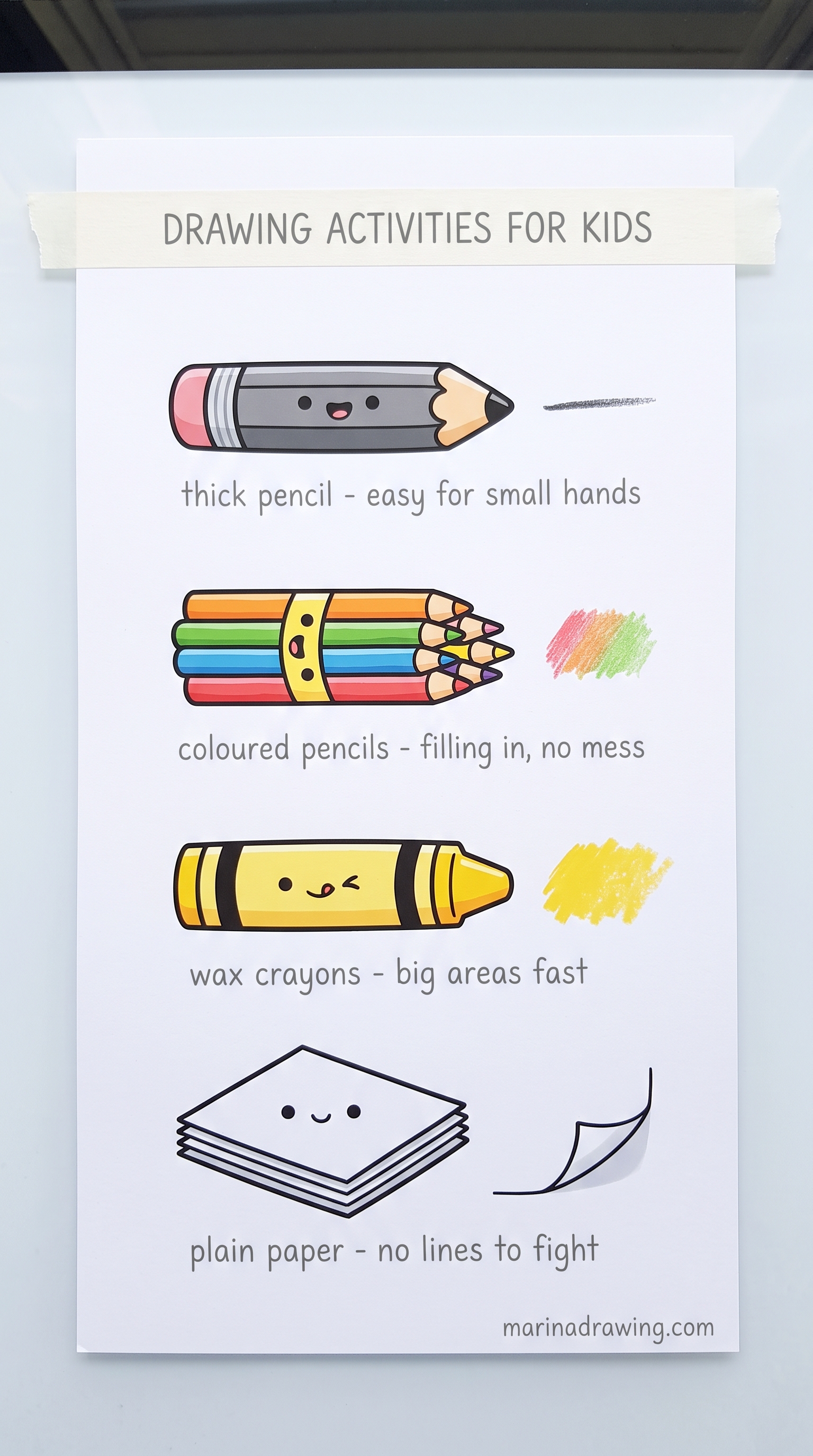
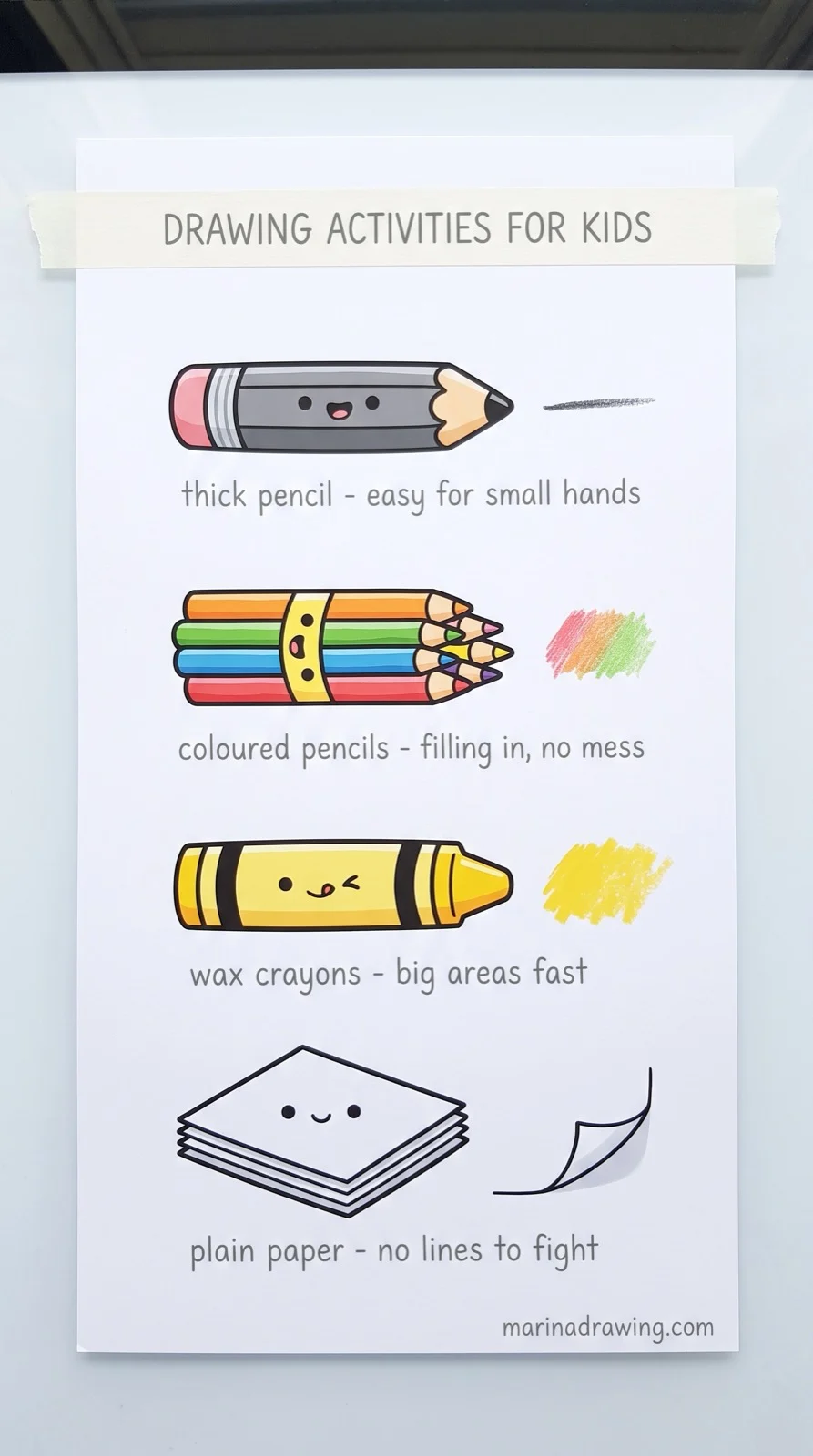
A thick graphite pencil and plain paper. Coloured pencils are optional, and you hand them over after the shapes are down.
How to make easy drawings for kids girl and boy alike?
The same way: you count shapes, not subjects. A face with hair as one shape works for any child, and so does the rocket.
What do I do when they say they cannot draw?
Check the last subject they tried against the shape count.
Almost always, “I can’t draw” follows an abandoned drawing that ran longer than their attention span, not a hard subject.
Go back to four to six shapes and let them finish one completely before you try anything bigger.
 Pin it
 Pin it
What supplies are worth having?
 Pin it
A pencil and plain paper are enough to start.
What you pick as a subject matters more than what you buy. No supply upgrade fixes a drawing that runs longer than your child’s attention span.