A crystal ball drawing looks real when the highlight stays paper white and the darkest tone sits on the rim, not the centre.
These 18 studies let you pick one in a minute, from a crystal ball drawing easy first sketch to a full fortune teller scene. For a steady routine, see drawing practice.
Quick answer: for a crystal ball drawing easy first try, start with study 1, then study 2. Draw one circle (kids can try it too, see easy drawings for kids), keep a window-shaped highlight as bare paper, and shade the rim and the cast shadow.
A crystal ball drawing works when the highlight stays clean paper and the rim is the darkest tone on the sphere.
What is a crystal ball drawing study?
A crystal ball drawing study is a short exercise where you draw one glass sphere to practise a single skill, such as a clean highlight, refraction or a table reflection, using a pencil from HB to 6B. The sphere is simple to outline, so all your effort goes into reading light and glass.
Which crystal ball drawing study to try: pick by what you need
Find your goal and jump to the study. Each row is a crystal ball drawing you can repeat until the glass looks right.
| Idea | Best for | Level | Time | What it trains | Avoid if | Course |
|---|---|---|---|---|---|---|
| 1. Single crystal ball on a plain table | Your first glass sphere | Beginner | 15 min | One highlight and one shadow | You want a busy scene | Shading Techniques in Pencil |
| 2. Glass sphere with a window highlight | Reading glass at a glance | Beginner | 20 min | Highlight shape | You dislike precise shapes | How to Draw Realistic Glass |
| 3. Crystal ball with upside-down refraction | The classic flipped view | Intermediate | 30 min | Refraction | You want a quick sketch | How to Draw a Glass |
| 4. Crystal ball on a wooden stand | Grounding the sphere | Intermediate | 30 min | Texture contrast | You prefer floating shapes | How to Draw Weathered Textures |
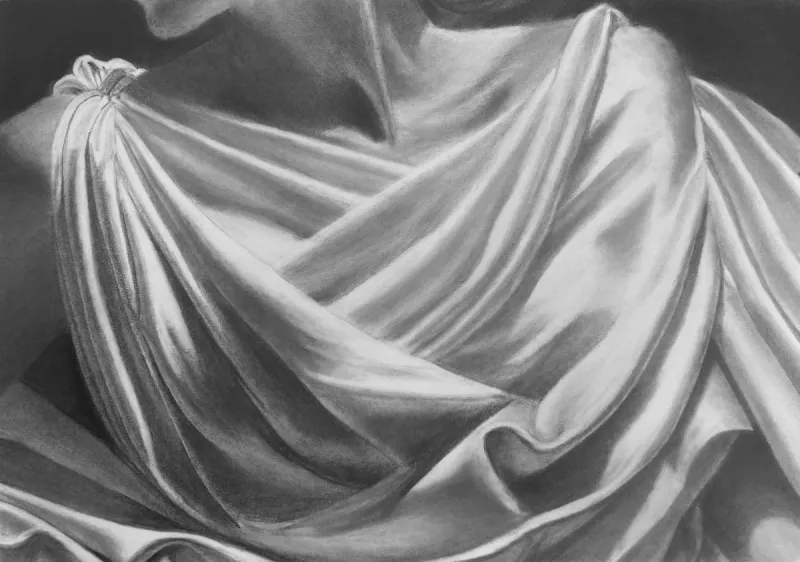
| 5. Fortune teller crystal ball drawing on velvet | A fortune teller scene | Intermediate | 35 min | Soft fabric folds | You want a plain background | How to Draw Drapery & Clothing Folds |
| 6. Hands hovering over a crystal ball | Telling a story | Advanced | 45 min | Hands and glass together | You are new to hands | Drawing Realistic Hands |
| 7. Crystal ball with swirling mist inside | Mystery and softness | Intermediate | 25 min | Soft gradients | You want hard outlines | How to Draw Mist |
| 8. Glowing crystal ball in a dark room | Dramatic contrast | Advanced | 40 min | Value range | You are new to shading | How to Draw a Portrait in Shadow |
| 9. Crystal ball reflecting a window | Realistic reflections | Intermediate | 30 min | Reflected light | You want a matte look | How to Draw Rain on Window |
| 10. Crystal ball on a mirror table | Doubling a shape | Advanced | 40 min | Mirror image | You are short on time | How to Draw Reflective Water |
| 11. Crystal ball showing a tiny landscape | Imagination | Intermediate | 35 min | Scale and distortion | You want strict realism | How to Draw Clouds |
| 12. Crystal ball with a candle behind it | Light through glass | Advanced | 40 min | Transmitted light | You are new to glass | How to Paint a Hurricane Lamp in Watercolor |
| 13. Pen and ink crystal ball | Bold clean lines | Intermediate | 30 min | Ink tone | You dislike permanent marks | How to Create Tone with Pen and Ink |
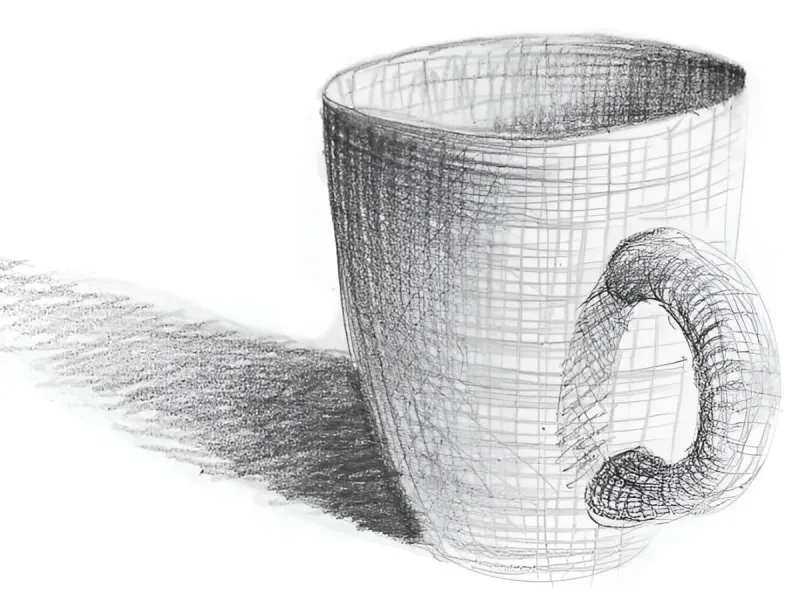
| 14. Cross-hatched glass sphere | Learning tone by lines | Beginner | 25 min | Hatching | You want a smooth blend | Cross Hatching for Beginners |
| 15. Colored pencil crystal ball drawing | Colour practice | Intermediate | 45 min | Colour layers | You want graphite only | How to Draw a Rose with Colored Pencils |
| 16. Crystal ball among bottles | Group still life | Advanced | 50 min | Composition | You want a single object | How to Draw Bottles Still Life in Pastel |
| 17. Crystal ball with smoke trails | Flowing lines | Intermediate | 25 min | Line flow | You dislike curved lines | How to Paint Smoke |
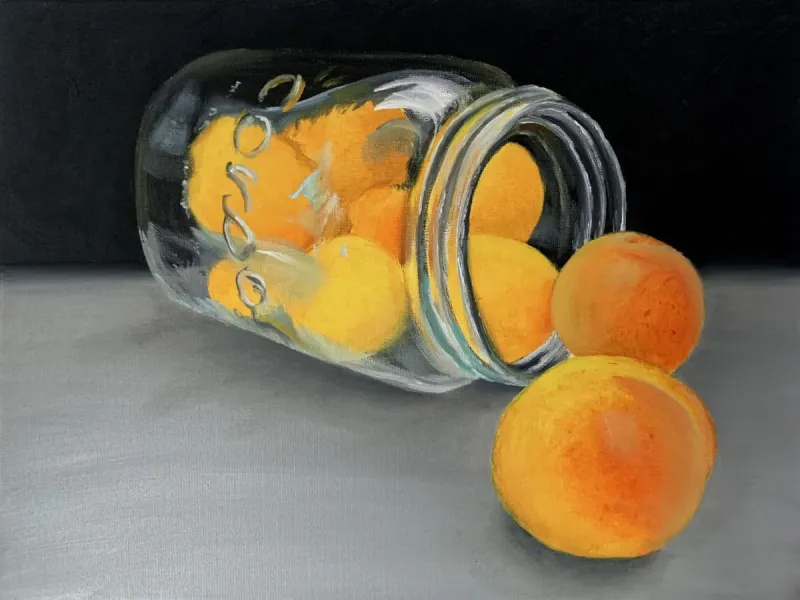
| 18. Crystal ball on a window sill with a bright spot | Shadow and bright spot | Advanced | 45 min | Cast light | You prefer simple shadows | Mason Jar Still Life in Oil |
How do you choose a crystal ball drawing study?
- Which skill does it train? Read the fifth column first: highlight, refraction, reflection or tone.
- How many minutes per attempt? A 15-minute study can be repeated twice in one sitting.
- How will you see it worked? Squint at your page: the highlight should read as the brightest spot and the rim as the darkest.
For other subjects, try sketch ideas and simple drawing ideas, or see easy drawings for beginners.
1. Single crystal ball on a plain table
A single crystal ball on a plain table is the cleanest crystal ball drawing easy exercise: one circle, one bright window highlight, one cast shadow. Draw the circle with a compass or a coin, as in easy drawings for beginners, keep the highlight as bare paper, then shade the table shadow with a 2B pencil.
- Best for: your first glass sphere.
- Avoid for: you want a busy scene.
Course: Shading Techniques in Pencil — builds the smooth graphite gradient that makes a flat circle read as a round ball.
You’ll need: HB and 2B pencils, a coin to trace, a kneaded eraser.
2. Glass sphere with a window highlight
A glass sphere with a window highlight looks real when the highlight copies the shape of the window, a soft rounded rectangle near the upper edge. Leave that shape as clean paper, darken the rim of the ball with 4B, and keep the centre lighter than the edge.
- Best for: reading glass at a glance.
- Avoid for: you dislike precise shapes.
Course: How to Draw Realistic Glass — shows how to leave bare paper for highlights so the sphere reads as transparent.
You’ll need: 2B and 4B pencils, a white gel pen for the final sparkle.
3. Crystal ball with upside-down refraction
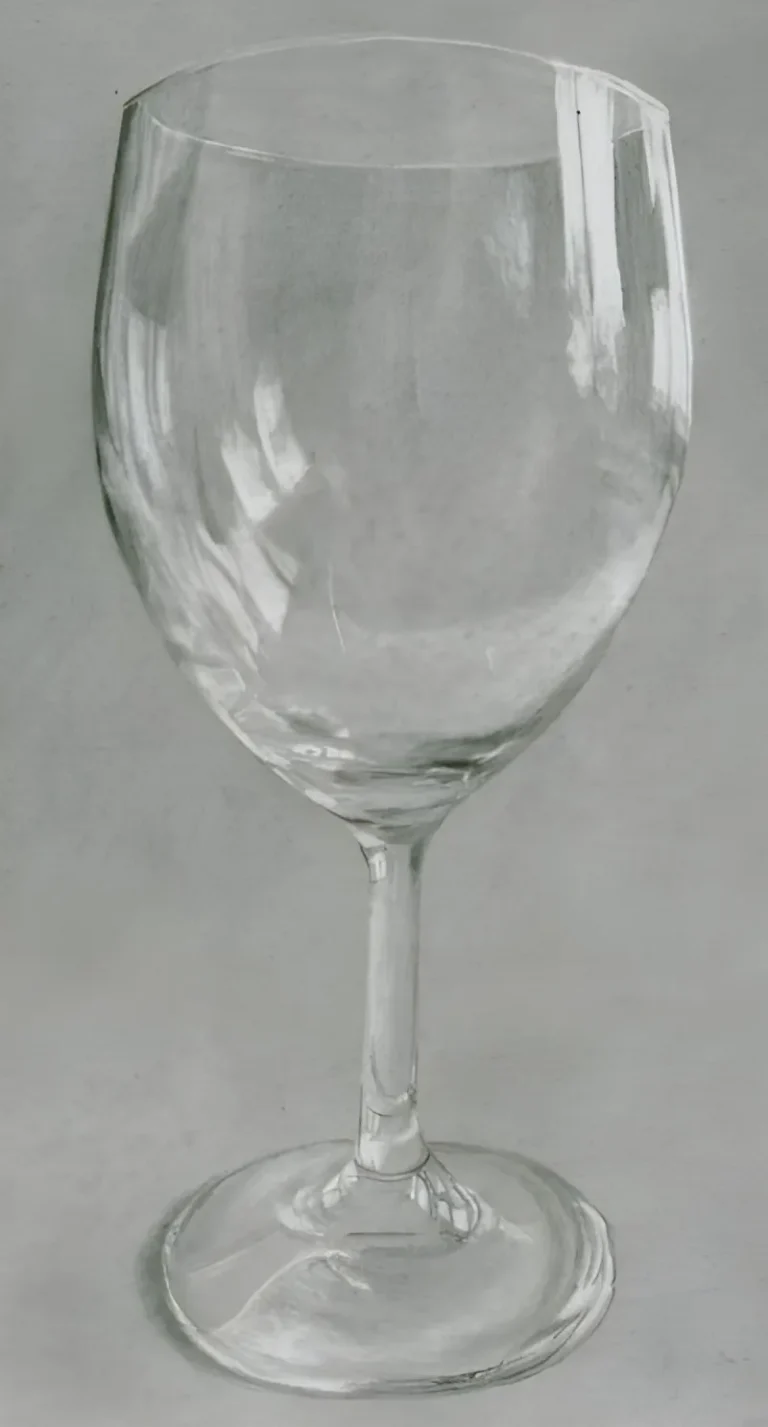
A crystal ball with upside-down refraction shows the room flipped inside the sphere: the ceiling sits at the bottom, the floor at the top. Sketch the flipped scene small and squeezed toward the centre, then darken the outer ring so the glass reads as thick; the bright eye-like catchlight works the same way as in how to draw eyes.
- Best for: the classic flipped view.
- Avoid for: you want a quick sketch.
Course: How to Draw a Glass — teaches how background shapes bend through clear glass, which is the whole trick of refraction.
You’ll need: HB pencil, 4B for the outer ring, a blending stump.
4. Crystal ball on a wooden stand
A crystal ball on a wooden stand pairs smooth glass with rough grain, so the contrast does the work. Draw the carved base first with short grain lines, then place the ball so its bottom edge dips about one finger-width into the cradle.
- Best for: grounding the sphere.
- Avoid for: you prefer floating shapes.
Course: How to Draw Weathered Textures — covers the rough wood grain that makes the glass above it look smoother.
You’ll need: 2B and 6B pencils, a ruler for the stand edges.
5. Fortune teller crystal ball drawing on velvet
A fortune teller drawing crystal ball scene starts with the cloth: a dark velvet cover with three or four deep folds running toward the ball. Shade the folds first, leave a small dent where the ball sits, then add the sphere with a clean highlight so it glows against the dark. Shading the face of a seer is covered in how to draw portraits.
- Best for: a fortune teller scene.
- Avoid for: you want a plain background.
Course: How to Draw Drapery & Clothing Folds — teaches the folds and underside shading that make the velvet look heavy and soft.
You’ll need: 2B, 4B and 6B pencils, a blending stump.
6. Hands hovering over a crystal ball
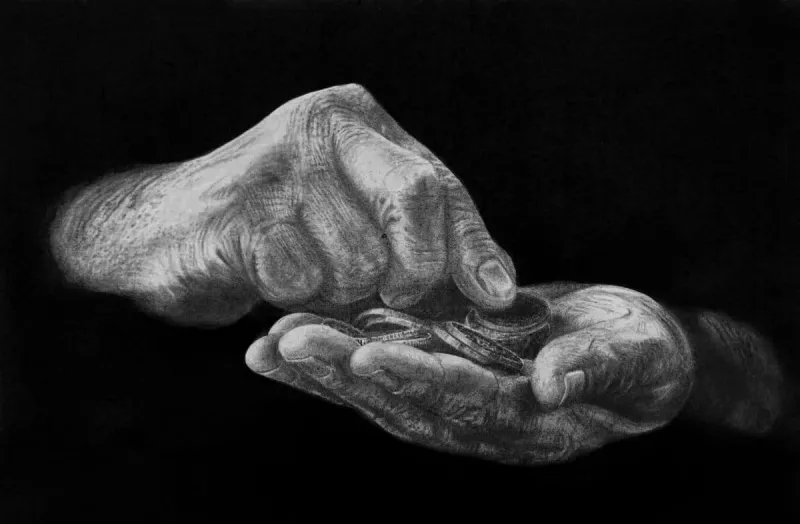
Hands hovering over a crystal ball turn a plain sphere into a fortune teller scene. Draw both hands as simple boxes first (see how to draw hands), spread the fingers by about 30 degrees, then let a faint reflection of the palms curve along the lower edge of the glass.
- Best for: telling a story.
- Avoid for: you are new to hands.
Course: Drawing Realistic Hands — walks through finger proportions so the hands above the ball stay believable.
You’ll need: HB and 2B pencils, a kneaded eraser.
7. Crystal ball with swirling mist inside
A crystal ball with swirling mist inside depends on soft edges, not lines. Smudge 2B graphite in two or three curling bands, lift the lightest swirl with an eraser, and keep the area near the rim darker so the mist stays inside the glass.
- Best for: mystery and softness.
- Avoid for: you want hard outlines.
Course: How to Draw Mist — explains how to build drifting soft gradients without a single hard outline.
You’ll need: 2B pencil, a blending stump, a kneaded eraser.
8. Glowing crystal ball in a dark room
A glowing crystal ball in a dark room makes the ball the lightest shape on the page. Cover the background with 6B graphite, leave the sphere almost white, then darken only the edge and the cast glow on the table so the light seems to come from inside.
- Best for: dramatic contrast.
- Avoid for: you are new to shading.
Course: How to Draw a Portrait in Shadow — shows how to keep one bright shape against a deep shadow ground.
You’ll need: 4B and 6B pencils, a large blending stump.
9. Crystal ball reflecting a window
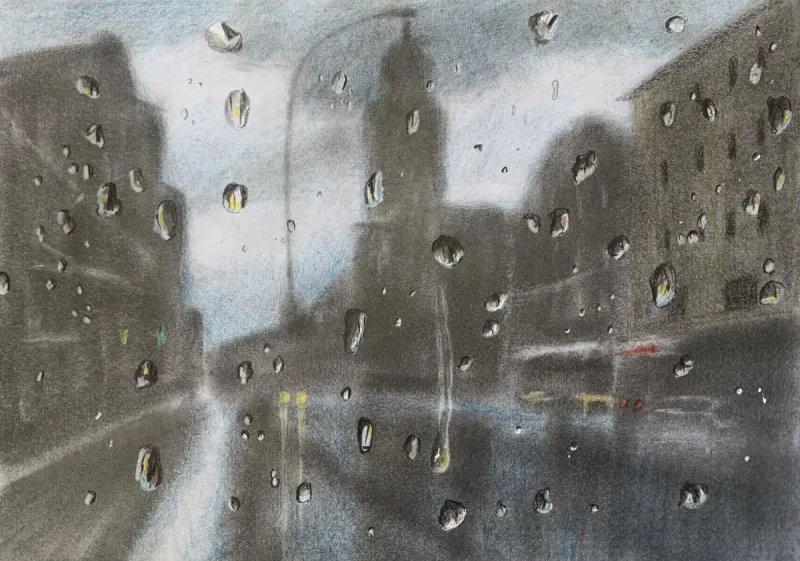
A crystal ball reflecting a window is the most common glass reflection study: the window frame appears as a small curved cross on one side of the sphere. Bend the straight bars into arcs that follow the curve, and keep the reflection brighter than anything else on the ball.
- Best for: realistic reflections.
- Avoid for: you want a matte look.
Course: How to Draw Rain on Window — teaches how to handle window light on glass and how reflections stay crisp on a curved surface.
You’ll need: 2B pencil, a ruler, a white gel pen.
10. Crystal ball on a mirror table
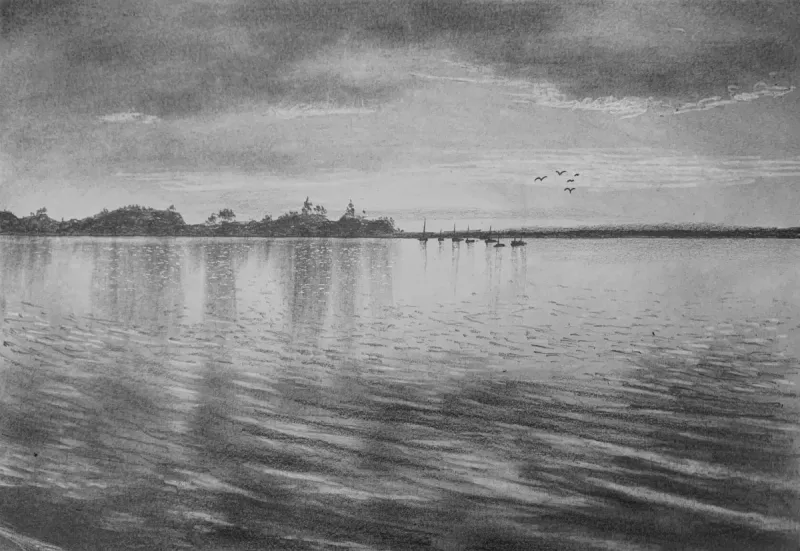
A crystal ball on a mirror table is drawn twice: the ball and its upside-down copy below it. Draw a straight horizon through the point where the ball touches the surface, mirror the shape exactly, using the same ruler method as in perspective drawing scene setup, then soften the copy by about one tone step.
- Best for: doubling a shape.
- Avoid for: you are short on time.
Course: How to Draw Reflective Water — shows how reflections mirror a shape and fade slightly as they move away from it.
You’ll need: 2B pencil, a ruler, a soft eraser.
11. Crystal ball showing a tiny landscape
A crystal ball showing a tiny landscape squeezes a whole sky and horizon into a circle. Draw the horizon as a curve that bows downward, place small clouds near the top, and crop the scene so it fills about two thirds of the sphere.
- Best for: imagination.
- Avoid for: you want strict realism.
Course: How to Draw Clouds — explains cloud shapes and sizes so the miniature sky inside the glass stays convincing.
You’ll need: HB and 2B pencils, a blending stump.
12. Crystal ball with a candle behind it
A crystal ball with a candle behind it glows from the middle outward. Place a bright flame shape just off centre, draw a soft halo around it, and add a warm bright spot on the table where the light passes through the sphere.
- Best for: light through glass.
- Avoid for: you are new to glass.
Course: How to Paint a Hurricane Lamp in Watercolor — covers how light glows through a glass shape, which is what lights the ball from behind.
You’ll need: 2B and 4B pencils, a kneaded eraser.
13. Pen and ink crystal ball
A pen and ink crystal ball builds the glass out of tiny marks instead of smooth shading. Use a 0.3 mm fine liner, curve every line around the form of the sphere, and space the lines wider near the highlight so the white paper shows through.
- Best for: bold clean lines.
- Avoid for: you dislike permanent marks.
Course: How to Create Tone with Pen and Ink — teaches how to build tone from lines and dots that follow the curve of the sphere.
You’ll need: A 0.3 mm fine liner, smooth paper, an HB pencil for the first guide.
14. Cross-hatched glass sphere
A cross-hatched glass sphere uses two or three layers of curved lines to build the dark edge. Hatch the first layer along the curve, cross it at about 45 degrees, and stop before the highlight so the clear spot stays paper white.
- Best for: learning tone by lines.
- Avoid for: you want a smooth blend.
Course: Cross Hatching for Beginners — gives the even hatching that darkens the ball edge in clean layers.
You’ll need: HB and 2B pencils or a fine liner.
15. Colored pencil crystal ball drawing
A crystal ball drawing color study replaces grey with tinted layers: blue and violet in the shadow, pale yellow in the highlight edge, and a touch of orange where the table reflects. Build each colour in three light passes instead of one heavy one.
- Best for: colour practice.
- Avoid for: you want graphite only.
Course: How to Draw a Rose with Colored Pencils — shows how to layer coloured pencil in light passes so each colour blends smoothly.
You’ll need: Violet, blue, yellow and orange coloured pencils, a white pencil.
16. Crystal ball among bottles
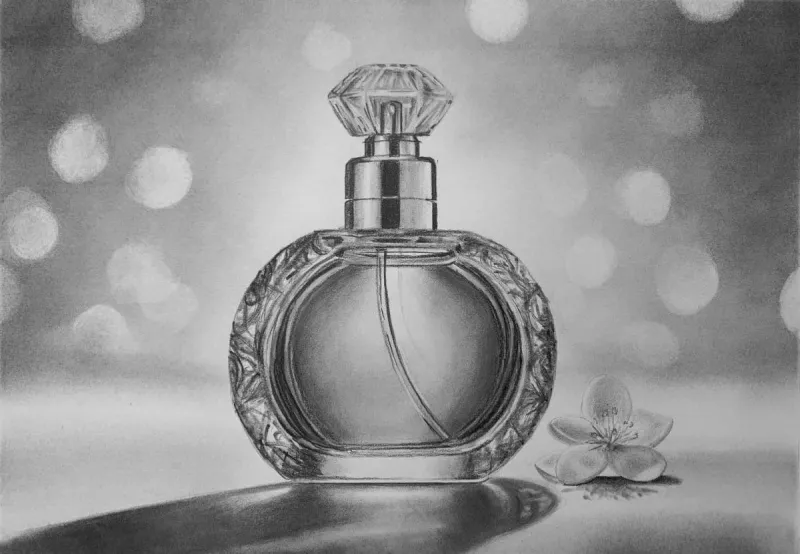
A crystal ball among bottles is a glass-on-glass group, so overlaps and edges decide everything. Place the ball in front of one bottle, draw the bottle line continuing through the sphere with a small bend, and vary the heights so the eye travels across the group.
- Best for: group still life.
- Avoid for: you want a single object.
Course: How to Draw Bottles Still Life in Pastel — covers overlaps and edges in a group of glass shapes.
You’ll need: 2B and 4B pencils, a ruler.
17. Crystal ball with smoke trails
A crystal ball with smoke trails lets curving lines wrap the sphere, then drift away from it. Draw one long S-curve from the top edge, let it thin out toward the end, and lift a lighter streak from the graphite so the smoke looks airy.
- Best for: flowing lines.
- Avoid for: you dislike curved lines.
Course: How to Paint Smoke — teaches how to draw smoke that curls, thins and fades naturally.
You’ll need: 2B pencil, a kneaded eraser, a soft brush for blending.
18. Crystal ball on a window sill with a bright spot
A crystal ball on a window sill throws a bright spot inside its own shadow, the same way a lens focuses sunlight. Draw the shadow as a soft oval stretching away from the window, then add a small bright crescent in the middle of it, a trick also used in fox eyes drawing studies.
- Best for: shadow and bright spot.
- Avoid for: you prefer simple shadows.
Course: Mason Jar Still Life in Oil — shows how light passes through glass jars and leaves bright spots inside the shadow.
You’ll need: 2B, 4B and 6B pencils, a kneaded eraser.
If it goes wrong
- The ball looks like a flat circle. Darken the rim a little more and keep the centre lighter, so the sphere has a clear edge and a clear middle.
- The glass looks like metal. Metal has hard dark and light bands, so soften the transitions and bring back a clean window highlight.
- The shadow points the wrong way. Draw a small arrow toward the light before you start, and keep the shadow opposite it, as in realistic drawings shading.
- You buy a course and drop it. Pick one study, one check and one sheet, and finish it first.
When the free version isn’t enough
Most self-taught artists stall when the same crystal ball has to sit under a new light. A beginner drawing course covers shapes, tone and light step by step.
Key takeaways
- Decide where the light comes from before you touch the pencil.
- Keep the highlight as bare paper in the shape of the window.
- Darken the rim of the sphere and keep the middle lighter.
- Finish one short study, then repeat it in your drawing practice before moving up.
Common questions
What is the easiest crystal ball drawing for a beginner?
Start with a single crystal ball on a plain table. Trace a coin for the circle, leave a window-shaped highlight as bare paper, and shade the rim and the cast shadow with a 2B pencil. It takes about fifteen minutes.
How do you make a fortune teller drawing crystal ball scene?
Draw a dark velvet cloth with deep folds, set a clean glass sphere on it, and add two hovering hands. Keep the sphere highlight white so it glows against the dark cloth.
How do you make a crystal ball drawing look like glass?
Leave the highlight as clean paper, darken the rim, and add a small bright spot inside the shadow. Those three steps make the sphere read as transparent.
Can I do a crystal ball drawing in color?
Yes. Use blue and violet pencil in the shadow, pale yellow near the highlight and a touch of orange for table reflections. Build each colour in three light passes.
Why does my glass ball look flat?
The usual cause is an even tone across the whole sphere. Choose one light direction, darken the rim on the far side and keep a bare highlight on the near side.