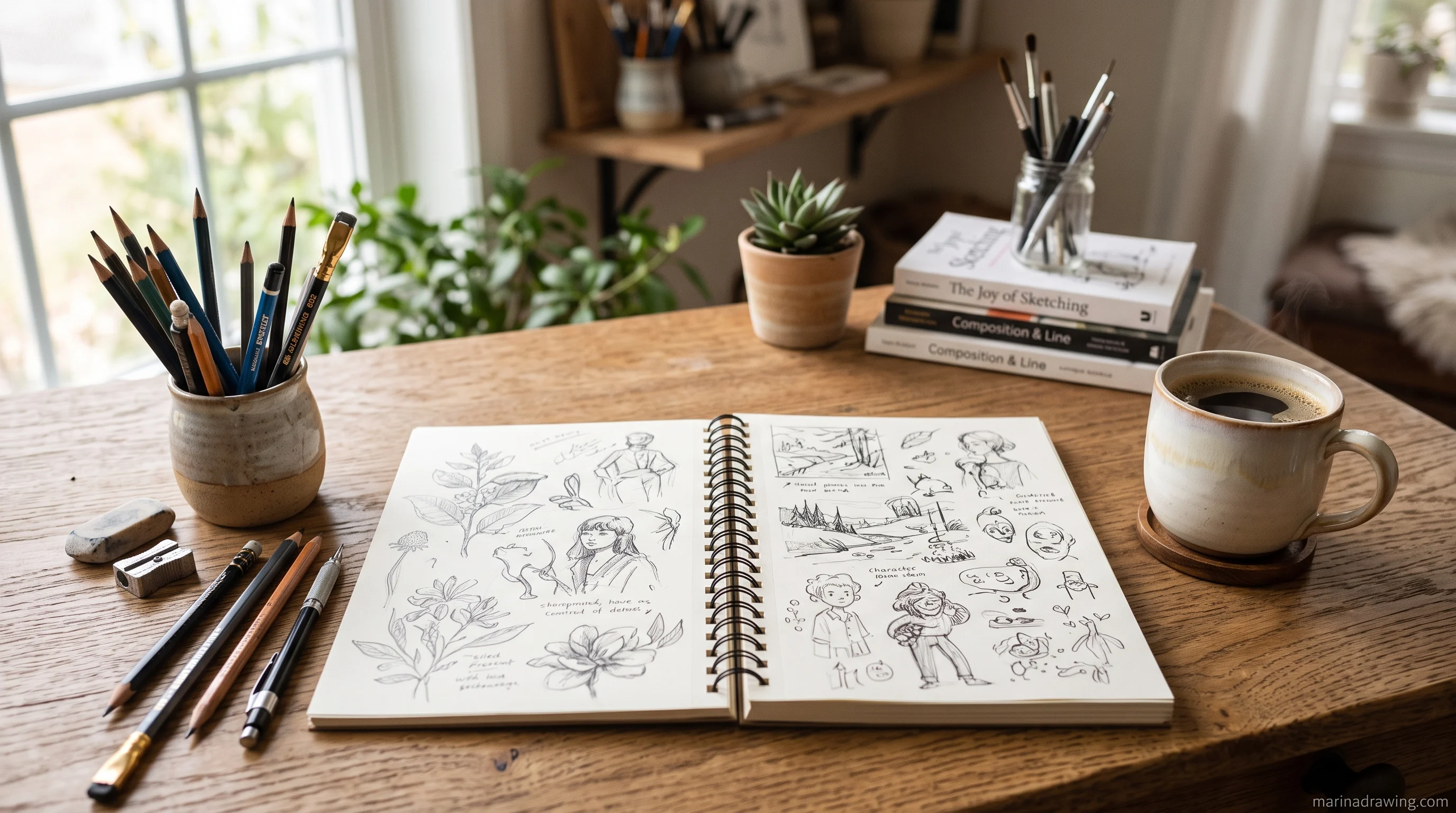
Quick answer: pick one object within reach, set a timer for ten minutes, draw it with no eraser, and move on to the next page. Do that once a day and the sketchbook fills itself. The ideas below are all things you can see from where you sit.
Sketch ideas are simply ordinary things you can see from your chair, drawn fast on a page you are not afraid to ruin.
A new sketchbook sits on the shelf for weeks because nobody tells you what to put on the first page. I know that feeling. You need nothing but the room you are sitting in, a pencil and a timer. Each idea takes ten minutes or less, and each one has a rule that keeps your page from getting stiff.
If you would rather have someone look at your pages, a course with work review does that.
I wrote this list for the person I was two years ago: a full sketchbook cover, an empty first page and a lot of guilt. If that is you, start with the first idea and ignore the rest until tomorrow.
Why a Blank Sketchbook Page Feels Harder Than Any Drawing
The page feels hard because it has no rules yet. A drawing has a subject, a size and an end. A blank page has none of them, so every choice looks like a way to fail.
- I stopped asking “what should I draw?” and started asking “what is nearest to my left hand?”
- I gave every sketch a time limit, so the page could never turn into a masterpiece I was afraid to ruin.
- I let the first three pages be bad on purpose. Nobody sees them, and they warm up your hand.
One more trick: write the date and the timer length in the corner of each page. It turns the page into a small record, and a record is easier to start than a drawing.
A sketch is a note, not a picture. You are writing down what you saw, and a note does not need to be beautiful to do its job.
The same thinking sits behind building an eye from a sphere first: a quick, loose structure beats a careful outline every time. If you want your page to feel less scary, you can also read easy drawings for beginners before you start. And when you get stuck, guided pencil lessons give you a path to follow.
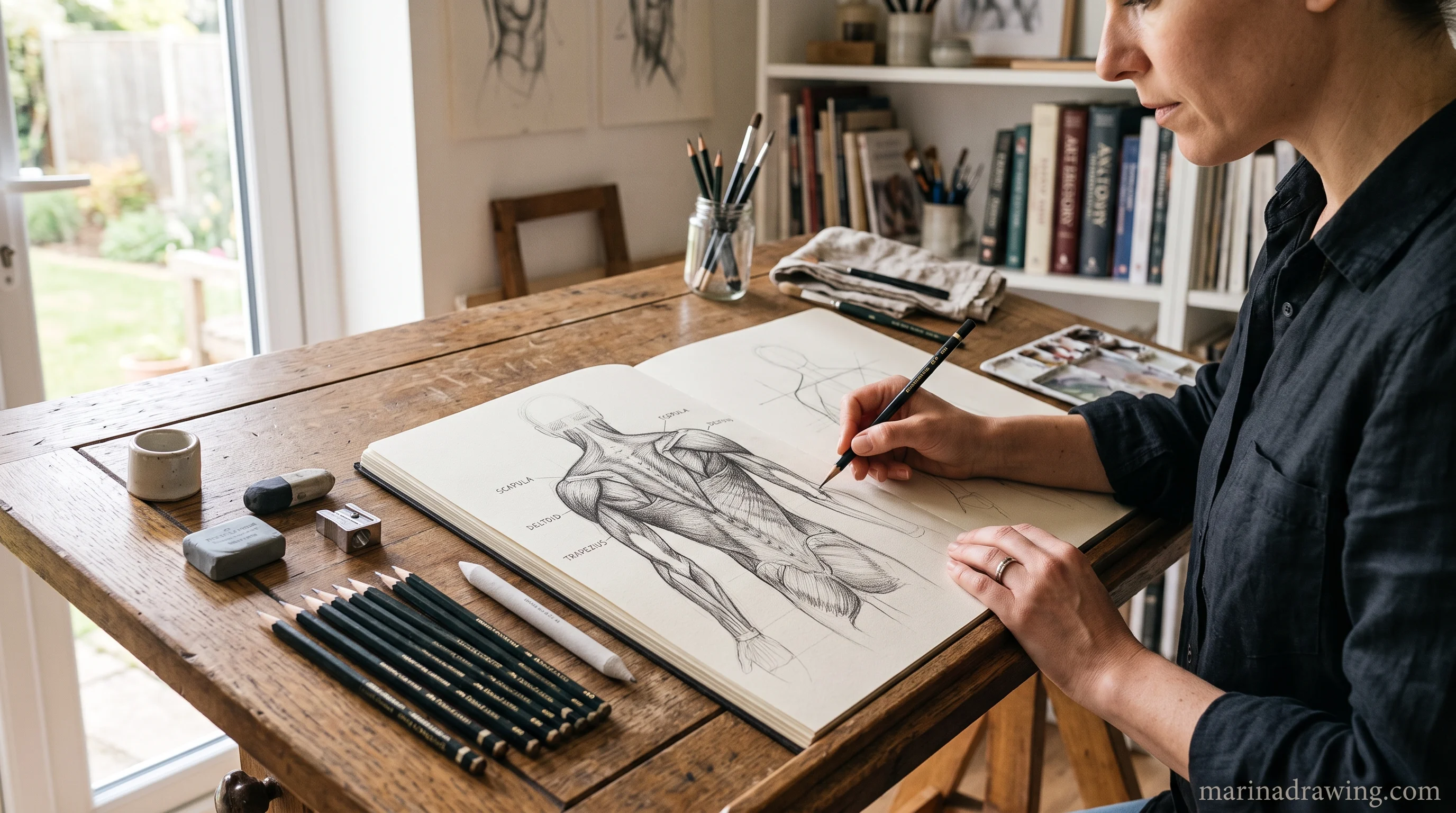
What You Need: One Pencil, a Cheap Sketchbook and a Timer
 Pin it
- One pencil that feels soft when you press. Anything from HB to 2B works.
- A cheap sketchbook. A book that feels too nice makes every page precious. I buy the plain one on purpose.
- A timer on your phone. It is the most useful tool on this list.
- No eraser for the first month. I keep it in a drawer.
That is the whole kit. A longer materials list is a different job. For these ideas, less is better.
A note on paper: thin sketchbook paper is fine. You are not making frameable work, you are making mileage. If a page tears or smudges, turn to the next one.
Sketch Ideas Easy: Five Things Within Arm’s Reach
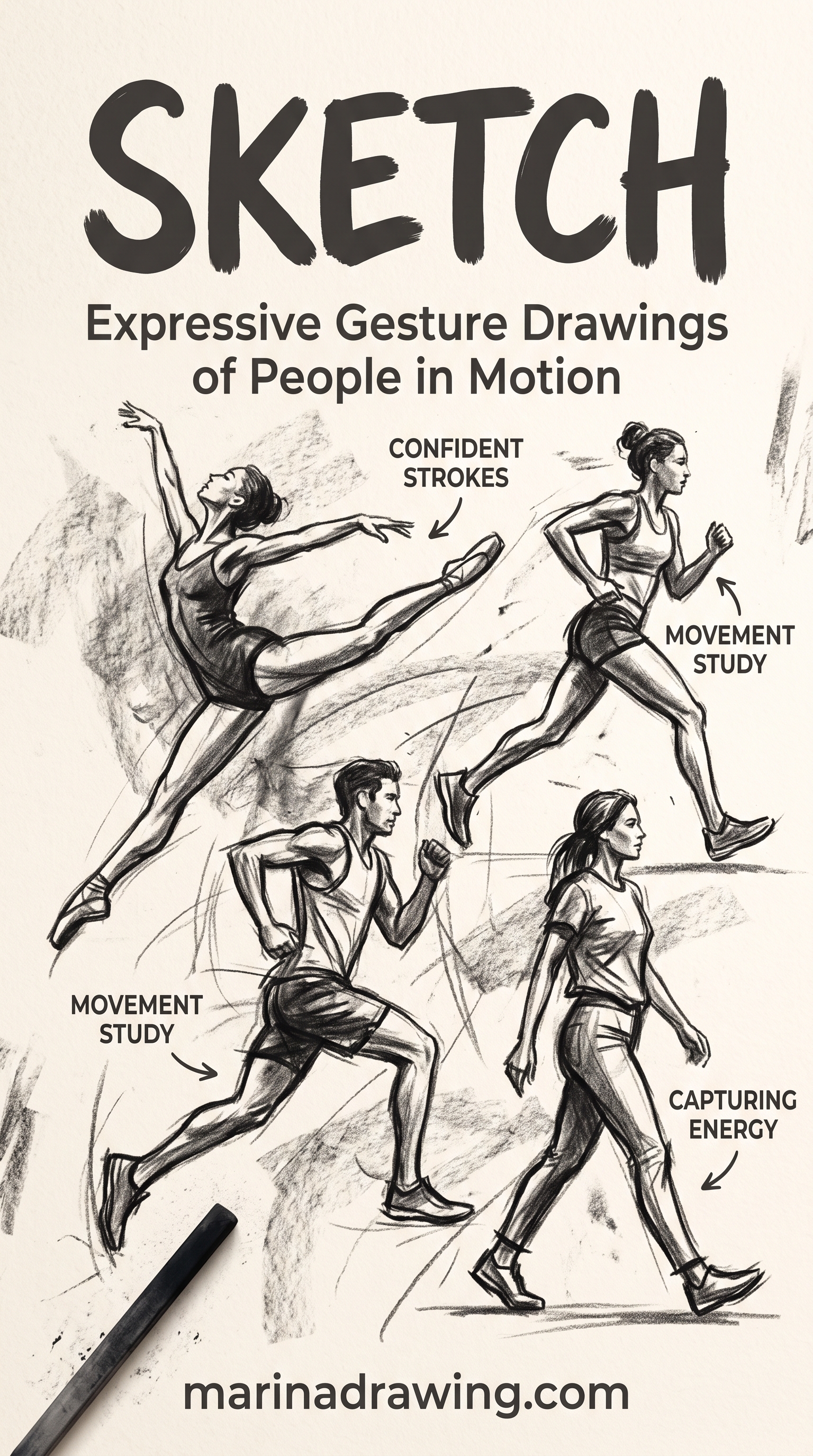
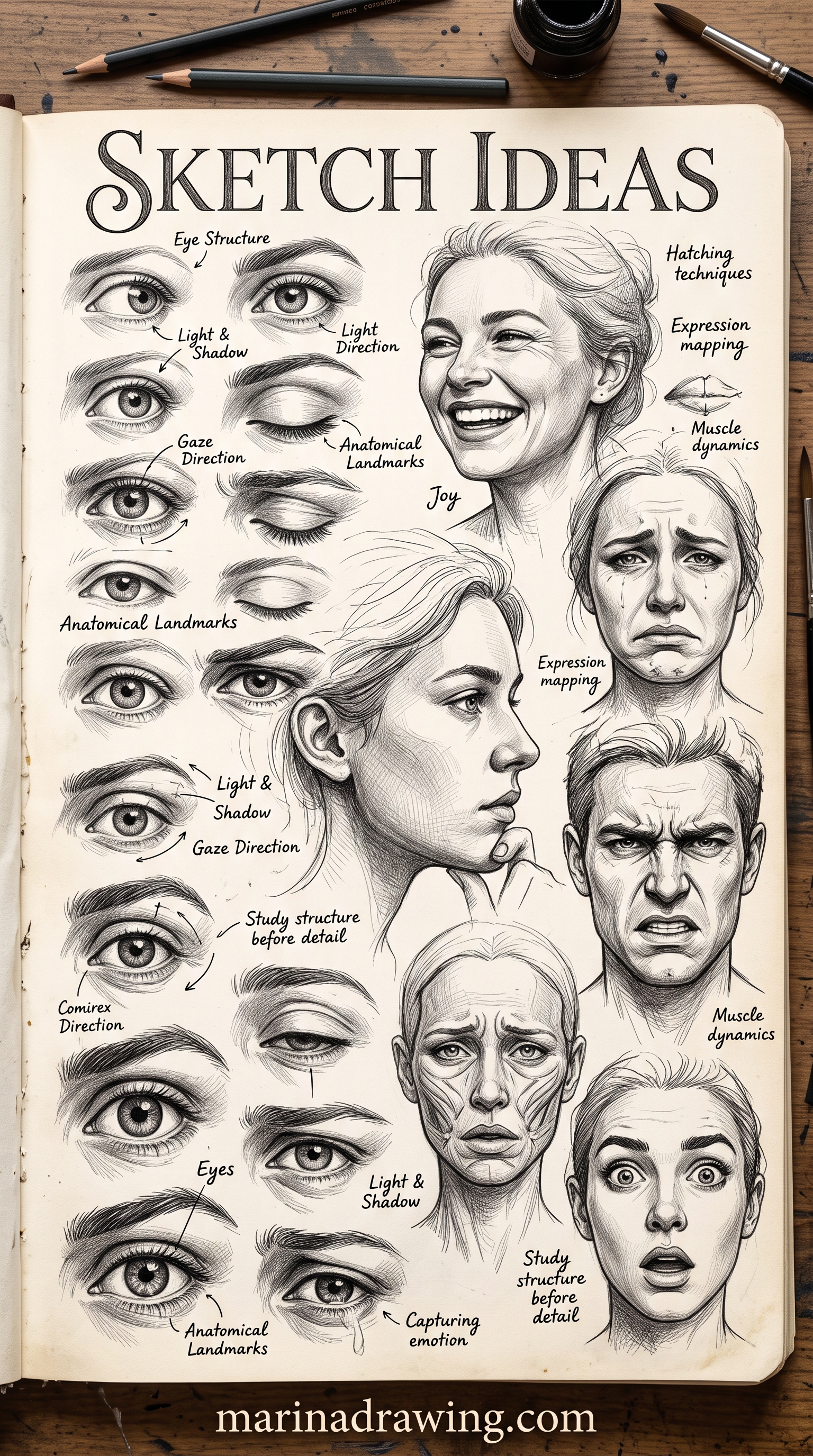
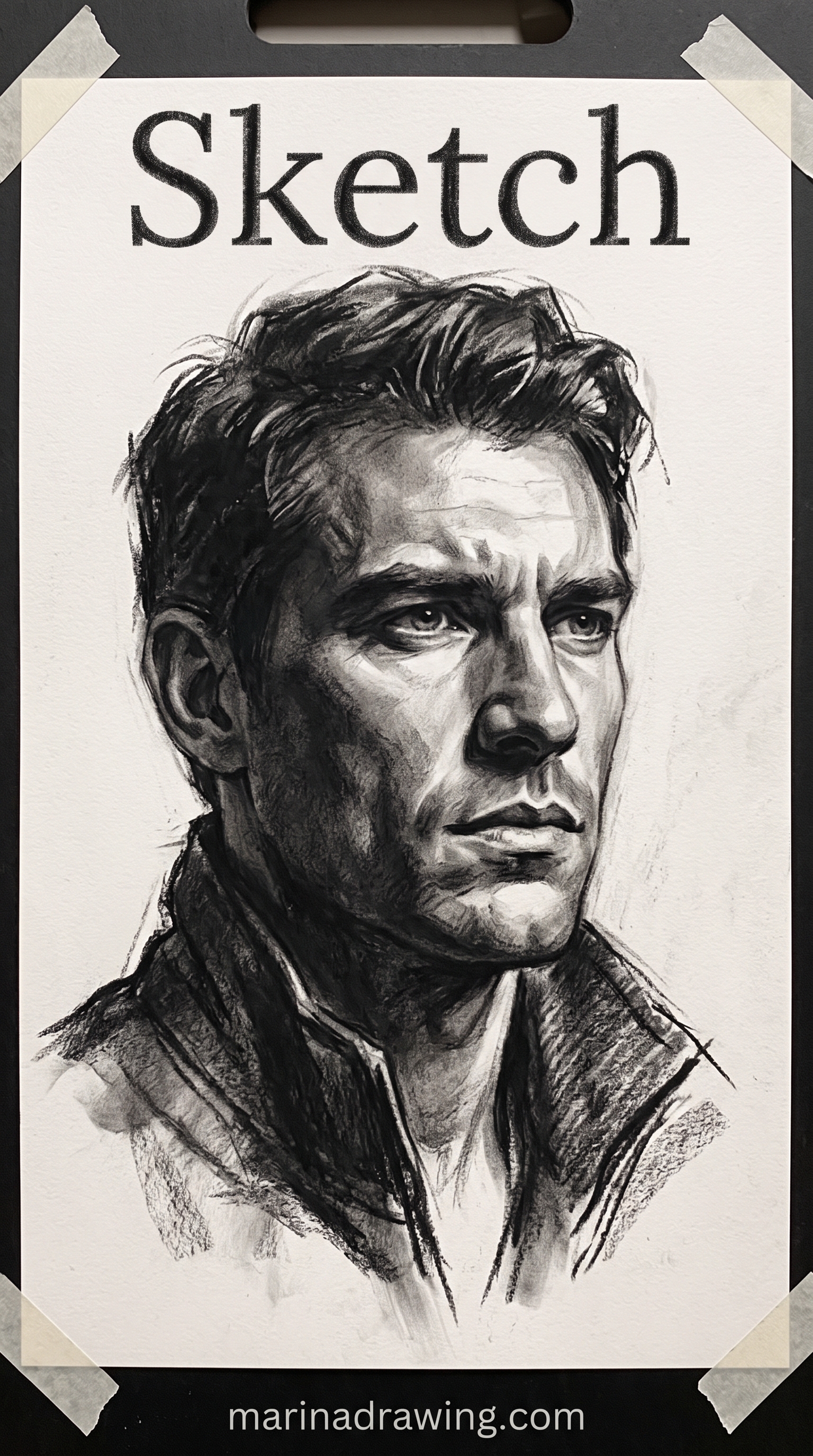
These are the sketch ideas easy enough to start today. Look around and pick one. You draw only that one thing, on its own, in the middle of the page. For more short subjects like these, see easy drawings sketches once you have finished your five.
1. Your shoes
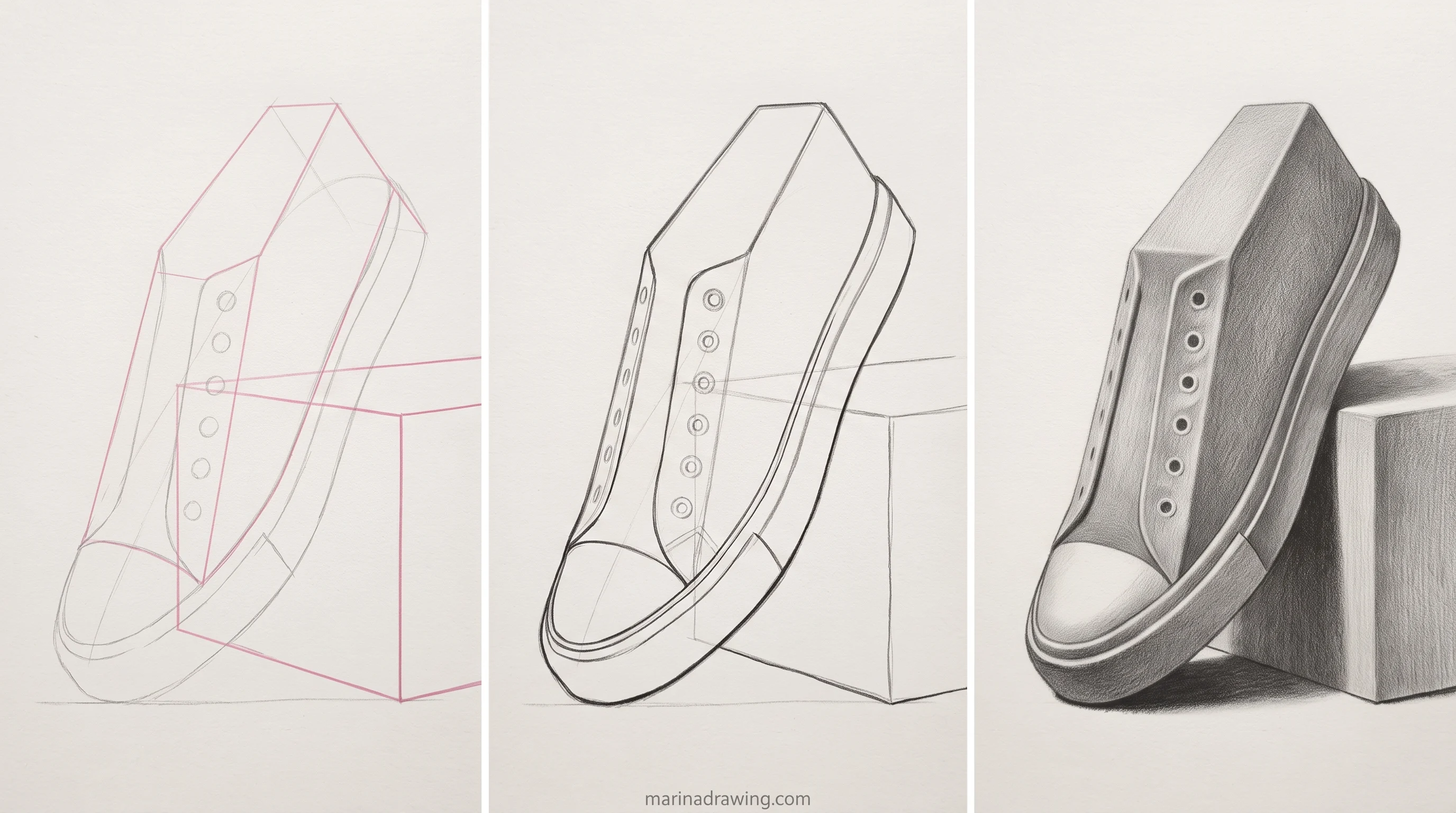
Take one shoe off and put it on the table. Draw the outline first, then the opening, then the laces. The shoe is a good first subject because nobody knows what a shoe should look like when it is drawn “correctly”.
2. Your favourite mug
Start with the ellipse of the rim. It is the one thing that gives beginners trouble, so give it three tries on the same page and keep the best one.
3. A stack of books
Draw each book as a flat box, one on top of another. Do not draw the titles. Just the edges, and the slight lean of the pile.
If the pile looks tilted, good. Real stacks lean, and a perfectly straight one looks like a diagram.
4. Keys and coins
Drop them on the table and draw them exactly where they land. The mess is the point. This one teaches you to draw what is there, not what you expect.
5. A piece of fruit
An apple or an orange is a rounded shape with one dark side. Draw the shape, then put one dark patch on the side away from the window.
Your first five pages will look rough, and you should let them. When you want to see what a slower, structured version looks like, this pencil course shows the build step by step.
Sketching Ideas From Your Window
 Pin it
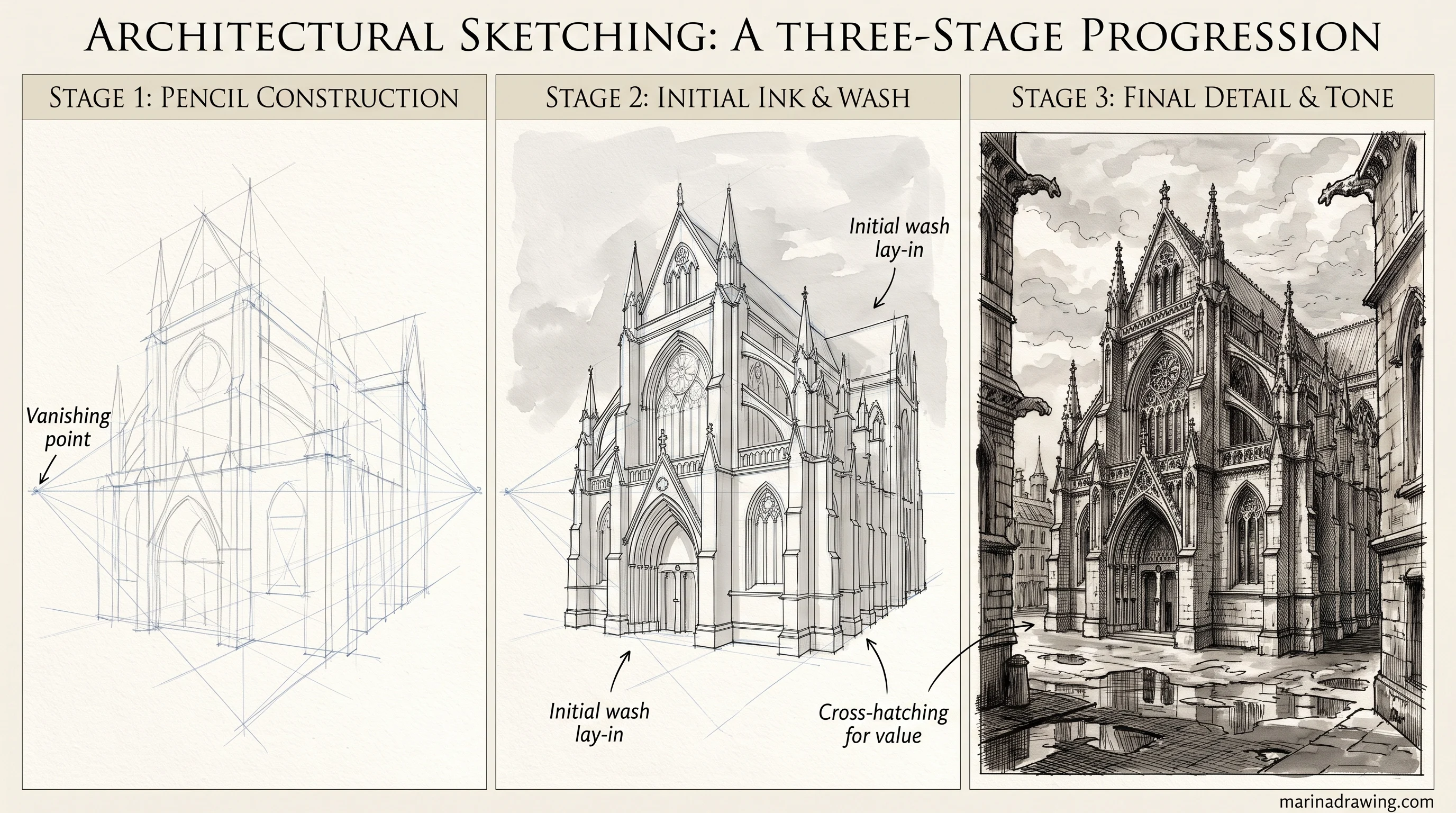
The view outside changes every hour, so you can never run out of sketching ideas here. I sit at the same window and draw whatever is in the frame.
- Rooftops. Long straight lines are easy to check by eye.
- One tree. Draw the trunk and the biggest branches. Skip the leaves.
- Parked cars. Two boxes and two circles. Good practice for perspective.
- The sky line. Only the shape where buildings meet the sky, nothing inside.
Draw what you see from your seat, and you will notice more each time. Long views also connect to still life setup, where you arrange objects on purpose.
Sketchbook Ideas Drawings: Your Own Hand in Ten Poses
42 hours of pencil drawing training, lifetime access
The video course I point plateaued students to — full lessons on portraits, hands, and realistic shading, not another short tutorial.
 Pin it
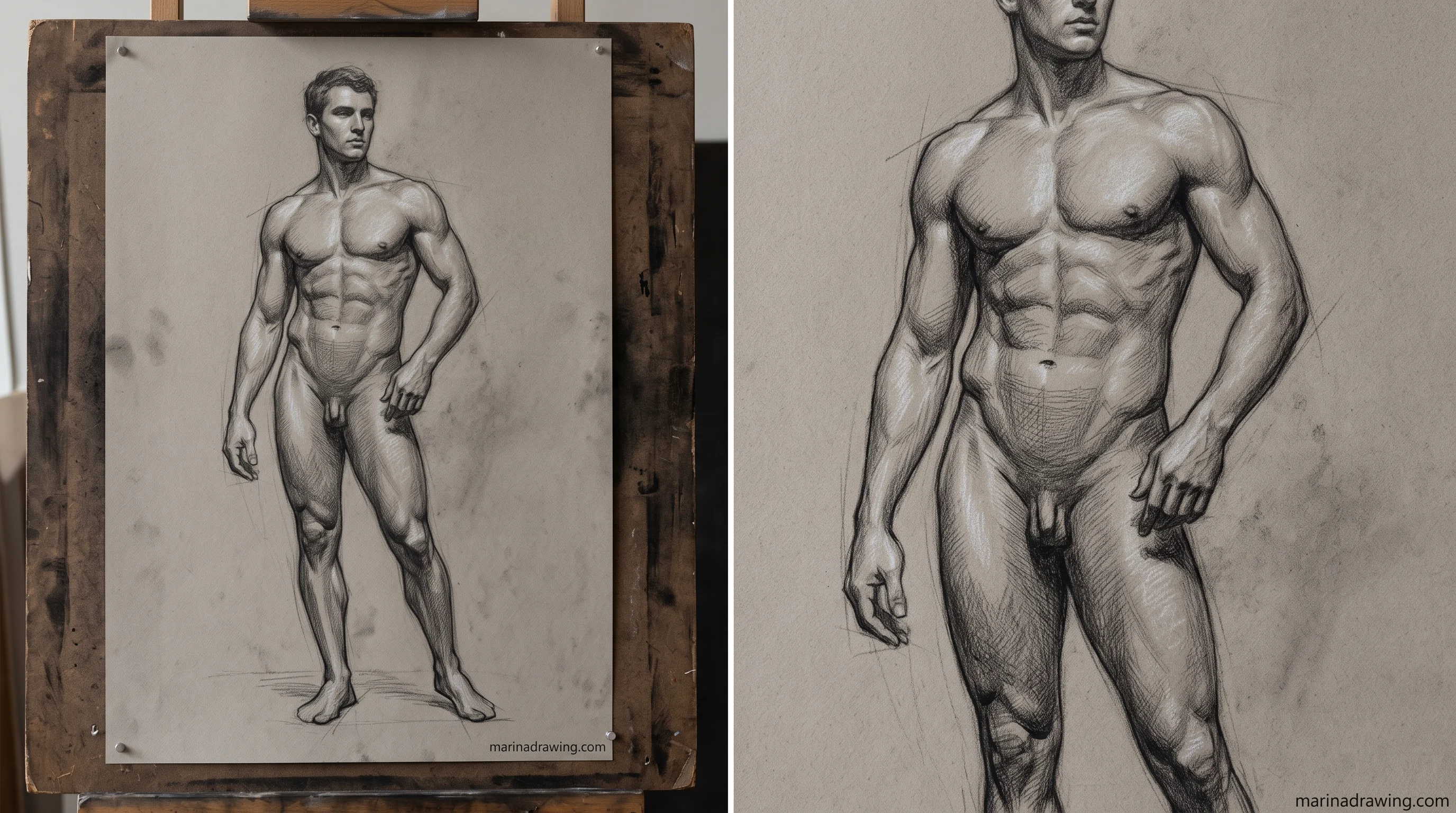
Your own hand is a model that never leaves. Set the timer for two minutes and draw it in a new pose each time.
- Open palm, fingers spread
- A loose fist
- Holding a pencil
- Holding a cup
- Two fingers pointing
- Resting on a book
- Curled as if asleep
- Pinching a small object
- Seen from the back
- Seen from the side, thumb up
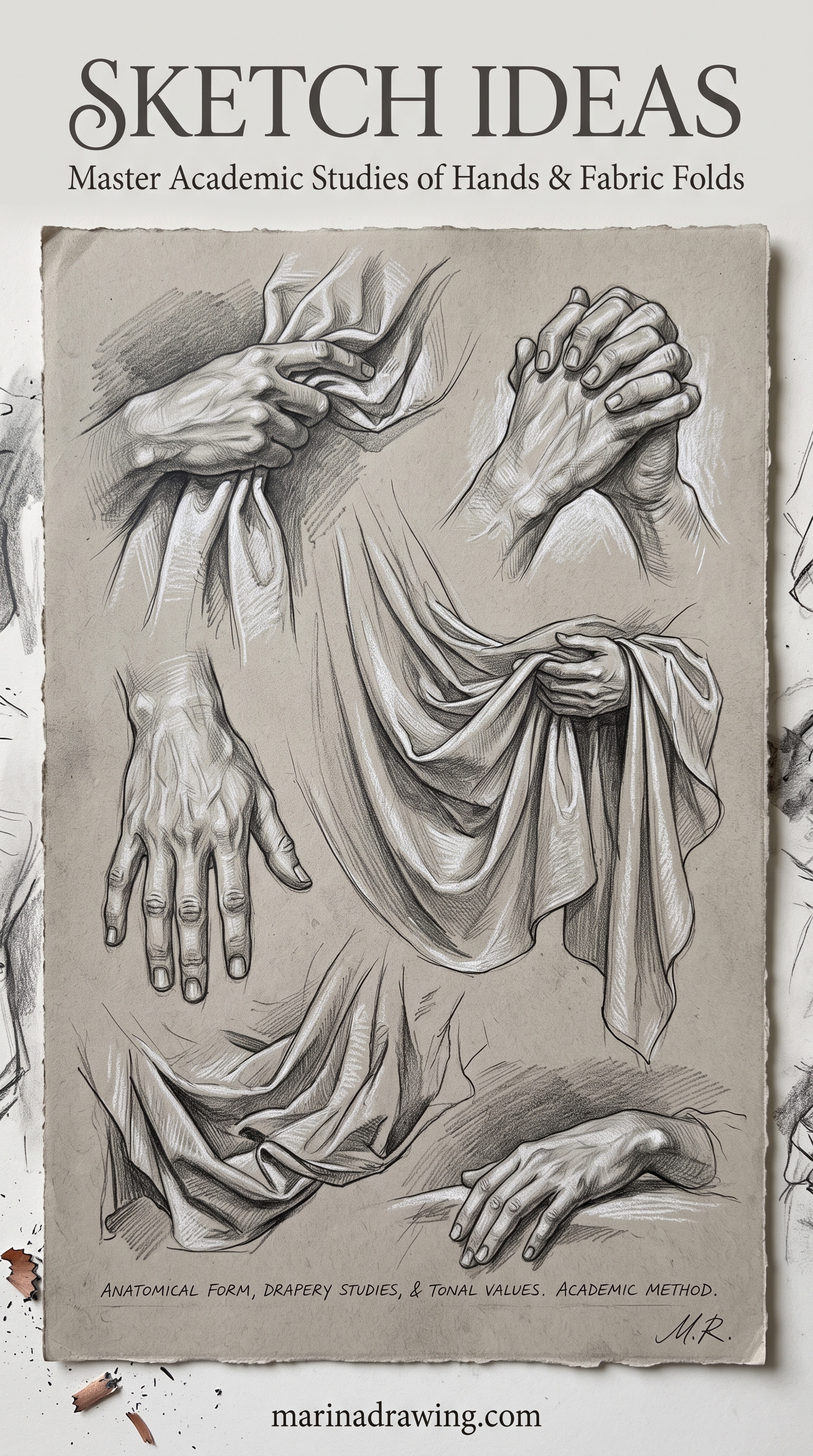
Ten poses fill a spread and give you a page you will actually want to look at. If a hand refuses to look right, the guide on how to draw hands explains where the trouble usually starts.
Sketches Ideas From Cloth, Paper and Shadows
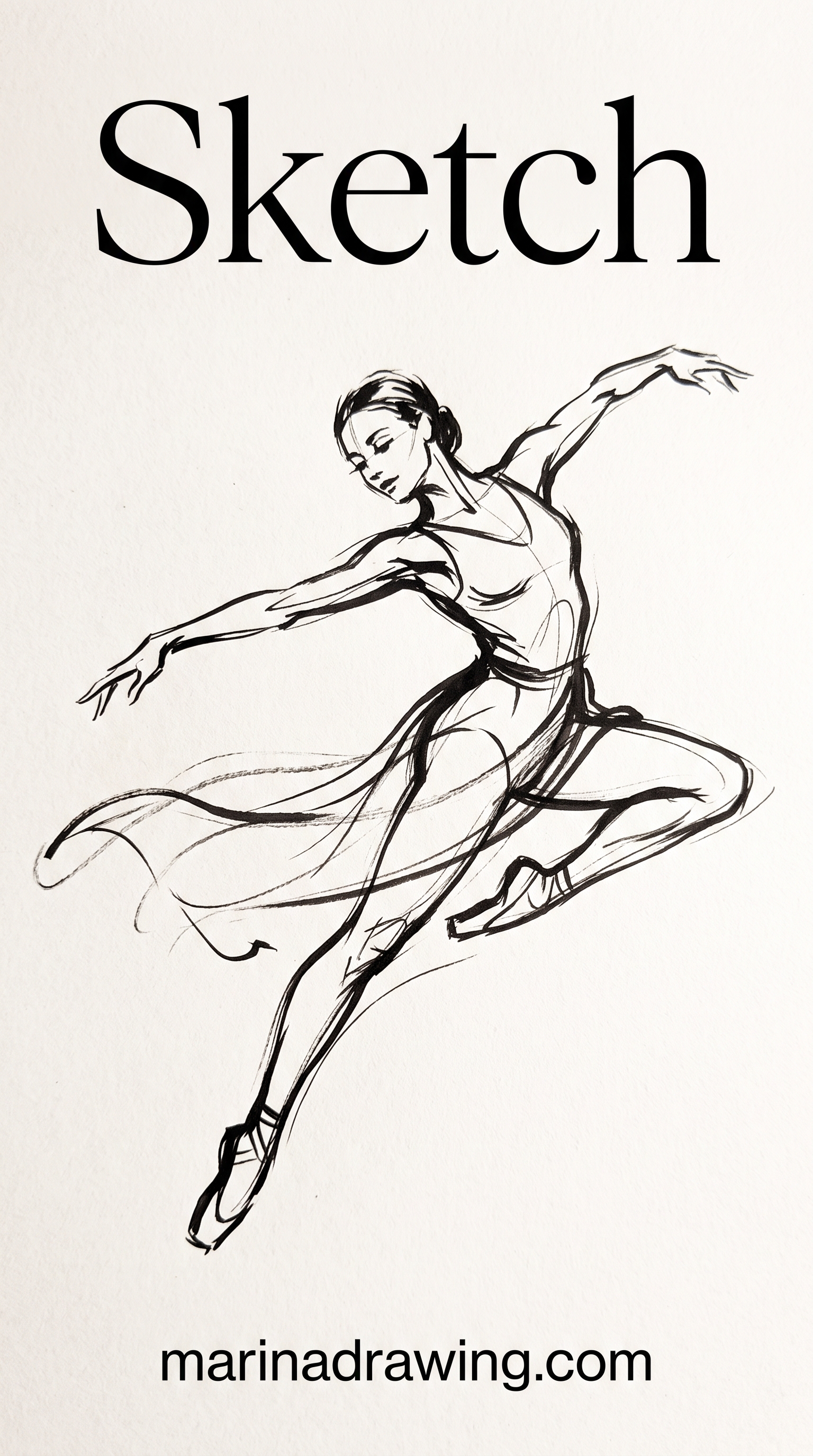
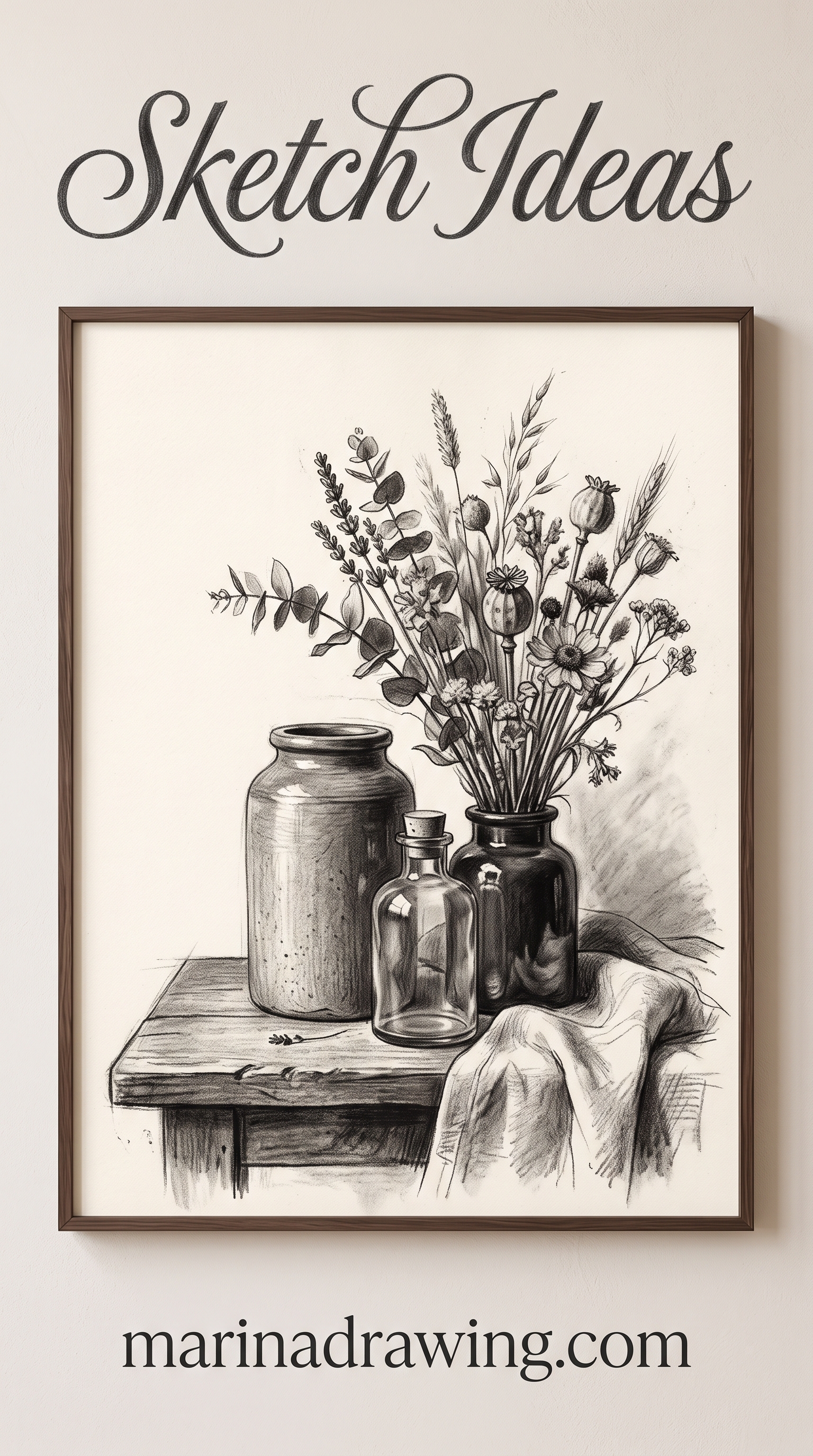
These sketches ideas look complicated but are really just shapes with light on them.
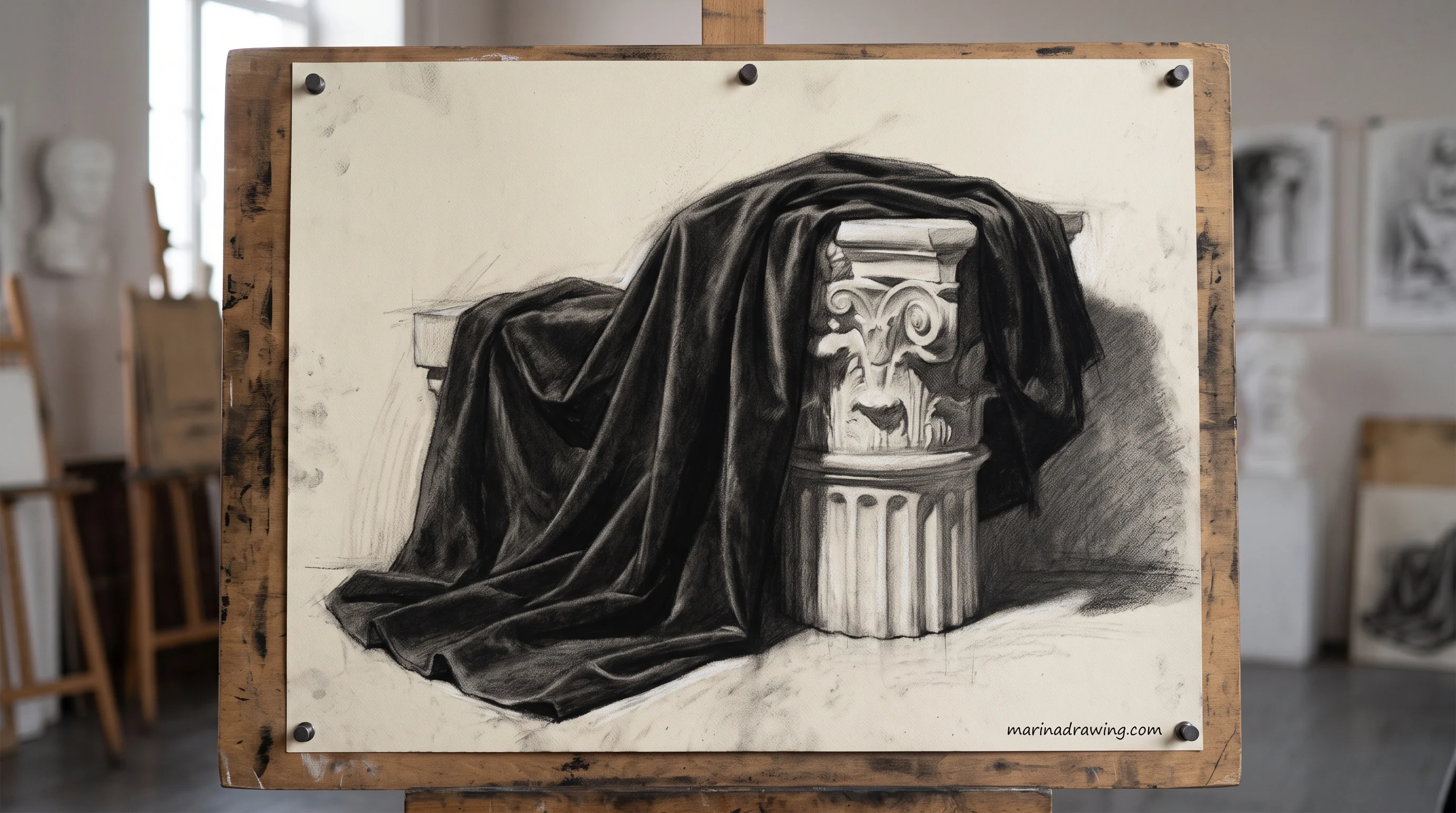
- A cloth over a chair. Draw the big folds only. Three or four are enough.
- A crumpled sheet of paper. Every crease is a small triangle of light and dark.
- A shadow on the wall. Trace the edge of the shadow and fill it flat.
- A plant leaf against the light. One line for the spine, two for the edges.
Aesthetic Sketch Ideas From Your Own Desk
 Pin it
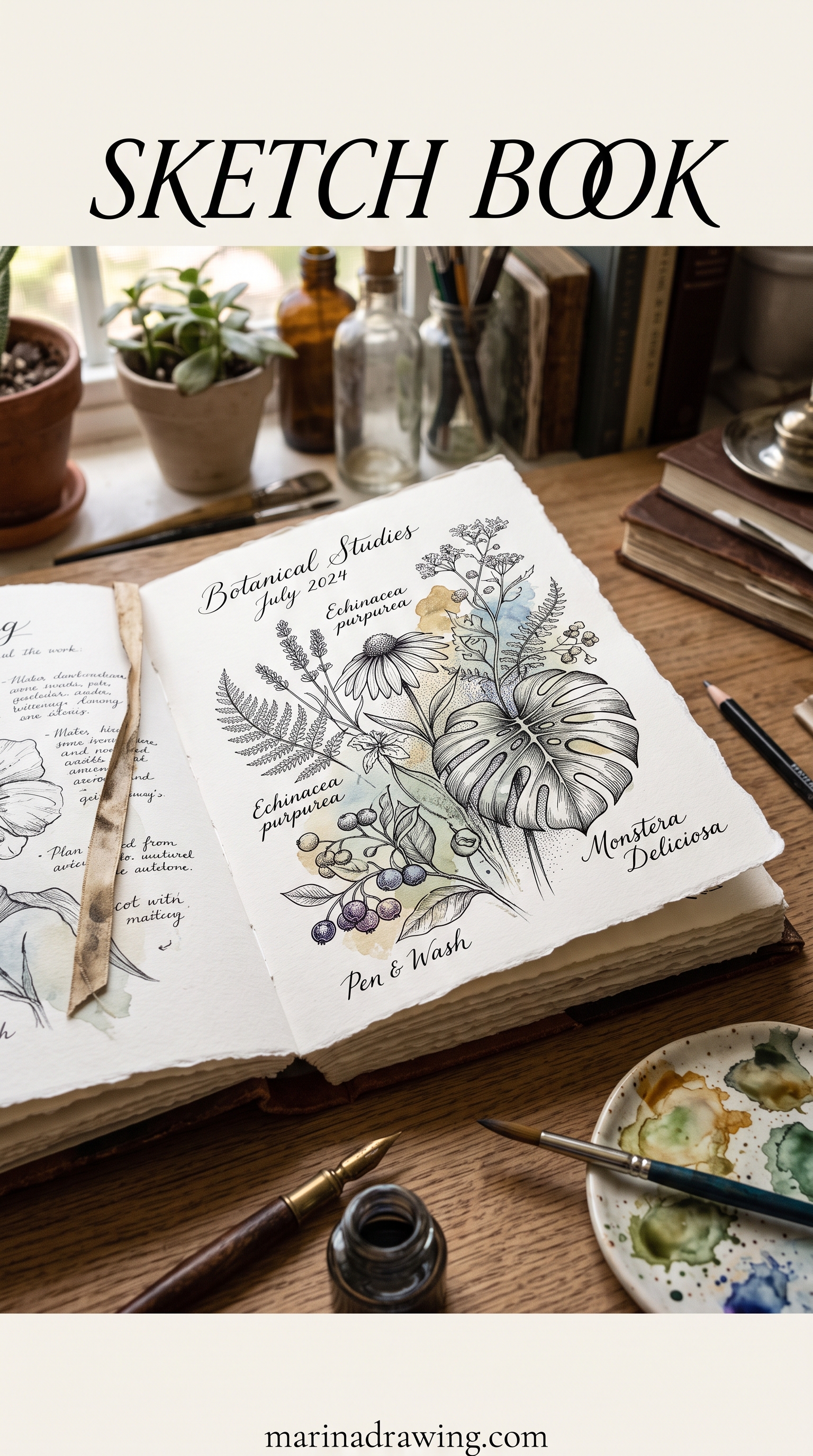
Aesthetic sketch ideas do not need a special setup. A tidy corner of a desk is already a composition. I pick three things and draw them as a small group.
- A cup, a notebook and a pen
- A lamp and its shadow
- A pair of glasses on an open book
- A plant in a small pot beside a phone
Keep the lines light and leave white space around the group. The white space is what makes a page look planned.
Try the same group twice: once with only outlines, once with one flat dark patch under each object. The second version looks finished, and it took one extra minute.
Your desk sketches will improve fastest with someone naming what to fix, and pencil lessons with work review do exactly that.
Random Sketch Ideas: Roll a Die and Draw
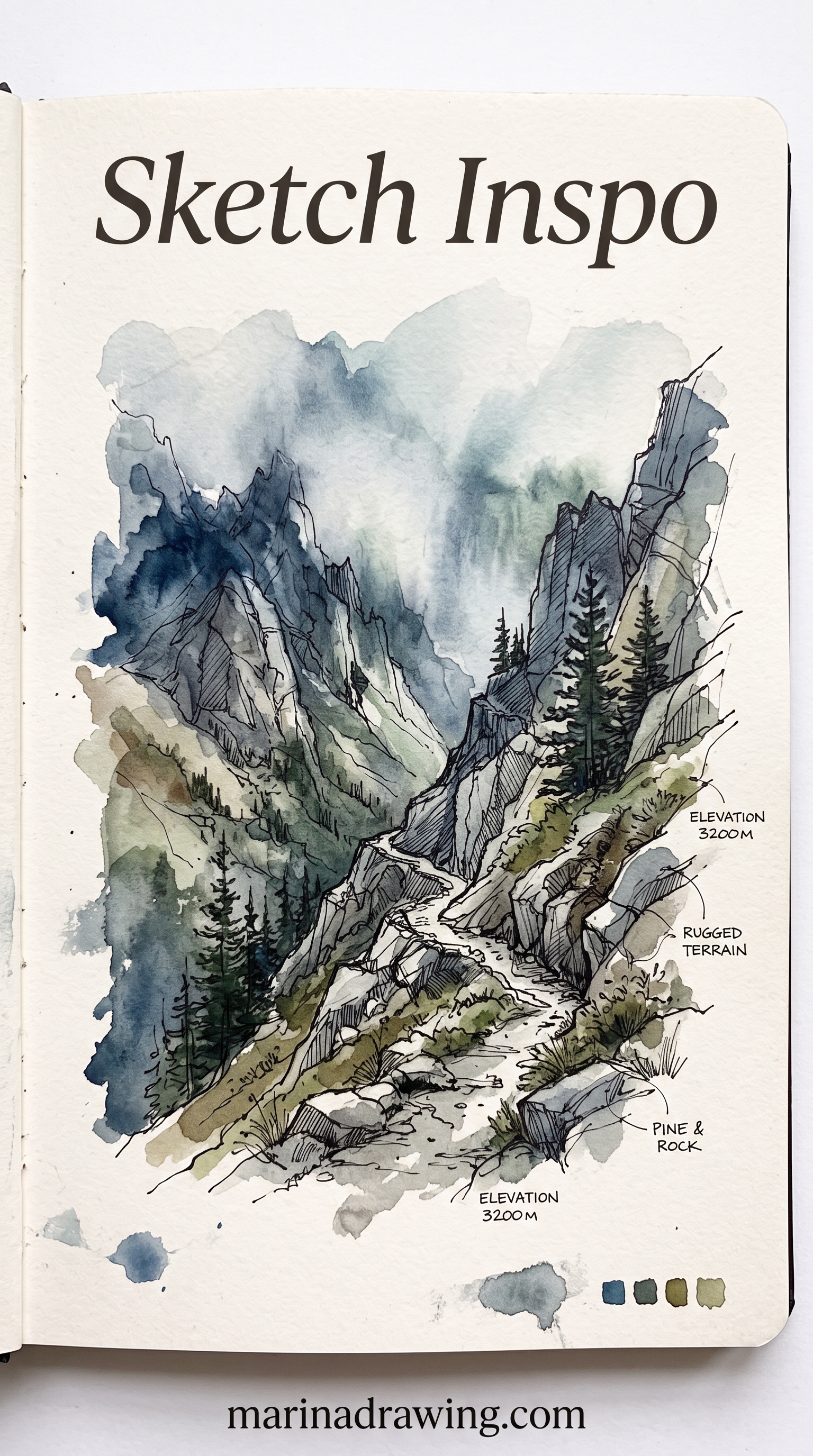
When I cannot choose, I let a die choose. Make a list of six objects near you and roll.
- 1: the thing on your desk you use most
- 2: the thing on the floor
- 3: something in the kitchen
- 4: something you are wearing
- 5: something out of a drawer
- 6: the thing you would least like to draw
These random sketch ideas remove the choice, and the choice was the hard part. The number six is my favourite: it is usually the page I learn the most from.
Keep the list on the inside cover so you never have to invent it again. When the six items stop feeling fresh, swap two of them for new ones.
Sketch Book Ideas: Six Ways to Fill a Whole Spread
 Pin it
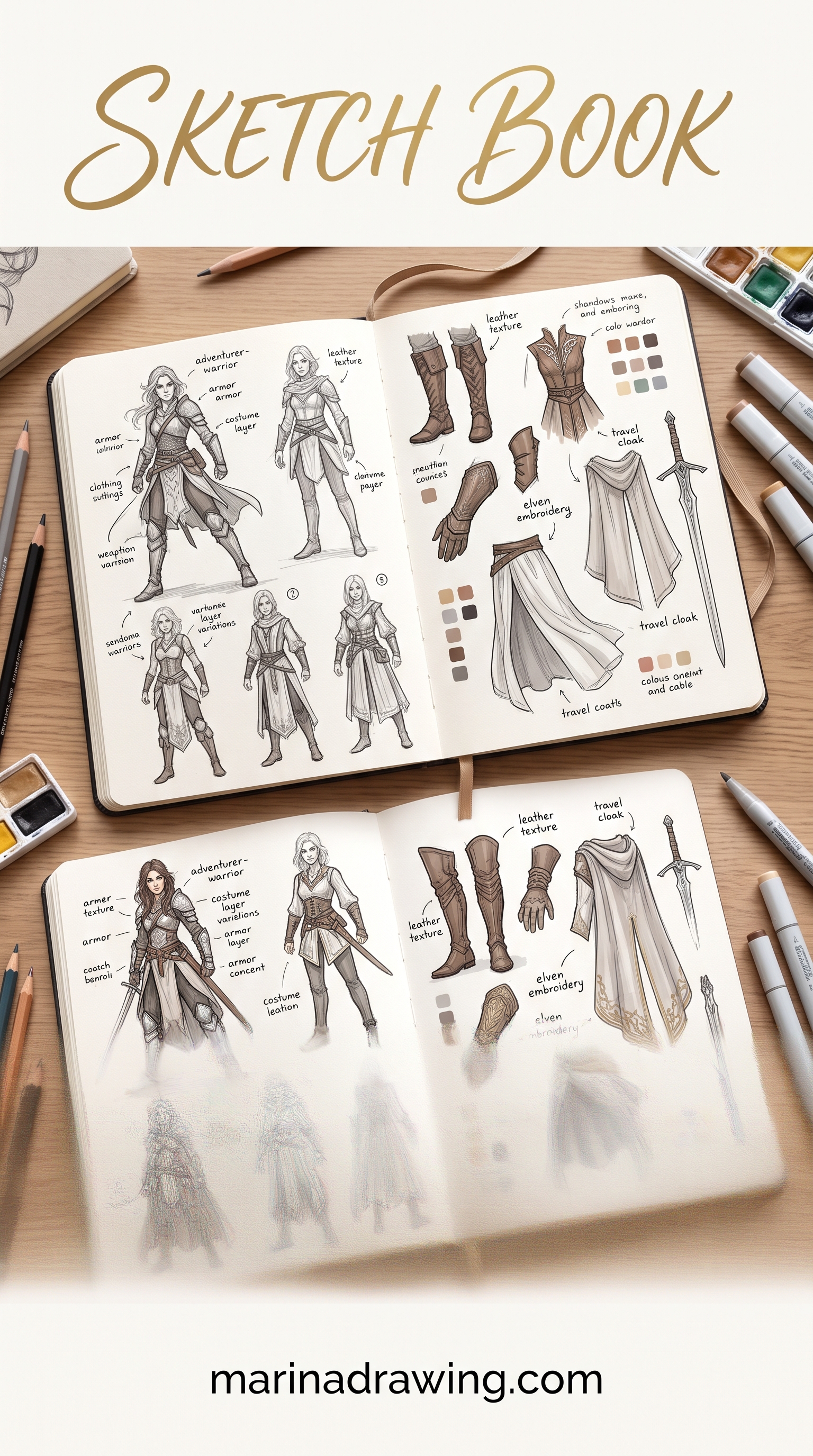
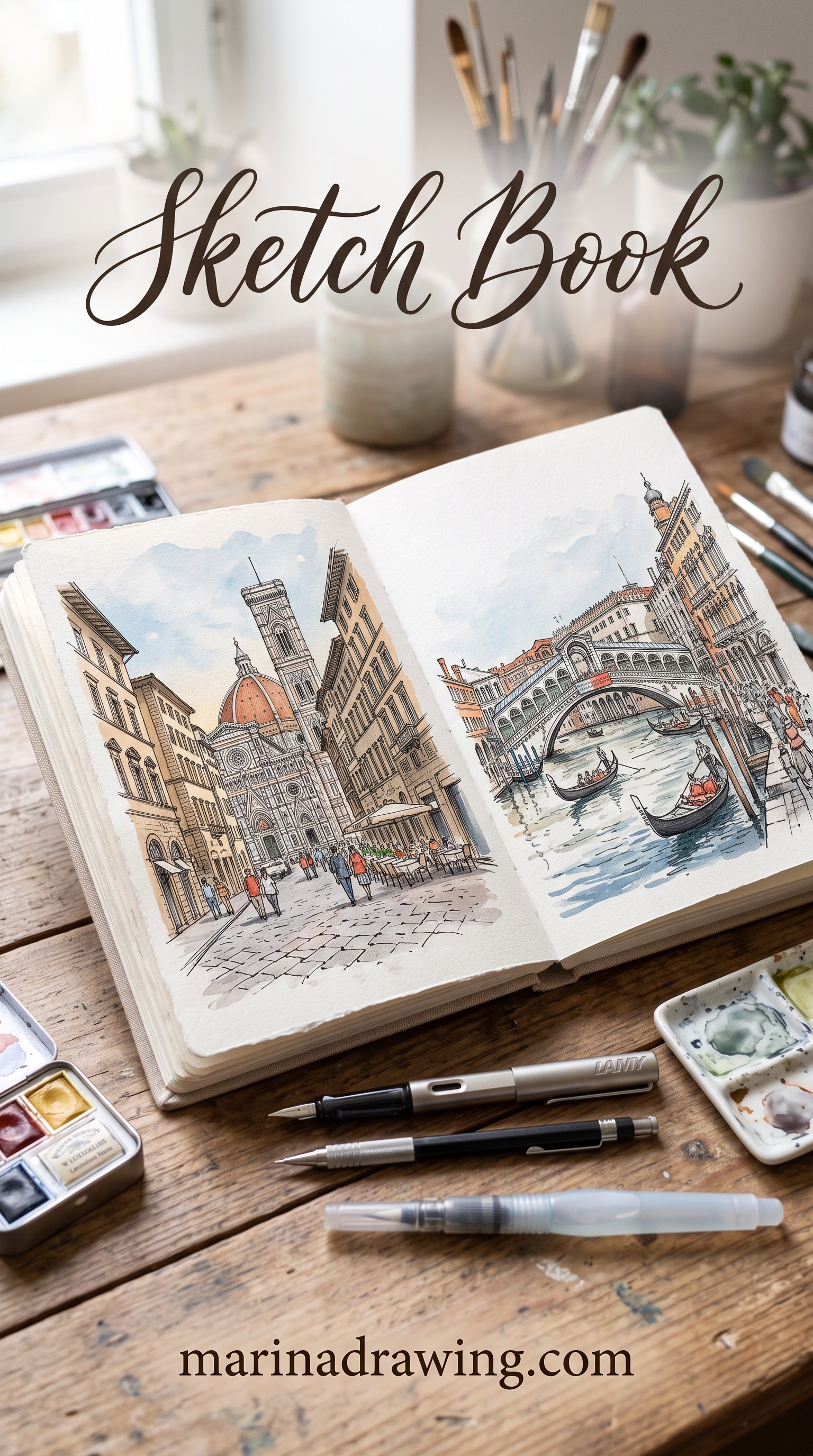
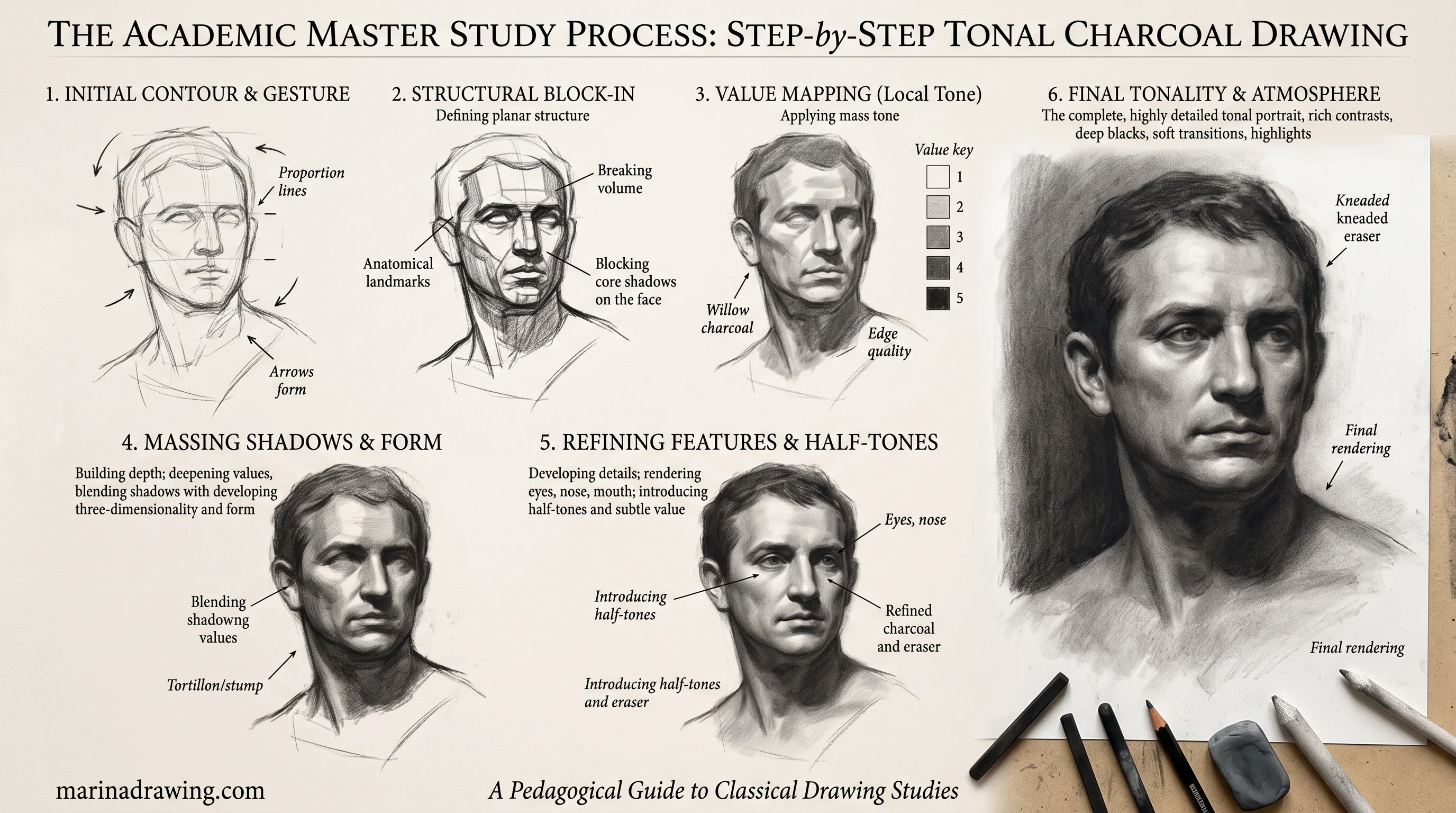
A list of things to draw only gets you halfway. The other half is what to do with the page. These sketch book ideas fill two facing pages so a single evening produces something you can look back on.
Pick one layout before you sit down. Deciding the page first and the drawings second is what keeps you from staring at the paper.
1. The grid of six
Draw six boxes on the spread. Put one small sketch in each. You have only a few minutes per box, so nothing gets fussy.
2. One object, five angles
Draw the same mug from above, from the side, from below, tilted, and with the handle away from you.
3. The same object over a week
Draw the same apple every day until it goes soft. The page becomes a small record of time passing.
4. A row of thumbnails
Draw a strip of very small boxes and put a tiny version of one scene in each. It teaches you to see the big shapes first.
5. Contour without looking
Look at the object, not the page, and draw the outline in one slow line. The result looks odd. That is exactly why it works.
6. One big, one small
Fill the left page with one large object and the right page with many tiny ones. The contrast makes the spread feel finished.
Whichever layout you choose, put the timer next to the book before you start. A course with feedback on your pages can help you decide which layout suits your hand.
Interactive Sketchbook Ideas Pages That Ask You to Do Something
42 hours of pencil drawing training, lifetime access
The video course I point plateaued students to — full lessons on portraits, hands, and realistic shading, not another short tutorial.
 Pin it
Some pages work like a small game. These interactive sketchbook ideas give you a task instead of a subject.
- Draw with your other hand. It will look wobbly. It also stops you from fussing.
- One line only. Do not lift the pencil until the object is done.
- Swap a page. Ask a friend to draw one shape, then turn it into an object.
- Finish in one minute. A minute is enough for a shape and one shadow.
Interactive pages are the ones I show people. They look playful, and playing is the fastest way I know to loosen a tight hand.
You can pick any of these layouts tonight. Your future self will thank you for a page that has a plan, and for structured feedback later, a work-review course is one option.
Overthinking Sketch Ideas: Ten Minutes and No Eraser
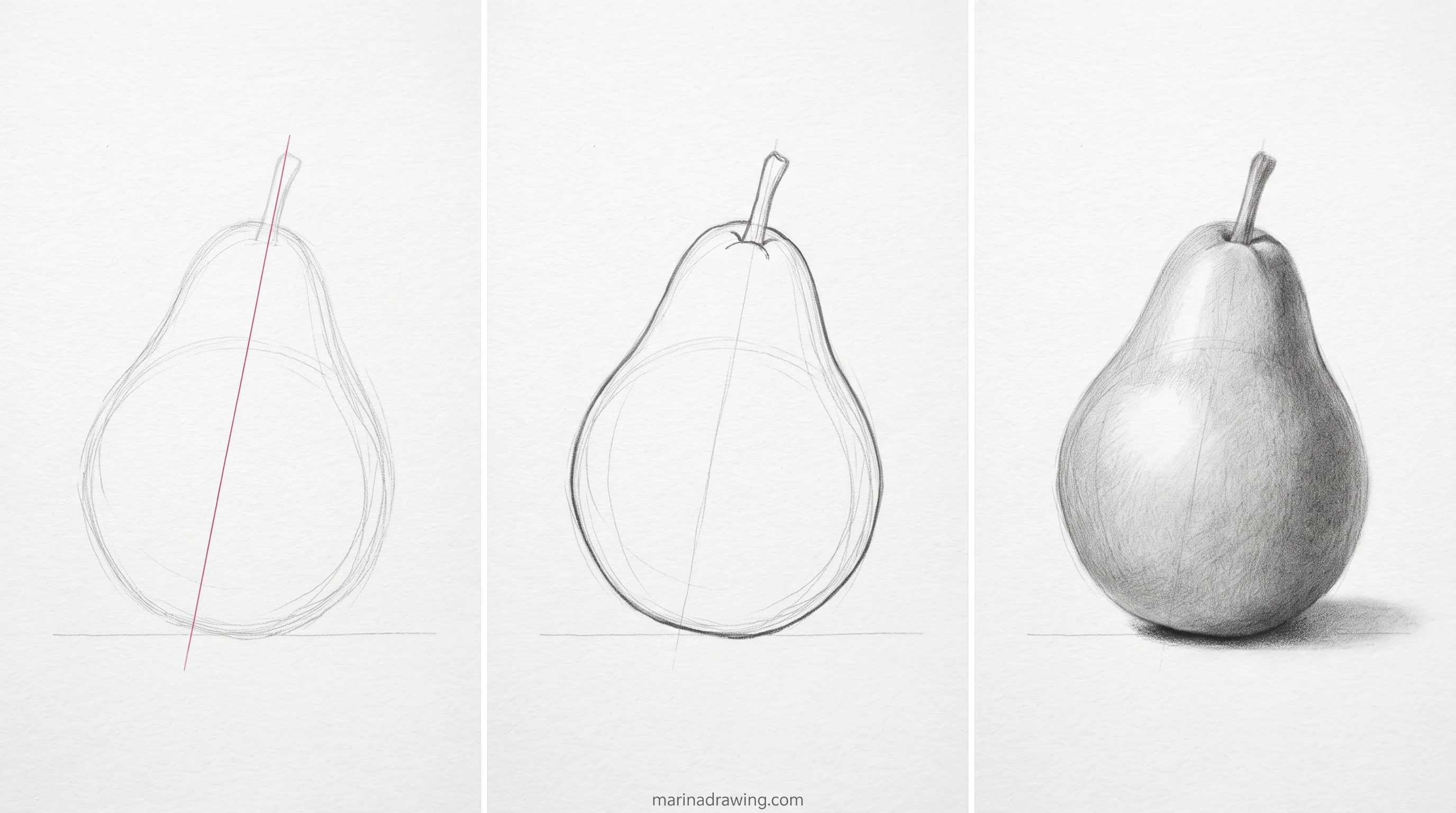
Overthinking sketch ideas are a real thing. On beginner drawing forums, a small but steady group of sketching posts describe the reverse problem: the sketch got stiff, overworked, or was erased back to nothing. So if your sketches feel tight, you are far from alone.
This is the routine I use when I catch myself polishing:
- Set the timer for ten minutes and do not stop it early.
- Put the eraser out of reach.
- If a line is wrong, draw it again beside the first one. Both stay.
- When the timer rings, close the book. No touching up.
The extra lines are not mistakes. Artists call them searching lines, and they are why a sketch looks alive.
When I started, my first ten-minute sketch looked worse than my slow one. The third one looked better. That is normal: the hand needs a few rounds before the fast line settles.
If ten minutes keeps running over, that is fine. To turn loose sketches into finished drawings, a structured pencil course is the quickest route I know.
You may notice the ten minutes go faster than you expect. That is the sign the routine is working for you, and it ties in with a simple drawing practice routine.
Art Ideas Sketches From Memory After One Look
 Pin it
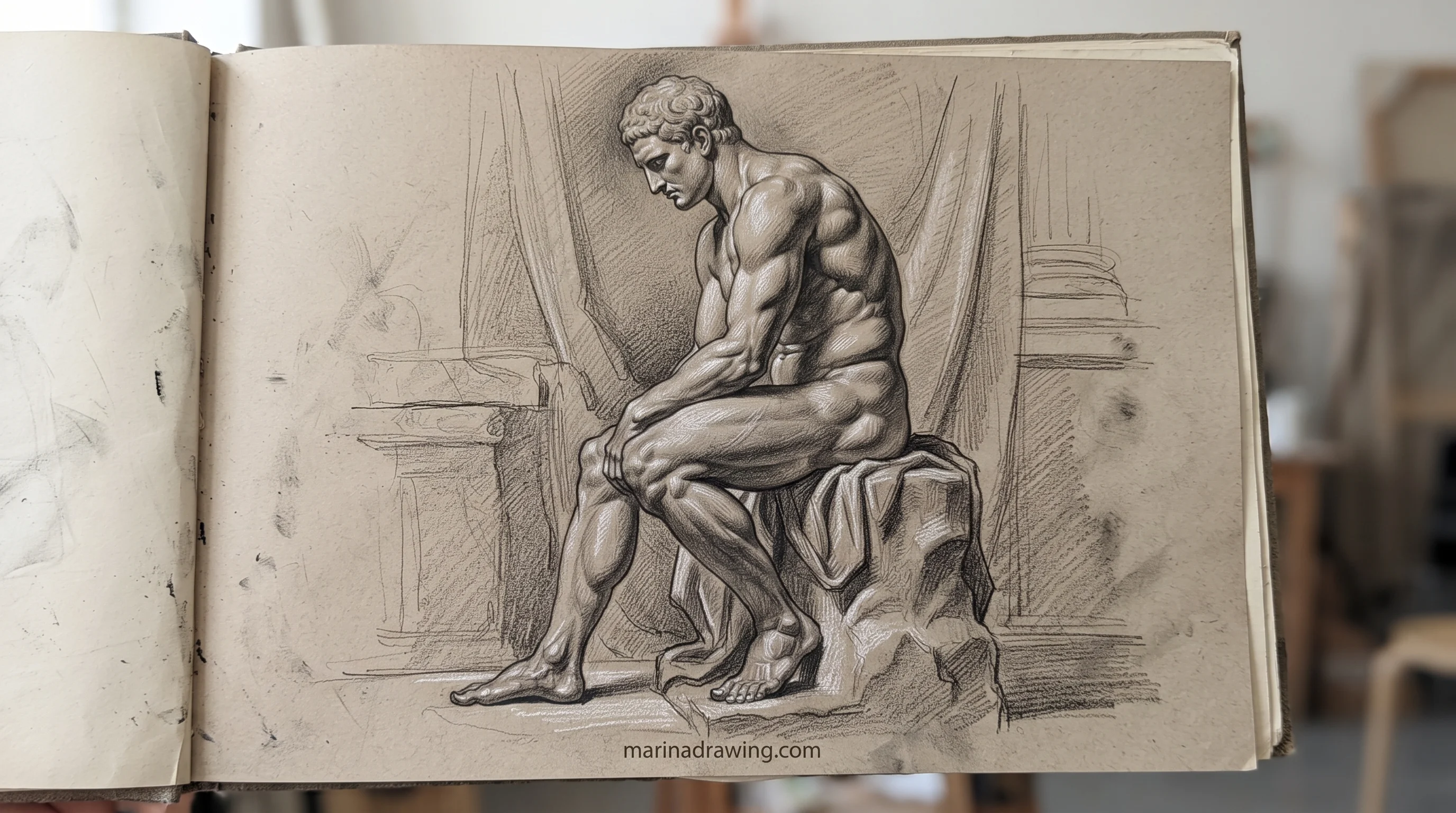
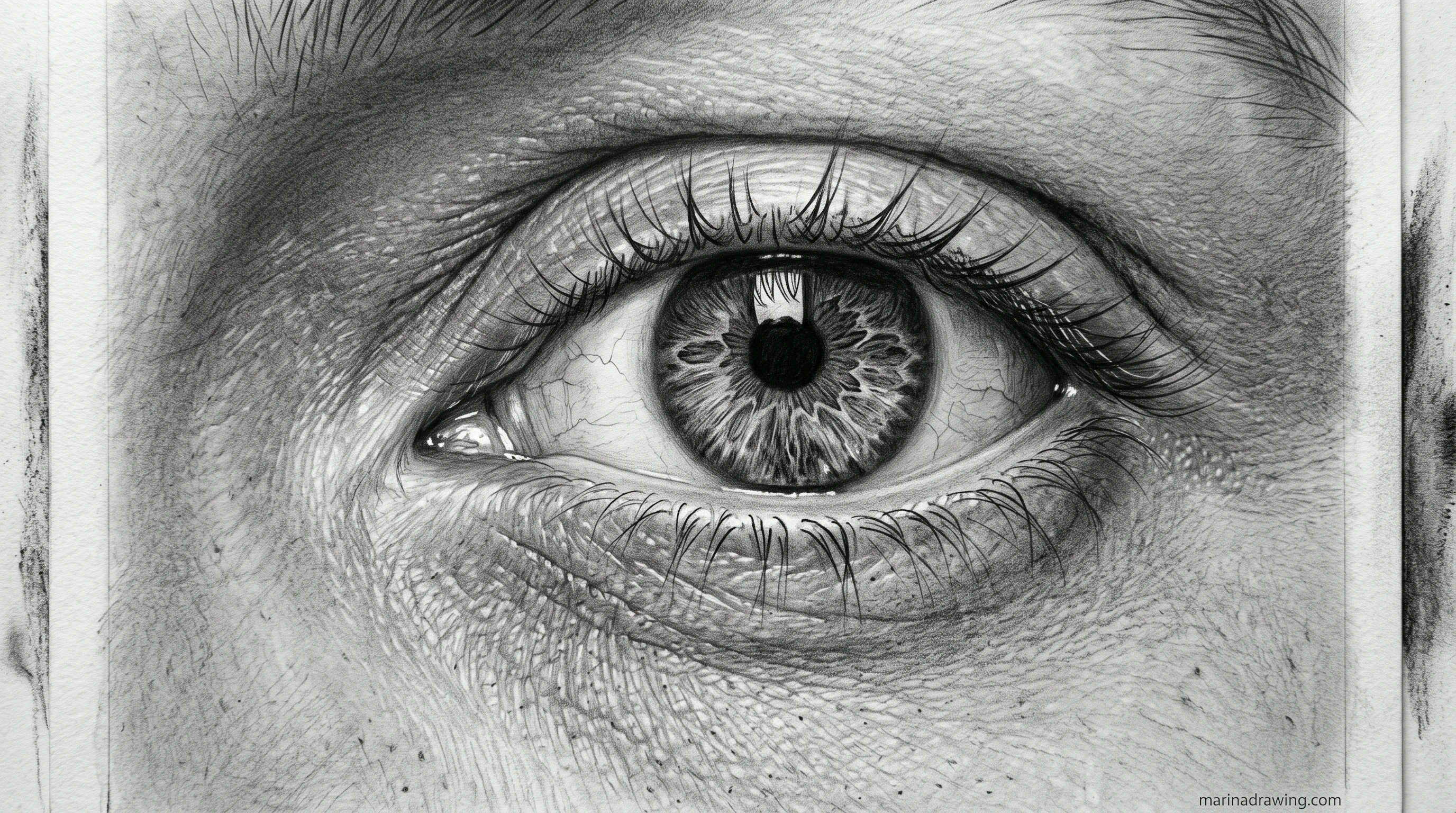
These art ideas sketches train you to see. Look at an object for thirty seconds, turn it away, and draw what you remember.
- Your front door
- A chair in the next room
- Your bag and everything you can remember inside it
- The last thing you ate
Then look again and see what you missed. The gaps are the things your eye skipped, and that is useful to know. If faces are where you skip most, the page on how to draw portraits shows where features usually sit.
Keep a separate page for these and never fix them afterwards. Comparing a memory sketch from Monday with one from Friday is the clearest proof you are improving.
Why Your Sketch Still Looks Stiff
Suppose you tried the ideas above and some sketches still feel tight. I have been there, and it usually comes down to three things you can check on the page.
- The line is one thin outline. A living sketch has a heavier line where the object presses down and a lighter one where it turns away.
- Everything is the same size of detail. The eye should have one spot that is finished and the rest kept loose.
- There is no structure under the outline. Without a light box or circle underneath, the shape floats. You can see how that works in building shading over structure.
A list can tell you what to draw. It cannot look at your page and tell you which of these three is the problem.
To check by yourself, hold the sketch at arm’s length and squint. If it looks like a wire frame, the line is too even. If nothing stands out, the detail is too even. If the object seems to float, the structure is missing.
Ten Sketch Ideas for One Week
Here is a plan instead of a list: a week that fits ten minutes a day. I run it every time a sketchbook stalls.
- Monday: your shoe, one page
- Tuesday: the mug from three angles
- Wednesday: your hand in five poses
- Thursday: the window view, only shapes
- Friday: a random object from the die
- Saturday: a grid of six small things
- Sunday: redraw your favourite, one line only
By the end of the week you will have seven pages and a habit. Both matter more than any single drawing. To see how a habit like this compounds, the eye-drawing guide shows the same idea applied to one feature.
 Pin it
Questions That Come Up Before the First Page
What is the easiest thing to sketch for a beginner?
A single object on a table, like a mug or a piece of fruit. It holds still, it has a clear shape and you can look at it as long as you like.
What should I draw first in a new sketchbook?
Something small and ordinary that you do not care about. A shoe works well. The first page should be easy to forgive.
What can I sketch in five minutes?
One object with one shadow, a single hand pose or a quick thumbnail row. Anything bigger belongs in a longer session.
How often should I sketch?
Ten minutes a day beats a two-hour session once a week. The daily habit is what changes your hand.
Do I need to finish every sketch?
No. When the timer rings, you stop, even if it looks unfinished. Finishing is a separate skill and it can wait.
Why do my sketches look stiff?
Usually the line is too even and nothing sits under it. Try a light box or circle first, and let the outline vary in weight.
Should I use a pen or a pencil for sketching?
Start with a pencil so a wrong line costs nothing. Once the ten-minute habit feels easy, try a pen for one page a week. A pen makes you commit to each line, which is a good cure for polishing.
How many sketch ideas do I need before I start?
One. Pick the object nearest to you and begin. The list on this page is for tomorrow, and the day after. When you are ready for feedback on your own pages, a self-paced pencil course is where I would look.
What are some sketch ideas?
Start with what is in the room: a shoe, a mug, a stack of books, keys, a piece of fruit, your own hand. Then move to the window view, cloth folds and a memory sketch after one look. Every idea in this article uses only things you already own.
What are the easiest things to sketch?
Objects with a clear outline and no moving parts. A mug, a book, an apple and a shoe all qualify. Avoid faces and animals until the daily habit feels normal.
What are the best sketch ideas for beginners?
The best sketch ideas for beginners are the ones you can finish in ten minutes: one object, one shadow, no eraser. Finishing small pages builds the habit that bigger drawings need later.
What are the best sketch ideas with pencil?
Ideas where light and dark do the work: cloth folds, a crumpled sheet of paper, fruit with one shadow side and a shoe on a table. A soft pencil suits all of them.
How do I sketch for beginners without feeling lost?
Pick the object first, set the timer second and draw the biggest shape third. Details come last, and only if there is time left.
Where do I look for sketch inspo without losing the evening to scrolling?
Keep your sketch inspo in the room, not on a screen. The six-object die list on the inside cover and the week plan above are both faster than a feed, and neither one can send you to bed with nothing drawn. On the evenings when you want a subject already broken into shapes, simple drawing ideas gives you one.
How do I get ideas for drawing when my mind is blank?
Do not wait for an idea to arrive. Roll a die on the list of six objects, or open the week plan above and follow the day. The idea comes after you start moving the pencil. If the blank stays, guided lessons give you the next step.