The Brooklyn Bridge is a perspective test hidden inside a famous view. Pick one horizon and one vanishing point, and a Brooklyn Bridge drawing starts to look solid within fifteen minutes. New to this? Warm up with easy drawings for beginners.
Maybe your towers lean, or the cables look flat and you cannot tell why. Pick one of twenty-eight studies below in a minute, and fix the part that fails.
A Brooklyn Bridge drawing looks right when the walkway, cables and towers all obey one horizon and one vanishing point.
Quick answer: for a Brooklyn Bridge drawing you can finish tonight, start with study 1 or study 3. Draw the horizon, run the walkway to one vanishing point, and add the cable curve last. Both take about fifteen minutes.
What is a Brooklyn Bridge drawing study?
A Brooklyn Bridge drawing study is a short practice sketch of the bridge that trains one skill at a time, such as perspective, curves or light. The granite towers, the cable curves and the walkway each follow clear geometry. Beginners copy the outline. Artists find the horizon first, and that one change is what gives the bridge depth.
Which Brooklyn Bridge study to draw: pick by what you need
Find your goal in the left column and jump to the study that fits.
| You need | Pick | Best for | Level / Time / What it trains | Avoid if | Course |
|---|---|---|---|---|---|
| Walkway straight ahead | 1. One-point deck view | Best for a first bridge | Beginner / 15 min / one-point perspective | You need a three-quarter view | Perspective in Buildings with Pen and Ink |
| Tower shape | 2. Granite tower with two pointed arches | Best for arch drawing | Beginner / 15 min / symmetry | You need a loose sketch | How to Draw an Old Doorway in Pastel |
| Cable curve | 3. Suspension cable curve | Best for curve control | Beginner / 12 min / smooth curves | You need fine detail | How to Draw a Harbour Bridge in Pencil |
| Stay cables | 4. Diagonal stay cable fan | Best for rhythm and spacing | Intermediate / 25 min / radiating lines | You need a quick page | Sketching Basics |
| Skyline view | 5. View from the Manhattan side | Best for depth practice | Intermediate / 30 min / overlap and depth | You need a flat design look | How to Draw Buildings in Pastel |
| Waterfront view | 6. View from Brooklyn Bridge Park | Best for landscape depth | Intermediate / 35 min / foreground and background | You need a close crop | Intro to Landscape Drawing Course |
| Wooden boardwalk | 7. Walkway from the pedestrian level | Best for ground plane lines | Beginner / 20 min / converging planks | You need a skyline view | Drawing a Path in a Forest |
| Tower base | 8. Two-point corner of the tower base | Best for two-point rules | Intermediate / 30 min / two-point perspective | You need a flat front view | How to Draw a Farmhouse in Pen and Ink |
| Soft mood | 9. Bridge in morning fog | Best for atmospheric depth | Intermediate / 25 min / soft values | You need hard outlines | How to Draw Mist |
| Warm light | 10. Bridge at sunrise | Best for light direction | Beginner / 20 min / light direction | You need detailed cables | Paint an Early Morning in Acrylic |
| Cast shadows | 11. Bridge at sunset with long shadows | Best for long shadows | Intermediate / 30 min / cast shadow | You need midday light | How to Paint a Sunset in Acrylic |
| Night scene | 12. Bridge at night with lamp lights | Best for light against dark | Advanced / 40 min / light and dark | You need outline-only work | How to Paint the Stars and Moon in Acrylic |
| Winter scene | 13. Bridge in falling snow | Best for value control | Intermediate / 30 min / limited values | You need colourful pieces | How to Draw Snow |
| Storm mood | 14. Bridge under heavy rain | Best for drama | Advanced / 40 min / dramatic contrast | You need calm moods | How to Draw Rain on Window |
| Mirror water | 15. Bridge reflected in the East River | Best for mirror practice | Intermediate / 30 min / reflection | You need moving water | How to Draw Water Reflections |
| Figure scale | 16. Cyclist on the walkway for scale | Best for scale contrast | Intermediate / 30 min / scale | You need a lone subject | How to Draw Children Walking |
| Looking up | 17. Tower seen from directly below | Best for foreshortening | Advanced / 40 min / three-point perspective | You need a calm layout | How to Draw a Ruin in Pen and Ink |
| Boat-level view | 18. Tower and skyline from the water | Best for framing | Intermediate / 35 min / low horizon | You need a high viewpoint | How to Draw a Basic Seascape |
| Under-bridge view | 19. Underside of the bridge deck | Best for structure | Advanced / 45 min / repeating structure | You need an open sky scene | How to Draw a Gothic House in Pen and Ink |
| Street reflection | 20. Bridge in a rain-wet street mirror | Best for curved shapes | Advanced / 40 min / distorted reflection | You need a clean line style | How to Draw Reflective Water |
| Foreground subject | 21. Bridge with a sailing boat in front | Best for overlap practice | Intermediate / 30 min / overlap | You need a bridge-only page | How to Draw a Sailboat |
| Sky detail | 22. Tower with birds in flight | Best for small shapes | Beginner / 18 min / small shapes | You need a still life | How to Draw a Seagull |
| Cloud sky | 23. Bridge across a thin sky of clouds | Best for tone blending | Beginner / 20 min / soft shading | You need stiff outlines | How to Draw Clouds |
| Foreground frame | 24. Lamp post in the foreground | Best for framing | Beginner / 20 min / scale and framing | You need an empty foreground | How to Paint a Fancy Lantern in Watercolour |
| Planning sheet | 25. Quick thumbnail set of six views | Best for composition | Beginner / 20 min / composition | You need one big drawing | How to Draw Quick Sketches |
| Wide panorama | 26. Long panorama across the river | Best for wide composition | Advanced / 50 min / wide horizon | You need a short session | Draw a Landscape by Scumbling |
| Ruler study | 27. Line-only study with a ruler | Best for straight lines | Beginner / 20 min / straight lines | You need an organic style | Introduction to Pen and Ink |
| Final test | 28. Final study that combines every view | Best for a full study | Advanced / 60 min / combined perspective | You need a quick sketch | Learn to Draw – Introduction to Drawing |
How do you choose a Brooklyn Bridge drawing study?
Three questions decide it, and each one is where a free tutorial usually stops.
- Which skill does it train? Check whether the study teaches perspective, curves or light. Free guides rarely say, so you repeat the same front view.
- How many minutes per attempt? A fifteen-minute deck view lets you run three tries in one evening. Panoramas need a plan, which a list cannot give you.
- How will you know it worked? Squint at the sheet. If every cable and walkway line still points to the same horizon, it worked.
1. Brooklyn Bridge drawing: one-point deck view
A Brooklyn Bridge drawing from the walkway is a one-point study. Put the vanishing point at the centre of the horizon, then run the walkway edges and cable lines to it. Everything else is a repeat of that rule. For a wider setup guide, read perspective drawing scene setup.
- Best for: a first bridge.
- Avoid for: a three-quarter view.
Course: Perspective in Buildings with Pen and Ink — teaches the vanishing-point rule that the deck view depends on.
2. Brooklyn Bridge drawing: granite tower with two pointed arches
The Brooklyn Bridge towers are tall granite blocks with two pointed arches. Draw a centre line first, then mirror each arch on both sides. Keep the arch tops sharp, since round arches are the most common mistake.
- Best for: arch drawing.
- Avoid for: a loose sketch.
Course: How to Draw an Old Doorway in Pastel — shows how to draw an arch or doorway symmetrically, like the pointed tower arches.
3. Brooklyn Bridge drawing: suspension cable curve
The main cables of the Brooklyn Bridge sag in one smooth parabola. Mark both tower tops, then draw the curve in a single stroke from the elbow. Redraw it three times and keep the lowest line. Curve control gets easier with sketch ideas.
- Best for: curve control.
- Avoid for: fine detail.
Course: How to Draw a Harbour Bridge in Pencil — walks through a bridge in pencil, including how its main cables curve and meet the towers.
4. Brooklyn Bridge drawing: diagonal stay cable fan
Stay cables fan out from the towers like an open hand. Draw the lowest cable first, then add each next one at a slightly steeper angle. Even spacing matters more than the number of lines you draw. See also easy drawings for beginners.
- Best for: rhythm and spacing.
- Avoid for: a quick page.
Course: Sketching Basics — covers the quick basics for placing many straight cable lines with a steady hand.
5. Brooklyn Bridge drawing: view from the Manhattan side
A Brooklyn Bridge drawing from the Manhattan side places the bridge behind a row of buildings. Draw the nearest buildings darkest and the bridge pale. Overlap is what tells the eye which shape is closer.
- Best for: depth practice.
- Avoid for: a flat design look.
Course: How to Draw Buildings in Pastel — trains stacking buildings into a skyline with believable overlap and depth.
6. Brooklyn Bridge drawing: view from Brooklyn Bridge Park
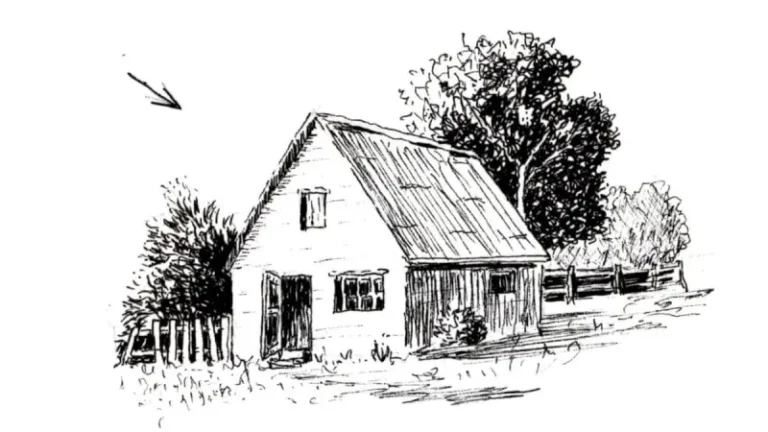
From Brooklyn Bridge Park the bridge sits above a wide band of water and grass. Draw the horizon low, then the towers small against the sky. A strong foreground edge makes the bridge feel far away.
- Best for: landscape depth.
- Avoid for: a close crop.
Course: Intro to Landscape Drawing Course — explains how to push a river and its far bank back in space, the base of the park view.
7. Brooklyn Bridge drawing: walkway from the pedestrian level
The wooden boardwalk is a ready-made perspective grid. Draw the plank lines so they meet at one point on the horizon, and add the cable fan above. Planks near you are wide and those far away get thin. Practise lines first with simple drawing ideas. For figures on the walkway, see how to draw portraits.
- Best for: ground plane lines.
- Avoid for: a skyline view.
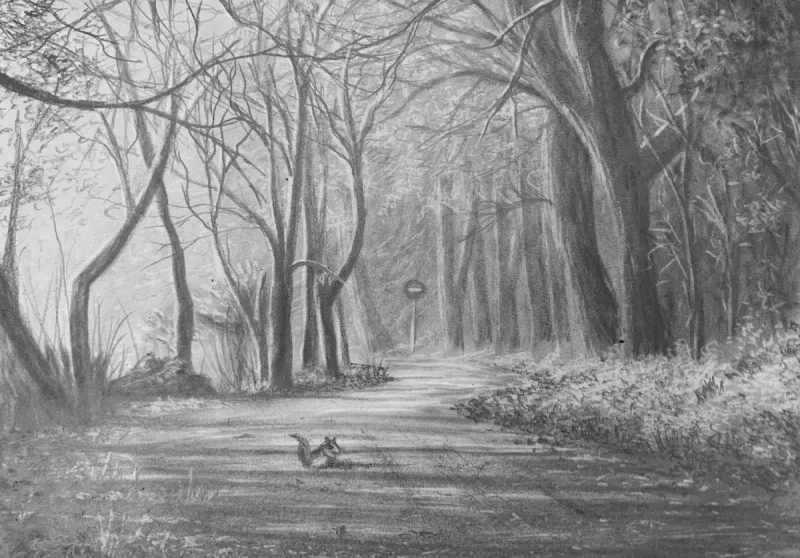
Course: Drawing a Path in a Forest — shows how a path narrows toward the horizon, the same guide for a pedestrian walkway.
8. Brooklyn Bridge drawing: two-point corner of the tower base
The tower base is a box, so it follows two-point rules. Place two vanishing points far apart on the horizon and run the base edges toward each. Draw the pointed arch inside the front face last.
- Best for: two-point rules.
- Avoid for: a flat front view.
Course: How to Draw a Farmhouse in Pen and Ink — treats a block-shaped structure in two-point perspective, like the tower base corner.
9. Brooklyn Bridge drawing: bridge in morning fog
A Brooklyn Bridge in fog loses detail with distance. Draw the near tower in mid grey and leave the far tower almost white. Keep the cables as faint single lines so the fog stays the main subject. Soft tone work is covered in realistic drawings and shading.
- Best for: atmospheric depth.
- Avoid for: hard outlines.
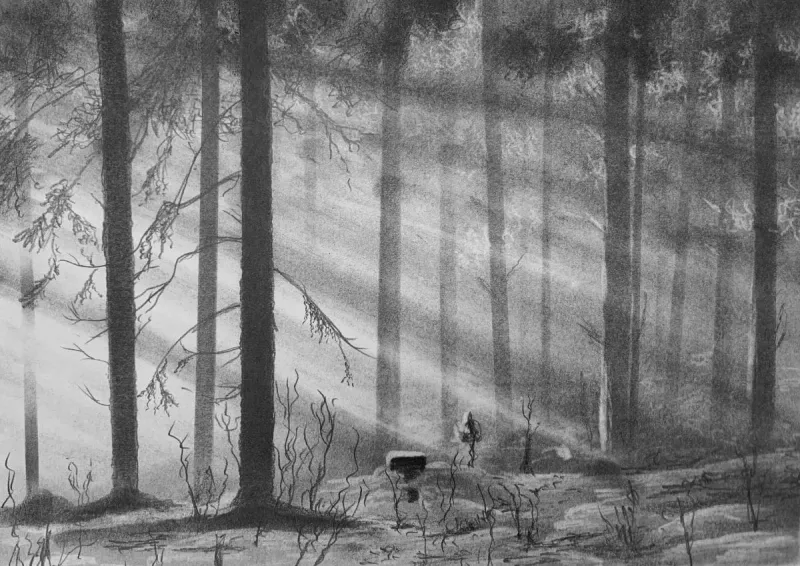
Course: How to Draw Mist — teaches the soft tonal layers that make distant towers disappear into fog.
10. Brooklyn Bridge drawing: bridge at sunrise
At sunrise the sun sits low behind the bridge, so the towers are dark shapes against a bright sky. Fill the tower with one flat tone and keep the cables as thin light lines. Simple shapes read best here.
- Best for: light direction.
- Avoid for: detailed cables.
Course: Paint an Early Morning in Acrylic — covers early-light colour and tone changes useful for a sunrise bridge.
11. Brooklyn Bridge drawing: bridge at sunset with long shadows
Low sunset light throws long shadows across the walkway. Draw each shadow so it runs in one direction and fades as it moves away from the tower. Shadow angle must match the sun position on every object.
- Best for: long shadows.
- Avoid for: midday light.
Course: How to Paint a Sunset in Acrylic — shows how to handle low warm light and long dark shapes across a scene.
12. Brooklyn Bridge drawing: bridge at night with lamp lights
Shade the whole page dark first, then lift the cable lines and lamp points with an eraser. A night Brooklyn Bridge drawing is mostly about what you leave unshaded. Keep the lights in a steady row to hold the perspective. Small light points are a good fit for fox eyes drawing studies.
- Best for: light against dark.
- Avoid for: outline-only work.
Course: How to Paint the Stars and Moon in Acrylic — trains dark skies and small points of light, the problem in a night view with lamps.
13. Brooklyn Bridge drawing: bridge in falling snow
Snow turns the bridge into a few dark shapes on pale ground. Leave the paper bare for the snow and shade the towers lightly in cool grey. Add the falling flakes last, in a few small dots.
- Best for: value control.
- Avoid for: colourful pieces.
Course: How to Draw Snow — explains how to suggest falling snow with tone and spacing instead of outlines.
14. Brooklyn Bridge drawing: bridge under heavy rain
Rain flattens the view, so push contrast. Shade the sky in heavy diagonals and keep the tower lighter against it. Draw the wet walkway with a few shiny horizontal streaks that mirror the cable lamps.
- Best for: drama.
- Avoid for: calm moods.
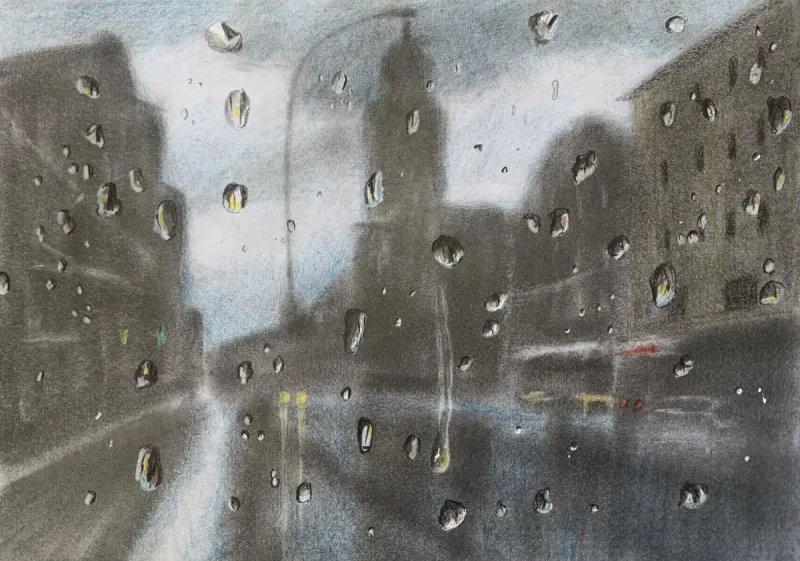
Course: How to Draw Rain on Window — shows how to draw rain streaks and softened shapes behind them.
15. Brooklyn Bridge drawing: bridge reflected in the East River
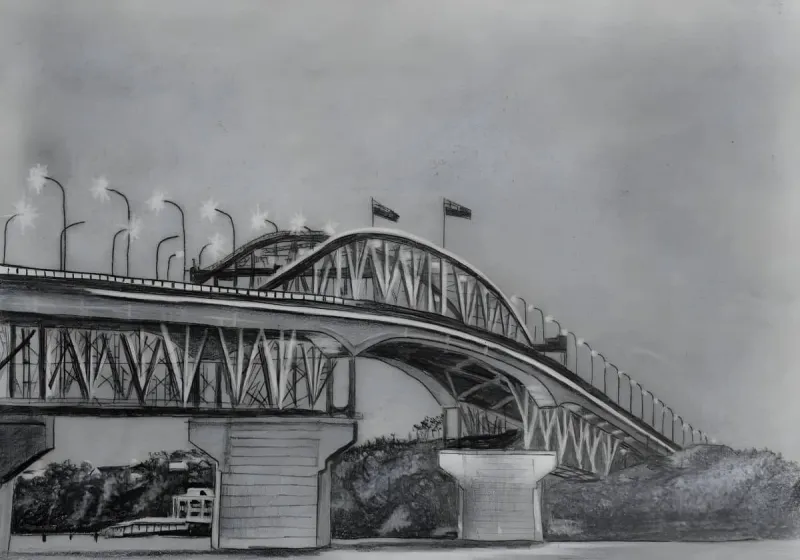
Reflections mirror straight down from the waterline. Draw the bridge first, then flip each tower base below the horizon and break it with two or three light ripples. Keep every vertical line aligned between shape and reflection.
- Best for: mirror practice.
- Avoid for: moving water.
Course: How to Draw Water Reflections — teaches how a reflection mirrors the bridge shape and breaks up on moving water.
16. Brooklyn Bridge drawing: cyclist on the walkway for scale
A cyclist on the walkway shows how big the bridge is. Draw the rider about as tall as a plank is wide near the viewer, and smaller further up. Scale cues like this stop the bridge from looking like a toy. Tiny figures borrow from how to draw hands.
- Best for: scale contrast.
- Avoid for: a lone subject.
Course: How to Draw Children Walking — gives proportions for small walking figures, which set the scale against the tower.
17. Brooklyn Bridge drawing: tower seen from directly below
Looking up at the tower is a three-point view. Add a third vanishing point far above the page, and let the tower edges lean toward it. The arches get narrower toward the top, which sells the height.
- Best for: foreshortening.
- Avoid for: a calm layout.
Course: How to Draw a Ruin in Pen and Ink — practises steep upward views of heavy masonry, as in a tower seen from below.
18. Brooklyn Bridge drawing: tower and skyline from the water
Seen from the water, the horizon is very low and the bridge fills the sky. Draw the river as a thin strip at the bottom and the towers tall above it. A low horizon makes everything look larger.
- Best for: framing.
- Avoid for: a high viewpoint.
Course: How to Draw a Basic Seascape — shows how to place a skyline above water with a clean horizon line.
19. Brooklyn Bridge drawing: underside of the bridge deck
The underside is a field of steel beams that repeat toward a vanishing point. Draw the first beam, then use a diminishing step for each next one. Stay with this study and your grasp of repeating shapes will jump. Build the habit with short sessions of drawing practice.
- Best for: structure.
- Avoid for: an open sky scene.
Course: How to Draw a Gothic House in Pen and Ink — works through the dense structure and receding lines of a large building seen from underneath.
20. Brooklyn Bridge drawing: bridge in a rain-wet street mirror
A street puddle shows a bent, broken copy of the bridge. Draw the puddle as an ellipse, then mirror the shapes inside it and soften the edges. The reflection should be darker and less detailed than the bridge.
- Best for: curved shapes.
- Avoid for: a clean line style.
Course: How to Draw Reflective Water — explains wet-surface reflection so a street can mirror the bridge.
21. Brooklyn Bridge drawing: bridge with a sailing boat in front
A sailing boat in front adds a second subject at a different distance. Draw the boat larger, lower and darker than the bridge, and let its mast cross the cable fan. The overlap builds depth quickly.
- Best for: overlap practice.
- Avoid for: a bridge-only page.
Course: How to Draw a Sailboat — walks through drawing a sailboat so it sits convincingly in front of the bridge.
22. Brooklyn Bridge drawing: tower with birds in flight
Birds around a tower add motion with very little drawing. Use short V-shaped marks and make the far ones smaller. Keep them out of the tower arches, so the main shape stays readable. Birds in flight start simply with how to draw a duck.
- Best for: small shapes.
- Avoid for: a still life.
Course: How to Draw a Seagull — gives a quick way to draw birds in flight with just a few curves.
23. Brooklyn Bridge drawing: bridge across a thin sky of clouds
Soft clouds make a calm backdrop. Shade the sky in light circular strokes, leaving bright gaps behind the tower tops. Keep the bridge crisp and the clouds soft so they do not compete.
- Best for: tone blending.
- Avoid for: stiff outlines.
Course: How to Draw Clouds — covers how to build thin cloud layers with soft pencil.
24. Brooklyn Bridge drawing: lamp post in the foreground
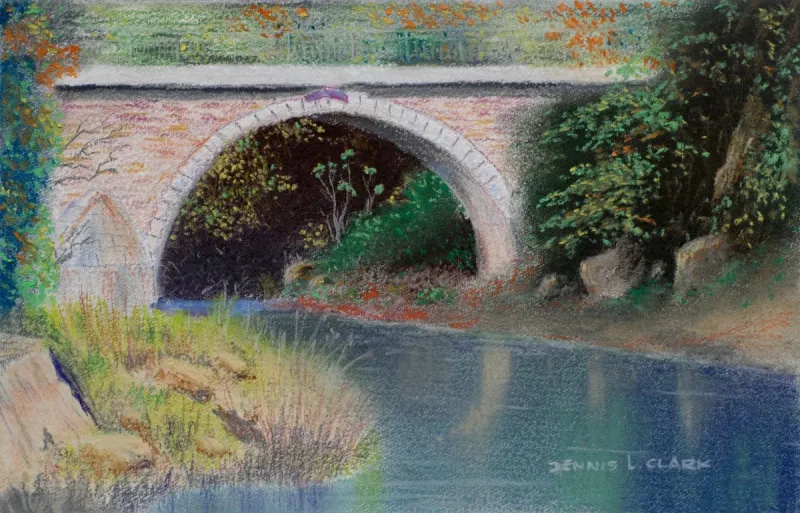
A lamp post in the foreground frames the bridge behind it. Draw the post tall and dark at one side, then the towers small and pale in the distance. The size jump between them is what creates depth.
- Best for: framing.
- Avoid for: an empty foreground.
Course: How to Paint a Fancy Lantern in Watercolour — shows how to draw a lantern shape and its light, the lamp-post detail up front.
25. Brooklyn Bridge drawing: quick thumbnail set of six views
Draw six tiny thumbnails of the bridge on one page, each from a different spot. Each takes about three minutes. Choose the strongest one for a big drawing and you save an hour of fixing weak layouts. Short warm-ups pair well with easy drawings for kids.
- Best for: composition.
- Avoid for: one big drawing.
Course: How to Draw Quick Sketches — trains fast thumbnail sketches, the skill the six-view page uses.
26. Brooklyn Bridge drawing: long panorama across the river
A panorama stretches the horizon across a long page. Place the towers on thirds, not the centre, and let the cables carry the eye. Check the horizon stays level, since a slight tilt is obvious in wide sheets. See also easy drawings sketches.
- Best for: wide composition.
- Avoid for: a short session.
Course: Draw a Landscape by Scumbling — teaches wide landscape layout with simple layered tone for a panorama.
27. Brooklyn Bridge drawing: line-only study with a ruler
Use a ruler for the walkway and deck lines and draw the cables freehand. Mixing both teaches you how a steady line feels. Check the result against the ruler and note where you wobble. Clean line control also helps in how to draw eyes.
- Best for: straight lines.
- Avoid for: an organic style.
Course: Introduction to Pen and Ink — introduces clean pen lines, the skill behind a ruler-only linework study.
28. Brooklyn Bridge drawing: final study that combines every view
Pick your favourite view and add what you learned: a horizon, one clear vanishing point, scale cues, a light direction and a reflection. This final study shows which skills you now own and which still need practice. Compare it to your first sketch from this list.
- Best for: a full study.
- Avoid for: a quick sketch.
Course: Learn to Draw – Introduction to Drawing — pulls the basics together, so a final combined study has a steady foundation.
If it goes wrong
Fix the one failure you see.
- The towers lean. You drew them by eye. Add a vertical guide line through each tower and check every edge against it.
- The cables look stiff. You drew them in short pieces. Redraw each cable in one stroke from the tower top.
- The walkway looks flat. The plank lines do not meet. Extend them with a ruler and fix the vanishing point.
- The reflection looks wrong. Mirror each shape straight down from the waterline and keep verticals aligned.
Key takeaways
- Draw the horizon before the bridge.
- Send every walkway and deck line toward one or two vanishing points.
- Draw each cable in one smooth stroke.
- Make far towers lighter and smaller than near ones.
- Use value, not outline, to push the skyline back.
Draw two or three studies and you will know which fault is yours. Rest your eye on something simpler with the marina drawing ideas when you need a break.
When the free version isn’t enough
A list of studies names your fault, but it cannot watch you work. For perspective, tone and a steady build-up, a pencil drawing course keeps going where this page stops.
Common questions
How do you draw the Brooklyn Bridge in perspective?
Draw a horizon line, pick one vanishing point on it, and run the walkway edges and deck lines toward that point. Add the towers as tall boxes and draw the cables last.
What is the easiest Brooklyn Bridge drawing for beginners?
The one-point deck view is the easiest. It is a walkway with converging lines, two towers and a smooth cable curve, and it takes about fifteen minutes.
How do you draw the Brooklyn Bridge towers?
Draw a tall granite block, add a centre line, and mirror two pointed arches on both sides. Keep the arch tops sharp and the tower edges vertical.
How do you draw the cables of the Brooklyn Bridge?
Mark both tower tops, then draw the main cable as one smooth curve. For the stay cables, fan thin lines out from the tower at even spacing.
How many vanishing points does a bridge drawing need?
One for a view along the walkway, two for a corner view of a tower, and three for a view looking up. A side view needs none, but a horizon still helps.
How do you make the far tower look far away?
Make it smaller, lighter and softer than the near tower, and place its base close to the horizon. A pencil drawing course covers value in much more depth.